President Trump is trying to solve a political dilemma with his push for tech companies to fund new power plants: The White House is all-in on AI, but Republicans face blowback as utility bills rise.
Why it matters: Rising consumer electricity costs — which have no single cause — and the need for more power generation are both threats to the AI boom.
The Trump administration's "energy dominance" council and a bipartisan group of governors unveiled a plan on Friday to address rising prices in the nation's largest power grid.
Why it matters: It's the latest sign that the administration is taking seriously the voter angst over skyrocketing electricity bills due in part to huge demand from AI-driven data centers.
Energy Secretary Chris Wright is looking to secure oil and critical minerals deals with Venezuela in the next few weeks ahead of a trip to Caracas, he said in a Friday interview with Axios.
Why it matters: The deals could give the U.S. exclusive access to key resources while helping finance the reconstruction of Venezuela's ailing economy.
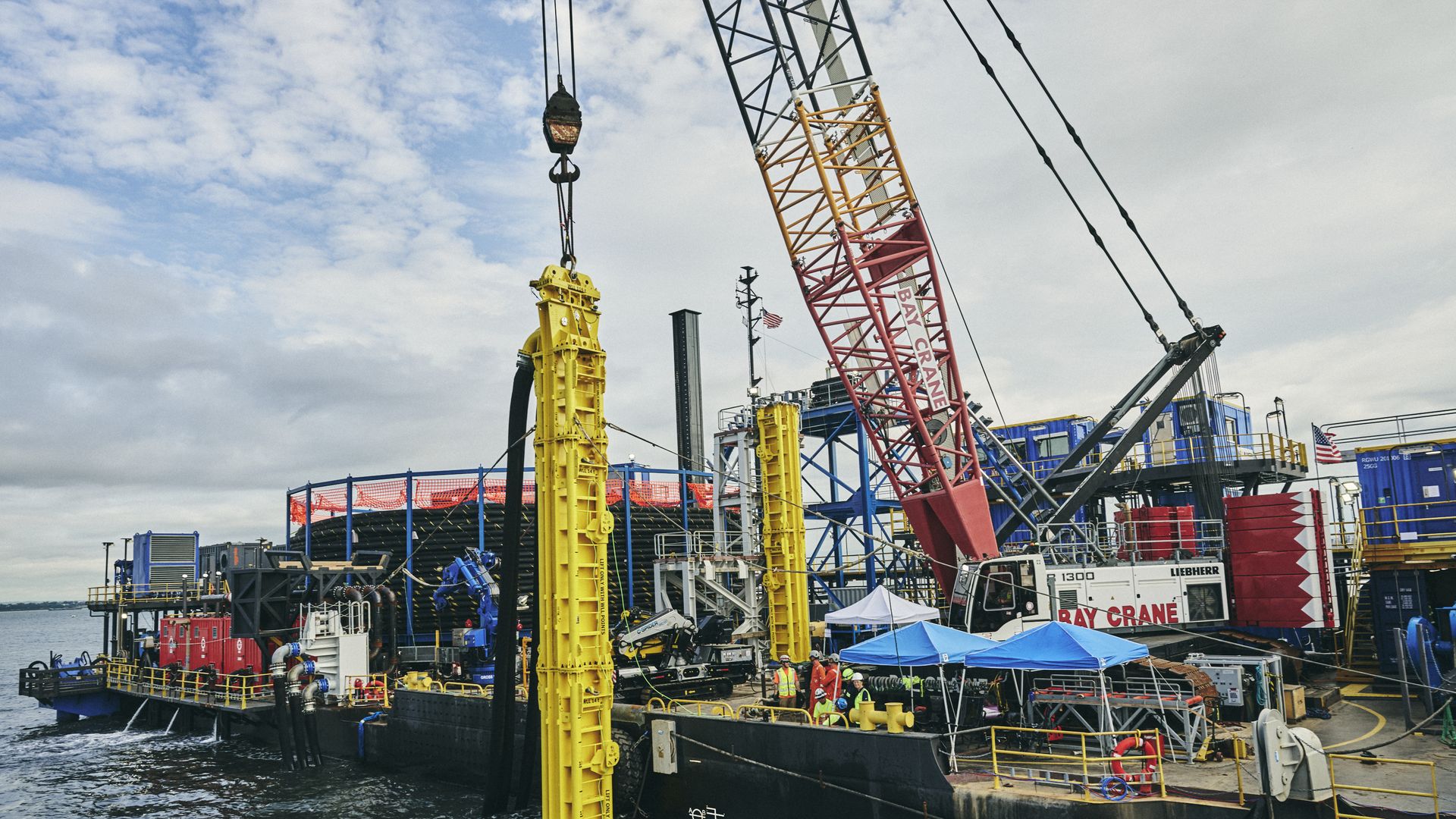
A judge on Thursday handed the Trump administration another setback in its quest to thwart offshore wind projects, granting the Empire Wind project a preliminary injunction allowing construction to resume off New York's coast.
Why it matters: The U.S. offshore wind industry has increasingly — and successfully — looked to the courts to keep its plans on track in the face of President Trump's opposition to the technology.
AI feels like magic — largely because most of us don't understand how it really works.
Why it matters: This story will radically break down the process so this technology — which is becoming as commonplace as the Internet — feels more real and less magical.
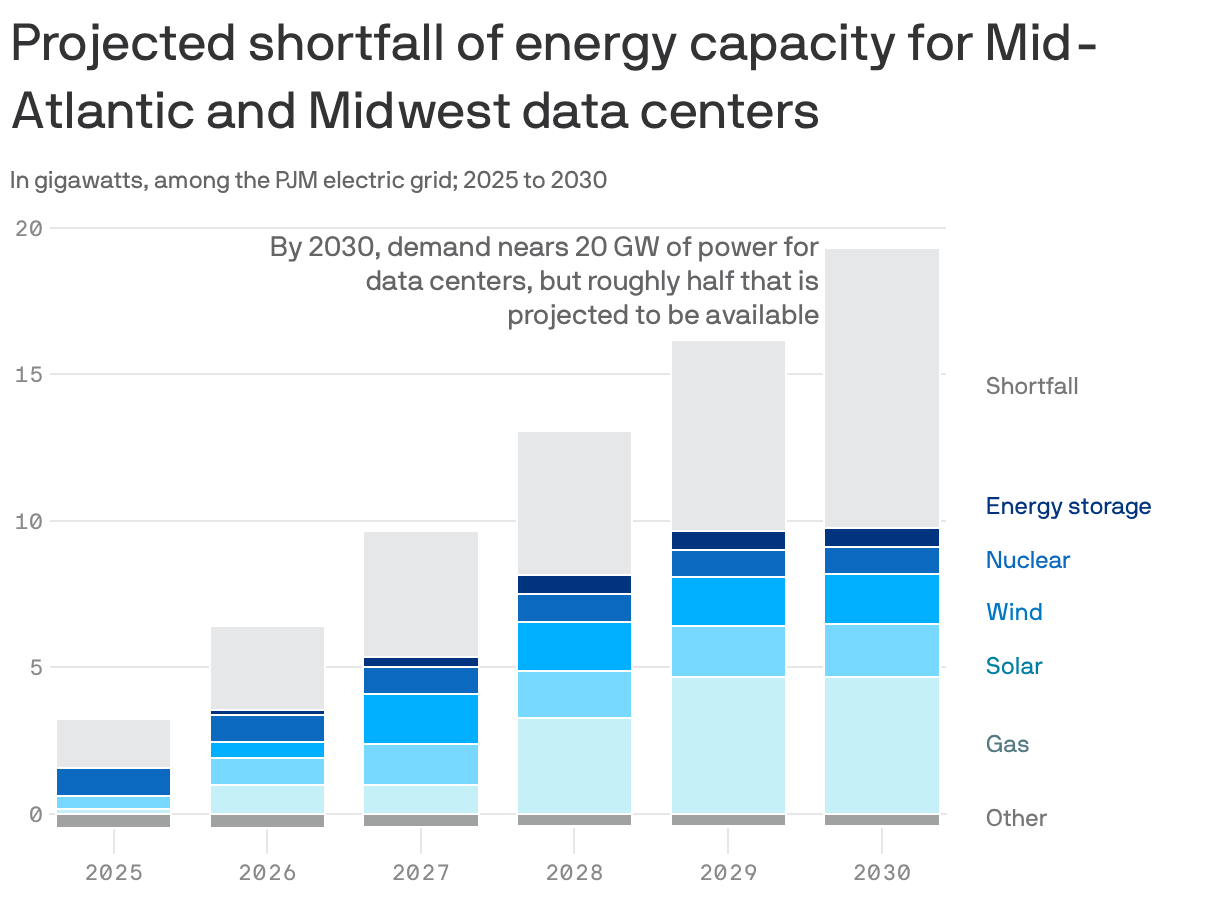
Data: Adapted from BloombergNEF; Chart: Axios Visuals
Natural gas is filling the biggest role fueling electricity for data centers in the Mid-Atlantic and Midwest — the country's AI hotbed — but the region is still staring down a huge shortfall in power.
Why it matters: Society faces the risk of spiking power prices or — worse — no power at all if this gap isn't resolved by either adding more power or fewer data centers.
The world is on the cusp of a generation-defining construction boom, but the U.S. may not have enough workers to make it happen, BlackRock warns in a new paper first seen by Axios.
Why it matters: This is the new fault line of the global economy — soaring demand for some workers and shrinking appetite for others. It could result in widening financial gaps in the coming years.