Hershey is warning of a disappointing Halloween, saying candy sales are lagging — just as trick-or-treaters get ready to hit the streets.
Why it matters: The candy aisle has become ground zero for climate-driven price pressure, and for quiet recipe tweaks as chocolate makers stretch cocoa supplies.
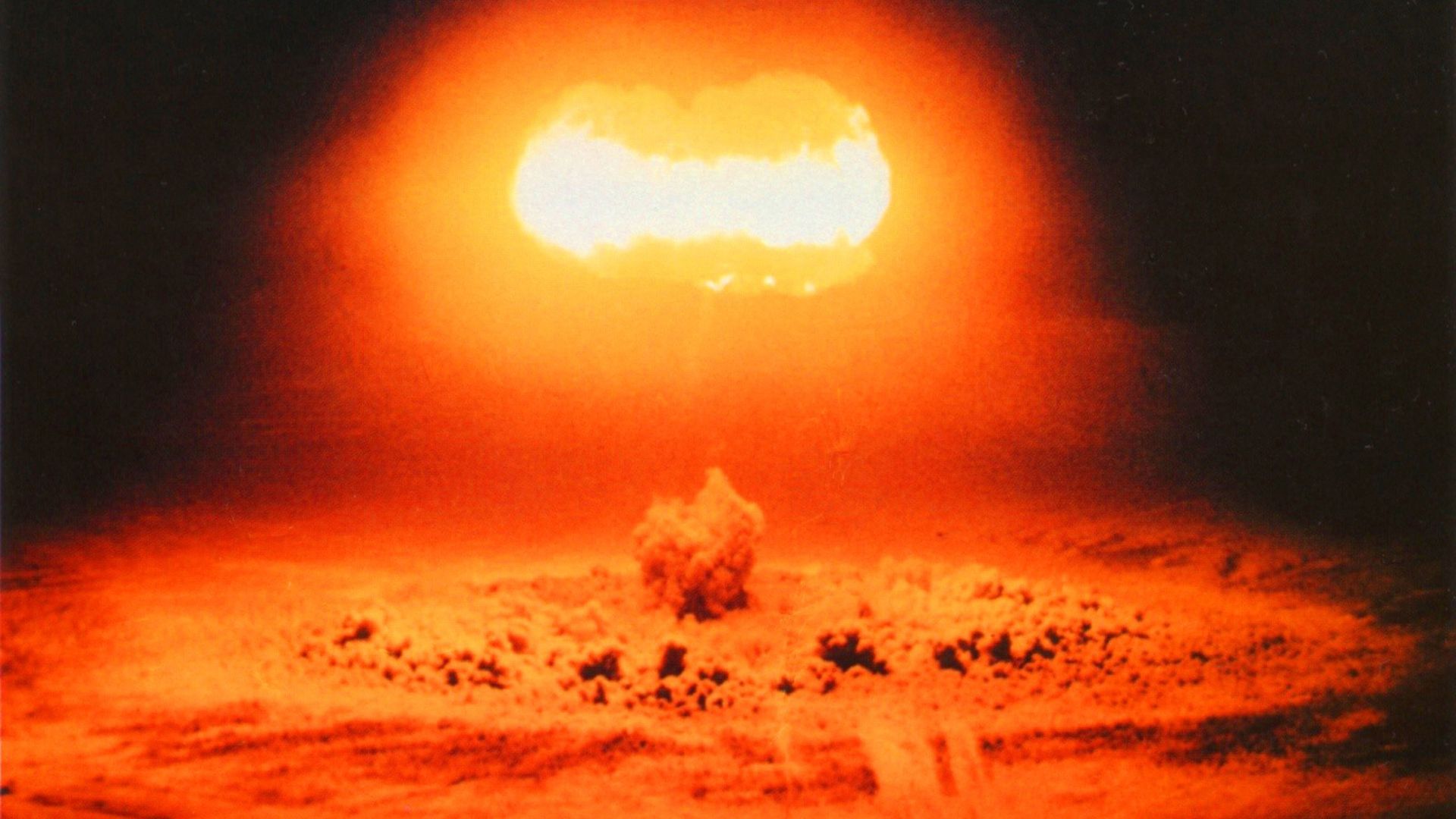
The United States hasn't tested nuclear weapons in three decades — but that might be about to change.
The big picture: President Trump called for renewed nuclear tests on Wednesday, something the U.S. has shied away from because of environmental concerns and escalating global conflicts, according to the Center for Strategic and International Studies.
New York State officials are taking fresh steps toward Gov. Kathy Hochul's goal of developing at least 1 gigawatt of new nuclear power upstate, per announcements shared with Axios ahead of their release.
Why it matters: Nuclear power has growing and cross-aisle momentum, and New York's move follows this week's new U.S.-industry partnership aimed at building $80 billion worth of projects.
Lucid Motors will soon unveil a vehicle-to-home power product, and the luxury EV startup is also talking with third-party dealerships in Europe — a departure from its direct-to-consumer model.
Why it matters: Those steps, shared by interim CEO Marc Winterhoff in an interview, illustrate how Lucid is adapting on the fraught, expensive road from buzzy startup to commercial-scale automaker.
Bill Gates' shift from "doomsday" climate warnings to a focus on improving human lives is triggering sharp reactions from scientists and activists.
Why it matters: As one of the world's most prominent funders of both climate and global health efforts, Gates' positioning influences the political and philanthropic center.
A burger served in one city may be greener than one in another, per a new study on emissions tied to urban meat-eating.
Why it matters: Some cities' meat supply chains involve fewer greenhouse gas emissions compared to those of others, the research finds.
Driving the news: The study, published Oct. 20 in Nature Climate Change, seeks to measure annual greenhouse gas emissions related to beef, pork and chicken consumption (the "carbon hoofprint," as the authors put it) for more than 3,500 U.S. cities based on their specific meat sources.
The researchers used a University of Minnesota-developed model to estimate emissions tied to each city's meat and animal feed supply chain.
They found a "wide range in meat-related emissions," mostly due to "variability in emissions from feed, driven by land-use change, yield differences, differing nitrogen fertilizer application rates and related [nitrous oxide] emissions."
Zoom in: Beef is more emissions-intensive than pork or chicken — it accounts for about 73% of cities' total "hoofprint," per the study, and partially because cows generate lots of methane — but how it's produced matters.
Beef's greenhouse gas intensity "is lower for cities that source higher proportions ... from culled beef and dairy cattle as opposed to feedlots," per the paper, which adds that such beef is more common in "cities near major dairy-producing areas, such as Wisconsin or southern Pennsylvania."
"Conversely, intensity is highest for beef cattle that are fed [greenhouse gas]-intensive feed at facilities with open manure lagoons" — common in Southern Texas, for example.
By the numbers: Among urban areas with at least 250,000 residents, McAllen, Texas (about 1,646); Laredo, Texas (1,626) and Corpus Christi, Texas (1,514) have the most annual per capita meat-related kilograms of carbon dioxide equivalent (kgCO2e), a metric used to measure the climate effects of different greenhouse gases.
Scranton, Penn. (575 kgCO2e per capita); Visalia, Calif. (576) and Milwaukee, Wis. (584) have the least.
What they're saying: The study's goal was to "broaden what people think of as urban sustainability," Benjamin P. Goldstein, lead author and assistant professor at the University of Michigan's School for Environment and Sustainability, tells Axios.
The focus there is often on "buildings and transportation and water and waste," he says. "That makes a lot of sense, because that's what cities have direct control over. But then beyond their borders, the things that cities consume and require also cause environmental change elsewhere."
The idea, he says, was to "link up urban consumption to rural production, and show that there is this interconnectedness, this interlinkaging, between the urban and the rural."
What's next: Swapping out some beef for chicken or pork — plus cutting down on food waste — could help cities slash their meat-related emissions, the authors write.
"Even though our study shows that your hoofprint varies heavily depending on the city you're in and where it sources from, the one consistent thing is that beef is the largest contributor," Goldstein says.
"And shifting from beef to pork or chicken — or heaven forbid, some tofu — can give you some really significant changes in your dietary greenhouse gas emissions."