Why the U.S. stopped testing nuclear bombs

Add Axios as your preferred source to
see more of our stories on Google.
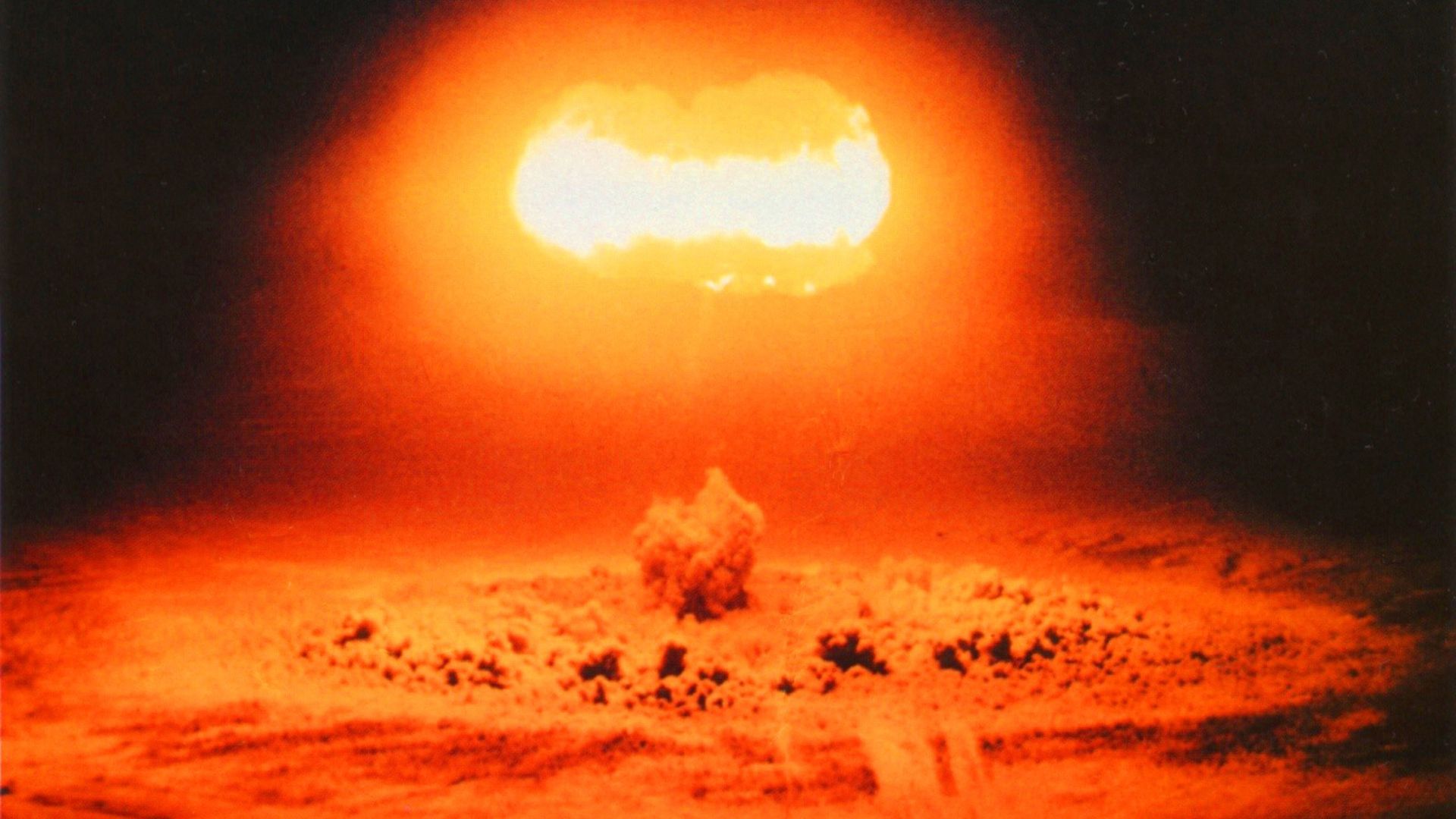
The U.S. detonated a 19-kiloton nuclear device during the Stokes test on Aug. 7, 1957. Photo: Universal History Archive/Getty Images
The United States hasn't tested nuclear weapons in three decades — but that might be about to change.
The big picture: President Trump called for renewed nuclear tests on Wednesday, something the U.S. has shied away from because of environmental concerns and escalating global conflicts, according to the Center for Strategic and International Studies.
- Several countries have tested nuclear weapons since the U.S. changed its course in the early 1990s — and there is some speculation that rival superpowers China and Russia have done so.
- Trump's call for nuclear testing comes amid a renewed emphasis on nuclear capabilities around the world in recent years, with China expanding its nuclear program and arms control between the U.S. and Russia breaking down.
Driving the news: Trump's Wednesday Truth Social post about resuming testing compared the U.S. stockpile of weapons to that of Russia and China.
- "Russia is second, and China is a distant third, but will be even within 5 years. Because of other countries testing programs, I have instructed the Department of War to start testing our Nuclear Weapons on an equal basis. That process will begin immediately," he wrote.
- The post came ahead of Trump's high-stakes meeting with Chinese President Xi Jinping.
Zoom out: Resuming testing would mark a massive shift in U.S. policy, as the country "has observed a voluntary moratorium on nuclear explosive testing since 1992," per the Library of Congress.
Here's why the U.S. and world stopped testing nuclear weapons.
Nuclear tests in the U.S.
By the numbers: The United States conducted 1,054 explosive nuclear tests from 1945 to 1992, per the Library of Congress.
- More than 920 of them were done at the Nevada National Security Site, a historic facility where nuclear tests were conducted for more than four decades.
Experiments date back to the Trinity test on July 16, 1945, in New Mexico, which confirmed that the atomic bomb could conduct nuclear detonation, according to a handbook on nuclear testing from the Department of Defense.
Military's role in nuclear explosive testing
The military played a large role in the testing of nuclear weapons for decades, though it wasn't solely through the Department of Defense, as Trump suggested on Wednesday.
- A division of labor and how tests were done and recorded was created in 1962.
- The Atomic Energy Commission — which is now the National Nuclear Security Administration and Department of Energy — would handle development and testing.
- The Defense Atomic Support Agency — which later became Defense Nuclear Agency and then the Defense Threat Reduction Agency — would build testing facilities and integrate results into documentation.
Why the U.S. stopped nuclear testing
The United States conducted several above-ground tests throughout the 1950s as tensions escalated with the Soviet Union.
- President Eisenhower announced a pause in testing in 1958, with the understanding that the Soviet Union would also halt its tests, according to the Defense Department's handbook.
- The Soviet Union began testing again in 1961, so the U.S. did, too.
Zoom in: In 1963, the U.S., the United Kingdom and the Soviet Union signed the Partial Nuclear Test Ban Treaty to stop nuclear tests in the atmosphere, outer space and underwater.
- The decision was made over environmental concerns and the fallout of the Cuban Missile Crisis, per the CSIS.
- The Threshold Test Ban Treaty in 1974 limited the yield of underground testing to below 150 kilotons.
- In 1992, Congress passed a resolution that prohibited the U.S. from conducting underground nuclear tests unless a foreign state did so, leading to the current moratorium.
Of note: The 1997 Comprehensive Test Ban Treaty sought to ban all nuclear testing worldwide, and it proved largely successful even though it was not universally ratified.
- President Clinton signed the CTBT and sent it to Congress for ratification. But the Senate rejected it, citing national security concerns.
Nuclear testing around the world
As of August 2025, 187 state parties have signed the CTBT, with 178 having ratified it.
- For it to be enforced, the treaty would need ratification by 44 countries — only 35 of which have ratified.
- Three of the 44 countries (India, North Korea and Pakistan) have not signed and five of them (China, Egypt, Iran, Israel and the U.S.) have not ratified.
- Russia rescined its ratification of the CTBT in 2023.
Friction point: Pakistan, India and North Korea have all conducted explosive nuclear tests since the treaty was established.
What the U.S. does instead
Even without testing, the president still has to prove to Congress every year that the country can maintain a safe and effective nuclear deterrent, Frank Rose, the former NNSA deputy under President Biden, told Axios.
- "And for every year since the late 1990s, they've been able to do that," Rose said. "Why? Because we have a science-based stockpile stewardship program, which includes experiments, simulations, and other things that ensure that we can maintain the weapons without testing."
- "Indeed, because of that program, we actually understand more about how weapons work now than we did at the height of testing."
Both the Department of Energy and NNSA recently reaffirmed that the U.S. has "no technical reasons" to conduct nuclear tests.
- Trump floated the idea during his first term, but he didn't conduct any tests — nor did President Biden during his tenure.
Why the U.S. could test nukes now
Trump's call for nuclear testing came hours ahead of his meeting with President Xi, and seemed to imply the U.S. was acting in the same light as Russia and China.
- A 2021 report from the State Department indicated that the U.S. cannot rule out the possibility that China and Russia are conducting nuclear tests.
- Satellite imagery suggests there was activity at China's Lop Nor test site between 2020 and 2024.
- Reports from the Department of State and the Defense Intelligence Agency alleged that Russia might be skirting the moratorium.
- However, the only country known to have conducted full-scale nuclear testing in recent years is North Korea.
Colin Demarest contributed to this report.
More from Axios:
White House plan would provide huge boost for nuclear power
A new nuke wave washes over the world
Trump's nuclear dilemma: "Greatest threat" is getting bigger
