WovenEarth Ventures has closed its first fund at $152 million, the firm tells Axios exclusively.
Why it matters: The growing climate tech sector is seeing burgeoning interest, and it's creating an opportunity for funds-of-funds like WovenEarth to tap into a rich vein of institutional investors.
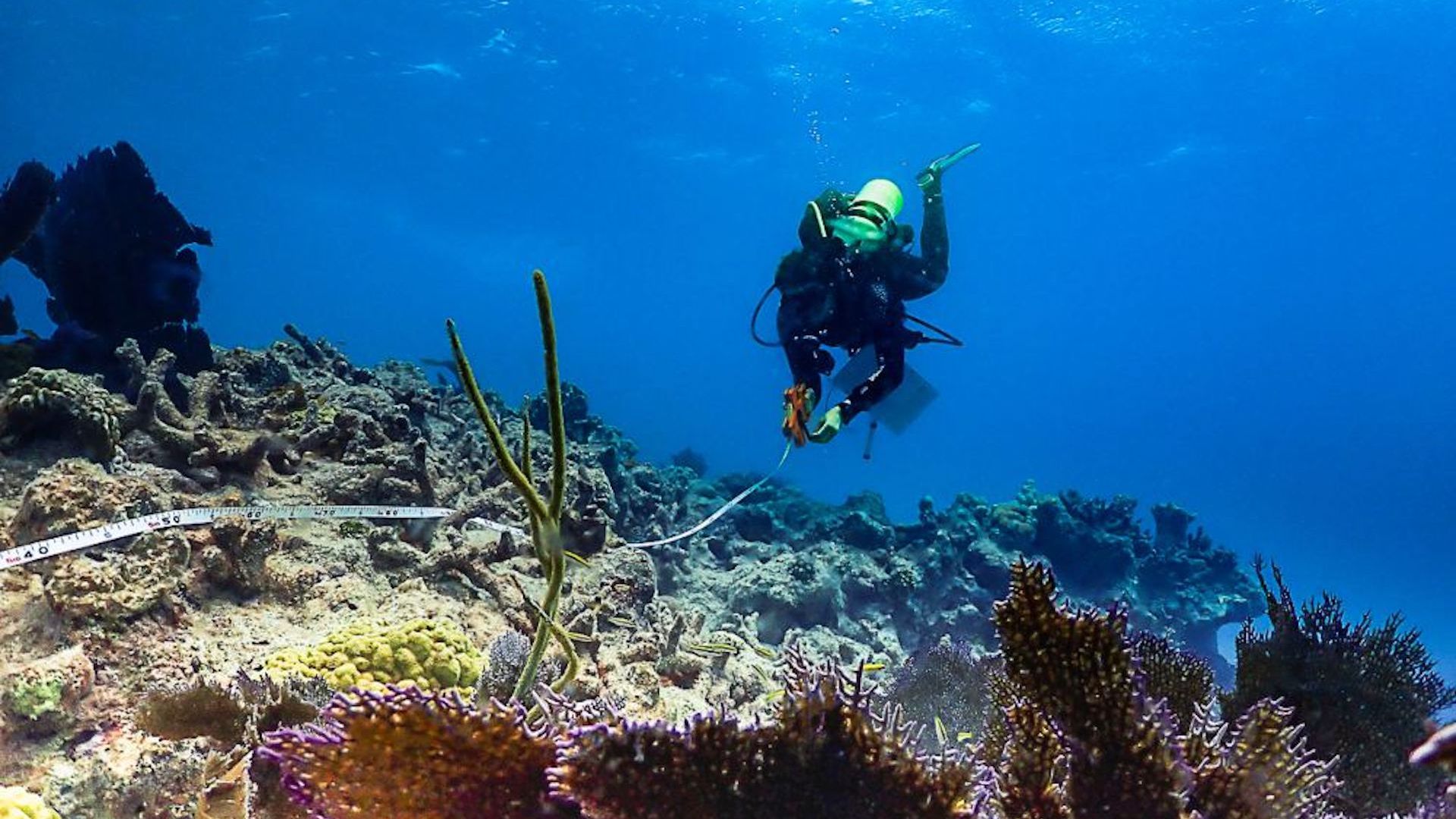
Why it matters: Corals are havens for biodiversity, providing shelter for over 25% of ocean animals, and they are major drivers of fishing and tourism revenue. Increasingly, climate change is threatening their viability.
The details: The preliminary results show that less than 22% of the approximately 1,500 staghorn coral surveyed are still alive.
Of the five reefs surveyed by NOAA's Mission: Iconic Reefs program and the Mote Marine Laboratory and Aquarium, only the two most northern ones, Carysfort Reef and Horseshoe Reef, had any living staghorn coral.
And of those surveyed, live elkhorn coral was only found at three sites.
No living staghorn or elkhorn corals were found at sample areas surveyed at Looe Key Reef, located in the lower Florida Keys, NOAA stated in a release.
How it works: Warm water corals mainly thrive in a narrow temperature range.
When water is too warm, they expel algae that lives in their tissues, which causes them to turn white (an event known as coral bleaching.)
Bleached corals are more susceptible to further heat stress, including eventual mortality if the extreme temperatures continue.
By the numbers: The coral mortality seen as a result of last year's marine heat wave — which came on earlier — was more severe and lasted longer than usual for this region.
According to Katey Lesneski, the monitoring coordinator for NOAA's Mission: Iconic Reefs program, the roughly 30,000 staghorn coral outplants at these five reefs (planted between 2020 and 2022) had one-year survival rates from an average of 40% to over 75%.
Yes, but: Scientists have not yet completed their surveys, including reefs where other coral species may have fared better.
Between the lines: During the past year,scientists at NOAA, Mote, universities and other institutions went to extraordinary lengths to save corals and avoid seeing hard-won conservation gains completely wiped out in the Keys.
This included removing in-watery nursery corals from the hot seas, placing them in nurseries on land, and then re-planting them once water temperatures cooled.
Coral evacuations such as this are an extreme conservation measure that may not be viable over the long term, particularly if marine heat stress becomes increasingly common, severe and long-lasting, as climate projections show.
The intrigue: Scientists with NOAA's Coral Reef Watch program, which monitors and warns of marine heat waves worldwide, recently added three new alert categories and colors as a direct response to the 2023 marine heat waves seen around the world.
The new categories include a Bleaching Alert Level 5, which corresponds to a risk of "near complete mortality."
Last year was a particularly severe year for marine heat waves around the world. The combination of long-term, human-caused climate change and the El Niño climate cycle has contributed to record-high ocean heat content worldwide.
According to NOAA, the cumulative heat stress on corals in the Florida Keys during 2023 was nearly three times the previous record.
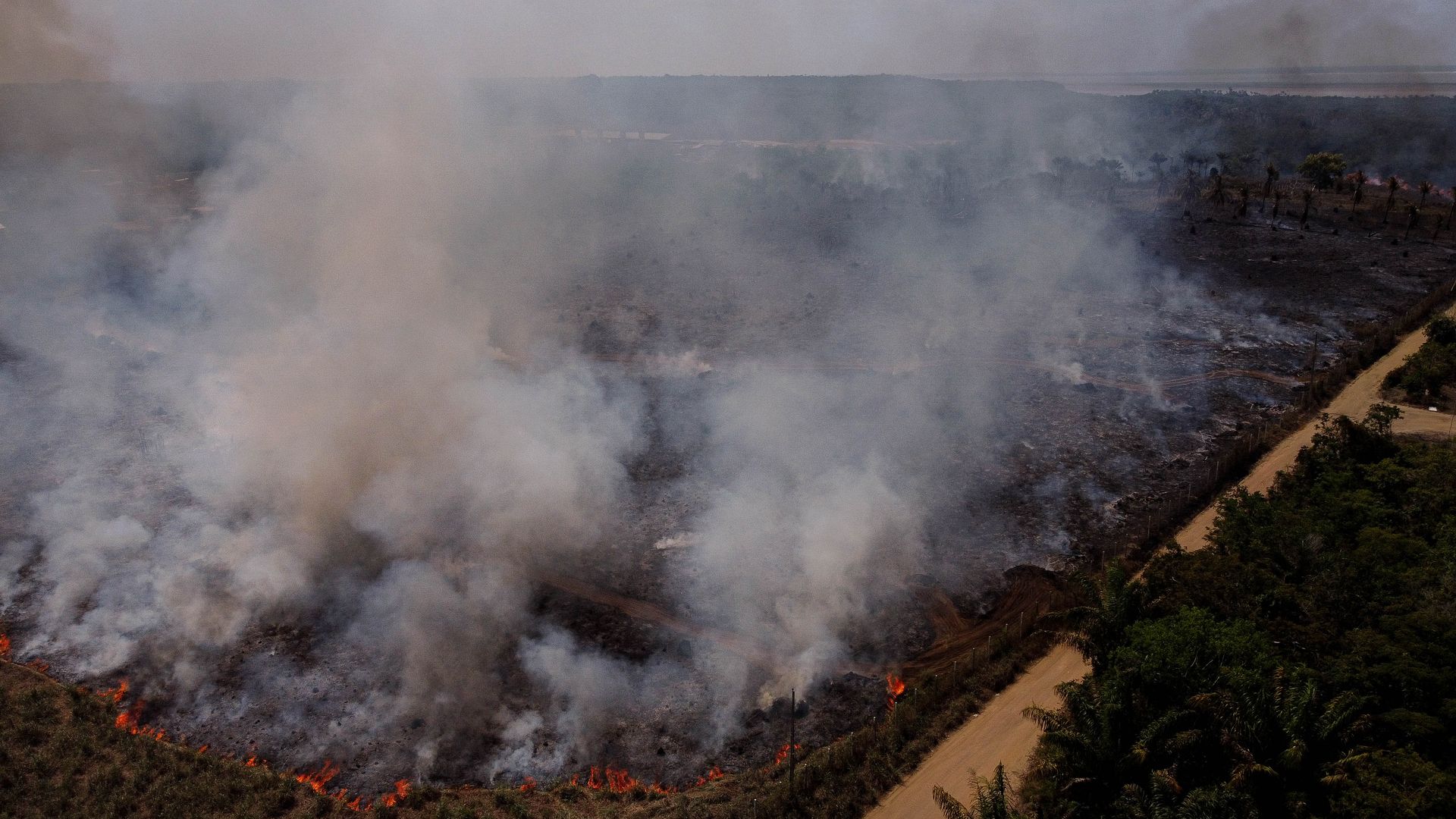
As much as half of the Amazon rainforest may cross tipping points as soon as 2050, beyond which those areas would no longer support such an abundance of life and buffer Earth from climate change, a new study shows.
Why it matters: The Amazon is home to more than 10% of Earth's biodiversity and holds up to 20 years' worth of global carbon dioxide emissions.
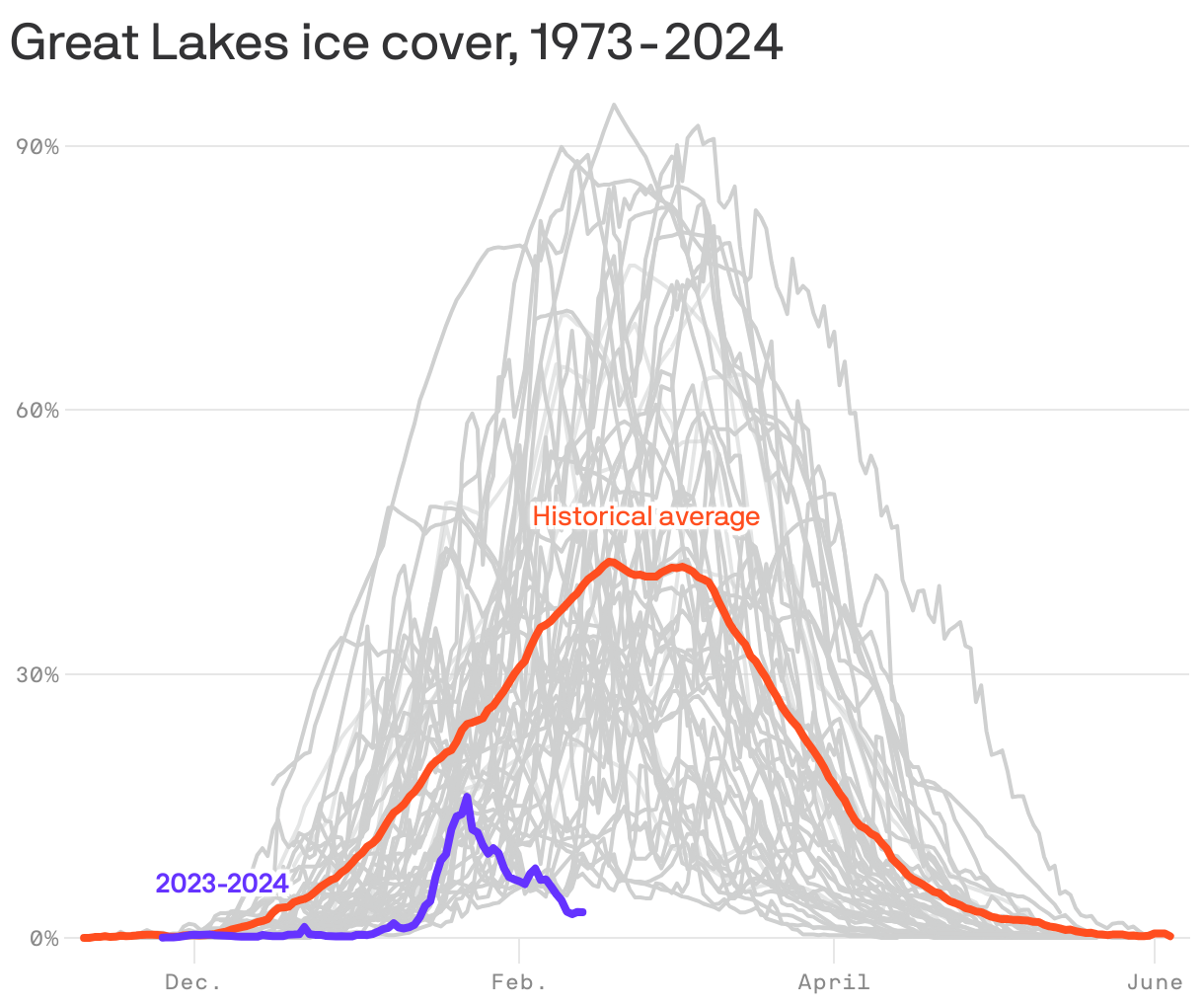
Great Lakes ice cover is at a record low for mid-February, after starting out the same way early in the season.
The big picture: The absence of ice this winter coincides with record warm temperatures and a "lost winter" that residents of the Great Lakes states and Midwest have experienced.