Thursday's energy & climate stories

“Unprecedented” coral disease relief

Scientists have discovered a new tool to add to their arsenal in treating and preventing a disease that has wreaked havoc on Florida’s coral reefs for years, according to new research.
Why it matters: Stony coral tissue loss disease, or SCTLD, is a fast-acting, deadly plague-like affliction that has long confounded researchers at authorities like NOAA — even as it spreads throughout the wider Caribbean, threatening local economy and livelihoods.

“Extrapolations” is a climate change cautionary tale

"Extrapolations," a new, star-studded Apple TV+ series, depicts humanity’s future under ever-worsening — yet largely realistic — climate change scenarios in strikingly ambitious ways.
Why it matters: The series is arguably the most far-reaching and experimental portrayal of climate change yet attempted. It sputters in some respects, with characters weaving in and out of episodes in sometimes confusing arcs.
- But it is startlingly well-grounded in climate science, and specifically references likely consequences of higher emissions scenarios from U.N. Intergovernmental Panel on Climate Change reports.
Driving the news: Creator, producer and writer Scott Z. Burns told Axios in an interview that the show explores the “messy middle” of the climate story.
- Now available for streaming, "Extrapolations" is not an end-of-days, apocalyptic disaster series, where nothing can yet be done to rein in global warming.
- Rather, it examines timeframes in which humans still have some agency to shift course on greenhouse gas emissions.
In just the first episode, you’ll find a U.N. climate summit taking place, as well as a detailed discussion of China’s observer status in the Arctic Council.
- For climate professionals, it may be a show that stays with you long after it is finished, be it a rabbi struggling to save his congregation’s place of worship in a sinking Miami; or a frighteningly realistic rogue geo-engineering (featuring Edward Norton).
Zoom in: Burns, known for producing Al Gore’s “An Inconvenient Truth” and serving as a writer on “The Report” as well as “Contagion,” said he was most heavily influenced by an essay by Amitav Ghosh called the “Great derangement.”
- He also consulted with Gore, along with climate activist and writer Bill McKibben, former NASA climate scientist James Hansen, among others.
- Burns aimed to tell the story of climate change at different time periods and from different perspectives, reflecting the fact that its effects vary widely depending on one’s economic circumstances, race and class status. In this way, the show shines a spotlight on climate justice.
What he's saying: “I was really interested in the kinds of stories that were going to occur in the messy middle, not the post apocalyptic moment, not in the final analysis, but in the human sized increments that a person might experience, that a couple might experience that a child and a parent might experience,” Burns said.
- Co-producer and writer Dorothy Fortenberry said she and Burns made an effort to tell stories during the time period when decisions made by characters near the beginning of the show continued to have ramifications near the end, which is in line with climate science findings.
Between the lines: Both Burns and Fortenberry told Axios they hope that this show will inspire other creators in Hollywood to tackle climate change on film and television.
- “This is one show, this is one way to do this,” Burns said. “I hope that we put a little crack in our industry, and other people will pry it apart further.”
The bottom line: You may find the dialogue in this show lingering in your head as you process it, especially if you work in the climate space.
- This line, in particular, has stuck with me: “You know the problem has never been technology. The problem is us, always has been."

Family SUVs are finally going electric

Kia's newest model, making its North American debut at this week's New York International Auto Show, is a spacious and sleek three-row SUV, with an innovative interior and loads of technology to satisfy busy families.
- Oh, and by the way — it's electric.
Why it matters: The Kia EV9, set to go on sale by the end of 2023, represents a new phase in the accelerating shift to electric vehicles (EVs).

Hawaii weighs tourism fee amid worsening environmental damage
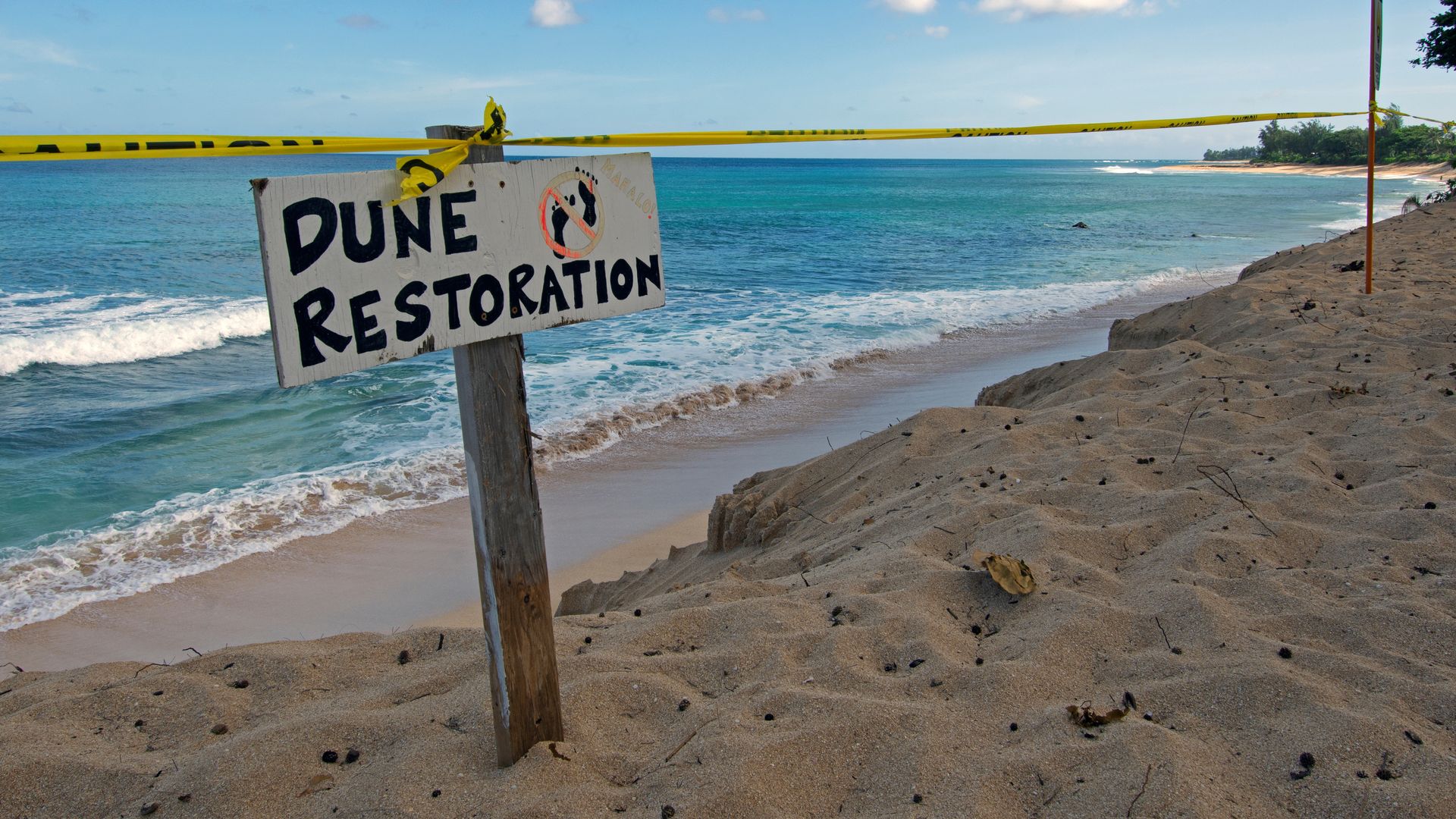
Hawaii could soon require tourists to pay a fee to visit state parks and trails under a bill moving through the state legislature.
Why it matters: Tourism has significantly exacerbated environmental damage to the islands, which already suffer outsized climate change effects. Locals have increasingly voiced frustration over the years amid reports of visitors harassing wild animals, hurting coral reefs and leaving behind plastic waste.

Exxon climate boss sees a multi-trillion-dollar market
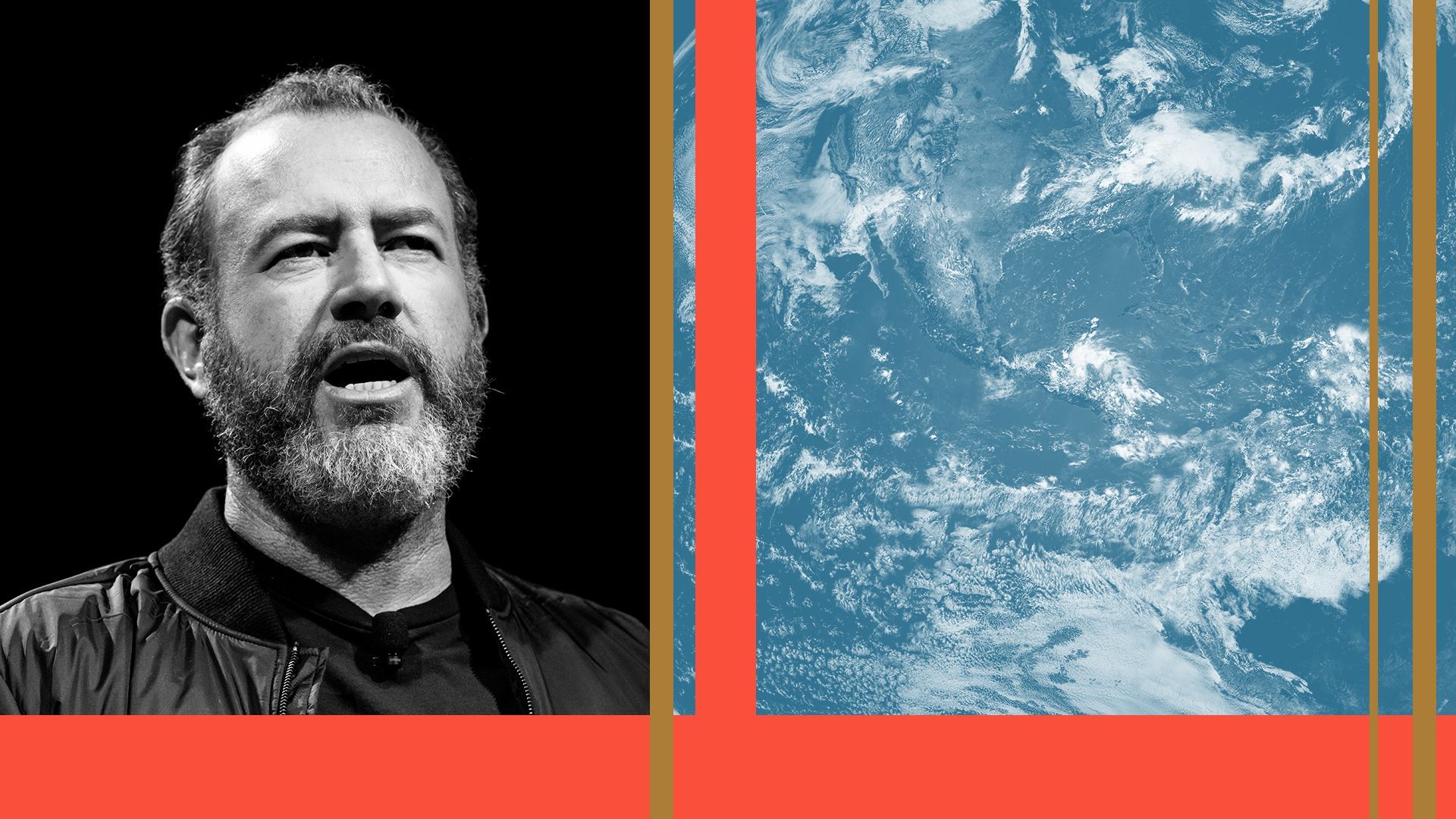
The head of Exxon's low-carbon business has a response to critics who say the oil behemoth isn't putting enough resources into climate-friendly projects: money isn't what matters most right now.
What he's saying: "The limiting factor, at this stage, in terms of the ability to scale up this business ... is not the availability of capital," Dan Ammann said in an interview with Axios.
Tesla's dominance fades as EV adoption grows
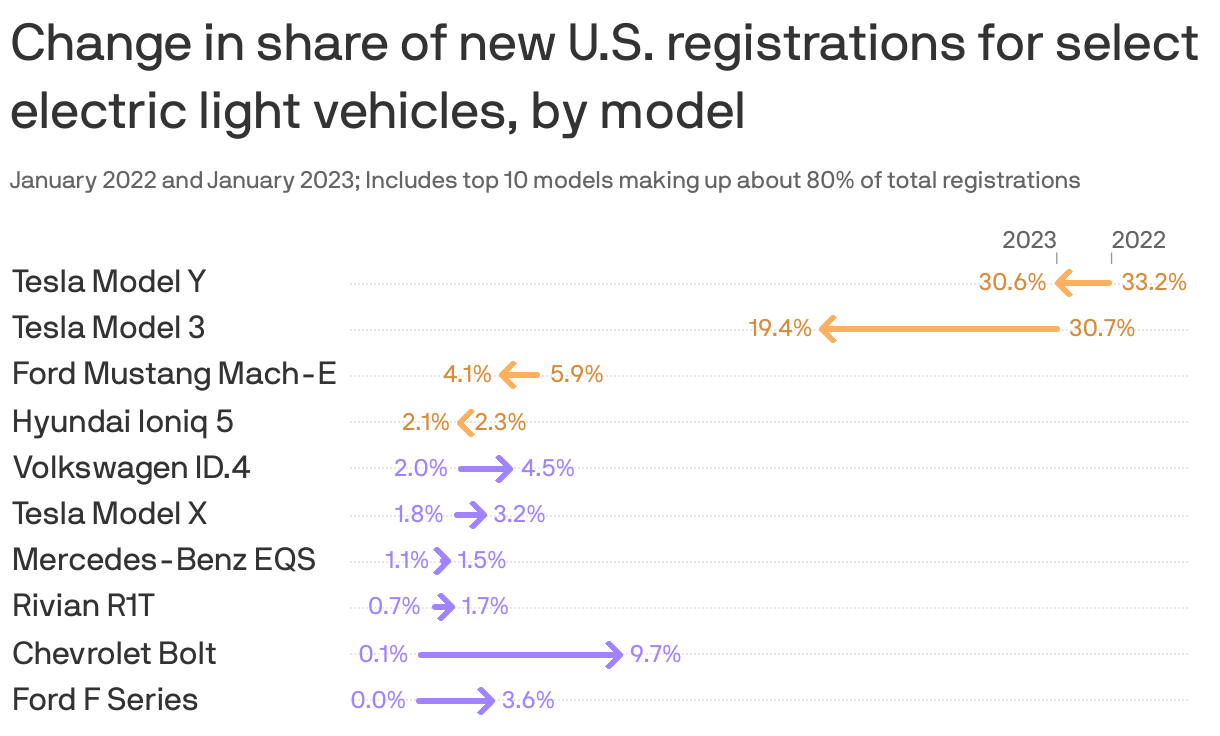
Electric vehicles (EVs) accounted for 7% of new vehicle registrations in the U.S. in January, up from 4.1% in January 2022 — another sign that the EV transition is gaining momentum.
- As the overall EV pie grows, Tesla's market share continues to shrink.