Adapted from an EPIC and Rhodium Group report; Chart: Axios Visuals
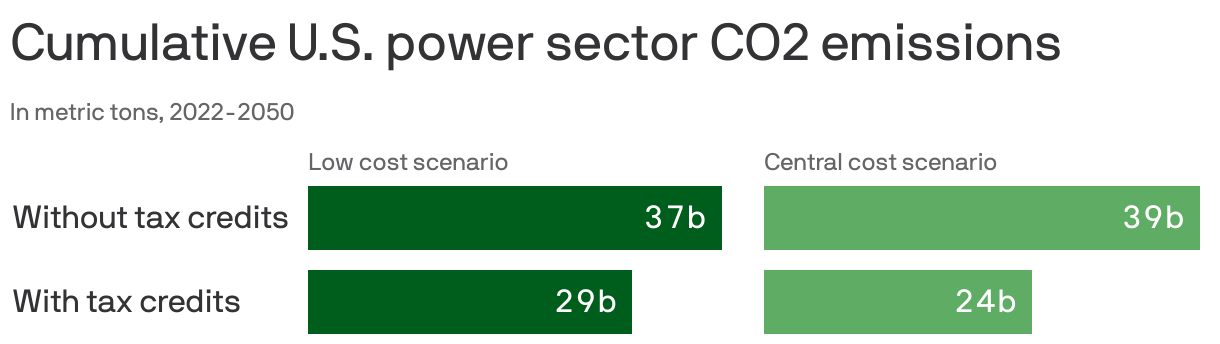
New and extended clean energy tax subsidies in the stalled Build Back Better legislation would slash power sector emissions and provide big net benefits, a new analysis argues.
Driving the news: The University of Chicago's Energy Policy Institute and the Rhodium Group modeled the House-approved version under two tech cost scenarios and three estimates of the social cost of carbon.
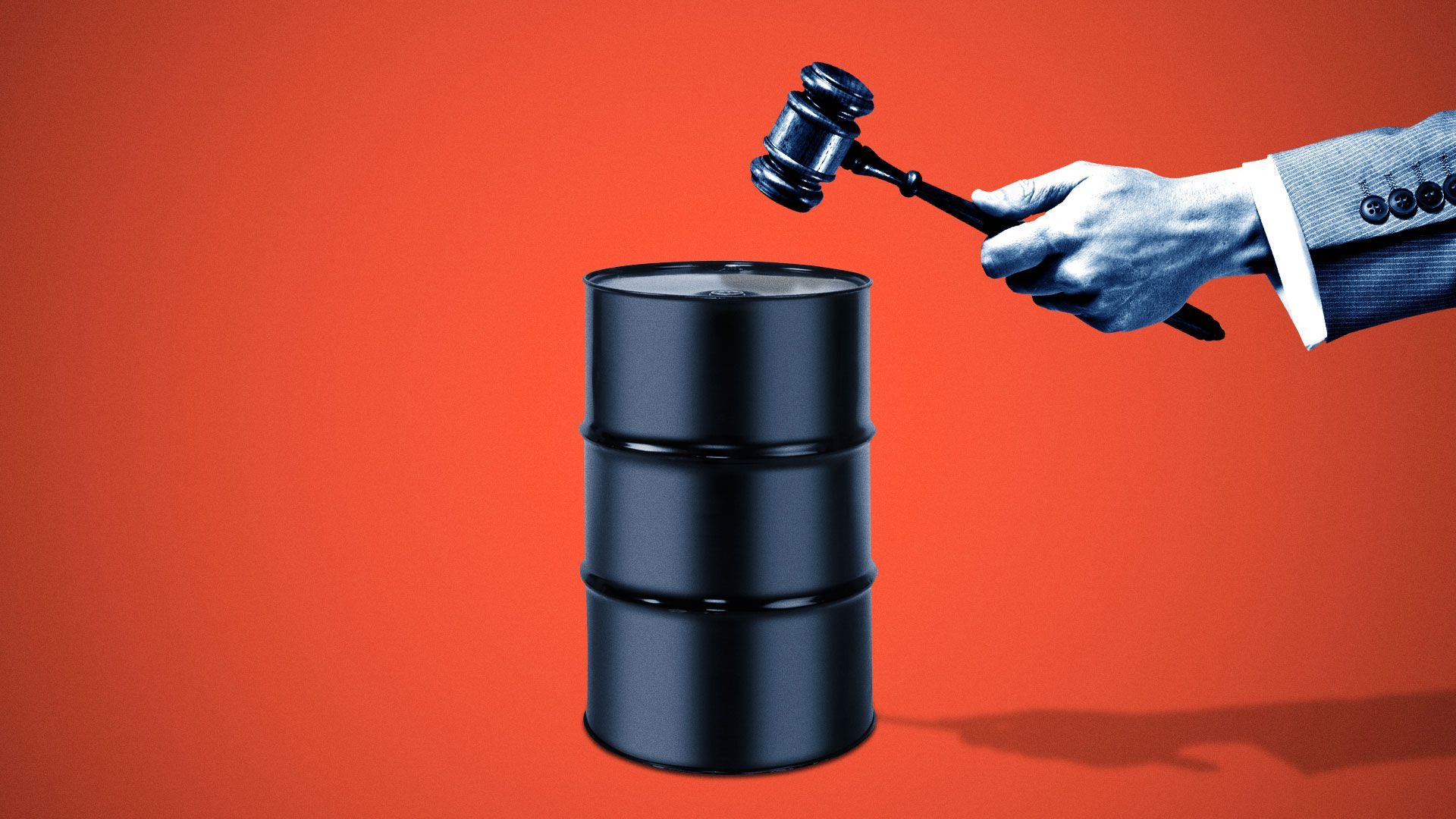
There are two important developments this week in closely-watched litigation at the intersection of climate change and the oil industry.
Driving the news, part 1: The U.S. Court of Appeals for the 10th Circuit ruled Tuesday that Boulder county and city officials' litigation against two oil giants belongs back in state court.
Watershed, a startup that helps companies analyze their emissions and find projects to cut them, raised $70 million in Series B funding from VC heavyweights.
Driving the news: Sequoia and Kleiner Perkins led the funding round for San Francisco-based Watershed, which claims a valuation of $1 billion. Clients include Sweetgreen, Twitter, Airbnb and DoorDash.
An autonomous truck startup called Waabi has developed what it calls "the ultimate school for self-driving vehicles" — one that requires humans to spend less time tutoring them on actual roads.
Why it matters: The more that autonomous vehicles learn to drive in the virtual world, the less time they need to practice on physical streets, which could be a safer, faster way to bring them to market.
President Biden isn't just about to lose the window for Democrats to pass legislation to reduce greenhouse gas emissions. He could also lose a president's best backup leverage: the ability to cut them through executive and regulatory actions.
Why it matters: The Biden administration may soon find itself hamstrung by unfavorable court rulings, including West Virginia v. EPA, a Supreme Court case scheduled for oral arguments on Feb. 28 that could curtail the EPA's ability to regulate greenhouse gases under the Clean Air Act.
The U.S. Army released its first climate strategy on Tuesday, outlining plans to cut its greenhouse gas pollution in half by 2030 and achieve net-zero greenhouse gas emissions by 2050.
Why it matters: A 2019 report from Brown University estimated that the U.S. military has emitted 1,212 million metric tons of greenhouse gases since 2001. In 2017 alone, its emissions totaled 59 million tons, more than many industrialized nations.
kWh, a company that tailors insurance policies for renewable energy installations such as wind and solar facilities, has raised $20 million in a Series B round, the company announced Tuesday morning.
Driving the news: The company says it will use the money to help rapidly scale up renewable energy facilities by helping developers gain access to capital.
Quaise Energy, a company with experimental tech to access hugely energy-dense geothermal resources 6 to 12 miles below Earth's surface, this morning announced $40 million in Series A funding.
Driving the news: Safar Partners, Prelude Ventures, Fine Structure Ventures, The Engine and others are backing the Cambridge, Massachusetts startup, which spun out of MIT in 2018.
The resignation Monday night of White House science adviser Eric Lander means the administration is losing its highest-ranking climate science official.
Why it matters: Lander has turned the White House Office of Science and Technology Policy (OSTP) into a new power center within the government for climate and energy research and policy.