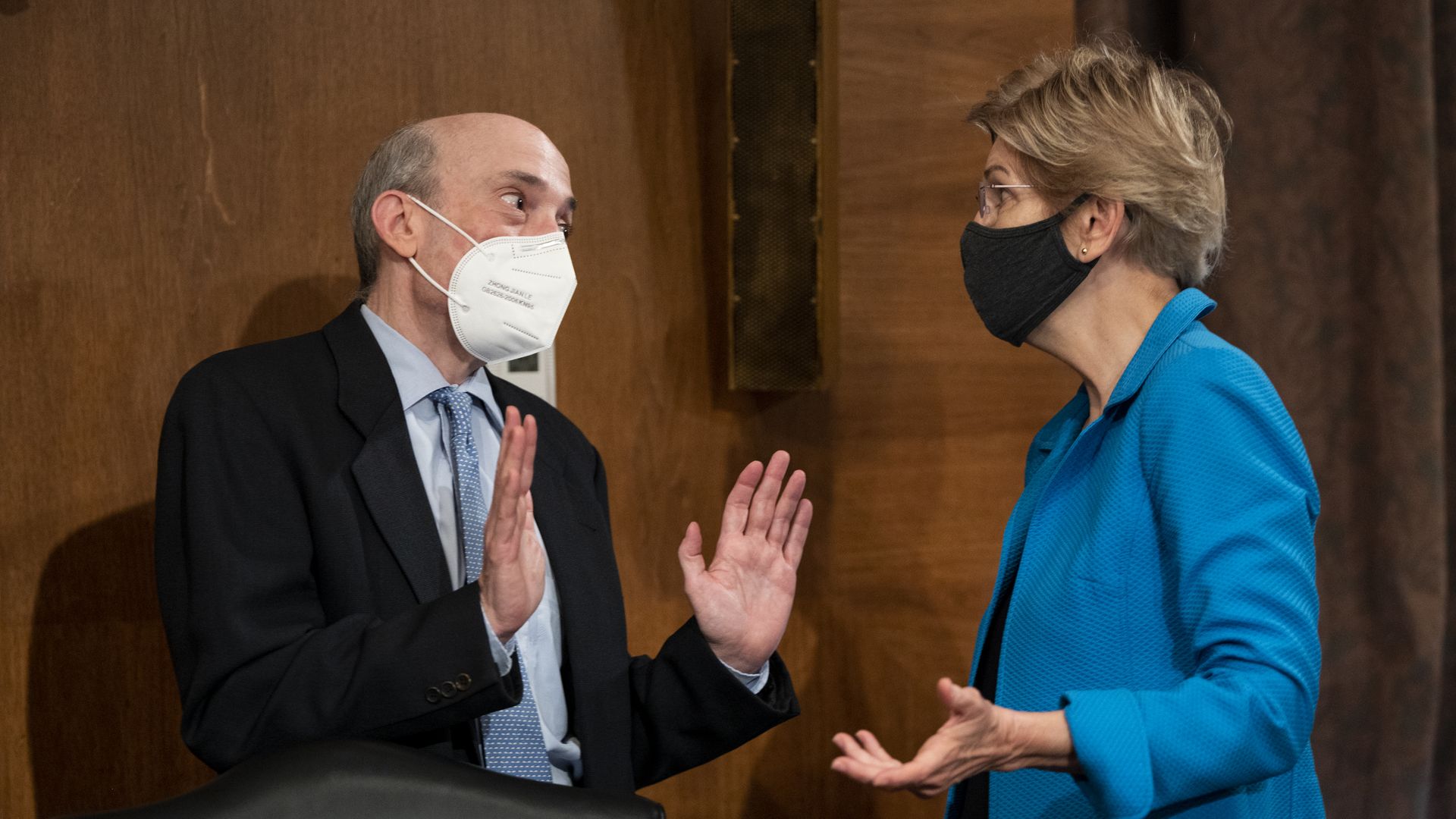
Sen. Elizabeth Warren (D-Mass.) is pressing the Securities and Exchange Commission to propose regulations that would force public companies to disclose climate-related risks and data.
Driving the news: Warren, in a new letter to SEC chairman Gary Gensler, criticizes "unacceptable" delays in the rules.
A startup using artificial intelligence to locate critical materials like cobalt and nickel needed for electric vehicle batteries just brought in almost $200 million.
Driving the news: KoBold Metals, based in Berkeley, California, raised $192.5 million in Series B funding led by T. Rowe Price Associates and joined by prominent investors and companies.
An extraordinary example of weather whiplash is under way in California, where one of the state’s wettest months of December was followed by a bone-dry January into the first part of February.
Why it matters: The state entered the wet season with extraordinary precipitation deficits from a multi-year "mega-drought," and a dry winter could result in severe water restrictions and another devastating fire season.
A federal judge on Thursday restored federal protections for gray wolves in several parts of the U.S. in a win for wildlife advocates that feared for the wolves' viability.
Why it matters: The Trump administration had removed the protections, claiming the species did not need them anymore since they were no longer subject to active eradication. Wildlife advocacy groups sued, however, arguing that the move left wolves vulnerable to hunters, among other concerns.
The Tennessee Valley Authority board of directors voted 5-0 on Thursday to spend up to $200 million to prepare for the potential construction of a nuclear-powered small modular reactor (SMR) designed by GE Hitachi.
Why it matters: The approval is the latest sign of rapidly accelerating momentum for advanced nuclear energy companies and projects.
A new initiative led by Microsoft and the ClimateWorks Foundation aims to improve methods for tracking how much greenhouse gases companies and countries are emitting.
Why it matters: Corporate leaders and policymakers are realizing that current carbon accounting and reporting methods may be missing huge amounts of emissions.
TotalEnergies said on Thursday it's buying SunPower's commercial and industrial solar business for $250 million as the France-based multinational oil giant expands its U.S solar portfolio.
Why it matters: European oil majors are increasingly moving into renewables, EV charging and other areas outside their core fossil fuel businesses.
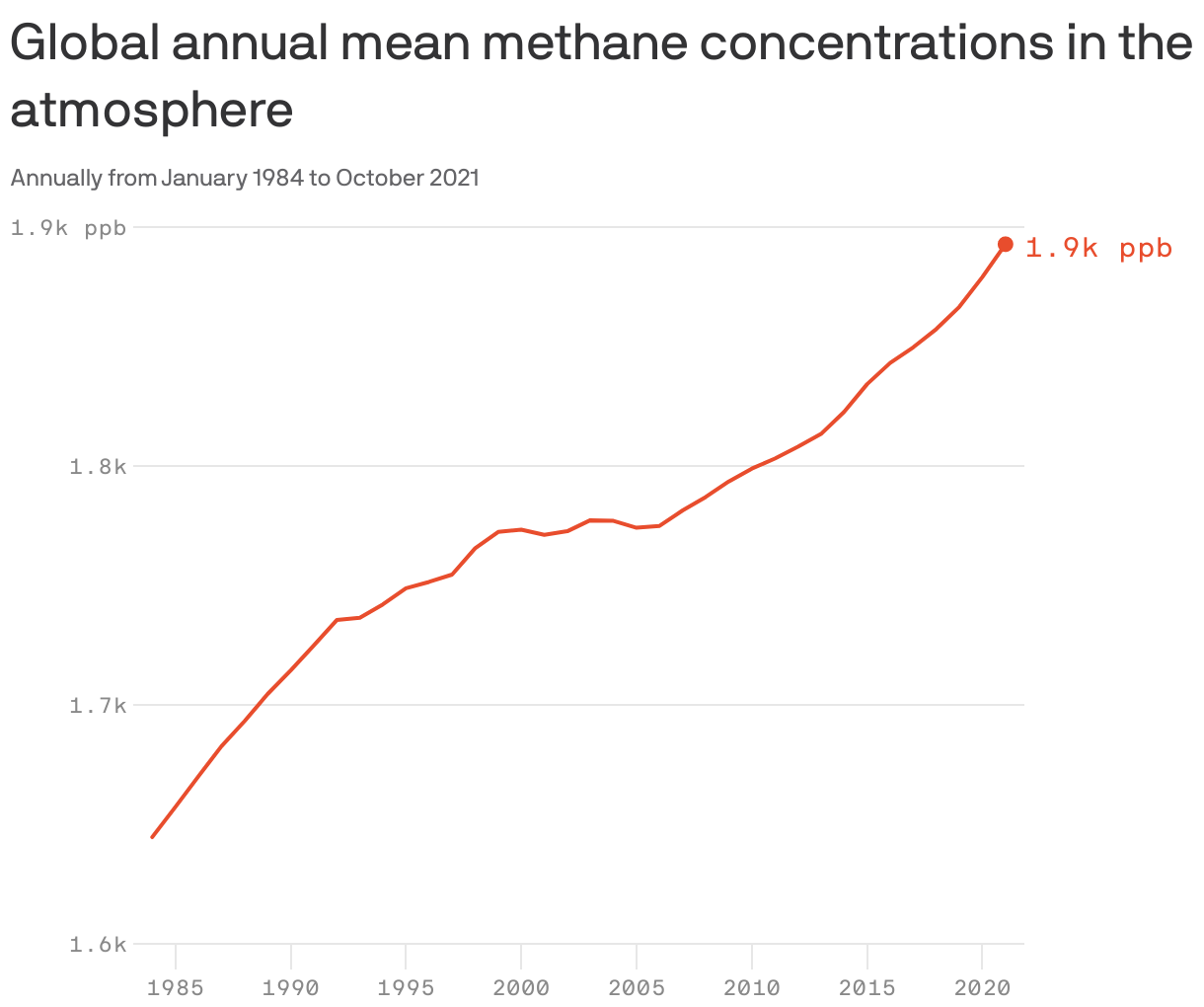
Data: NOAA Global Monitoring Laboratory; Chart: Baidi Wang/Axios
An increase in atmospheric methane concentrations has been occurring at a quickening pace since 2007, alarming some scientists.
Why it matters: Methane is a more powerful greenhouse gas than carbon dioxide, but with a far shorter atmospheric lifespan. Policymakers have embarked on a drive to cut methane emissions as a way to tackle near-term warming.
The Biden administration is throwing open the doors for states to begin tapping $5 billion over five years from the bipartisan infrastructure law to expand electric vehicle charging on the nation's highways.
Why it matters: Transportation is the nation's largest source of carbon emissions. Charging growth is key to helping EVs move from a small — albeit growing — share of sales into becoming rivals for gas-powered cars and eventually replacing them in the market.