The Tennessee Valley Authority board of directors voted 5-0 on Thursday to spend up to $200 million to prepare for the potential construction of a nuclear-powered small modular reactor (SMR) designed by GE Hitachi.
Why it matters: The approval is the latest sign of rapidly accelerating momentum for advanced nuclear energy companies and projects.
A new initiative led by Microsoft and the ClimateWorks Foundation aims to improve methods for tracking how much greenhouse gases companies and countries are emitting.
Why it matters: Corporate leaders and policymakers are realizing that current carbon accounting and reporting methods may be missing huge amounts of emissions.
TotalEnergies said on Thursday it's buying SunPower's commercial and industrial solar business for $250 million as the France-based multinational oil giant expands its U.S solar portfolio.
Why it matters: European oil majors are increasingly moving into renewables, EV charging and other areas outside their core fossil fuel businesses.
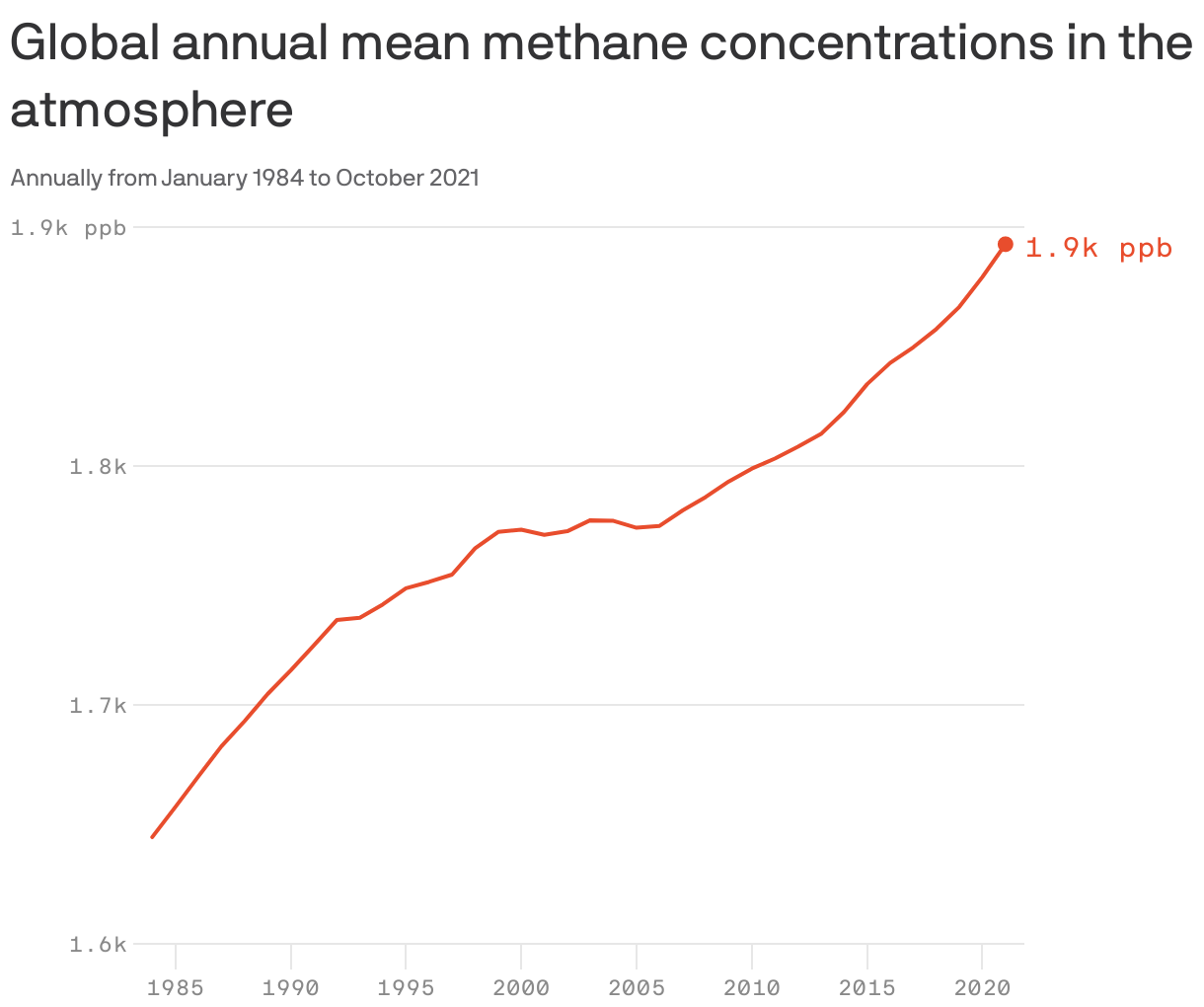
Data: NOAA Global Monitoring Laboratory; Chart: Baidi Wang/Axios
An increase in atmospheric methane concentrations has been occurring at a quickening pace since 2007, alarming some scientists.
Why it matters: Methane is a more powerful greenhouse gas than carbon dioxide, but with a far shorter atmospheric lifespan. Policymakers have embarked on a drive to cut methane emissions as a way to tackle near-term warming.
The Biden administration is throwing open the doors for states to begin tapping $5 billion over five years from the bipartisan infrastructure law to expand electric vehicle charging on the nation's highways.
Why it matters: Transportation is the nation's largest source of carbon emissions. Charging growth is key to helping EVs move from a small — albeit growing — share of sales into becoming rivals for gas-powered cars and eventually replacing them in the market.
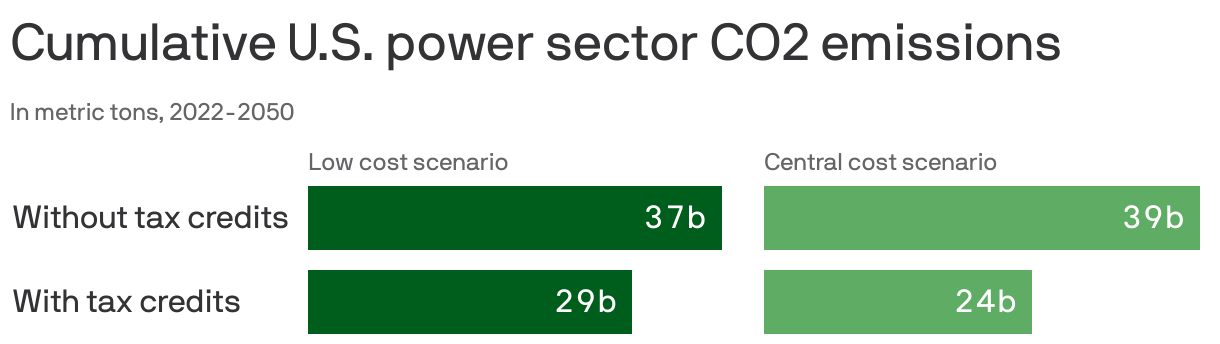
Adapted from an EPIC and Rhodium Group report; Chart: Axios Visuals
New and extended clean energy tax subsidies in the stalled Build Back Better legislation would slash power sector emissions and provide big net benefits, a new analysis argues.
Driving the news: The University of Chicago's Energy Policy Institute and the Rhodium Group modeled the House-approved version under two tech cost scenarios and three estimates of the social cost of carbon.
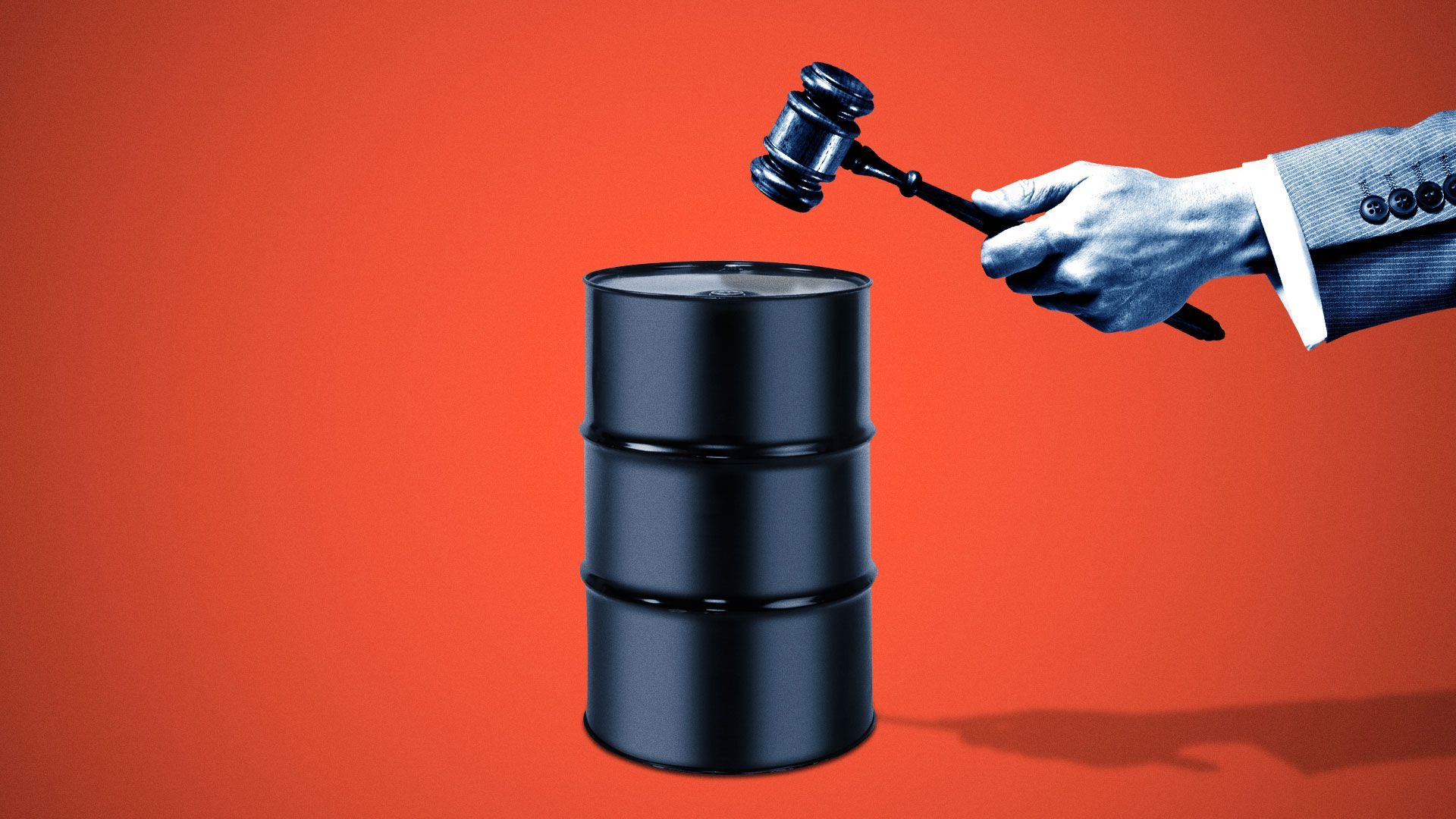
There are two important developments this week in closely-watched litigation at the intersection of climate change and the oil industry.
Driving the news, part 1: The U.S. Court of Appeals for the 10th Circuit ruled Tuesday that Boulder county and city officials' litigation against two oil giants belongs back in state court.
Watershed, a startup that helps companies analyze their emissions and find projects to cut them, raised $70 million in Series B funding from VC heavyweights.
Driving the news: Sequoia and Kleiner Perkins led the funding round for San Francisco-based Watershed, which claims a valuation of $1 billion. Clients include Sweetgreen, Twitter, Airbnb and DoorDash.
An autonomous truck startup called Waabi has developed what it calls "the ultimate school for self-driving vehicles" — one that requires humans to spend less time tutoring them on actual roads.
Why it matters: The more that autonomous vehicles learn to drive in the virtual world, the less time they need to practice on physical streets, which could be a safer, faster way to bring them to market.