The FAA is announcing $20.4 million in grants to airports for using zero-emissions vehicles and electrifying equipment that currently relies on fossil fuels.
Why it matters: While next-wave, future aviation/aircraft techgets lots of attention, nuts and bolts equipment at airports is decidedly low-tech (think diesel generators and dirty shuttle buses) and ripe for the deployment of existing and mature low-emissions systems.
Just-published industry data shows that installation of renewable power and battery storage capacity is on a record pace this year.
By the numbers: The American Clean Power Association said 9,915 megawatts of capacity came online in the first half of this year — a 17% increase over the first half of 2020.
Major power and oil companies are funding a tech startup that helps detect risks to critical infrastructure — including energy networks.
Driving the news: Urbint just announced $60 million in Series C funding to scale its platform that uses AI to "stop failures, damages, and worker injuries before they happen."
The country's first vessel powered by hydrogen fuel cells is undergoing trials and could begin passenger service this year in San Francisco Bay.
Why it matters: The 70-foot, 75-passenger ferry represents an important step in the U.S. maritime industry’s effort to transition away from fossil fuels to cleaner methods of propulsion.
Human-caused climate change increased the likelihood and intensity of the heavy rainfall that helped cause the devastating floods in Europe in July, an international team of 39 climate scientists stated Monday.
Why it matters: The study, released Monday, demonstrates how global warming is already influencing extreme weather events in ways that ramp up disaster risks.
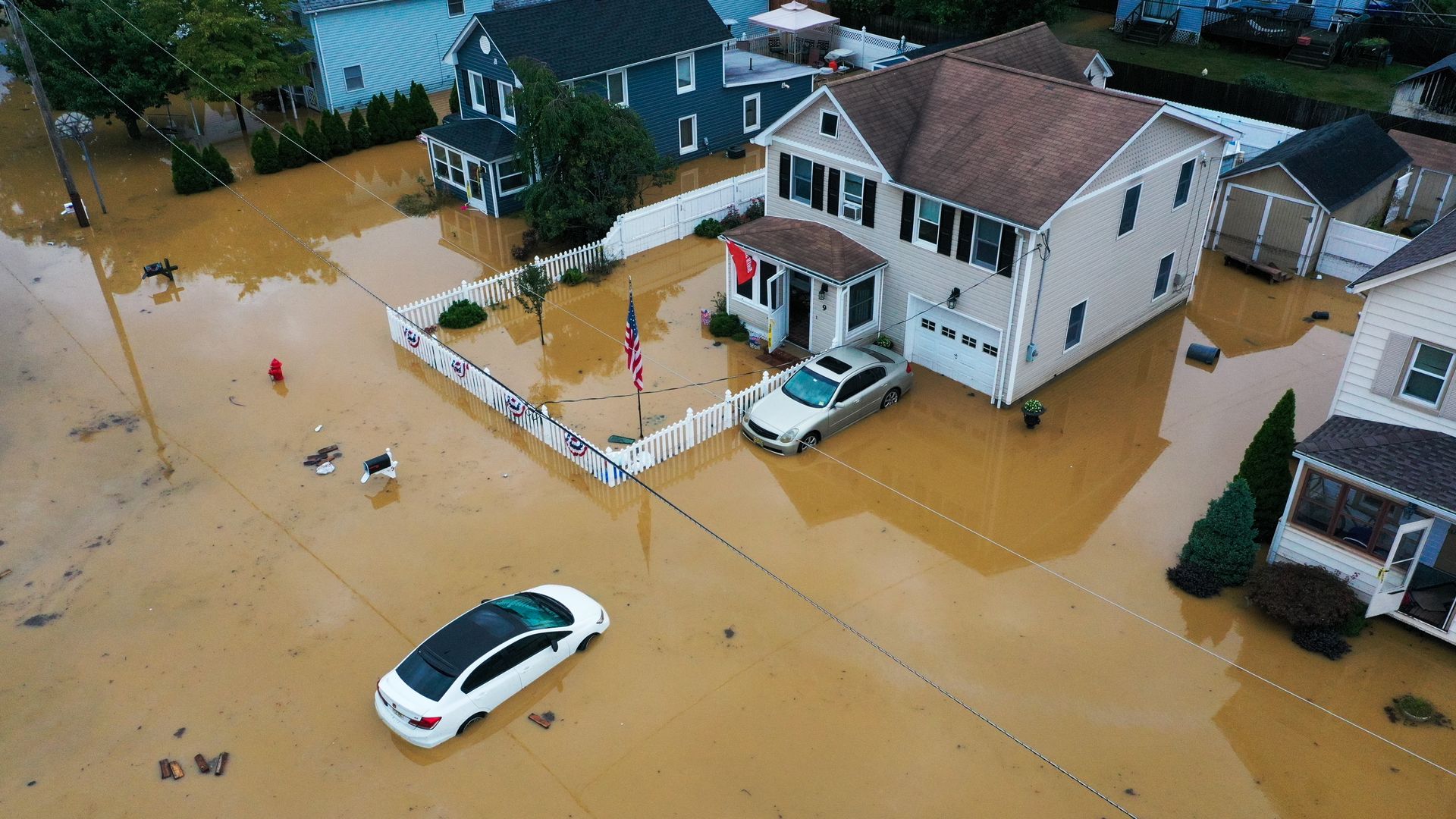
Storm Henri dumped heavy rain across the Northeastern U.S. on Sunday, causing considerable flash, urban and other minor flooding over the Tri-State Area and New England.
The latest: The storm is expected to continue to drench the region through Monday night. More than 60,000 customers throughout the Northeast were without power as of Monday morning, according to Poweroutage.us.
Science Moms, a nonpartisan group of climate scientists and mothers, is launching a $4 million digital ad campaign targeting suburban moms in several key swing states.
Why it matters: The three ads, which focus on how this summer's extreme weather events are affecting families around the country, will target suburban moms in metro areas that proved pivotal in the 2020 election.
Nobody said the transition to electric vehicles would be seamless, and the General Motors recall of every Chevy Bolt is the latest example of why it won't be.
Driving the news: GM's expanding Bolt recall over battery fire risks to include 2020-2022 models, and 2019 models that weren't covered by previous rounds.
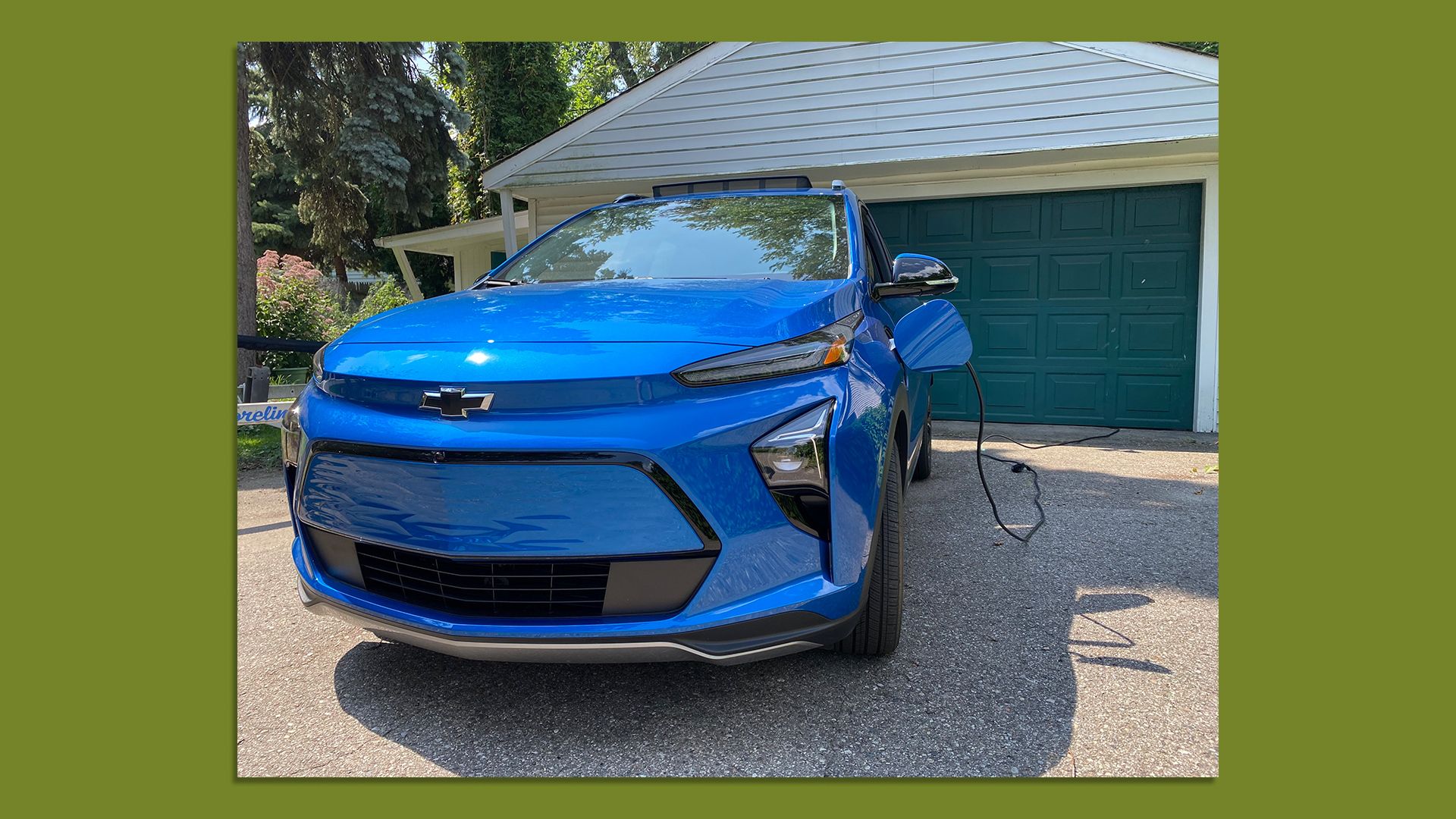
This week I'm test-driving the 2022 all-electric Chevrolet Bolt EUV. Four days into the loan, it was recalled by General Motors.
Why it matters: The car's batteries may catch fire.
What's happening: GM isn't messing around. The company is telling all Bolt owners to park their vehicle outside and away from structures and to not charge the car overnight. And it gave owners special instructions for charging in the meantime to avoid extreme charging cycles.
Since I had a Bolt EUV from the media test fleet, GM advised me to follow the same instructions as any Bolt owner.
What I did: With help from a video on GM's dedicated Bolt recall page, I hit a few buttons on the car's touchscreen to limit the charging capacity to 90%.
This was pretty simple, but GM says anyone who feels uncomfortable making the change should ask a dealer to do it right away.
Following GM's instructions, I also recharged the battery more frequently rather than waiting until the battery was almost run down.
Those deep charging cycles can put thermal strain on a battery, causing a short.
I also parked the car outside my garage and per GM's advice, did not leave it charging overnight.
The root cause of the problem, per GM and its battery supplier, LG Chem, is a rare manufacturing defect in battery modules that can cause a short in a cell and trigger a fire.
GM says it is working with LG to increase battery production, and owners will be notified when replacement modules are ready.
What's next: This isn't the car review I expected to write about the Bolt EUV (electric utility vehicle), a slightly roomier version of the Bolt EV hatchback. I really enjoyed driving it, and I plan to share some of the highlights — including its hands-free highway-driving option — in the coming days.
But right now, the focus is on avoiding catastrophe.

/2021/08/24/1629809321658.gif?w=3840)