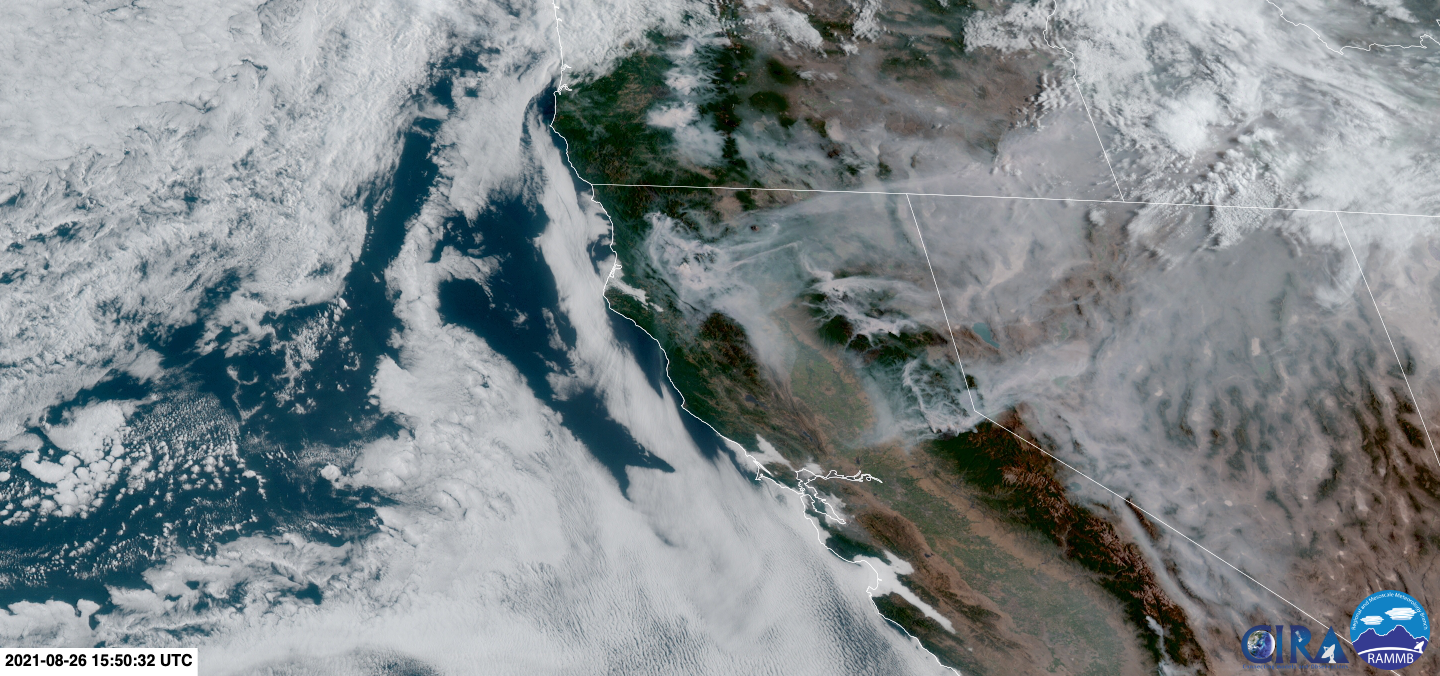
A satellite image of low-level smoke in Northern and Central California.
Towns in northern and central California registered some of the worst air quality in the world Thursday because of smoke from wildfires burning in the state, according to data from the federal government.
Why it matters: Microscopic particles suspended in wildfire smoke are a danger to the public and have been linked to decreased lung function, aggravated asthma, heart attacks and premature death in people with heart and lung disease, according to the Environmental Protection Agency.
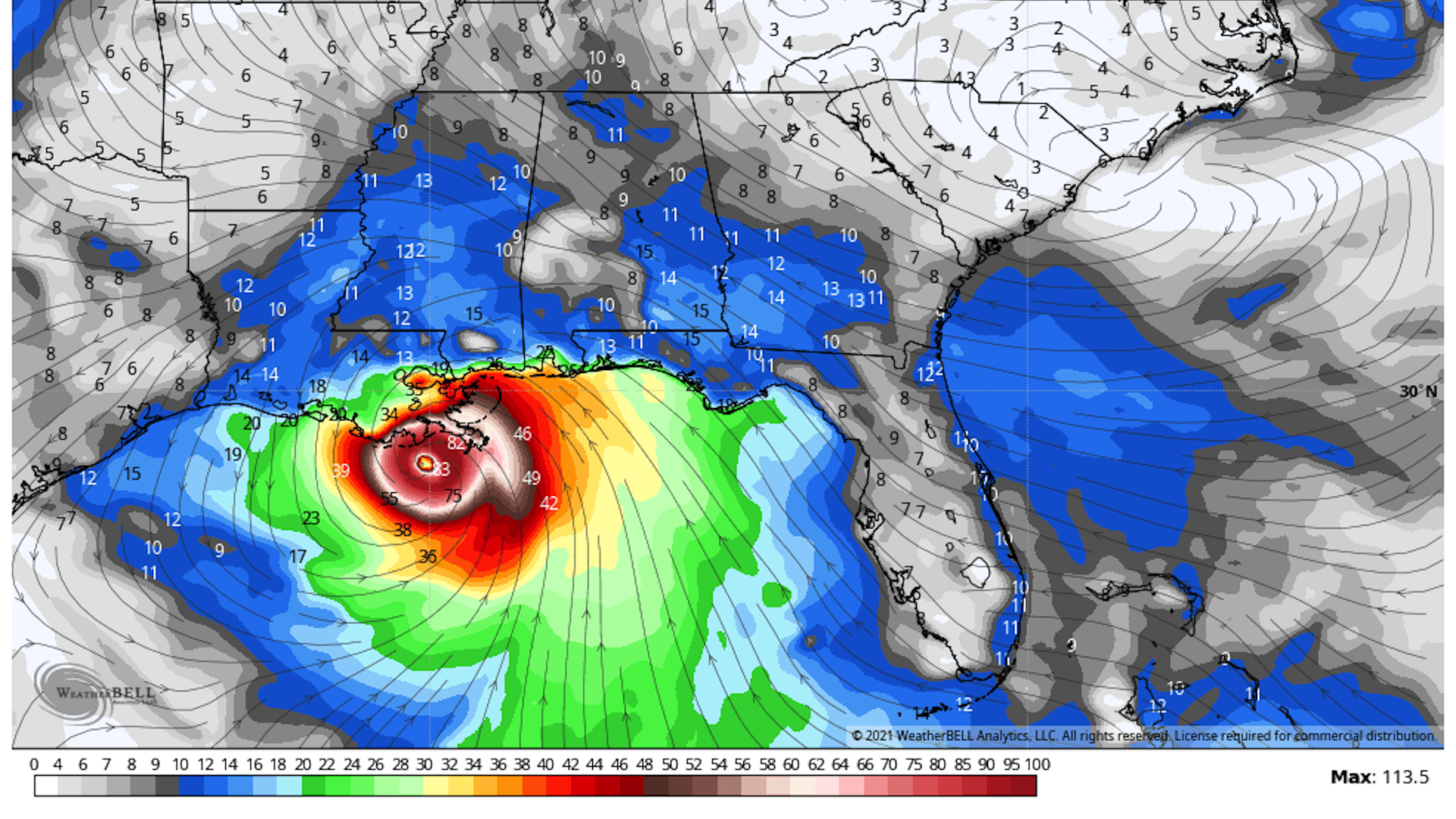
Tropical Storm Ida formed Thursday afternoon over the Caribbean Sea and has the potential to become a powerful hurricane over the Gulf of Mexico and strike the northern Gulf Coast by Monday, according to the National Hurricane Center.
The big picture: The Hurricane Center included unusually sobering wording for the first advisory on a storm, partly because the timing of landfall means there is only a few days for residents in the storm's potential path to prepare.
It's just over two months until a pivotal United Nations climate summit, and if Capitol Hill's importance to the equation wasn't already clear, it sure is now.
Catch up fast: Senate Majority Leader Chuck Schumer released an analysis showing the Democrats-only reconciliation plan — and to a much lesser degree the bipartisan infrastructure deal — would essentially put the U.S. on track to meet President Biden's pledge under the Paris Agreement.
A recent satellite image of the southwestern portion of the Greenland Ice Sheet shows the existence of cerulean blue pockmarks — phenomena that provide scientists with a worrying message about sea-level rise and the risk of massively consequential changes in ocean behavior.
Why it matters: The melt ponds, rivers and moulins, cracks in the ice where surface water can plummet to where the ice sheet meets bedrock, are a symptom of a summer season that has brought large spikes in melt extent.
Electric, self-driving taxis might not be the answer to our climate problems that many people think, a new study finds.
Why it matters: Transportation is the largest contributor to U.S. greenhouse gas emissions, which is one reason that the Biden administration is pushing for a rapid shift to electrification.
But instead of reducing energy consumption and emissions that contribute to climate change, widespread deployment of electric robotaxis could exacerbate those problems, the joint Harvard-MIT study found.
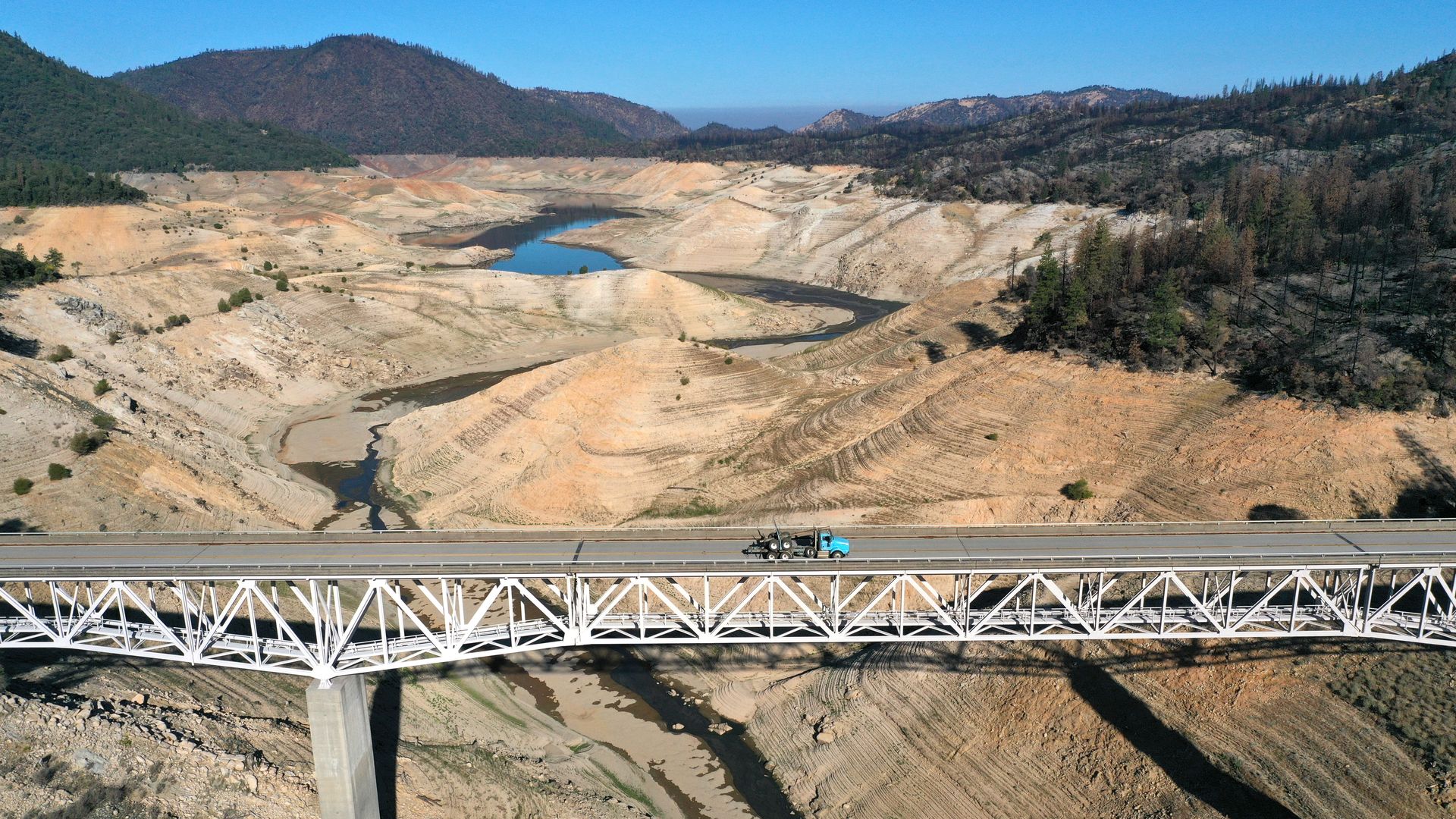
Reps. Jared Huffman (D-Calif.) and fellow Democratic Rep. Joe Neguse (D-Colo.) from Colorado are urging President Biden to declare a drought disaster in the West.
Driving the news: The lawmakers wrote to Biden Wednesday, calling on his administration to support Western governors' Federal Emergency Management Agency drought disaster declaration request issued earlier this month, as they experience water cuts driven by rapidly depleting supplies.
Global carbon dioxide emissions from the power sector have surged past pre-pandemic levels to reach new highs, a new report examining trends during the first half of 2021 finds.
Why it matters: The report from Ember, a London-based environmental think tank, shows that the energy transition that needs to happen to limit the severity and pace of global warming is not taking place fast enough.
Senate Democrats' spending and tax plan and the bipartisan infrastructure package would together cut greenhouse gas emissions almost enough to meet the U.S. pledge under the Paris Agreement, Majority Leader Chuck Schumer said.
Driving the news: Schumer, in a new letter to Senate colleagues, said his office's analysis of the two proposals shows they would put the U.S. on track to cut emissions around 45% below 2005 levels by 2030.
An environmental group with ties to the White House is pressing the Biden administration to emphasize climate change as it considers nominees to the Federal Reserve.
Driving the news: Evergreen Action, in a new memo shared with Axios, lays out five actions they want from the Fed.