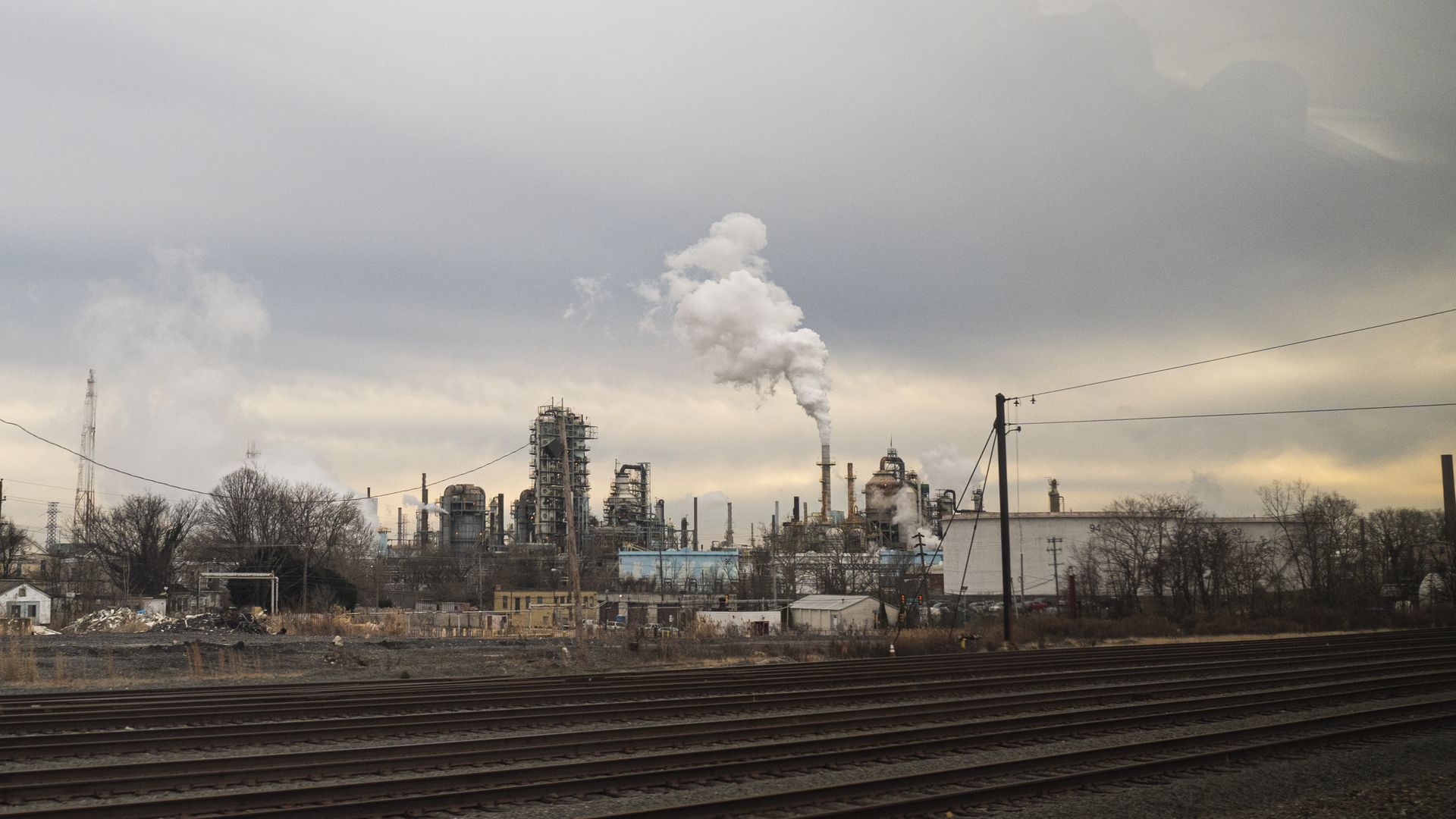
Americans of color are disproportionally and pervasively affected by fine particulate air pollution (PM2.5), the nation's most deadly pollutant, according to a study published Wednesday in the journal Science Advances.
Why it matters: PM2.5 exposure in the U.S. causes roughly 85,000 to 200,000 more deaths of all Americans than anticipated, the study notes.
Melanie Nakagawa, special assistant to the president and senior director for climate and energy, said that the 2020 decade is the "decisive decade" to make meaningful climate change action.
Why it matters: "Collectively, if commitments, policies and action can deliver a 7.6% emissions reduction every year between 2020 and 2030, we can limit global warming to 1.5 degrees Celsius," per the UN Environment program. "While there will still be climate impacts at 1.5 degrees Celsius, this is the level scientists say is associated with less devastating impacts than higher levels of global warming."
The Biden administration is looking to jumpstart the construction of new transmission lines by offering up to $8.3 billion in loans and, separately, issuing new guidelines to help state officials with siting.
Driving the news: The Energy Department on Tuesday invited applications for up to $5 billion in loans for projects like high-voltage systems; transmission for offshore wind; and systems that follow rail and highway routes.
A very public battle is raging over how ExxonMobil should face questions about long-term oil demand and prepare for a carbon-constrained world.
Driving the news: Investment group Engine No. 1, which is nominating board members it says are equipped to deal with these dynamics, this week gained new support.
Epicurious will no longer publish beef recipes in what is being called a "pro-planet" shift, the popular digital food magazine has announced.
Driving the news: The Condé Nast-owned publication's Maggie Hoffman and David Tamarkin wrote in a post Monday that the decision was "solely about sustainability, about not giving airtime to one of the world's worst climate offenders."
CEOs feel the pressure to take action on climate change in the absence of government regulation, executives at Patagonia and Ceres said at an Axios virtual event on Tuesday.
What they're saying: Federal and state regulators, starting with the Securities and Exchange Commission and Federal Reserve, should not let policies to offset climate change be voluntary for businesses, Mindy Lubber, CEO and president of the sustainable investment advocacy group Ceres, said.
Banking giant Citigroup said that last year it declined 11 "transaction opportunities" around coal mining or coal-fired power as a result of recently launched climate policies.
Why it matters: The tally, part of a wider ESG report released Monday, provides a rare glimpse at specific business fallout of Wall Street giants' growing restrictions on certain types of fossil finance.
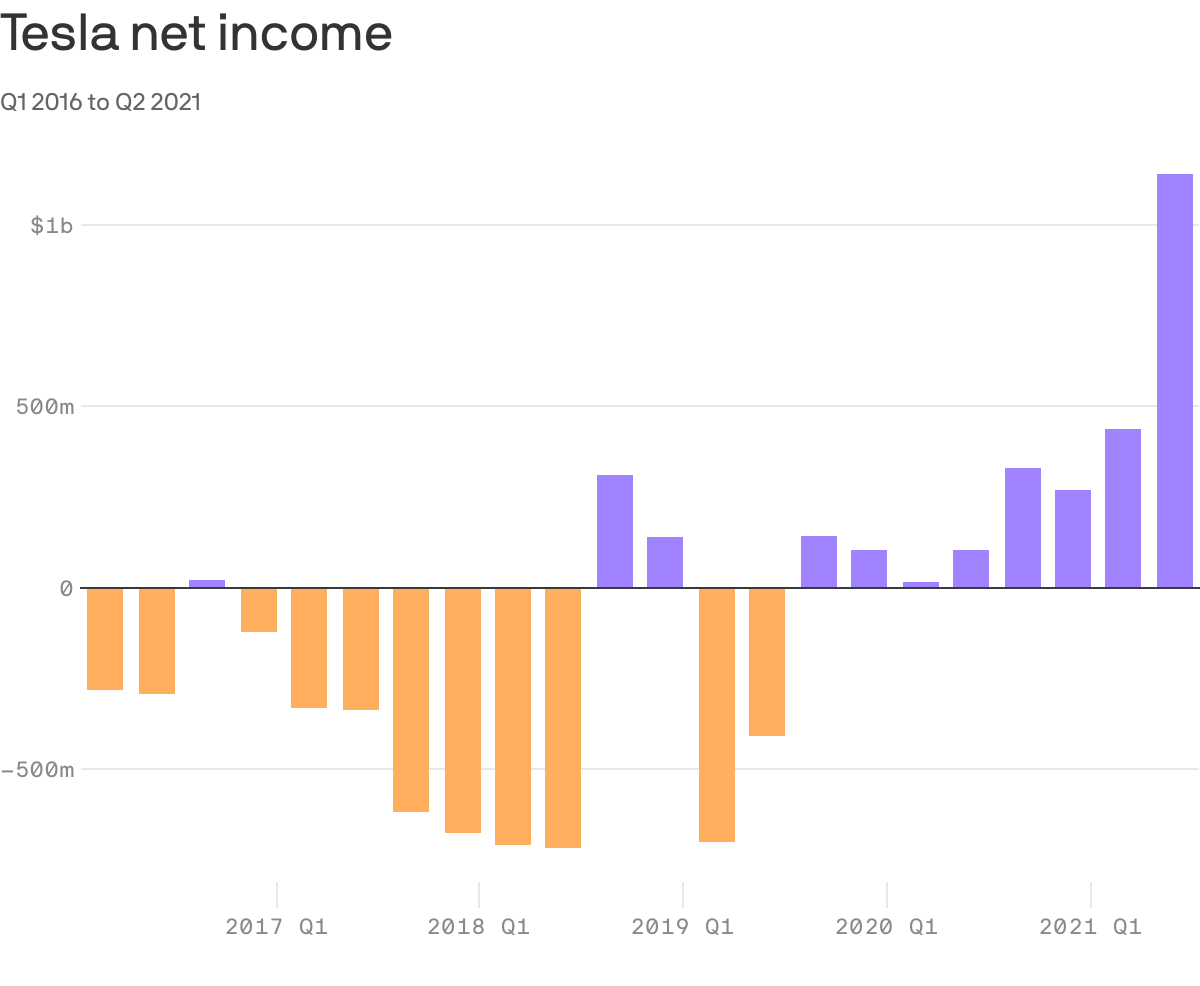
Data: FactSet, company filings; Chart: Will Chase/Axios
Tesla's latest earnings reportbeat expectations handily, thanks largely to its investment in bitcoin and regulatory credits, but the stock fell by as much as 3% in after-hours trading.
By the numbers: Tesla reported revenue of $10.4 billion and a record-high $438 million in net profits. The company said it made $101 million from the sale of some of its bitcoin holdings after investing $1.5 billion in February.
A new report from the International Energy Agency and the European Patent Office tracks the upward march of clean energy patent applications worldwide — and warns that it's not enough.
Driving the news: The report shows a resumption in clean energy patenting after a slump in recent years, and that innovation in these technologies is outpacing fossil fuel-related patenting.
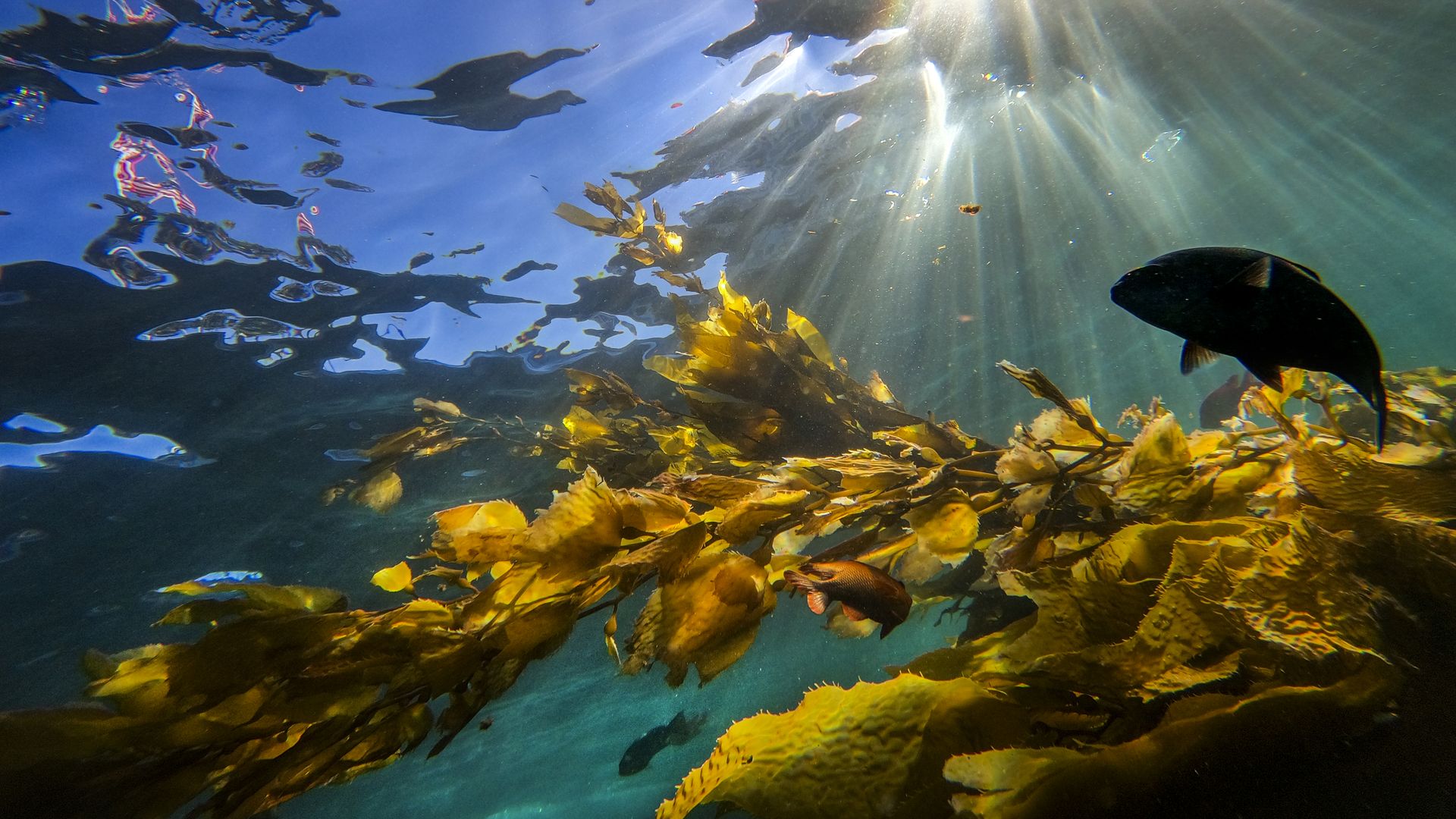
Marine scientists announced Monday they've uncovered at a former industrial waste site off the Southern California coast some 25,000 barrels that their research indicates contain the toxic chemical DDT.
Why it matters: Scientists had previously detected in the area near Santa Catalina Island "high levels of DDT in marine mammals including dolphins and sea lions," with exposure to DDT and polychlorinated biphenyls, or PCBs, per a statement from the Scripps Institution of Oceanography.
The Environmental Protection Agency (EPA) on Monday signaled its intention to rescind Trump-era policies blocking California from setting its own vehicle carbon emissions rules.
Why it matters: The move would restore California's ability to be an environmental regulator after former President Trump stripped the state of that right.