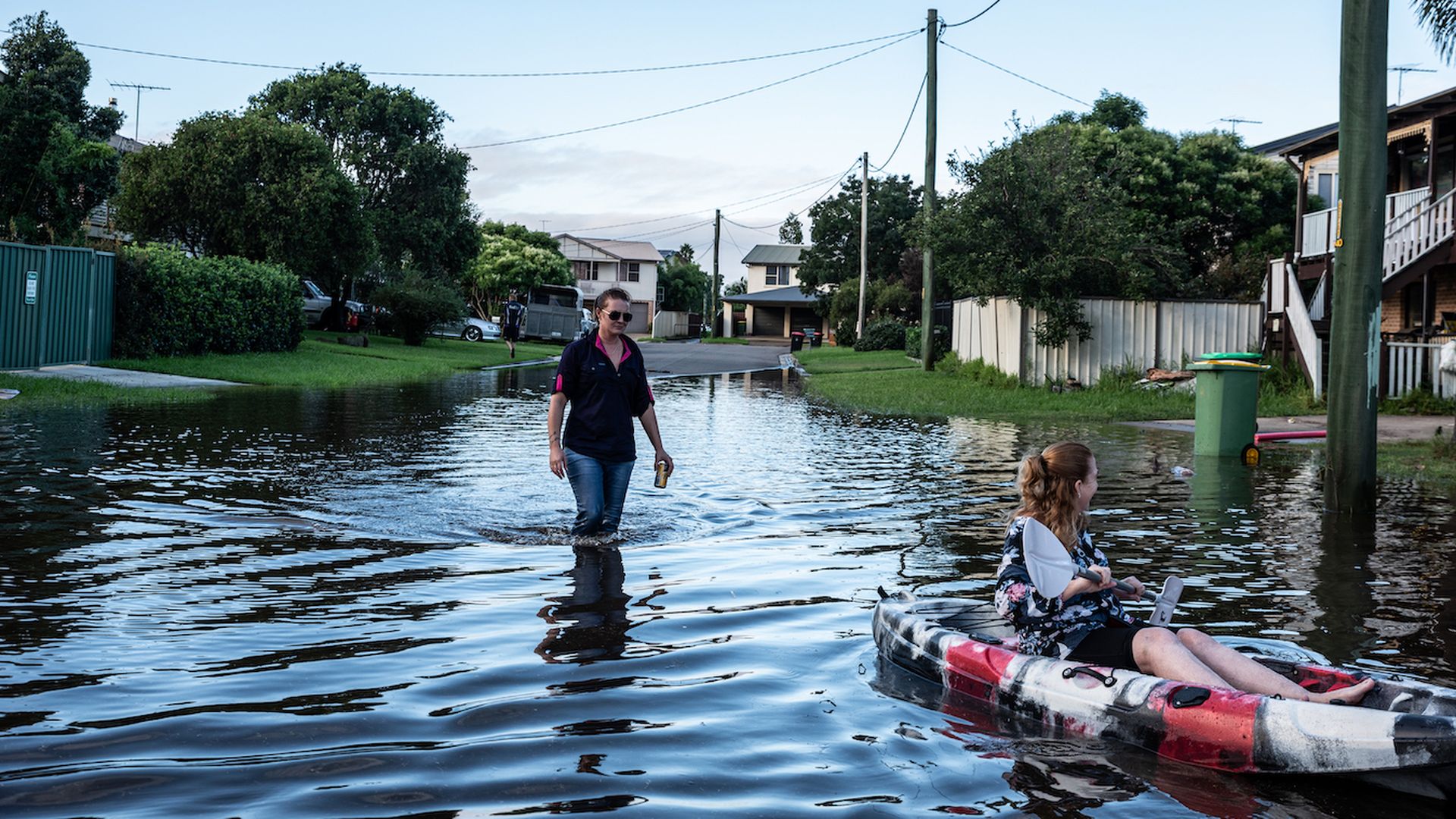
Rainfall is easing in some parts of Australia Tuesday, but many rivers continue to rise in the wake of nearly a year's worth of rainfall that fell in just six days in New South Wales and Queensland.
Why it matters: The flooding is the latest in a string of extreme weather disasters that have struck Australia in the past year. The country has careened from drought and devastating wildfires to unusually heavy rains and flooding not seen in decades.
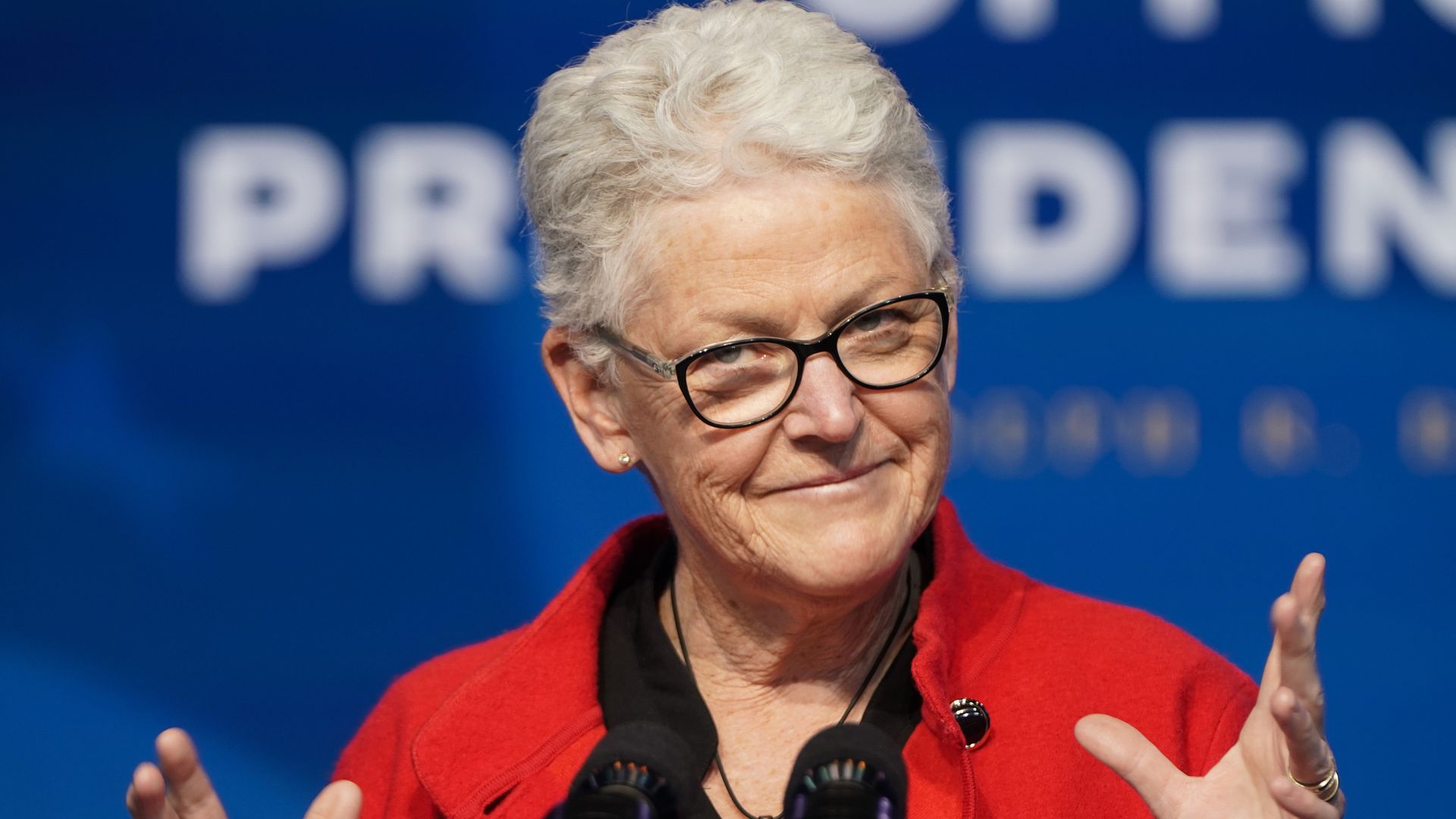
President Biden's senior domestic climate official met with top oil-and-gas executives Monday as the industry braces for White House emissions policies.
Why it matters: A White House summary claims they're seeking common ground with the sector.
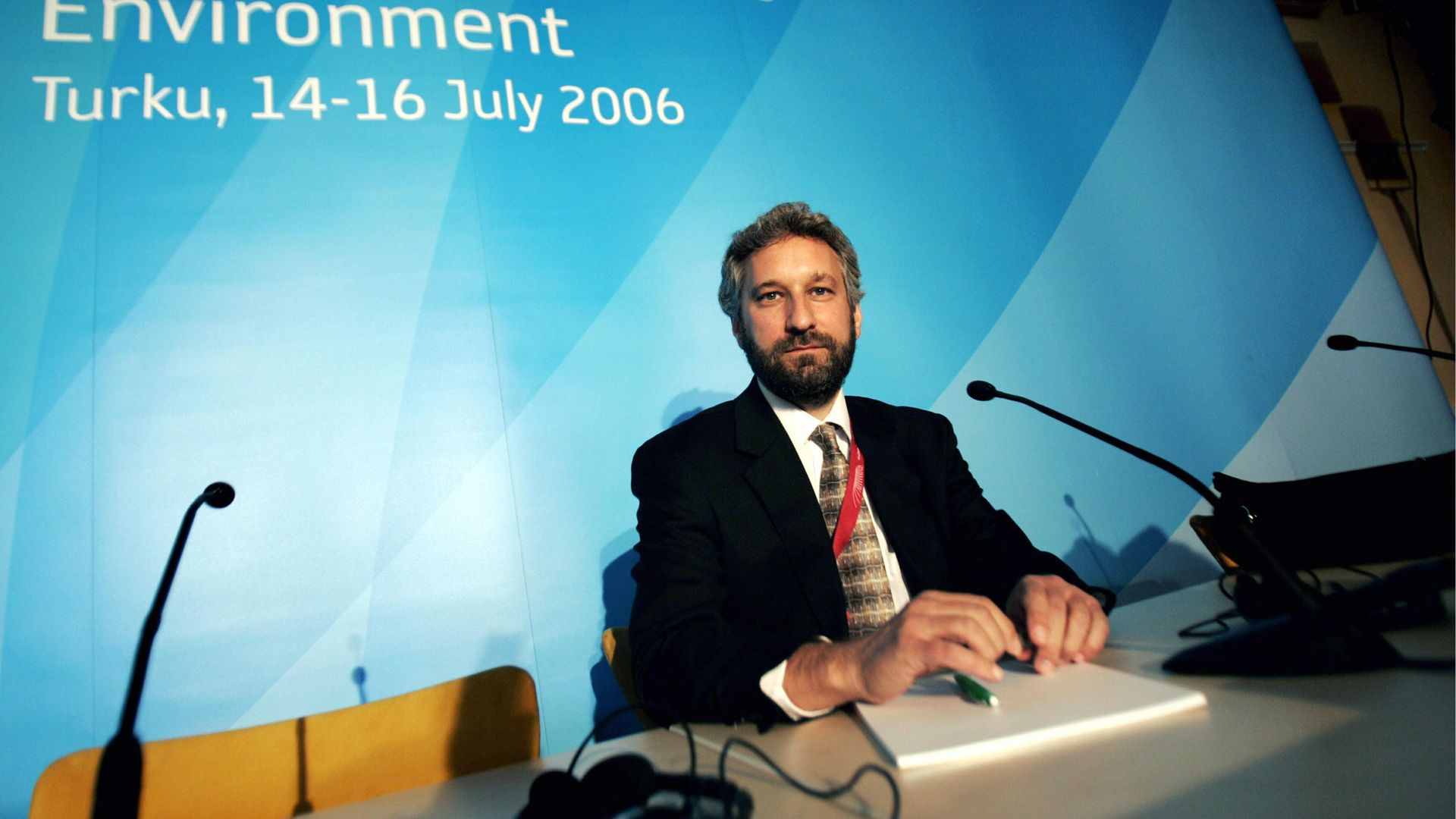
Elliot Diringer, a well-known figure in climate diplomacy circles, has joined the State Department as the Biden administration looks to step up global collaboration.
Driving the news: Diringer's auto-reply email at the Center for Climate and Energy Solutions (C2ES), where he had long been a senior executive vice president, says he began the job on Feb. 18.
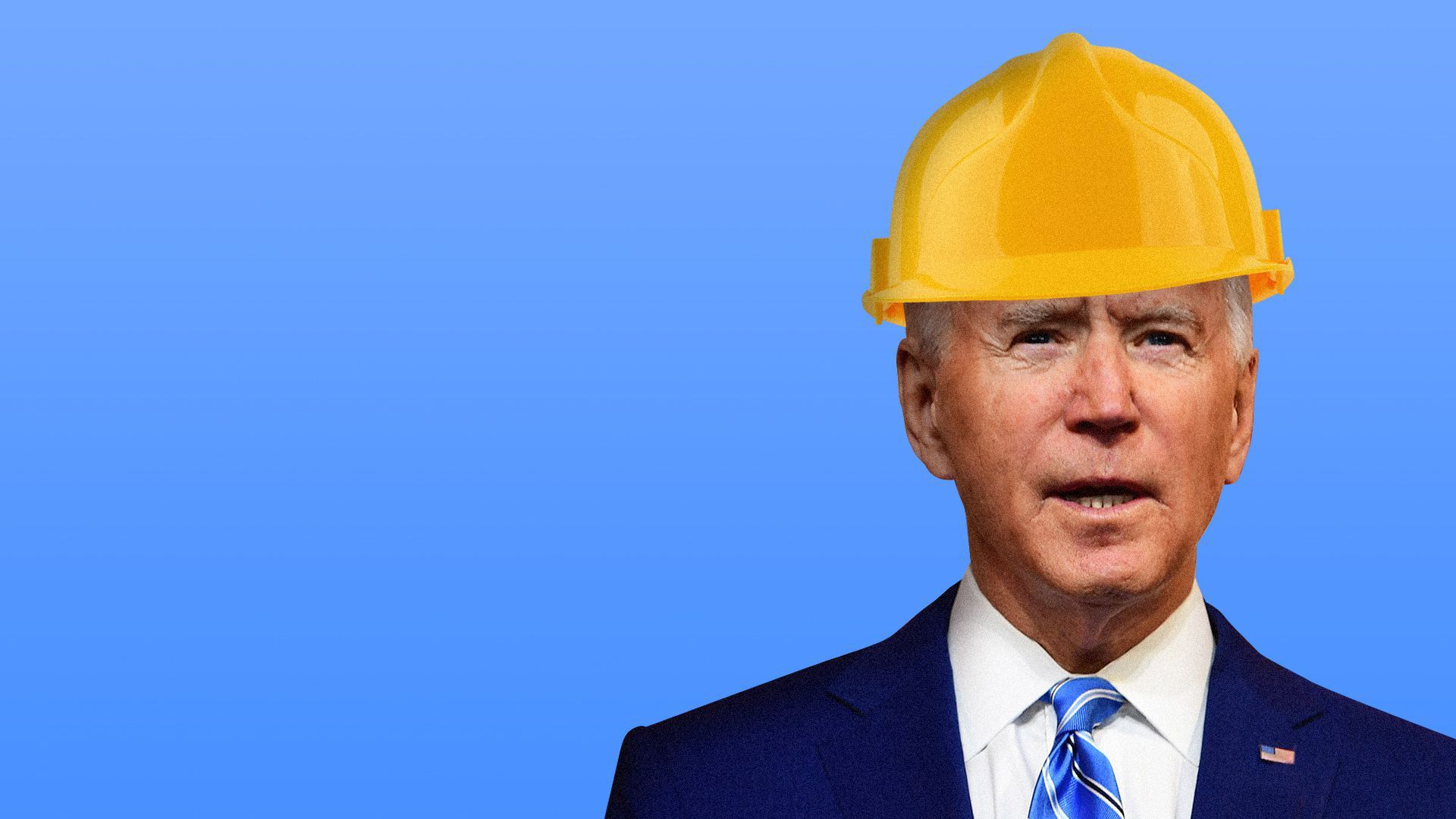
The White House is starting to fill in some of the blanks on plans to push an infrastructure package with climate and energy provisions.
Driving the news: President Biden is considering using budget reconciliation two more times this year to pass up to $3 trillion in spending aimed at core priorities, including infrastructure, climate change, education, taxes and health care, Axios' Hans Nichols and Alayna Treene report.
That image above is the Jeep Wrangler "Magneto," an electric concept Jeep's calling a "stealthy, quiet, quick and an unmistakable rock-climbing force."
The details: 285 horsepower and the concept vehicle can go from 0-60 mph in 6.8 seconds, Jeep said.
The last 72 hours highlighted hurdles and opportunities for U.S.-China cooperation on climate at a time of very deep divisions over human rights, cybersecurity and more.
Driving the news: Chinese state media, in a weekend readout of high-level U.S.-China talks in Alaska on Thursday and Friday, said one outcome of the multitopic meeting will be a "joint working group" on climate.
In a semiannual economic-policy survey by the National Association for Business Economics, more than two-thirds of the 205 respondents said U.S. policy should do more to mitigate climate change.
The big picture: “Seventy percent of respondents believe that economic policy should do more to mitigate climate change, while 55% believe that the federal government should enact a broad-based energy or carbon tax to boost government revenue,” NABE survey chair Ilan Kolet, Institutional Portfolio Manager at Fidelity Investments, said in a statement.