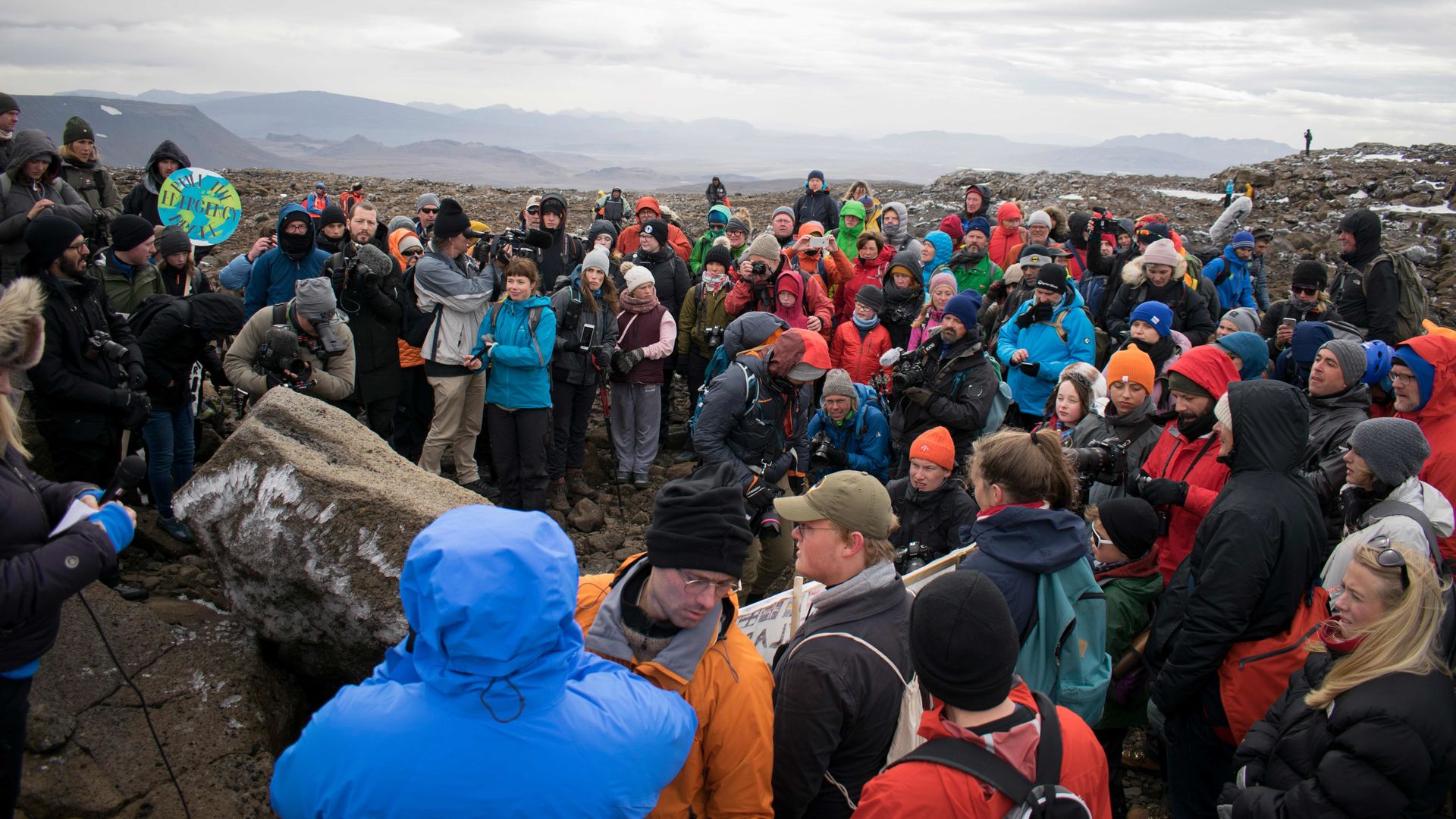
About 100 people in Iceland trekked 2 hours up a volcano to formally bid farewell to the glacier once known as Okjokull, offering their condolences to the ice mass that disappeared about a decade ago, AP reports.
The big picture: This was the nation's first glacier to formally go extinct, but Icelandic geologist Oddur Sigurðsson says it won't be the last. He predicts all of the nation's glaciers will be gone in 200 years as temperatures continue to rise as a result of man-made climate change, causing global sea-level rise. The glacier had been 6 square miles wide and was a source of clean drinking water.
The world's top 5 warmest years on record have occurred since 2014 — and it's almost certain that 2019 will be added to this list as well.
Why it matters: Such trends are indicative of long-term global warming due to human activities such as burning fossil fuels for energy and transportation, cutting down forests for agriculture and other purposes. Only 1 of the top 20 warmest years on record since instrument data began in 1880 took place before the year 2000. With greenhouse gas concentrations in the air at their highest level in 3 million years, the odds favor more record-shattering years in the future.
Union workers at Royal Dutch Shell's Pennsylvania petrochemical plant were given the option of attending President Trump's address there this week or miss out on wages, the Pittsburgh Post-Gazette first reported Saturday.
Details: A contractor relayed to employees that Shell sent union leaders a memo the day before Trump's visit Tuesday to the $6 billion construction site that attendance wasn't mandatory, but "only those who showed up at 7 a.m., scanned their ID cards, and prepared to stand for hours — through lunch but without lunch — would be paid," according to the news outlet.
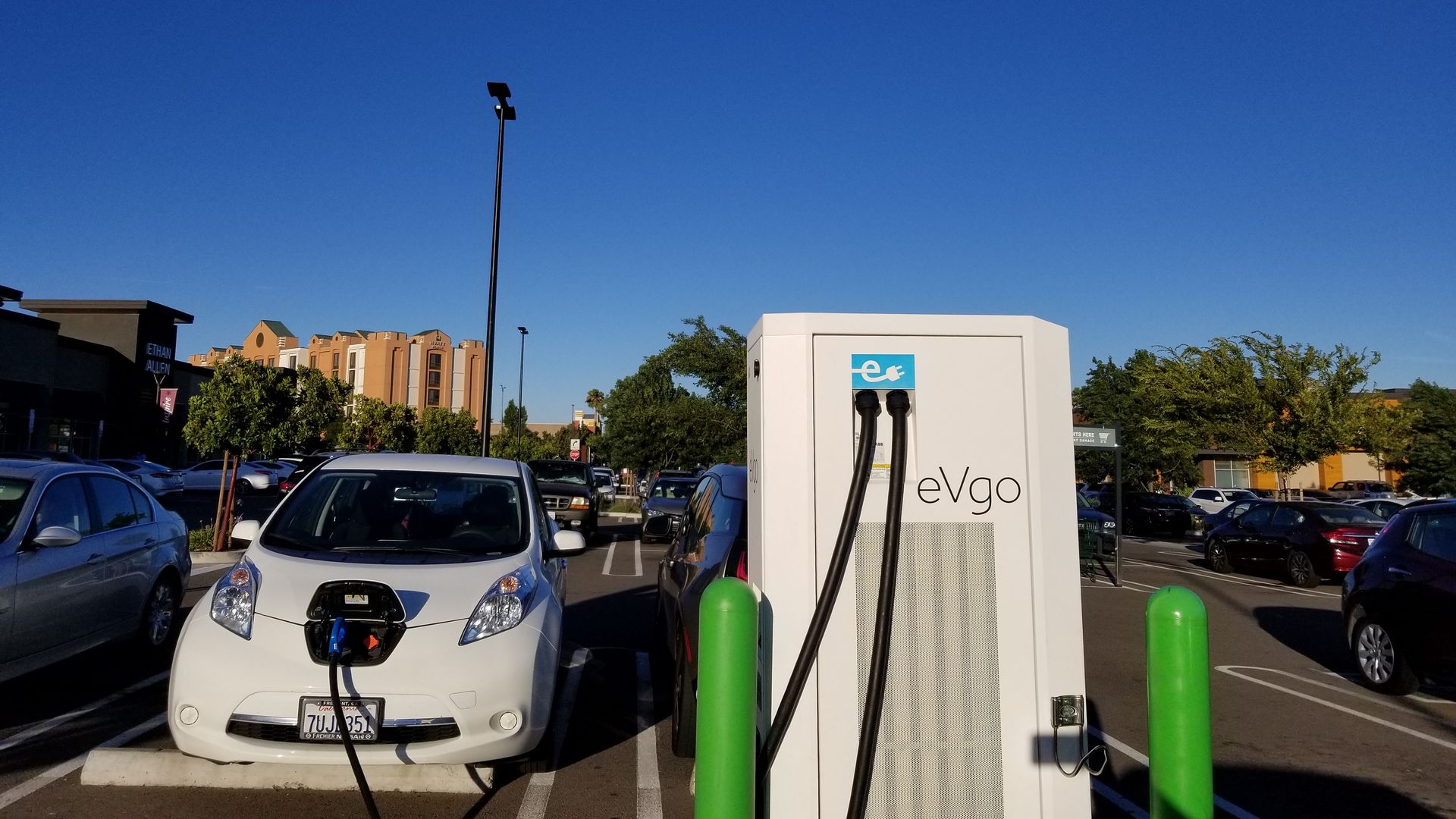
What it means: California's requirements are stricter than federal standards, which it maintains under the Clean Air Act. The ZEV program gives rebates for zero emission vehicles (ZEVs) and incentives for ZEV infrastructure and aims to "reduce the emissions contributing to climate change," per the Center for Climate and Energy Solutions (C2ES).
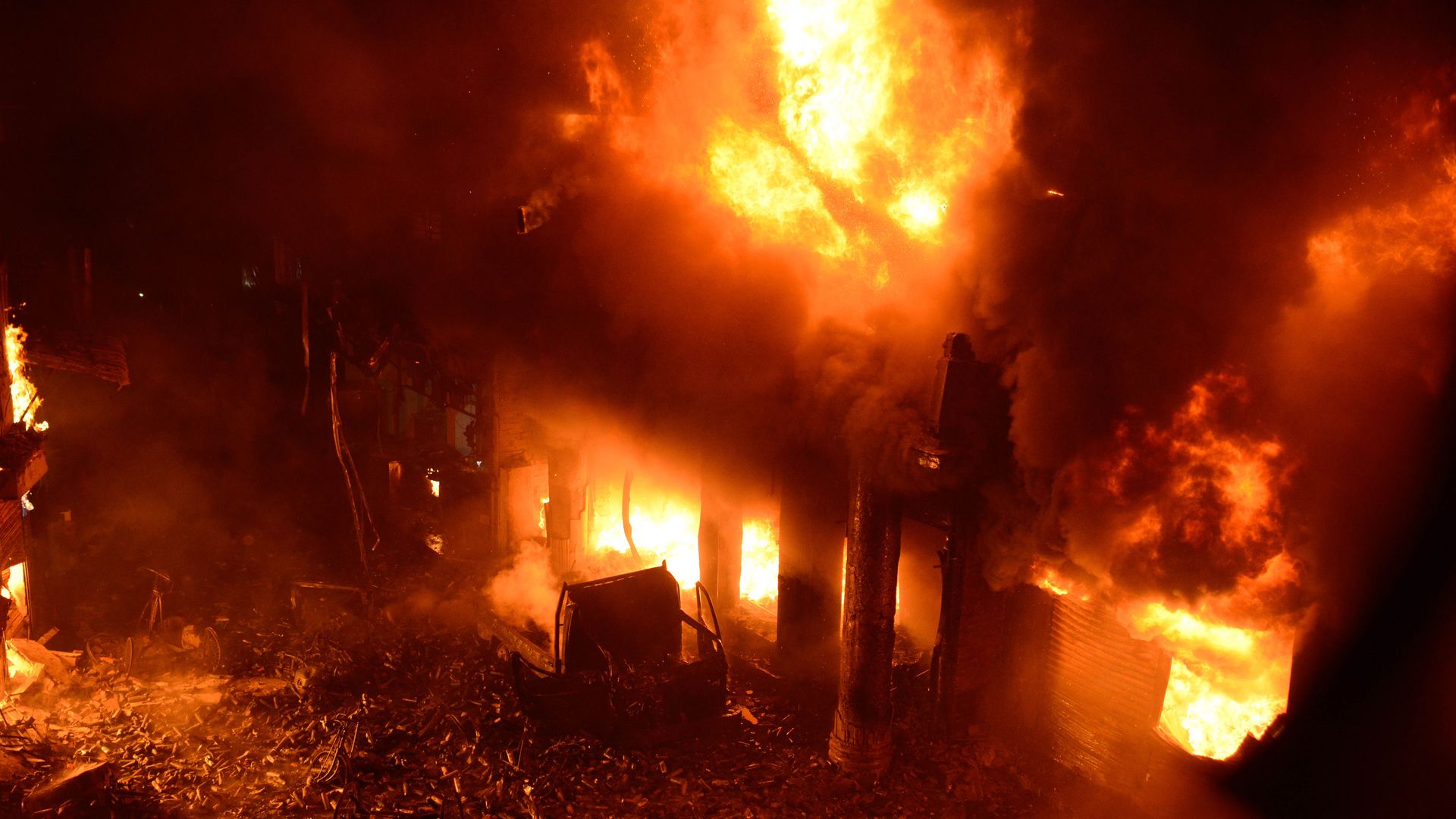
Nearly 15,000 homes were reportedly destroyed in Bangladesh's Chalantika slum late Friday (local time) after a fire of unknown origin raged in the nation's capitol for over 6 hours, according to the BBC.
The impact: Several people were injured and no deaths have been reported. Atiqul Islam, mayor of the Dhaka North City Corporation (DNCC), said, "All basic needs for the homeless people will continue till their rehabilitation," and temporary shelters will be erected in the meantime, per the U.K.'s Independent.