Thursday's energy & climate stories

Global warming is pushing the Great Barrier Reef to the brink
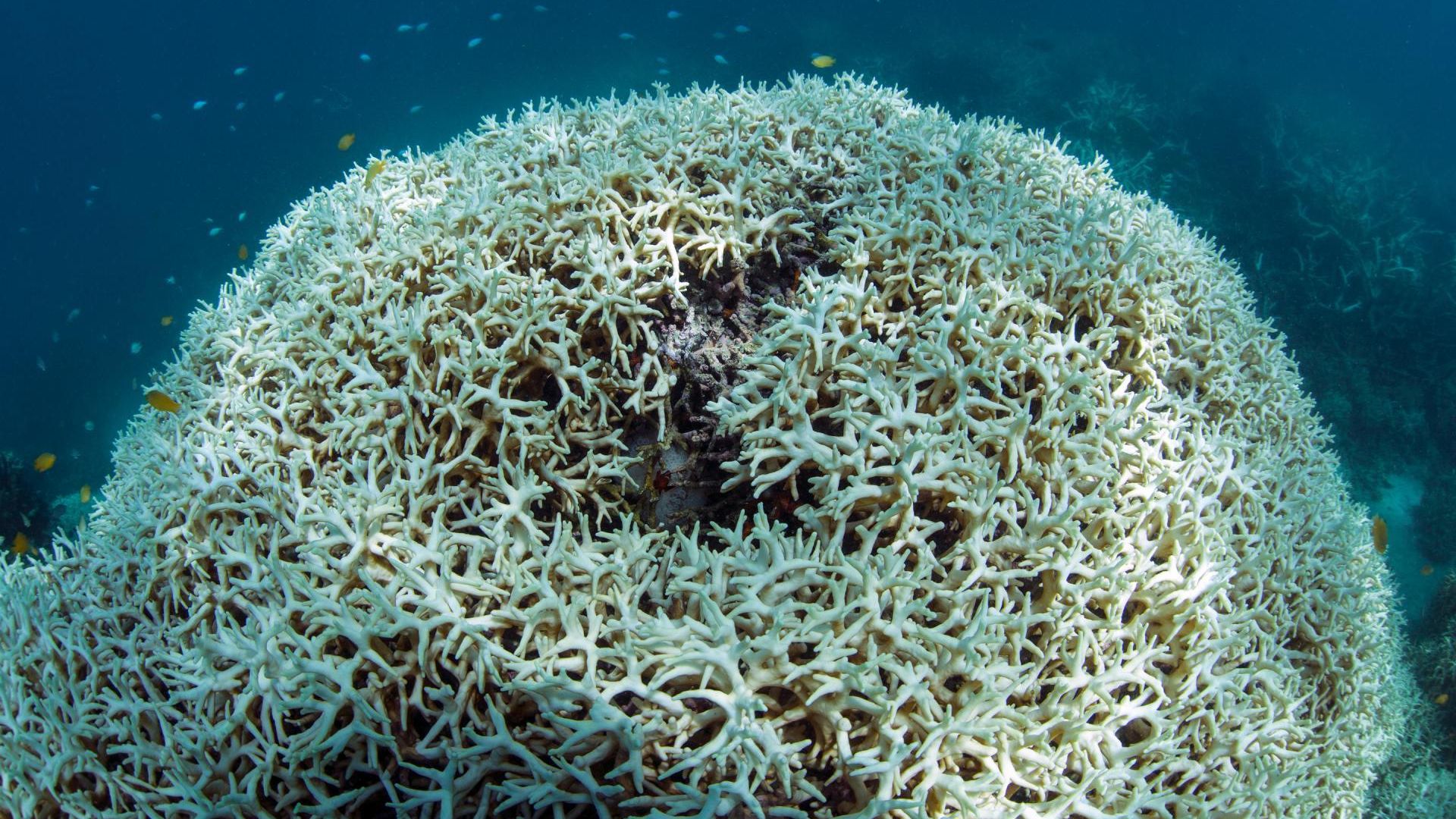
Repetitive, severe marine heat waves are disrupting the Great Barrier Reef's ability to regrow with a similar abundance and mix of species as before, a new study warns. The paper, published in Nature Wednesday, depicts a vast, complex reef ecosystem that is on the verge of "ecological collapse."
Why it matters: The Great Barrier Reef is the word's largest coral reef ecosystem, spanning 1,400 miles from north to south off the eastern coast of Australia. The reef is a haven for biodiversity and a major driver of tourism for Australia. The new results add to a series of grim findings about just how susceptible this reef community, long viewed as too big to fail, is to warming ocean waters.
What they did: For the study, researchers in Hawaii and Australia examined how corals reproduce, or spawn, from one year to the next, by taking in situ measurements out on the Great Barrier Reef. Researchers compared spawning behavior in years prior to the marine heat waves that struck two-thirds of the reef in 2016 and 2017 against what happened immediately following the heat waves, also referred to as coral bleaching events for their tendency to turn corals a ghostly white as heat stress causes organisms to kick out symbiotic algae that gives corals their vibrant colors.
What they found: By comparing coral spawning behavior in years without marine heat waves with what followed the devastating marine events of 2016 and 2017, the study found that such heat events compromise the reef's capacity to recover by causing a sharp plunge in coral reproduction rates.
- By killing adult corals, the heat waves slashed the rate of reproduction and the balance between coral species. According to the study, the number of new corals settling on the Great Barrier Reef declined by 89% following the assault on adult corals in 2016 and 2017.
One species, Acropora, which establishes branching and table coral, declined by 93% compared to prior, non-heat wave years.
What they're saying: There are more reasons for pessimism about the reef's future than optimism, scientists tell Axios, but all is not lost, at least not yet.
The increased frequency of bleaching events means that more corals will die before they can recover. "One more large scale bleaching event in the next few years and it could be curtains" for many parts of the Great Barrier Reef, study co-author Andrew Baird, of James Cook University in Australia, tells Axios via email.
But the new study is just one snapshot of the reef's damage right after a massive shock. "The drop in coral recruitment is what we would expect after such severe bleaching events that result in high mortality of adult reproductive corals," says Sarah Lester, who studies corals at Florida State University.
“I think extrapolating that to say that we could understand how these systems are going to respond or compensate potentially over the longer term, that’s a bit harder, that still would remain to be observed because we’re still trying to extract these lessons from these sort of life after death moments,” says Kim Cobb, a coral expert at Georgia Tech.
But, but, but: However, the severe bleaching events mean that the surviving corals were able to withstand the extreme heat, and that they may prove more resilient to future events as well.
Madhavi Colton, program director with the nonprofit Coral Reef Alliance, says she''s interested in seeing what happens with coral recruitment (the term that describes the process by which coral larvae attach themselves to existing coral) beyond just a single year following the bleaching event.
“I would be interested in seeing if this trend holds up, then we should be more alarmed than we are with one very bad year,” she tells Axios.
Be smart: Colton says in looking at these results, one could focus on the high percentage of corals that died, which previous studies have pegged at about75% of all the corals in the northern two-thirds of the reef. Or, as she put it, "Oh my gosh, 25% of the corals survived! They made it through that! And that’s where the future lies," Colton says.
The bottom line: According to Cobb, the future of the world's reef ecosystems will look nothing like what we've known in the recent past.
“It’s worth remembering that we kind of think about will they ever get back to where they were before these events happened? Probably not," she says.
"Will they look very, very different? Will there just be a different kind of reef there, will they have a different functionality? Maybe yes.”
Go deeper:

Oil-and-gas giant Total's foray into China battery tech
Oil-and-gas giant Total on Thursday announced a joint venture with the Tianneng Group, a Chinese battery maker, to expand production in China.
Why it matters: It's the latest sign of oil majors' deepening forays into energy storage tech with vehicle and power grid applications.
How the nuclear "dread" zone handicaps public support

A new peer-reviewed study quantifies how much more nuclear power the public might support if "dread" melted away and opinions were more consistent with actual risk. The short answer? A lot.
Why it matters: The novel analysis, published in the journal Energy Policy, comes amid heightened urgency around "deep decarbonization" of power systems to help keep temperature rise in check.

Tesla deliveries fall short of Wall Street expectations
Tesla said Wednesday night it delivered 63,000 cars during the first quarter, less than the 76,000 analysts expected, and 30% fewer cars than the prior quarter. Production of its Model 3, S and X models — which came in at 77,100 vehicles, more than the fourth quarter — outpaced deliveries, the company said, thanks to longer transit times to customers in Europe and China.
What's next: The company warned that "lower than expected delivery volumes and several pricing adjustments," would hurt the company's profits — expected to be released next month. CEO Elon Musk already dialed back expectations that Tesla would turn a a profit in the first quarter.
PG&E names new CEO and overhauls board

Bill Johnson, the outgoing CEO of government-owned utility Tennessee Valley Authority, will step in as the new CEO of PG&E, the company said on Wednesday. The California utility will also appoint 10 new board members, while 7 others will step down.
Why it matters: PG&E filed for bankruptcy earlier this year, anticipating hefty liability costs for its potential role in the deadly 2018 Camp Fire. The company's troubles have caught the attention of activist hedge fund BlueMountain Capital, which proposed its own slate of board members, and California Gov. Gavin Newsom, who slammed an earlier proposal of new board members as primed with "hedge fund financiers, out-of-state executives and others with little or no experience in California and inadequate expertise in utility operations, regulation and safety."

John Kerry, Chuck Hagel testify on national security, climate change

A bipartisan pair of former Cabinet members — Secretary of State John Kerry and Secretary of Defense Chuck Hagel — is set to testify to Congress next week on the national security implications of climate change, Axios has learned.
Driving the news: Kerry’s appearance will be his first time testifying since stepping down from his State Department post under President Obama in January 2017, an aide confirms. Hagel, a Republican, also served under Obama.

Grassley: Trump's wind turbine comments are "idiotic"

Sen. Chuck Grassley (R-Iowa) called President Trump’s recent comments suggesting that the noise from wind turbines causes cancer, “idiotic,” AP reports.
Why it matters: Grassley authored a federal tax credit for wind power and helped push the legislation over the finish line nearly 26 years ago. Iowa has more than 4,000 wind turbines and generates approximately 40% of its electricity from wind power.

Scientists pitch a new border security idea: an energy corridor
/2019/04/02/1554231989064.gif?w=3840)
As an alternative approach to securing the border, a group of scientists and engineers have proposed the U.S. and Mexico build a sprawling "energy park" of wind turbines, water desalination plants, solar panels and natural gas pipelines.
The big picture: An energy corridor could offer the benefits of a secured physical barrier, since the infrastructure would be well protected, while also creating job opportunities for both migrants and U.S. workers. It has some potential for bipartisan appeal, and President Trump even suggested a similar idea in 2017.

House Judiciary Committee authorizes subpoena for full Mueller report

The House Judiciary Committee on Wednesday voted 24-17, along party lines, to authorize a subpoena compelling Attorney General William Barr to turn over special counsel Robert Mueller's "full and unredacted" report.
The big picture: Barr wrote in a letter to the committee that he would turn over a version of the report by mid-April, once he and Mueller finished redacting it for "grand jury information, classified information, information related to ongoing prosecutions, and information that may unduly infringe on the personal privacy and reputational interests of peripheral third parties." But Democrats have demanded that Barr provide the full 400-page report, along with underlying evidence, for the sake of transparency.