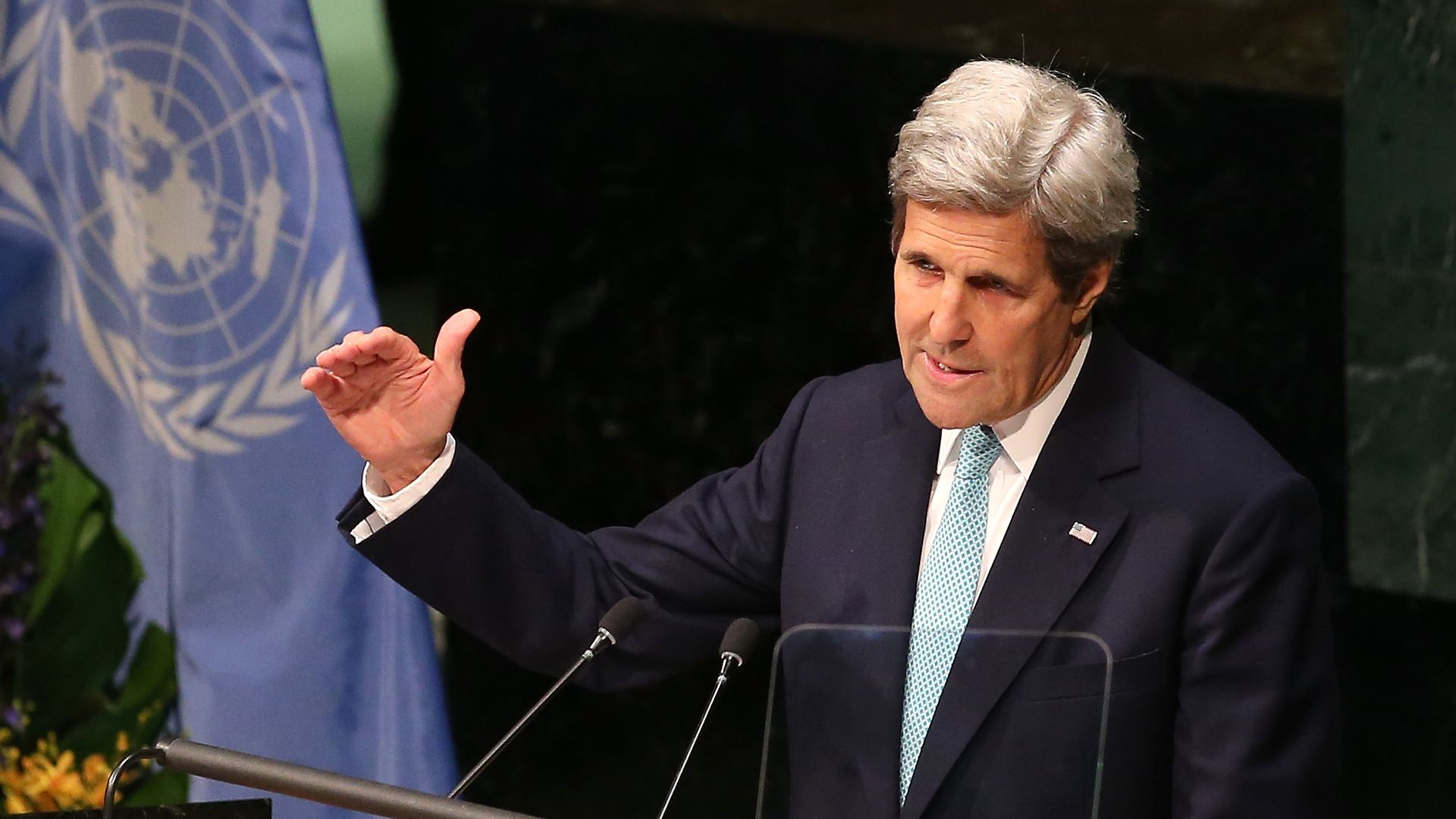
A bipartisan pair of former Cabinet members — Secretary of State John Kerry and Secretary of Defense Chuck Hagel — is set to testify to Congress next week on the national security implications of climate change, Axios has learned.
Driving the news: Kerry’s appearance will be his first time testifying since stepping down from his State Department post under President Obama in January 2017, an aide confirms. Hagel, a Republican, also served under Obama.
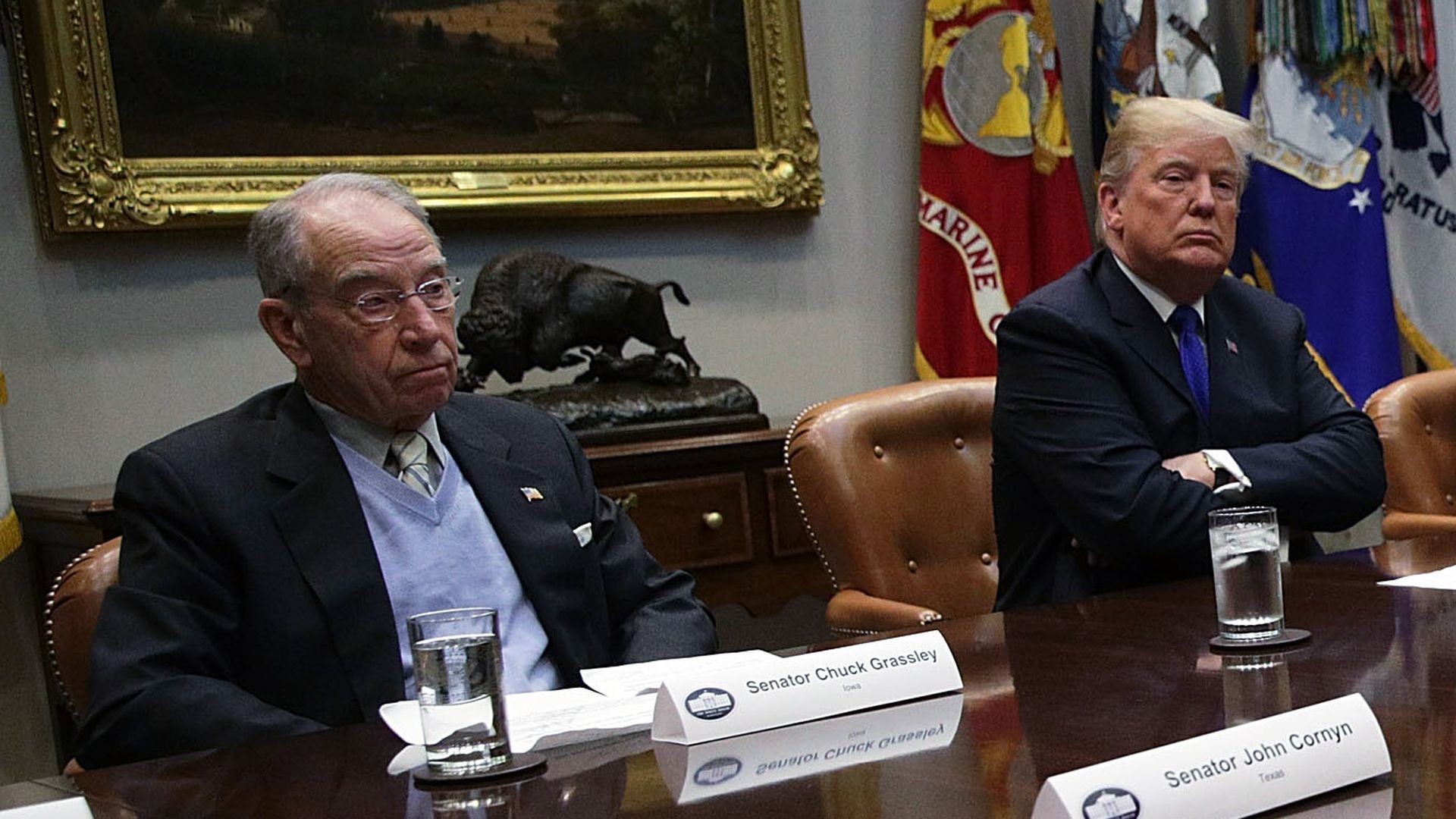
Why it matters: Grassley authored a federal tax credit for wind power and helped push the legislation over the finish line nearly 26 years ago. Iowa has more than 4,000 wind turbines and generates approximately 40% of its electricity from wind power.
As an alternative approach to securing the border, a group of scientists and engineers have proposed the U.S. and Mexico build a sprawling "energy park" of wind turbines, water desalination plants, solar panels and natural gas pipelines.
The big picture: An energy corridor could offer the benefits of a secured physical barrier, since the infrastructure would be well protected, while also creating job opportunities for both migrants and U.S. workers. It has some potential for bipartisan appeal, and President Trump even suggested a similar idea in 2017.
The House Judiciary Committee on Wednesday voted 24-17, along party lines, to authorize a subpoena compelling Attorney General William Barr to turn over special counsel Robert Mueller's "full and unredacted" report.
The big picture: Barr wrote in a letter to the committee that he would turn over a version of the report by mid-April, once he and Mueller finished redacting it for "grand jury information, classified information, information related to ongoing prosecutions, and information that may unduly infringe on the personal privacy and reputational interests of peripheral third parties." But Democrats have demanded that Barr provide the full 400-page report, along with underlying evidence, for the sake of transparency.
These are split-screen times for shareholder advocates pushing the world's most powerful oil companies to do more on global warming.
Driving the news: Axios' Amy Harder reported yesterday that the SEC granted ExxonMobil's request to throw out a shareholder resolution urging the oil giant to disclose targets for steeply cutting emissions.
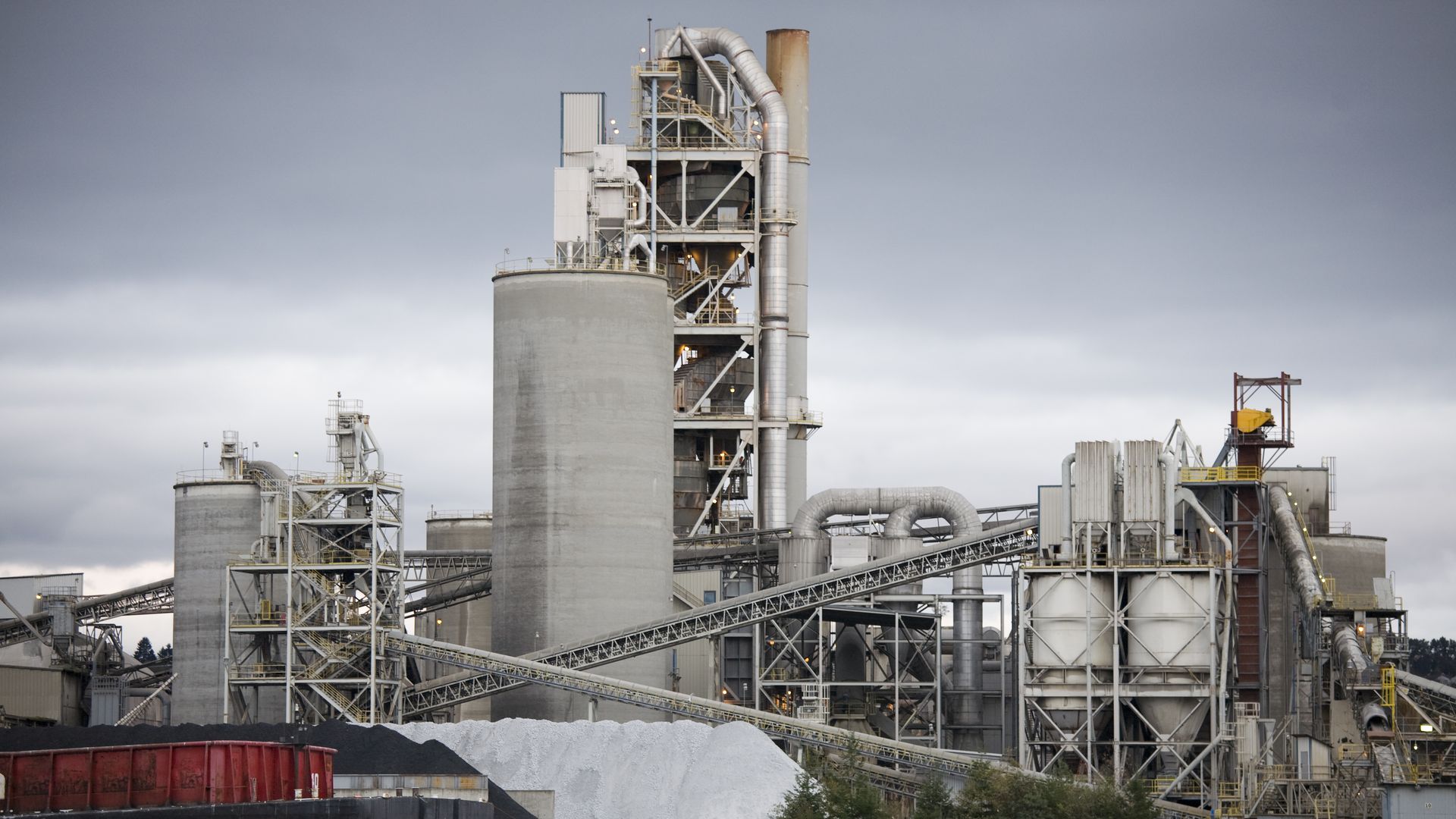
Although coal continues to be phased out of electricity generation, it remains integral to producing materials for infrastructure projects like buildings, bridges and roads.
The big picture: Coal is the most emissions-intensive fossil fuel, and steel and cement production account for more than 20% of the world's use. While options exist to reduce or eliminate coal from those processes, many of the necessary technologies require policies, incentives and new markets to bring down the costs of commercial deployment.
The federal Securities and Exchange Commission has granted ExxonMobil’s request to throw out a shareholder-pushed resolution urging the oil giant to disclose targets that would drastically reduce its greenhouse gas emissions.
Why it matters: The investment community is becoming an alternative battleground between publicly traded companies and climate change as U.S. government policy on the matter retreats under President Trump. Activist investors, including those that filed this resolution with Exxon, are worried about what they characterize as the SEC ramping up their scrutiny of resolutions under Trump.
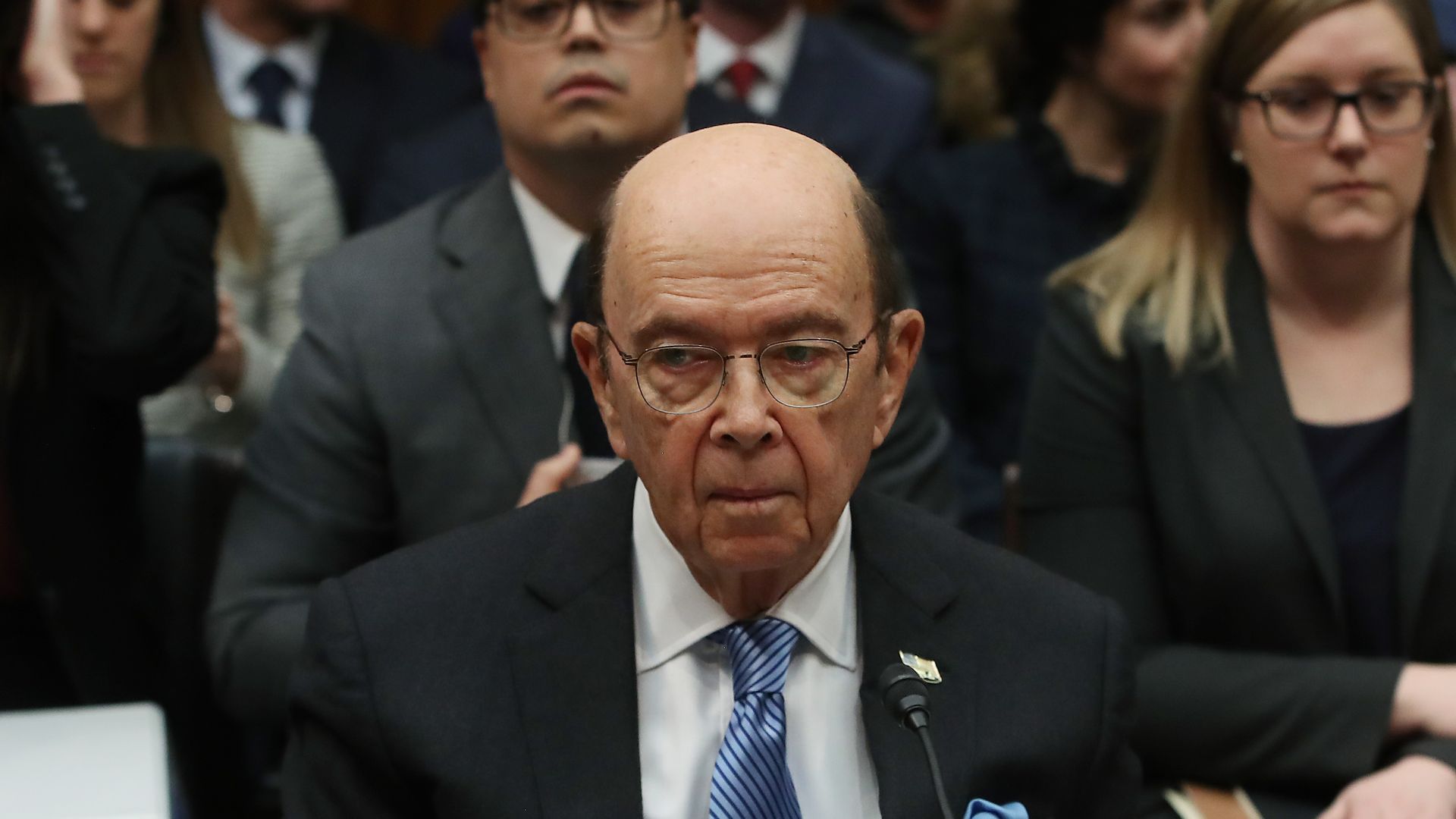
The House Oversight Committee passed a vote 23-14 Tuesday to subpoena Commerce Secretary Wilbur Ross for records related to the administration's decision to add a citizenship question to the 2020 Census, which critics say would lead to massive undercounts in heavily Democratic states with large immigrant communities.
Why it matters: With less than a year left until the 2020 Census population count, chairman Elijah Cummings said the Trump administration's "stonewalling" has left the committee no choice but "to obtain this information by compulsory process." The committee also authorized subpoenas for Principal Deputy Assistant Attorney General John Gore to testify and Attorney General William Barr to provide records related to the investigation.
There's interesting information in Saudi Aramco's 469-page bond prospectus, beyond the $111 billion net income last year that Axios Generate noted on Monday.
Driving the news: The state oil giant lays out a series of climate and climate-policy related risks to its business, including reduced demand for fossil fuels, litigation, and threats to infrastructure.
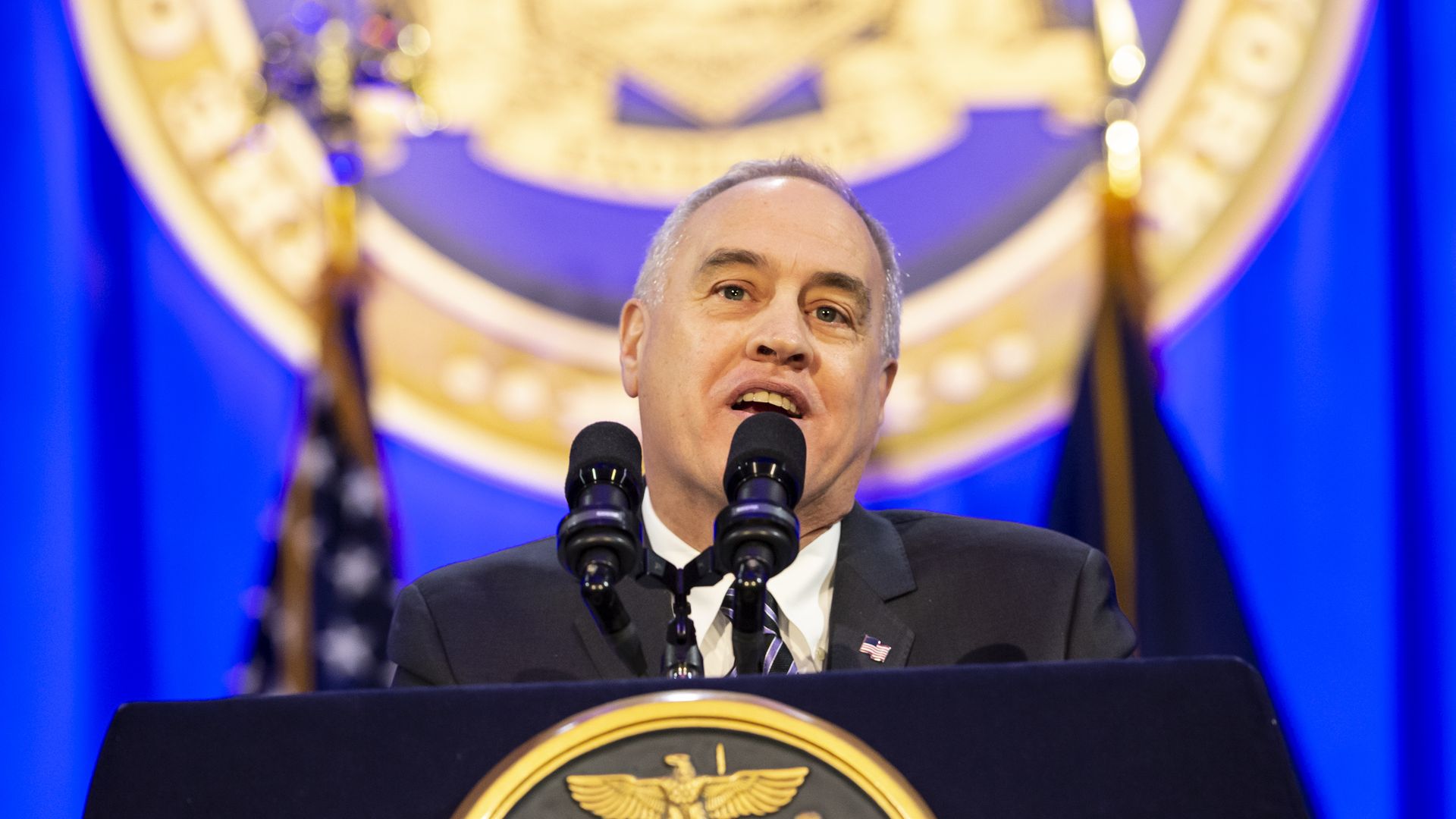
The money manager behind New York's public pension fund, Comptroller Thomas DiNapoli, is leading the charge urging more action on climate change within ExxonMobil and other publicly traded companies.
Why it matters: The investment community is becoming an alternative battleground between corporations as U.S. government policy on climate change retreats under President Trump.
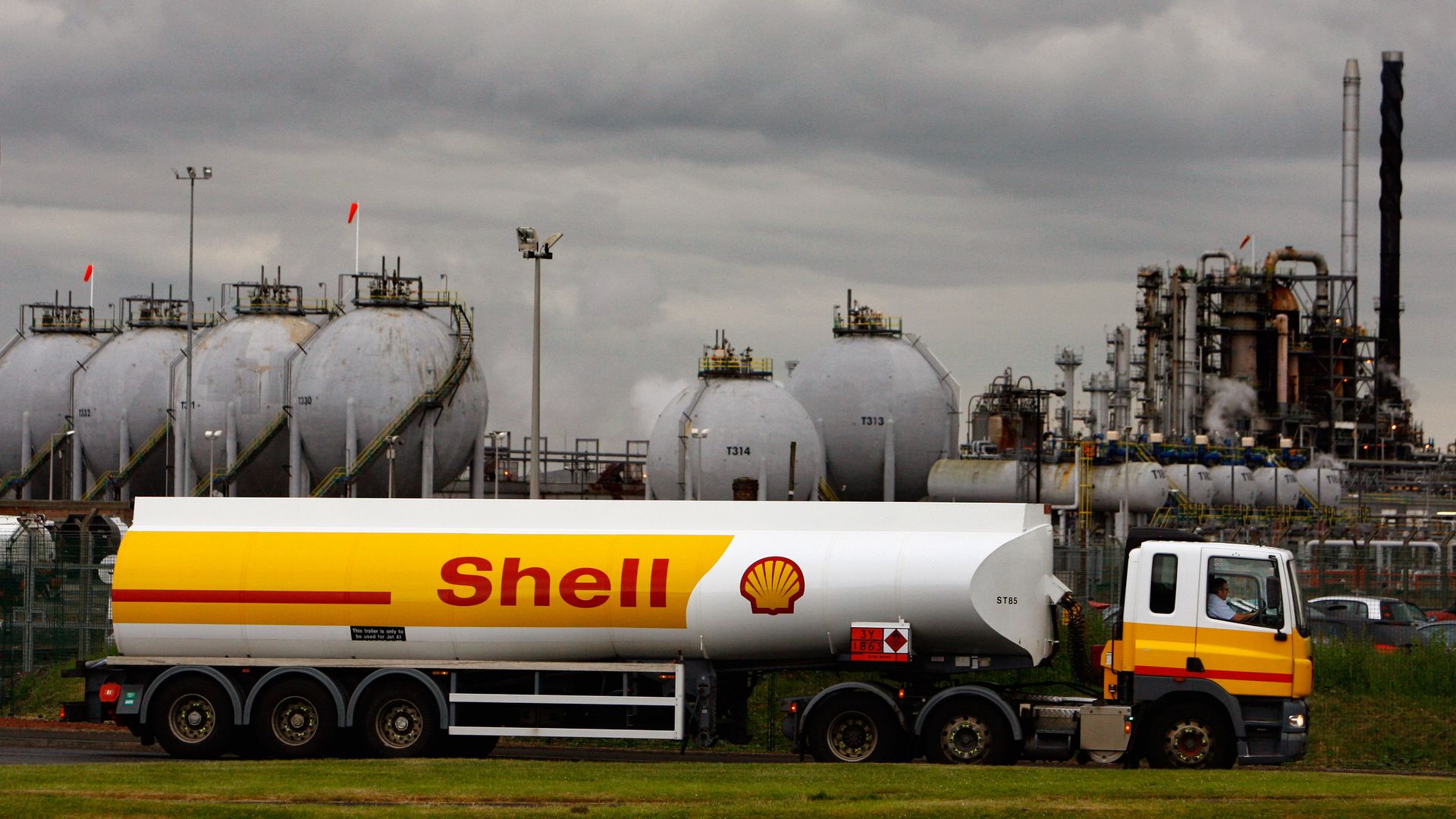
Royal Dutch Shell said Tuesday that it's leaving American Fuel & Petrochemical Manufacturers (AFPM), a major Beltway industry lobbying group, over differences on climate change policy.
Why it matters: The rupture signals how Shell and some other oil giants, largely headquartered in Europe, are moving more aggressively on climate than the petroleum industry as a whole.
"We have identified material misalignment on climate-related policy positions with this association," Shell said in a published review of its membership in trade associations. Shell said it would not renew its AFPM membership next year.



/2019/04/02/1554231989064.gif?w=3840)