New, independent observations from ocean buoys and other data sources show Earth's oceans are warming at a rate that's about 40% faster than indicated in the 2013 U.N. Intergovernmental Panel on Climate Change (IPCC) report.
Why it matters: The study, published Thursday in the journal Science, resolves a key uncertainty in climate science by reconciling analyses from a variety of different scientific teams.
Fiat Chrysler will pay more than $500 million in a settlement announced Thursday with the Justice Department and Environmental Protection Agency over allegations that it installed software on some diesel vehicles that produced lower emissions results.
Why it matters, via Axios' Amy Harder: Following a much larger scandal at Volkswagen in 2015 that resulted in billions in fines for the German automaker, it's a reminder that vehicles' efficiency shouldn't be taken for granted. Politically, the settlement highlights a sense of continuity between the Obama and Trump administrations' enforcement actions in this area.
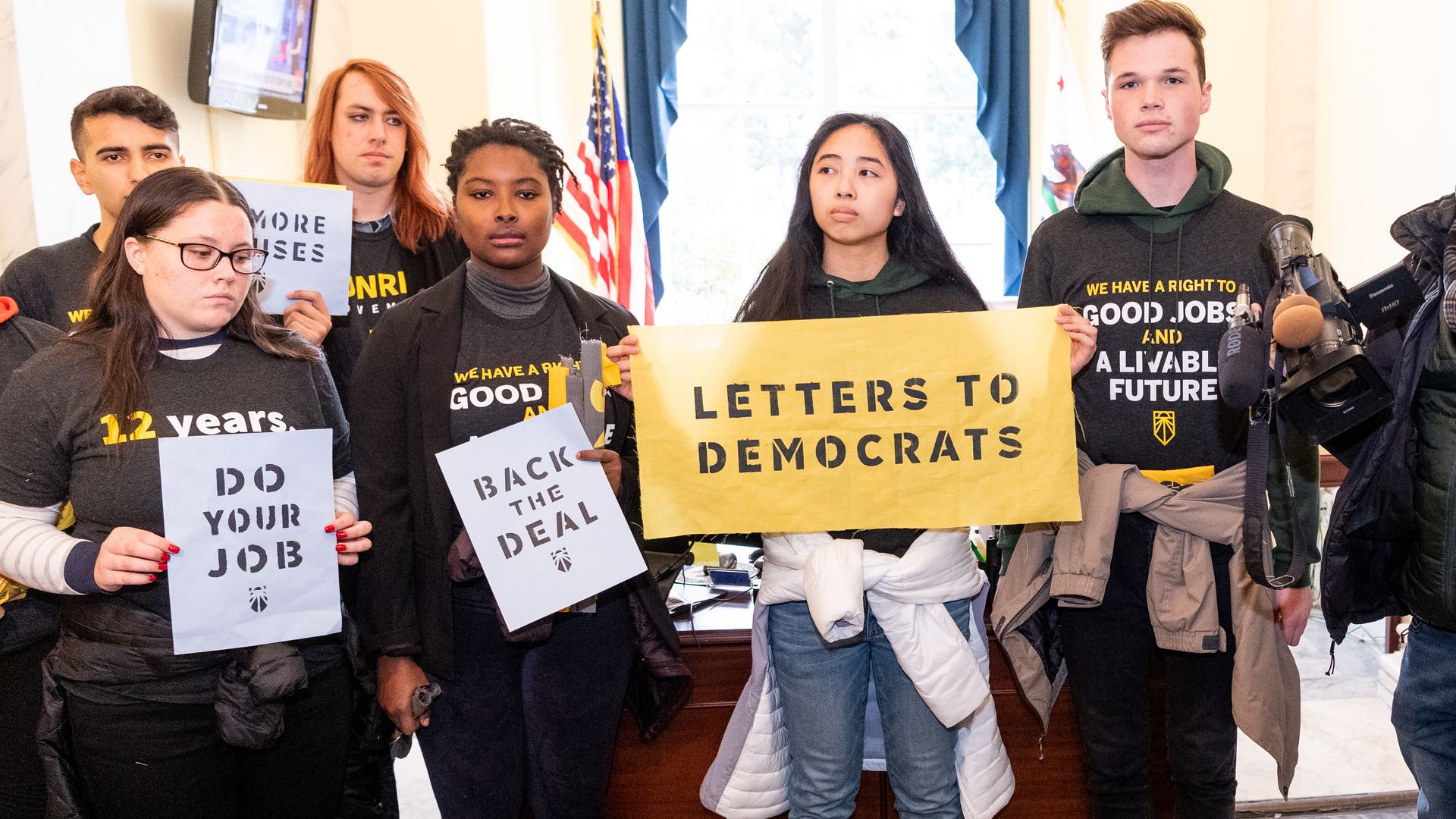
A suite of groups on the environmental movement's left flank are out with a new open letter to House members about their legislative goals around climate change.
Why it matters: The statement endorsed by groups including Friends of the Earth and 350.org is an early sign of efforts to influence the shape of the Green New Deal (and climate policy more broadly).
Several new developments in early 2019 provide a glimpse into the next wave of automakers' accelerating preparation for the mainstreaming of electric vehicles.
Driving the news: Ford and Volkswagen are on the cusp of announcing a major partnership at next week's Detroit Auto Show that includes EVs and autonomous vehicles, Reuters first reported.
ExxonMobil Corp. is actively considering whether to invest in electric-charging stations, according to an Atlantic Council report published this week.
Why it matters: Most other international oil and gas companies have at least token investments in electric-charging infrastructure, but Exxon has been an outlier among its peers in this space. Exxon's possible change of heart reflects Big Oil’s recognition that the world is transitioning away (albeit slowly) from oil-powered cars as part of a broader shift in the energy industry's response to climate change.
E-scooter startup Bird is raising $300 million in new funding led by Fidelity, Axios has learned. Bird would maintain its existing $2 billion pre-money valuation, as this is being structured as an extension of its prior round.
The big picture: Bird continues to battle for "micromobility" supremacy with rival Lime, which is said to be seeking $400 million in its own new funding round. A Bird spokesperson declined comment.
Kim Hart fills in for Dan today and chats with Axios science editor Andrew Freedman about the polar vortex and why we experience certain weather patterns. Also in the "Final Two," Kim talks about a key defeat in Brexit negotiations and how 18- to 27-year-olds feel that they will never be able to pay off their debt.
Chevron and Occidental are investing an undisclosed amount in Carbon Engineering, a Canadian company aiming to commercialize technology that captures carbon emissions directly from the atmosphere.
Why it matters: It's a clear sign of increasing interest in the viability of direct air capture (DAC) technologies.
President Trump threatened to cut off FEMA funding for California's wildfire relief in a Wednesday tweet, blaming the state's poor land management.
"Billions of dollars are sent to the State of California for Forest fires that, with proper Forest Management, would never happen. Unless they get their act together, which is unlikely, I have ordered FEMA to send no more money. It is a disgraceful situation in lives & money!"
Our thought bubble from Axios science editor Andrew Freedman: Climate change is extending wildfire season year-round and increasing the frequency of extreme fires that spread quickly and are harder to contain. Forest management, including "raking" brush, which President Trump has previously advocated, would reduce only some of the risk, fire experts have told Axios.