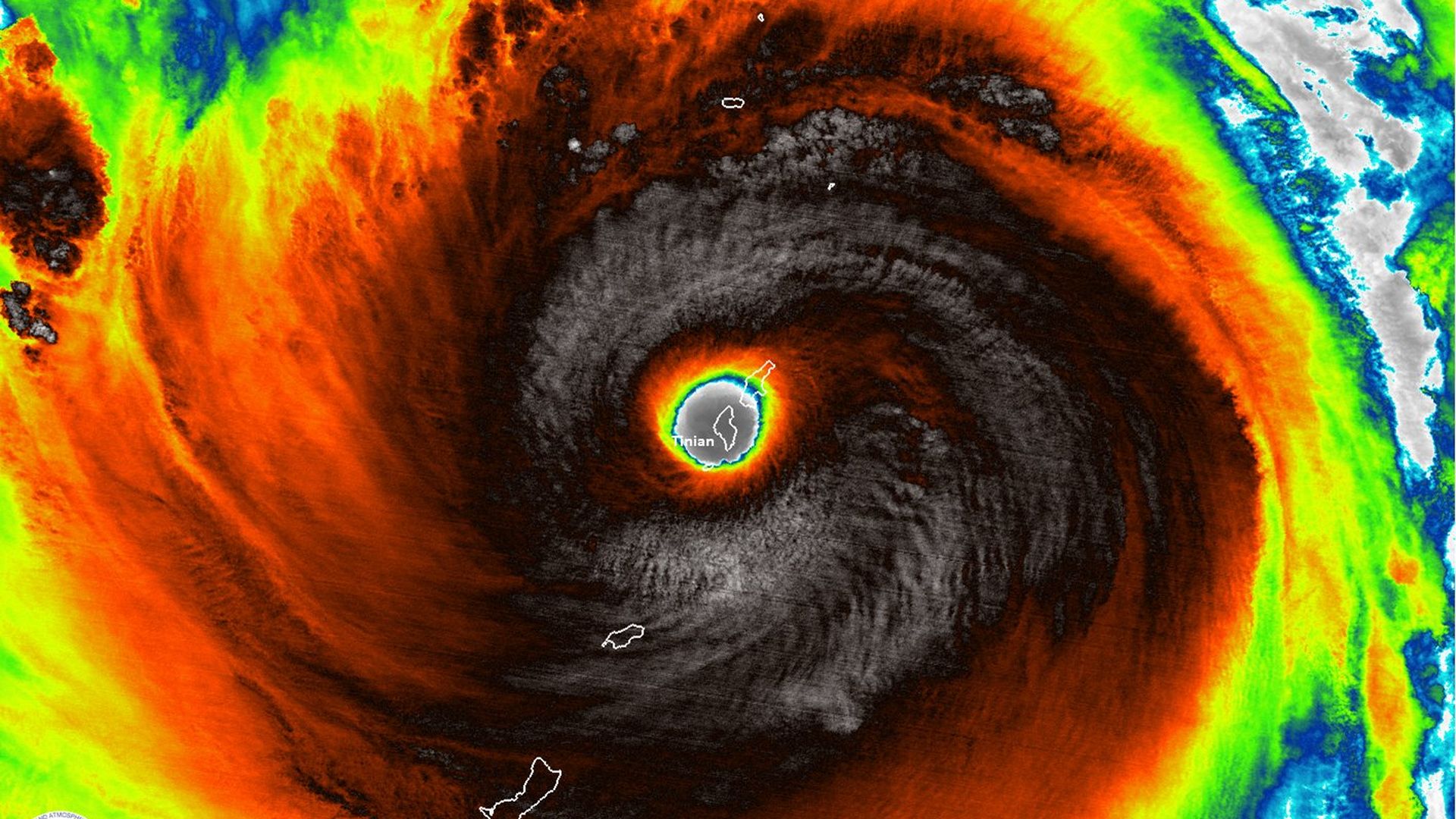
Super Typhoon Yutu struck the Northern Mariana Islands on October 24, packing maximum sustained winds of 180 miles per hour and gusts higher than 200 mph. This made it the most intense storm to strike U.S. soil since at least 1935, and one of the strongest storms ever measured on Earth.
The big picture: Before and after satellite photos taken by DigitalGlobe's WorldView-3 satellite provide a first look at the devastation the storm brought to the islands of Tinian and Saipan in particular.
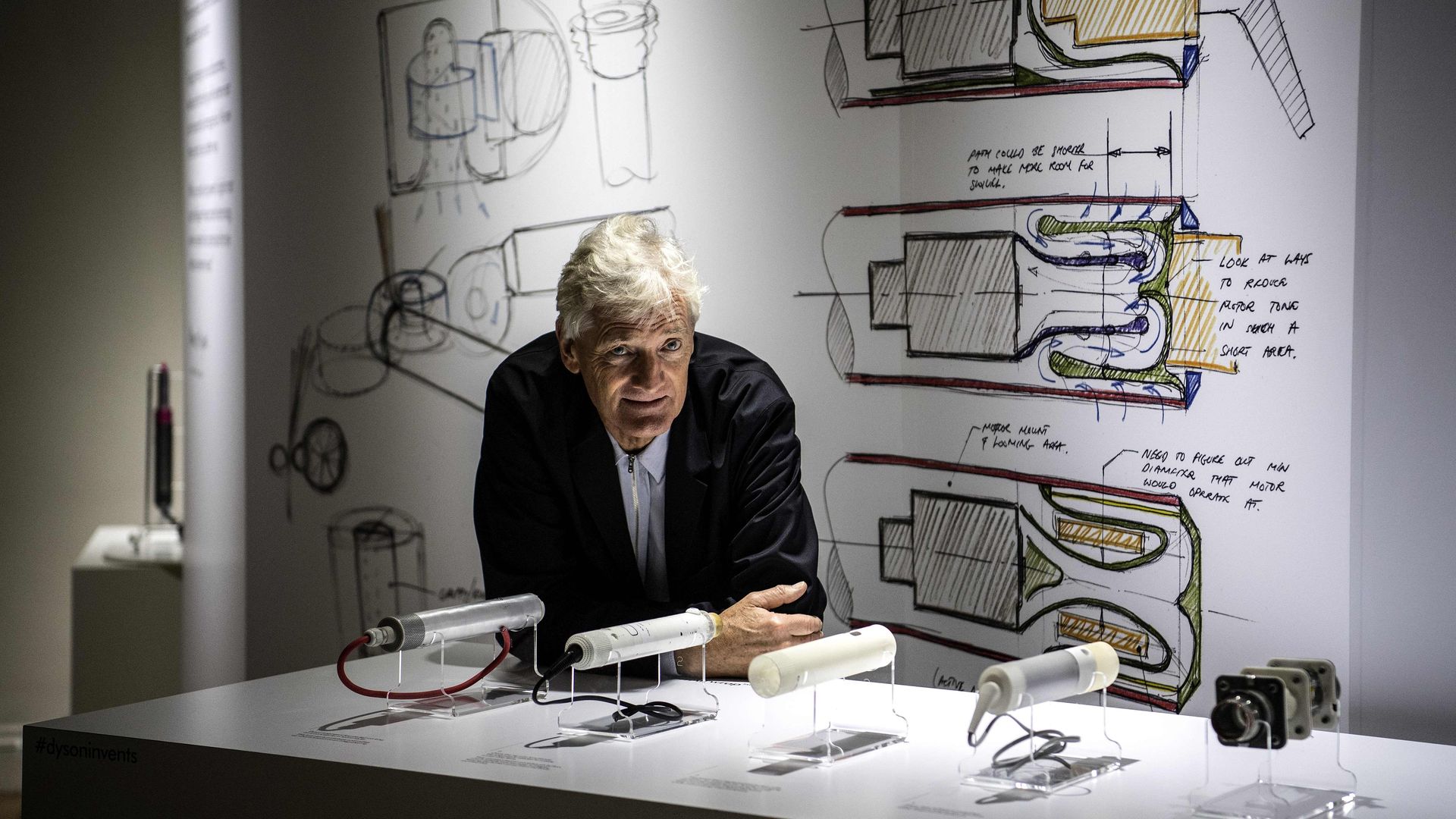
British technology company Dyson is moving forward with its plan to build electric cars after its board approved plans to build a plant in Singapore by 2020, according to The Verge.
Why it matters: This is the next step from Dyson's announcement in 2017 to break into the electric car market, a $2.5 billion investment. The company has transformed markets by redesigning the engineering make-up of premium vacuums, hairstyling and household appliances and hand dryers.
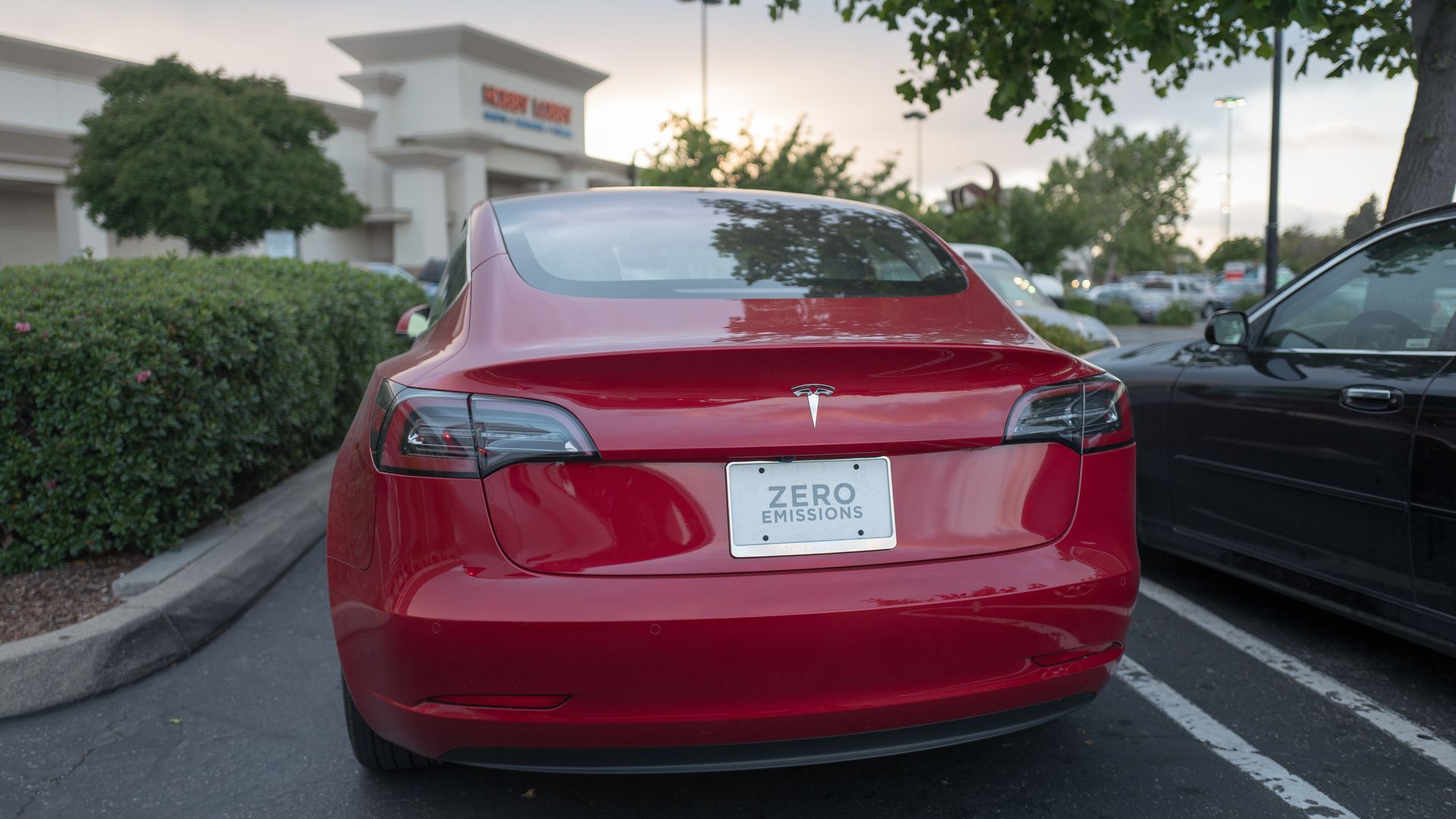
As Tesla and CEO Elon Musk wrapped up a settlement with the Securities and Exchange Commission, the FBI deepened an investigation into whether Tesla misstated information about the production of its Model 3 sedans and if the company deceived investors back in 2017, The Wall Street Journal reports.
The big picture: The FBI requested "documents from the Department of Justice about its public guidance for the Model 3 ramp," per Tesla. In February 2017, Tesla had an aggressive production plan for the Model 3 to make 5,000 vehicles a week in the fourth quarter of that year. The FBI will compare the company’s statements with its production capability from 2017.
Few changes in modern life will hit in more radical ways than how we get around.
Already, people are abandoning cars for ride-hailing and tooling around on electric scooters. Computer-assisted driving is giving way to prototype autonomous vehicles that share the road in some cities with pedestrians, bicyclists and traditional vehicles.
The big picture: The vision is that driverless cars will chauffeur you anywhere while you relax, work or socialize. The reality is that while 99% of routine driving skills have been relatively easy for robots to achieve, the last 1% haven't — and those are crucial for safety and consumer trust.