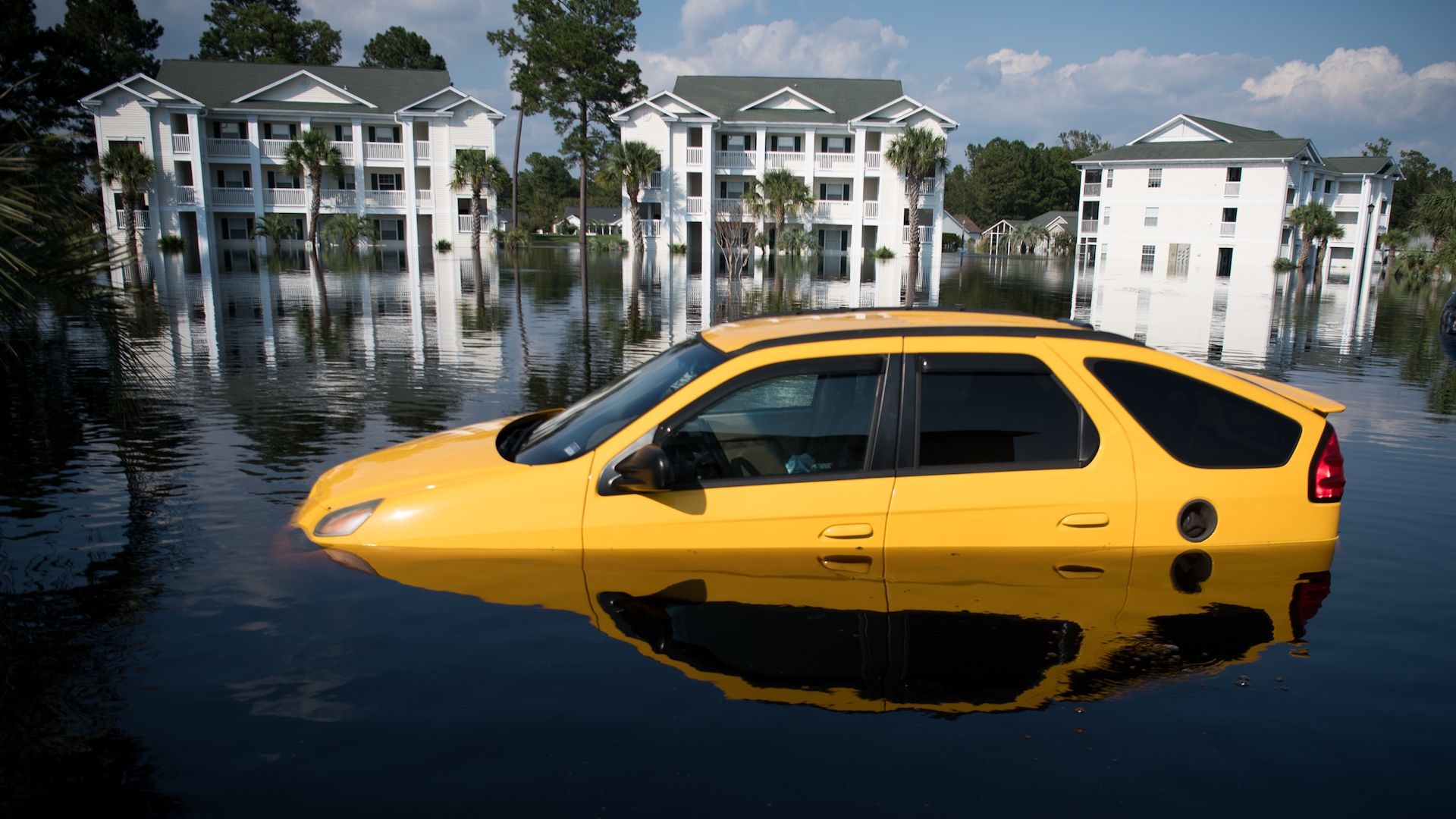
A sea level research and communications group's rapid analysis of the storm surge from Hurricane Florence has found that 1-in-5 of the homes impacted along the Carolina coast wouldn't have fared so badly had sea levels not risen significantly since 1970.
Why it matters: Sea level rise is one of the most significant effects of climate change that is already impacting society, and its footprint is only projected to grow. For example, the report also projects far more flooding from a similar, Florence-type storm in 2050.
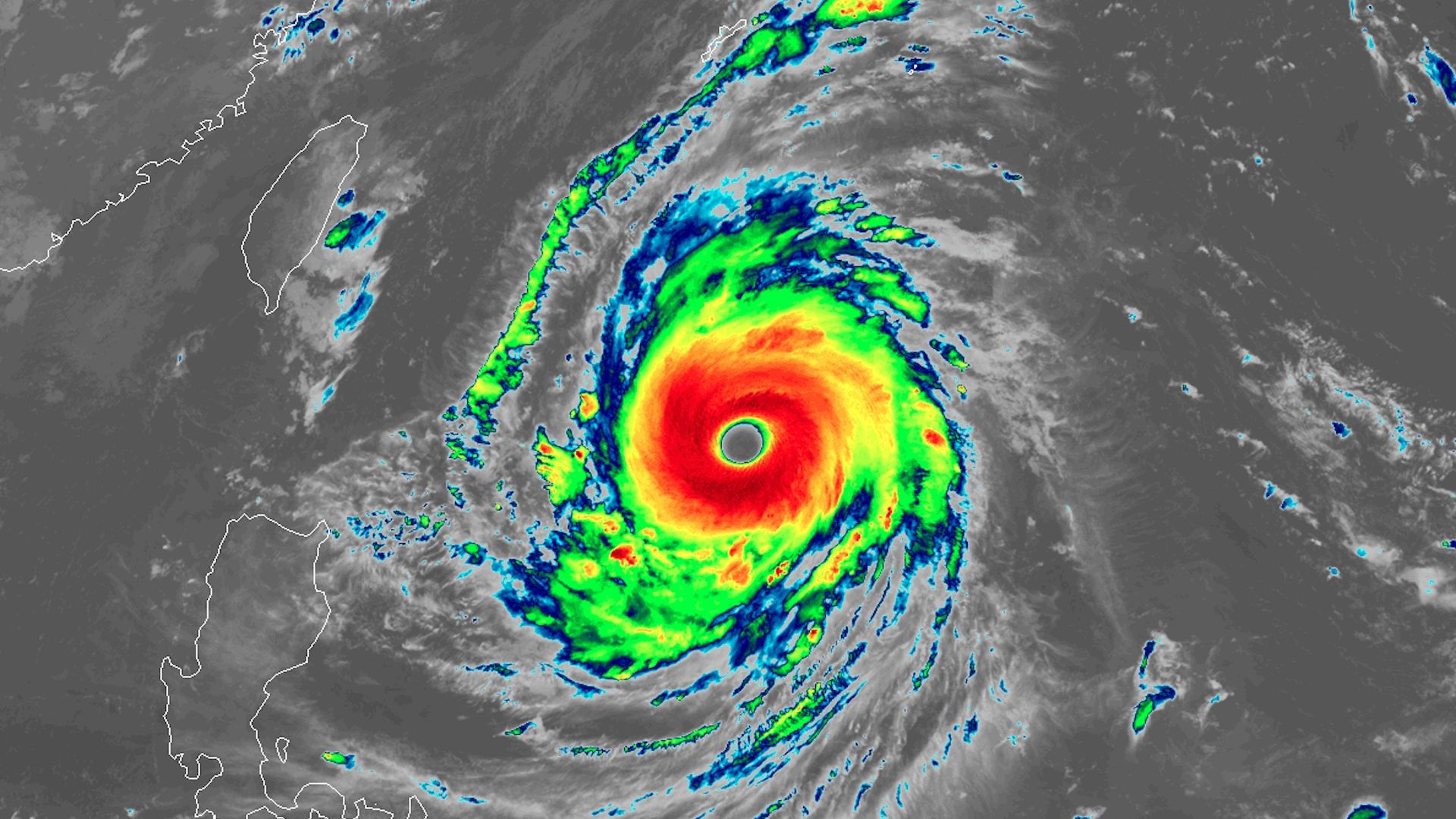
Super Typhoon Trami exploded in intensity from a tropical storm on Saturday to the verge of Category 5 intensity on Monday. The storm is slowly moving northwestward, spinning closer to Taiwan and southwestern Japan.
The big picture: Super Typhoon Trami is expected to reach the equivalent of Category 5 intensity as it moves slowly over some of the warmest waters in the Northern Hemisphere. By Sept. 29, it will be nearing Japan's Ryukyu Islands and northern Taiwan. Given the track uncertainty this far in advance, the storm is considered a landfall threat to Taiwan.
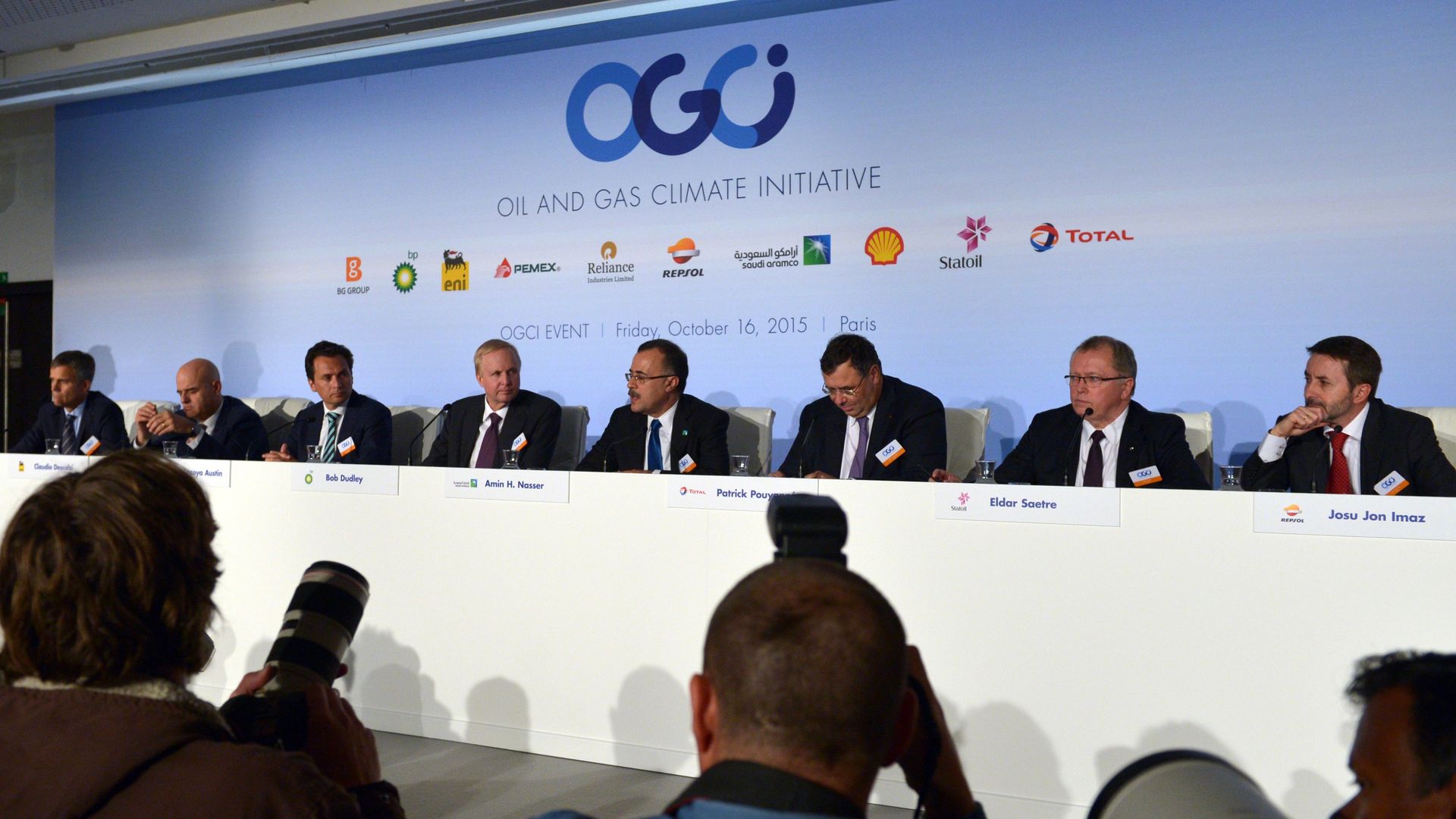
The Oil and Gas Climate Initiative (OGCI), a group of top oil companies that now includes ExxonMobil and Chevron, has committed to a 20% cut in methane emissions by 2025, reports Reuters.
Why it matters: Per the Environmental Defense Fund, methane is 84 times more potent than carbon dioxide as a heat-trapping gas in the first two decades of its release. The announcement by OGCI is another sign of how America’s biggest oil companies, under pressure from investors and lawsuits, are joining most other U.S. corporations in working to reduce greenhouse gas emissions.
Owners of a troubled, over-budget nuclear power project in Georgia will decide today whether to cancel the ongoing construction of two new reactors.
Why it matters: The expansion of Southern Company's Vogtle site is the only nuclear power project underway in the country. Its demise would be a major blow to the industry that has seen hopes for a U.S. renaissance fade.
Addressing climate change isn’t just about moving to cleaner forms of energy anymore. It’s about literally taking out some of the heat-trapping gases already in our skies.
Why it matters: There is so much buildup of carbon dioxide in the atmosphere, scientists say we’ve reached a point that some needs to be removed to limit Earth’s temperature rise and avoid the worst impacts of a warmer world. Technology exists to do it, but it’s costly, zany-sounding and not well known. That's starting to change now.
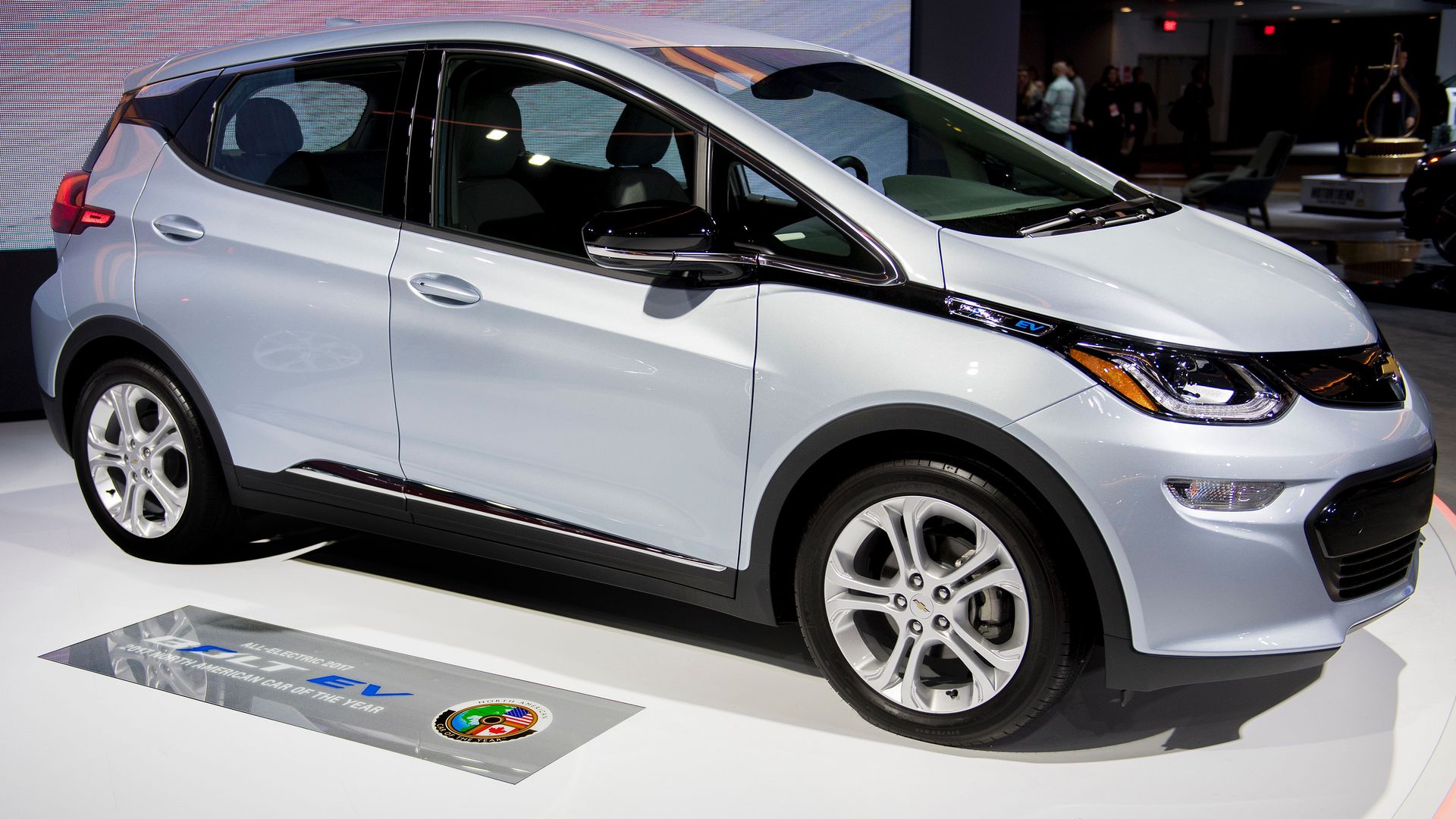
General Motors is overhauling its electric vehicle management with several internal moves as the automaker works to have 20 EV models launched worldwide by 2023.
Why it matters: The moves signal increased focus on EVs by major automakers — even though they hold only a tiny share of the market today.
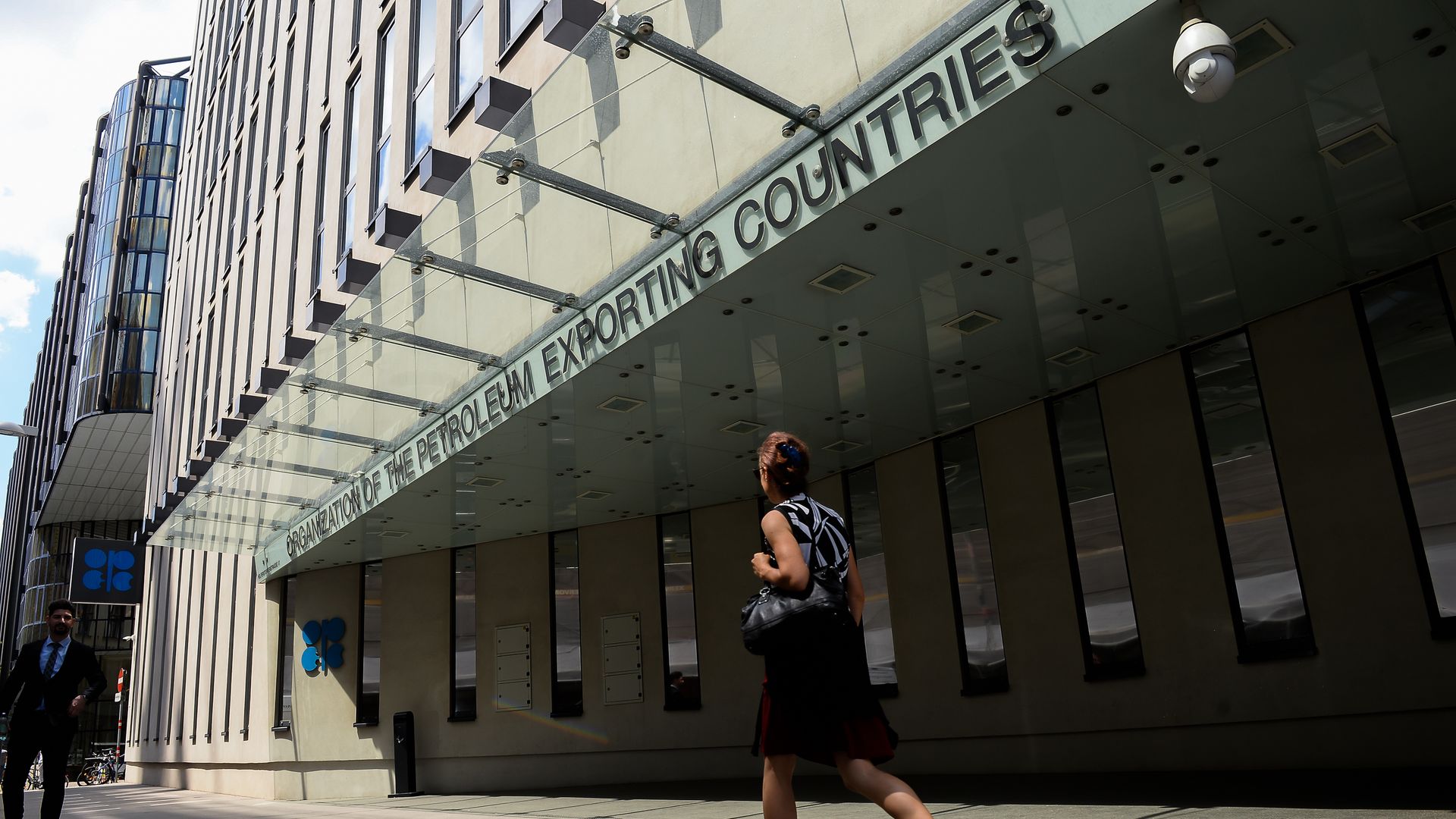
OPEC's latest long-term forecast sees global oil demand rising through at least 2040, effectively rebuffing analyses released since last year's edition that project an earlier peak in the world's crude thirst.
Why it matters: The timing of the eventual peak in crude oil demand is relevant to the long-term planning of oil producers and companies — not to mention the trajectory of worldwide greenhouse gas emissions.
The flooding from Hurricane Florence continues in the Carolinas, after the storm dumped an epic amount of rain. Rising waters have breached dams and overtopped levees, and pollution concerns are growing as hog waste and coal ash enters swollen rivers and lakes.
The big picture: Photos taken using DigitalGlobe's satellites show a dramatic contrast between the landscape before and after this historic storm. The company, which operates a fleet of Earth imaging satellites for civilian and government use, released these images as rivers were still rising.
Porsche announced Sunday that it will no longer offer cars with diesel propulsion and instead focus more of its attention on hybrid and electric vehicles.
The big picture: Porsche stressed that it is "not demonizing diesel," and that the decision is simply a case of demand for hybrid models skyrocketing at the same time interest in diesel is falling.