A bipartisan pair of former congressional leaders, backed by corporate money, are launching a seven-figure advocacy and lobbying group in support of a carbon tax.
Why it matters: It’s a pivotal step bolstering an initiative, first launched last year by conservative leaders from earlier GOP administrations, pushing a carbon tax in which its revenue is returned back to most Americans in the form of dividend checks. Tuesday’s announcement comes one year after four global oil companies announced support for the plan.
Solar energy has experienced rapid growth in the U.S. — from essentially no share of the nation's generation only 7 years ago to 1.5% of the total by 2016's end.
What to watch: In the medium term, solar energy will face significant headwinds in the form of tariffs, tax code changes and diminishing incentives, which threaten to reduce its cost-competitiveness. Despite these challenges, investors and developers remain bullish on solar’s long-term potential, with installed capacity projected to more than double in less than 5 years.
Ben Walker, the Department of Energy's assistant secretary for the Office of Electricity, said the department is "uniquely situated" as part of the intelligence community and makes "classified intelligence decisions," to secure the United States in response to criticism of administration plans to aid economically struggling coal-fired and nuclear power plants on the Columbia Energy Exchange podcast.
Why it matters: The comment shows how the department is positioning itself at a time when many critics from various quarters say the potential aid is unneeded and accuse the administration of grafting a new post-facto rationale onto their longstanding goal of saving coal plants.
The U.S. took a back seat in pursuing renewable energy goals through federal policy after announcing plans to pull out of the Paris Climate Agreement last year, but a survey published by the American Council on Renewable Energy (ACORE) found that confidence in the sector remains high among investors.
Where it stands: Surveying financial firms that make up a third of annual renewable energy investments nationwide, ACORE found that two-thirds plan to increase their investments in U.S. renewables by 5% or more in 2018 when compared to 2017.
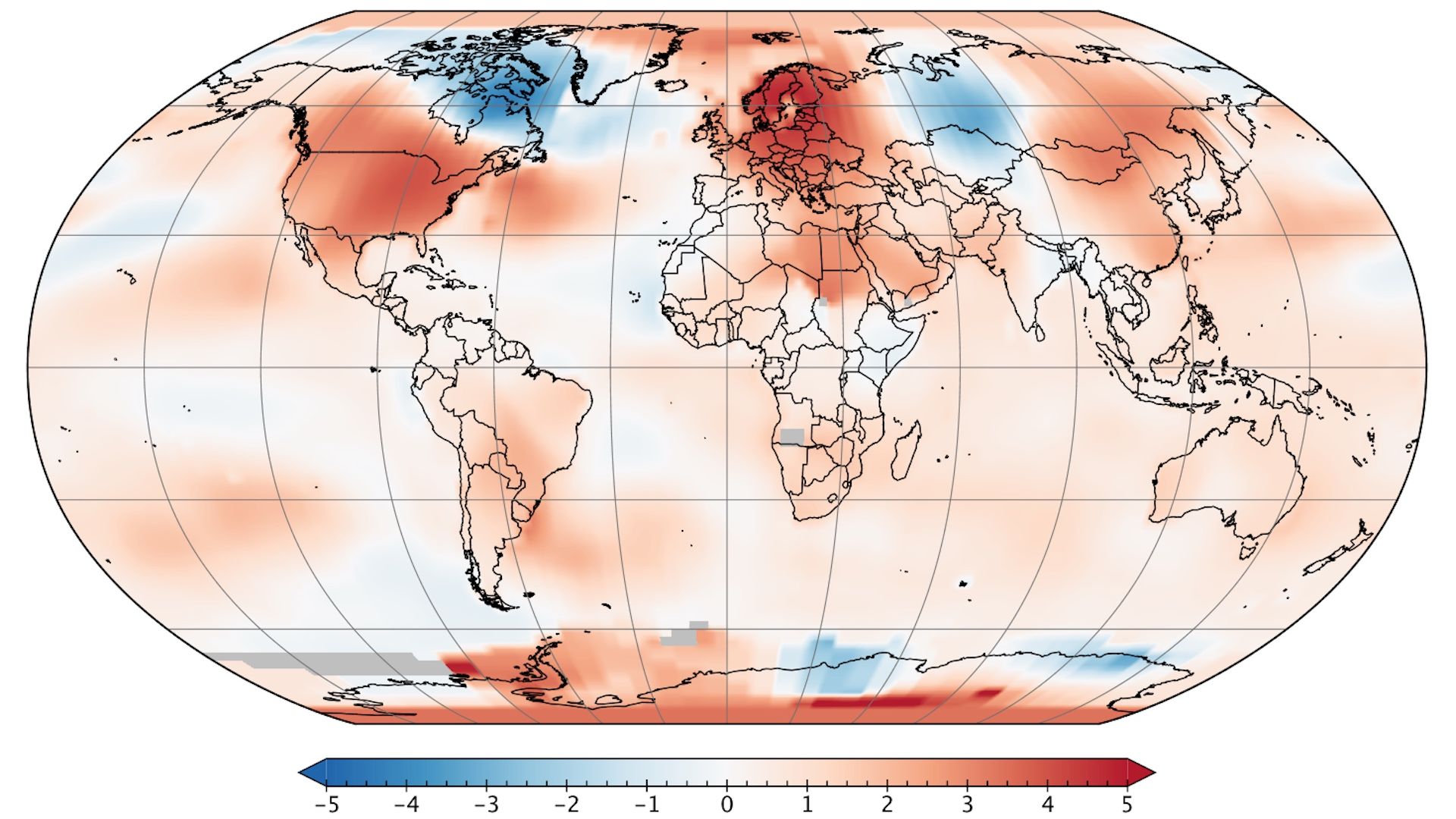
May was the fourth-warmest such month on record, according to NASA, NOAA and the Japan Meteorological Agency. In addition, NASA found that spring in the Northern Hemisphere was the third-warmest such period on record, since instrument records began in 1880.
Why this matters: The monthly temperature data is another piece in the broader picture of a changing climate, with month after month, and year after year, showing an increasing trend. Using NOAA's data, May was the 401st straight month to be warmer-than-average globally.
GM and Honda recently announced a deal to co-develop next-generation battery systems for future electric vehicles (EVs) in North America. Named the EME 1.0, the battery system relies on GM internal designs and is said to have a smaller footprint than current commercial models. Honda will procure battery systems from GM as part of this arrangement.
Why it matters: The firms will share development resources and costs to improve battery charge times while maintaining high energy density. In addition to their smaller footprint, these batteries couldcut manufacturing and materials costs up to 50%.
The U.S.-China trade war is no longer sparing some major energy equipment and commodities, including crude oil, while U.S. natural gas exports still remain outside the struggle.
The big picture: In recent days, analysts have been grappling with a few major questions when it comes to oil, including: how specific trade flows will be affected and whether the wider economic fallout from the U.S.-China fight will hinder worldwide oil demand.
Beef is an American food icon. It’s also the biggest culinary culprit when it comes to greenhouse gas emissions.
Why it matters: California startups are increasingly targeting carnivores with plant burgers so beef-like they bleed, as you'll see in the above video. Plus, new research is breaking down food’s impact on climate change, and potential solutions are emerging to cut down on a potent greenhouse gas that cows emit.