Pressure is growing on President Trump to replace Veterans Affairs Secretary David Shulkin, with reports that Energy Secretary Rick Perry is being considered as a replacement and an influential Republican calling for Shulkin to be fired.
The backdrop: As we reported this weekend, Trump has become increasingly fed up with Shulkin in recent days. A source with direct knowledge confirms the New York Times report that Trump has mentioned Perry as a possible replacement but other names are in the mix. Some senior staff will try to talk Trump out of picking Perry because that would mean two more confirmation votes (for Perry and his replacement) in addition to votes for the new secretary of State.
George David Banks, who until recently was a top White House international climate aide, predicts President Trump will reverse his decision to abandon the Paris climate accord.
Why it matters: If borne out —a gigantic "if" — it would mark a major reversal for an administration that has abandoned or sought to reverse a suite of Obama-era global warming policies.
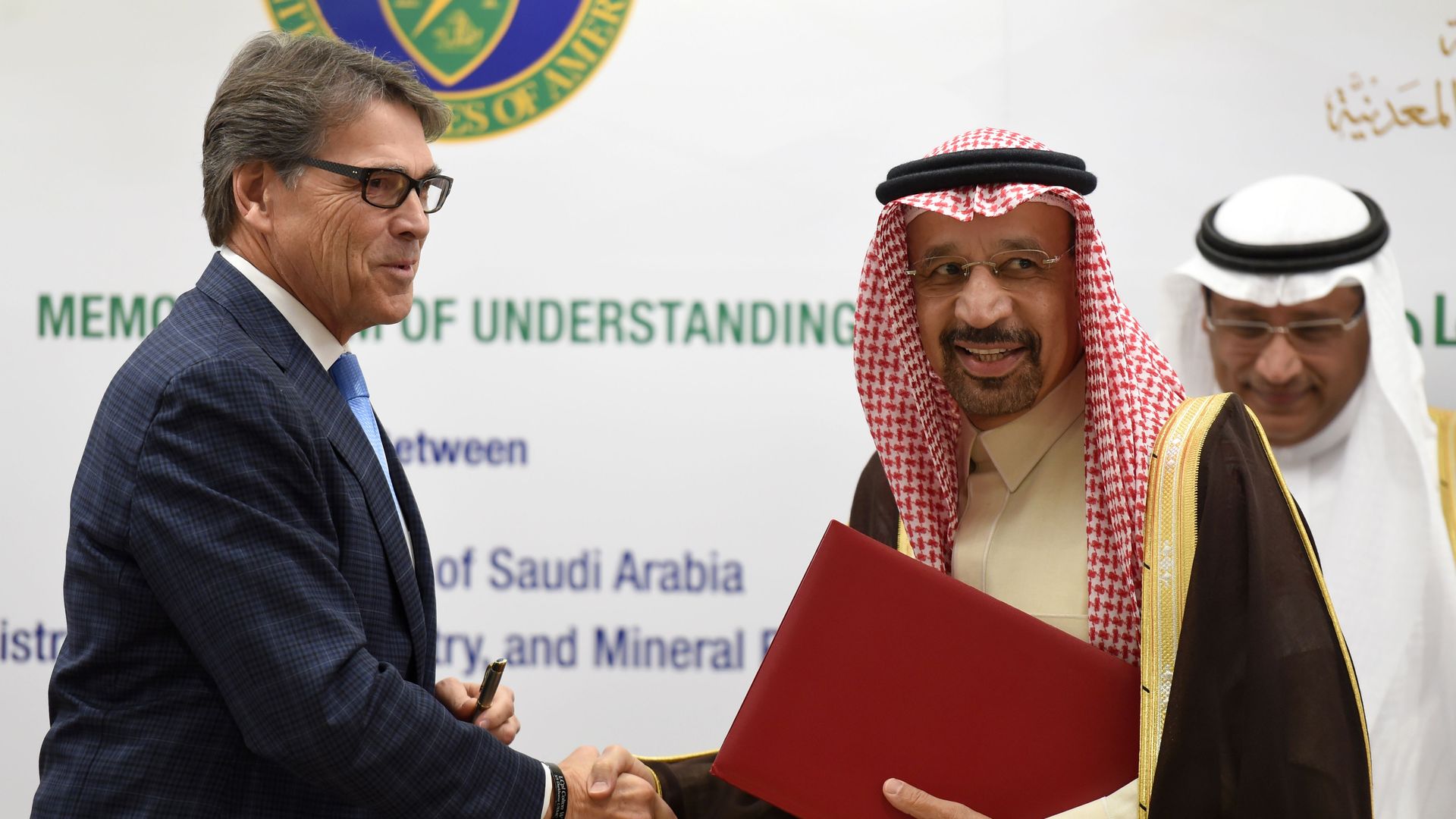
When Saudi Arabia opened the bid for construction of its first nuclear power plant, the U.S.–based manufacturer Westinghouse was eager to beat out Russia’s Rosatom and China's National Nuclear Corporation for the deal. Last week Energy Secretary Rick Perry traveled to London to discuss the potential for a nuclear cooperation agreement with senior Saudi officials.
Why it matters: In order to secure the deal, the Trump administration may relax the U.S.’s “gold standard” nonproliferation guidelines — conditions that would prohibit Saudi Arabia from enriching uranium or reprocessing spent fuel. In that case, neither outcome of the bidding process would come without downsides.
Occidental Petroleum, one of the biggest producers in Texas’ Permian basin, quietly issued its first-ever climate change report earlier this month.
Why it matters: Occidental’s report is the latest from a string of fossil-fuel companies responding to resolutions pushed last year by investors requiring more disclosure about what companies are doing to prepare for a carbon-constrained future. Occidental stood out last year because its measure was both the first to pass and saw record votes in support.
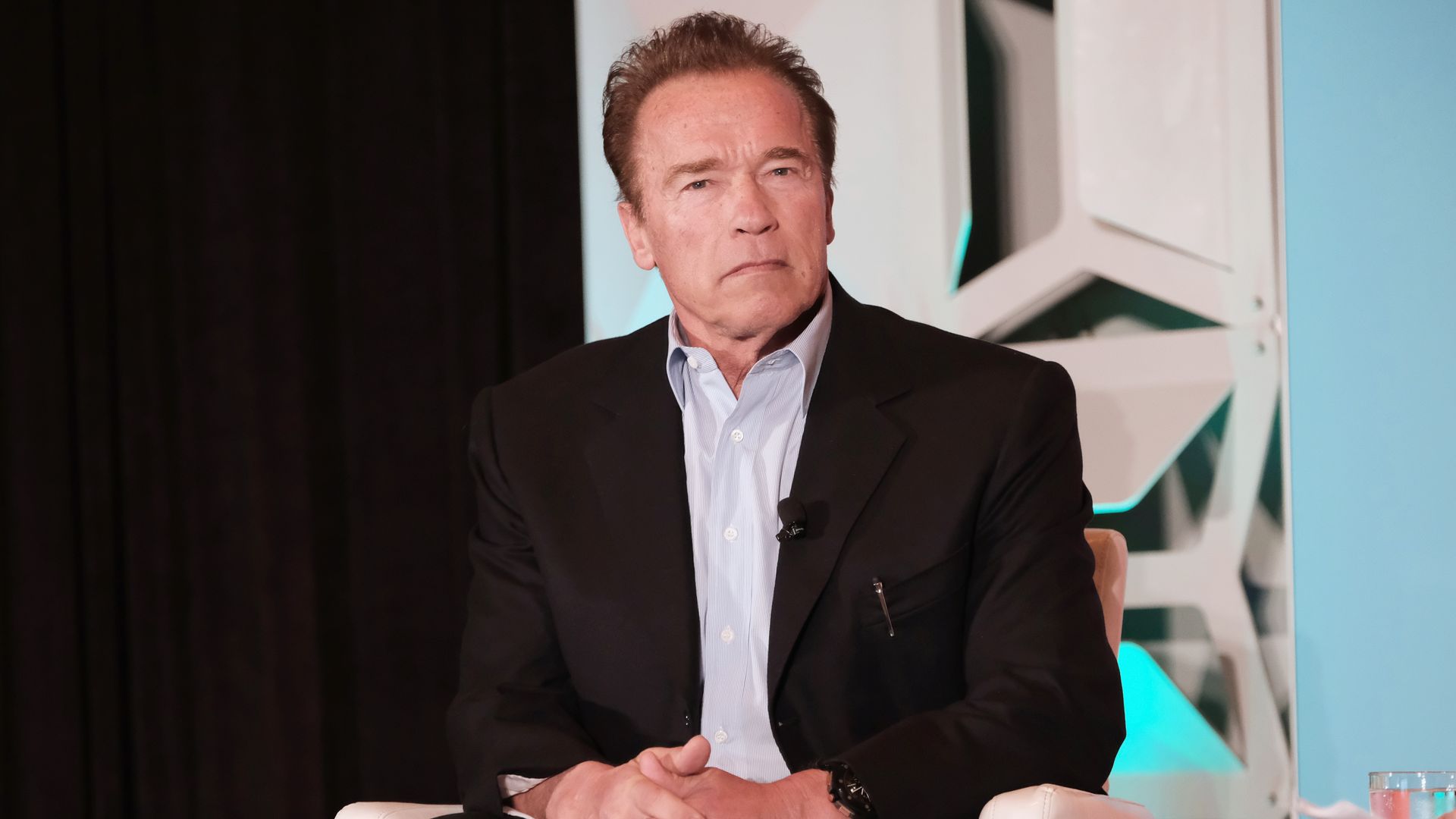
Arnold Schwarzenegger told Politico at South by Southwest on Sunday that he is going to sue oil companies “for knowingly killing people all over the world," comparing oil companies to the tobacco industry that knew smoking could kill people, but for years denied what they knew.
Key quote: He said that since 1959 oil companies knew fossil fuels caused global warming, "I don’t think there’s any difference: If you walk into a room and you know you’re going to kill someone, it’s first degree murder; I think it’s the same thing with the oil companies.”
As he set an audacious Mars target, Elon Musk — the Tesla and SpaceX visionary, introduced as liking things that go fast and go far — urged the young, ambitious crowd at South by Southwest in Austin yesterday to look up in more ways than one:
His message: Life can't just be about solving one sad problem after another. We need things that inspire us, that make us glad to wake up in the morning and be part of humanity.
HOUSTON — On the outskirts of America's oil capital is a carbon capture project poised to reap hundreds of millions of dollars in new federal tax credits. There's a catch, though: it uses the carbon to extract oil.
Why it matters: Capturing carbon to extract oil seems counterintuitive to addressing climate change, but experts who have crunched the numbers say this technology is a necessary, if controversial, step that's helped along by these kinds of projects.
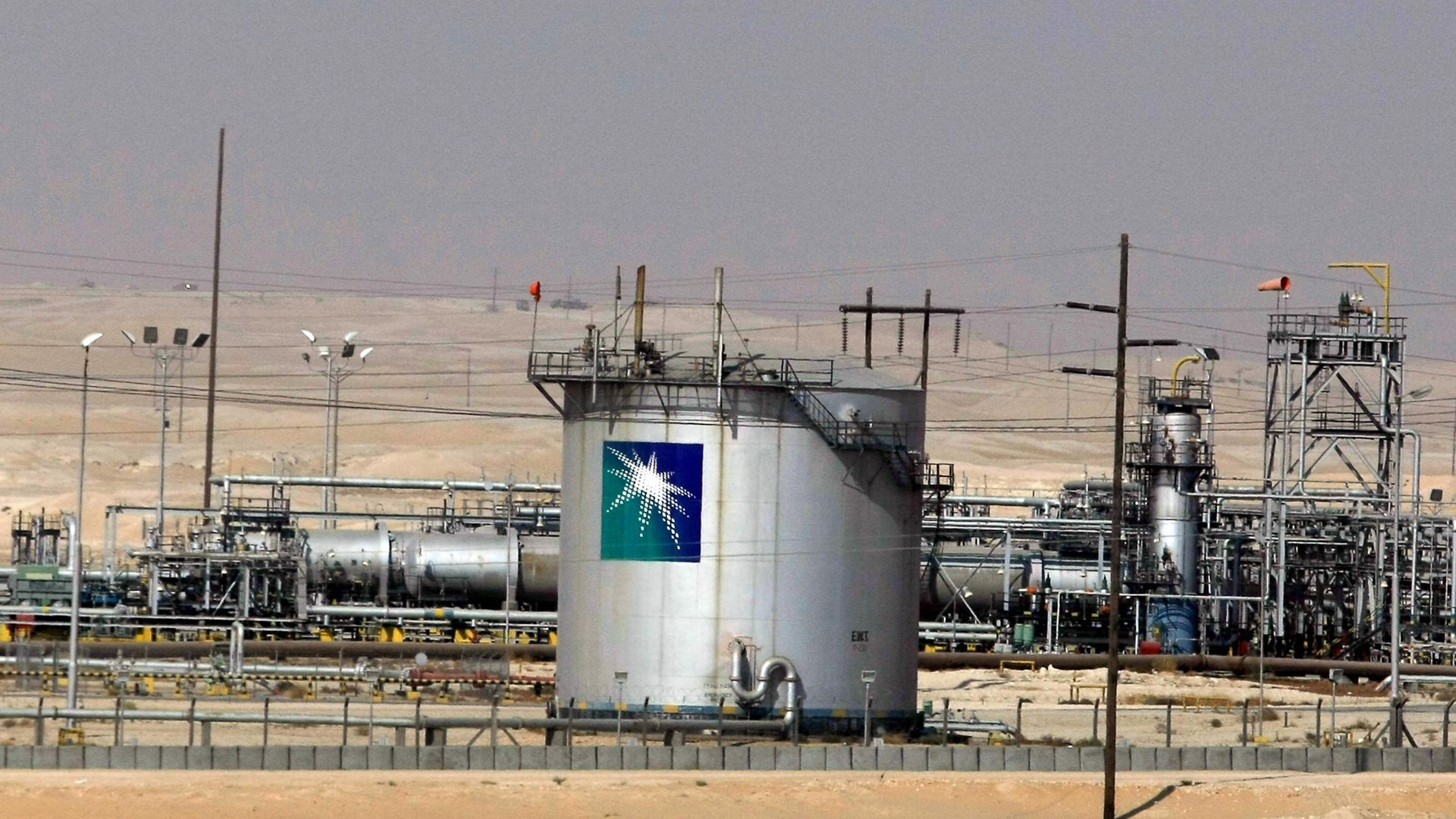
The last few days have brought increasingly firm signs that Saudi Aramco's massive international IPO won't happen in 2018.
Why it matters: The IPO is designed to raise tens of billions of dollars to help support the kingdom's economic diversification plans. The selection of the main listing venue is also high-stakes, given the massive fees and action it will bring.
A new analysis finds that in 2017 the world's largest asset managers often declined to support shareholder resolutions that pushed large power and oil companies to respond more aggressively to climate change risks.
Data: Peterson, et al., 2018, "Asset Managers and Climate-Related Shareholder Proposals: Report on Key Climate Votes", 50/50 Climate Project; Chart: Andrew Witherspoon / Axios
Why it matters: The report arrives as activist investors and their allies are increasingly pushing large energy companies to disclose more about their plans to address climate change. There's a particular focus on pushing companies to model how their business will fare in a hypothetical carbon-constrained world in which emissions are on a trajectory to hold the global temperature increase to two degrees Celsius above preindustrial levels.