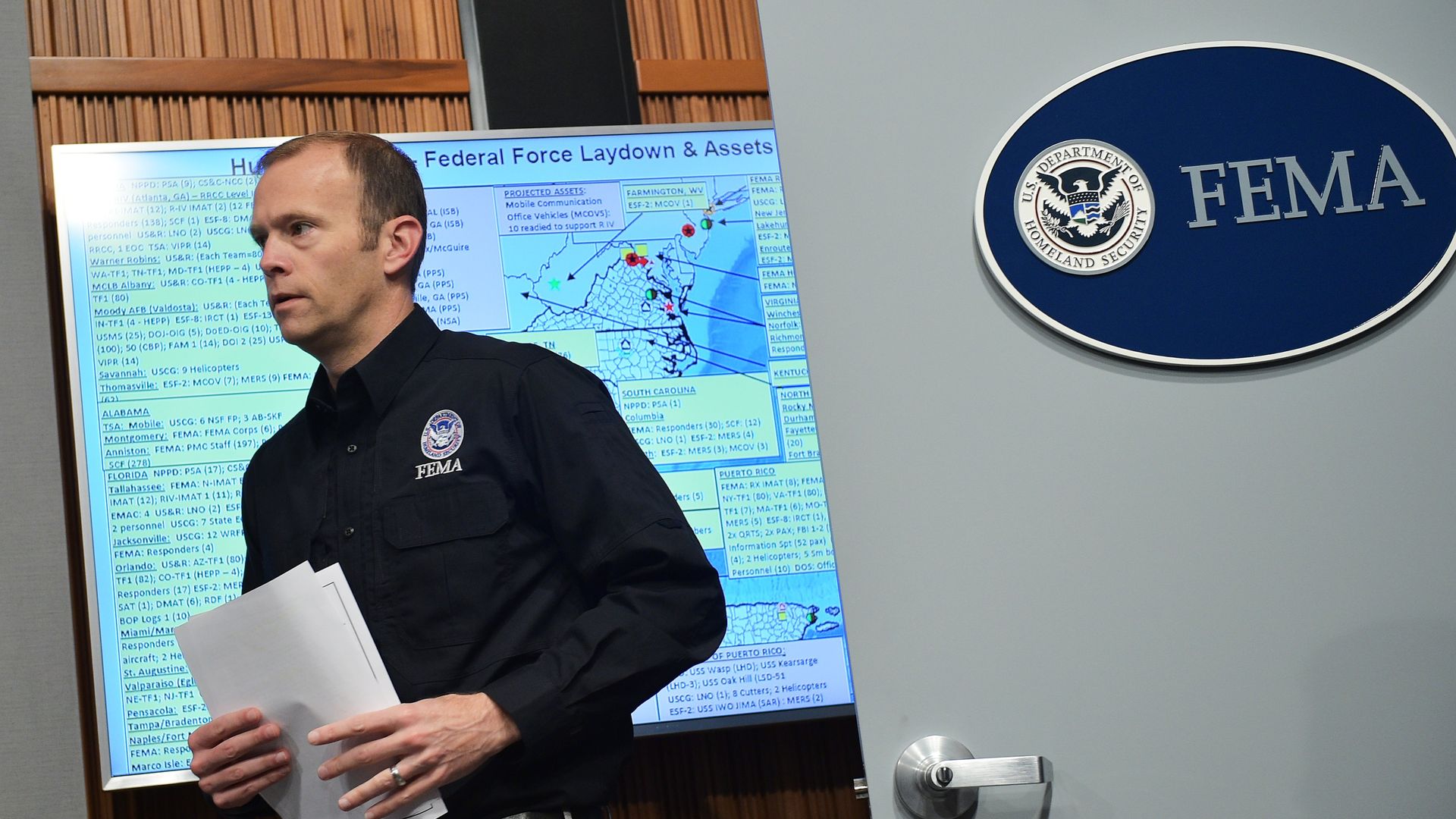
The Federal Emergency Management Agency (FEMA) has removed the words “climate change” from its strategic plan that sets out the agency's priorities for the next four years. The document does not mention terms related to scientific predictions of rising surface temperatures such as climate, global warming, sea-level rise, or weather.
Why it matters: FEMA, which is responsible for coordinating the government's response to natural and manmade disasters, now joins at least two other federal agencies — the U.S. Citizenship and Immigration Services and the Department of Housing and Urban Development — that made or planning to make a similar move by deleting key terminologies associated with their primary mission.
Ocean acidification cut the growth of a coral reef on Australia's Great Barrier Reef by one-third, according to a study published Wednesday in Nature. By simulating a more acidic environment, researchers were able to look at the effect of carbon dioxide on multiple reef species in their natural habitat for the first time.
Why it matters: Hundreds of millions of people around the world rely on coral reefs — for food, income from tourism and protection from tsunamis and storms. The study suggests the combined impact of coral bleaching from increased water temperatures and ocean acidification from carbon dioxide emissions could impair a reef's ability to recover.
"They’ll be hit by two stressors simultaneously so the effects could be worse than what we expected from lab studies...The bleaching events we see today that look scary could be even worse when compounded by a falling pH."
— University of Miami's Chris Langdon, who wasn't involved in the study
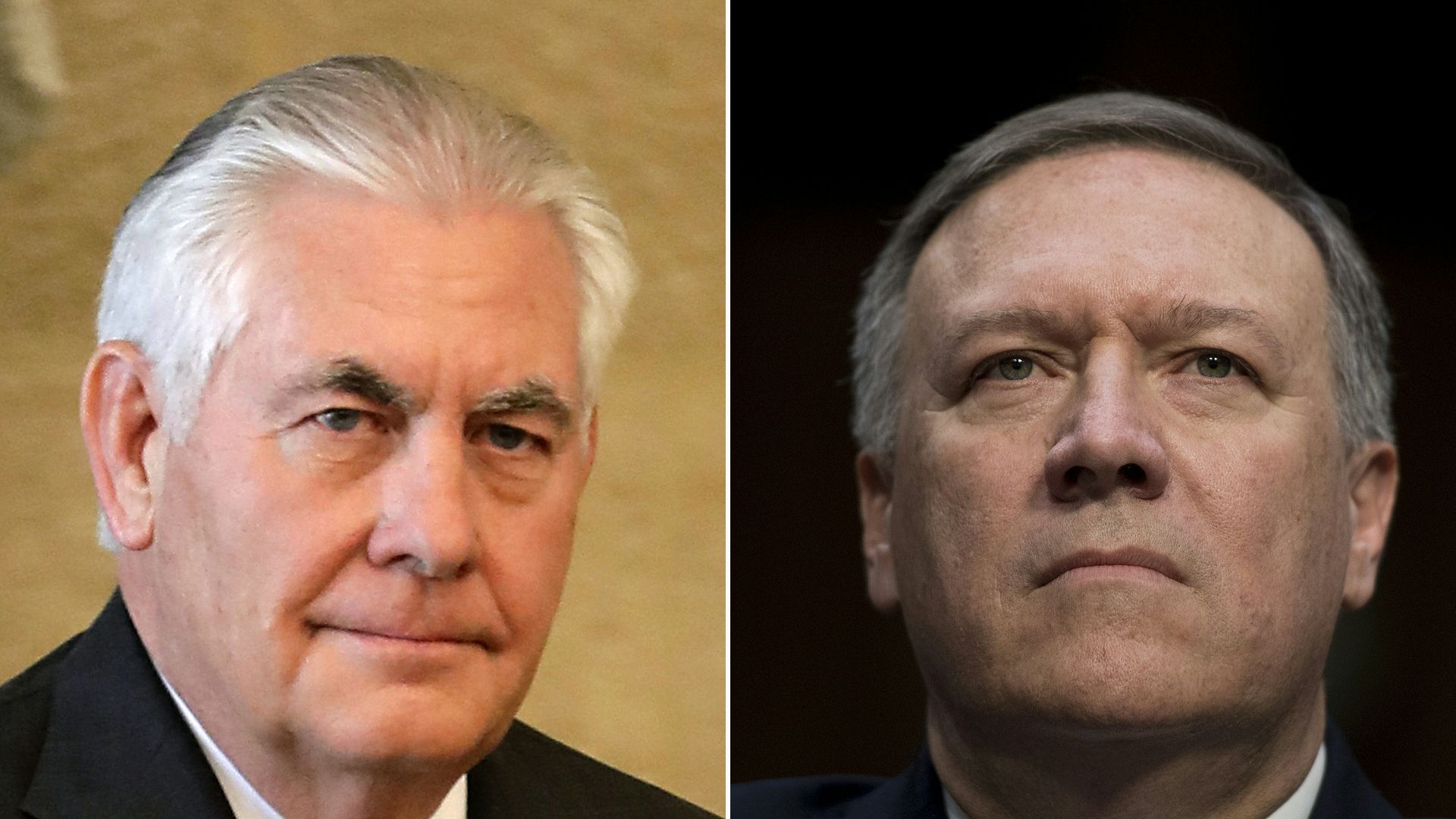
The firing of Secretary of State Rex Tillerson yesterday might impact U.S. climate policy, especially as the secretary-in-waiting, Mike Pompeo, has openly questioned the dominant scientific view on human-induced global warming.
The big picture: The rapid-fire departure of White House aides George David Banks, Gary Cohn, and now Tillerson means the disappearance of the more moderate voices — by Trump administration standards — on climate policy from the president's orbit.
A number of analysts quickly predicted that Secretary of State Rex Tillerson's ouster and Mike Pompeo's ascendance will ensure a more aggressive U.S. posture against two major oil producers: Iran and Venezuela.
Why it matters: Beyond the security and humanitarian considerations, potential new sanctions could also alter oil markets.