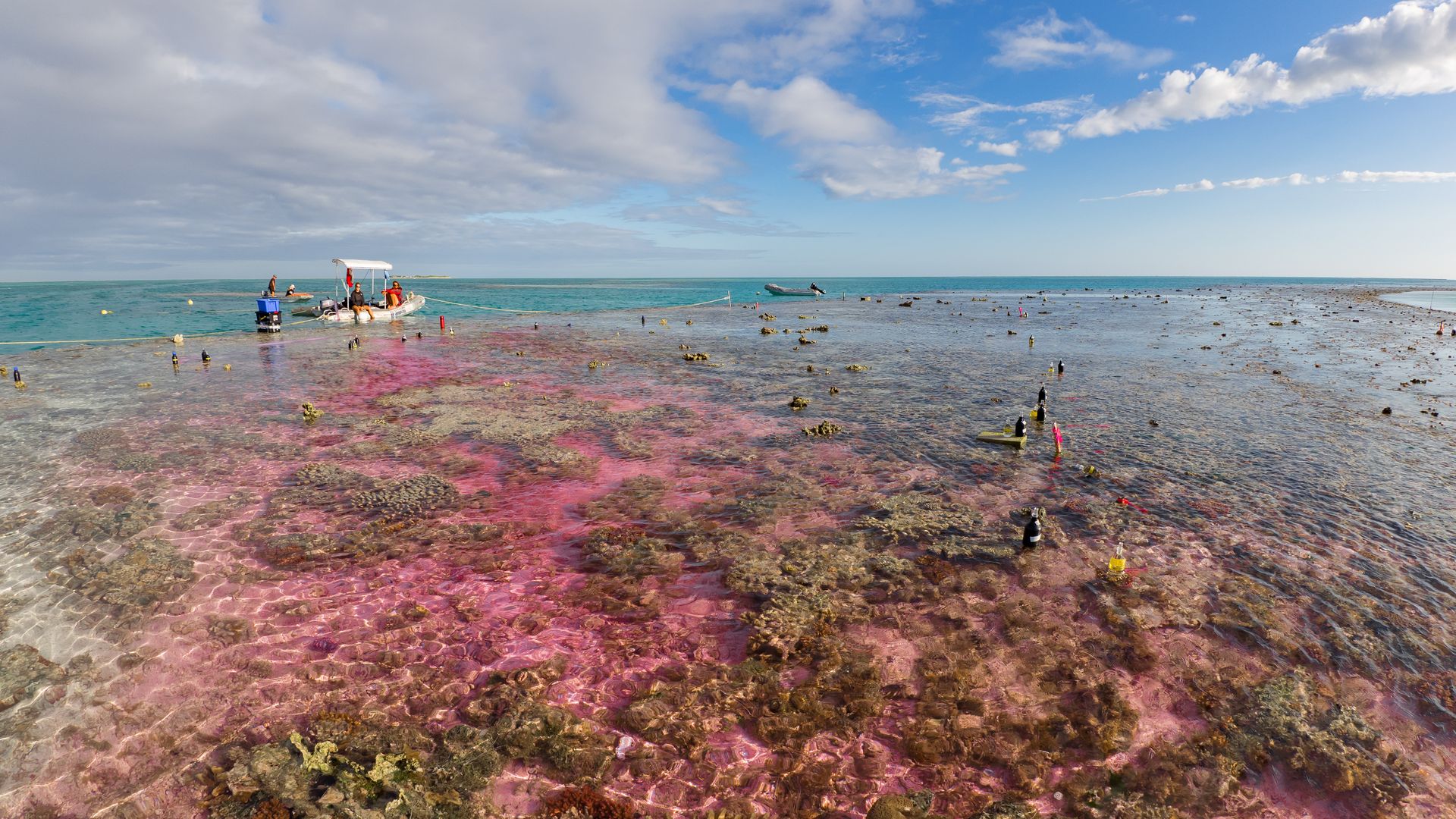
Ocean acidification cut the growth of a coral reef on Australia's Great Barrier Reef by one-third, according to a study published Wednesday in Nature. By simulating a more acidic environment, researchers were able to look at the effect of carbon dioxide on multiple reef species in their natural habitat for the first time.
Why it matters: Hundreds of millions of people around the world rely on coral reefs — for food, income from tourism and protection from tsunamis and storms. The study suggests the combined impact of coral bleaching from increased water temperatures and ocean acidification from carbon dioxide emissions could impair a reef's ability to recover.
"They’ll be hit by two stressors simultaneously so the effects could be worse than what we expected from lab studies...The bleaching events we see today that look scary could be even worse when compounded by a falling pH."
— University of Miami's Chris Langdon, who wasn't involved in the study
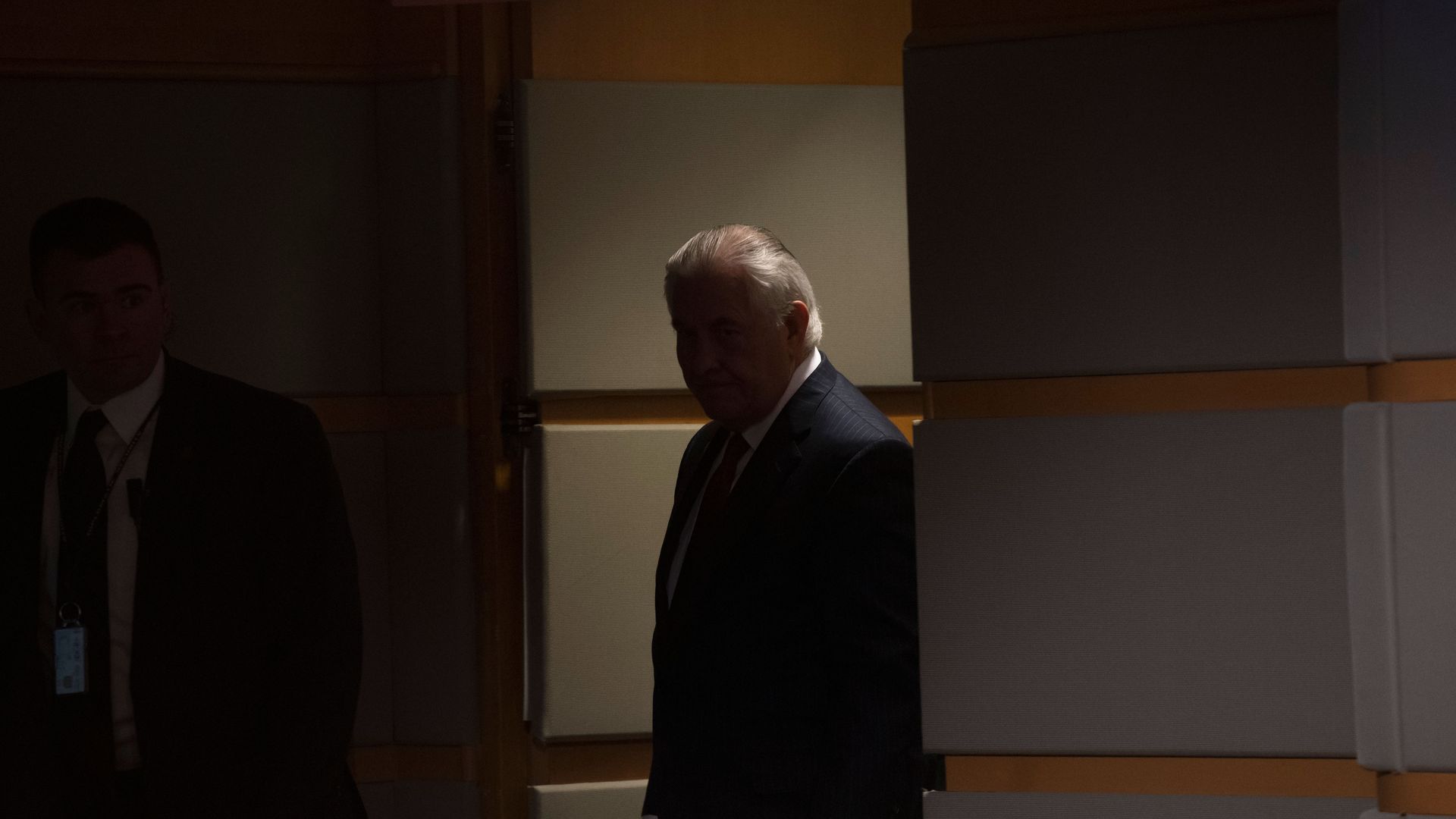
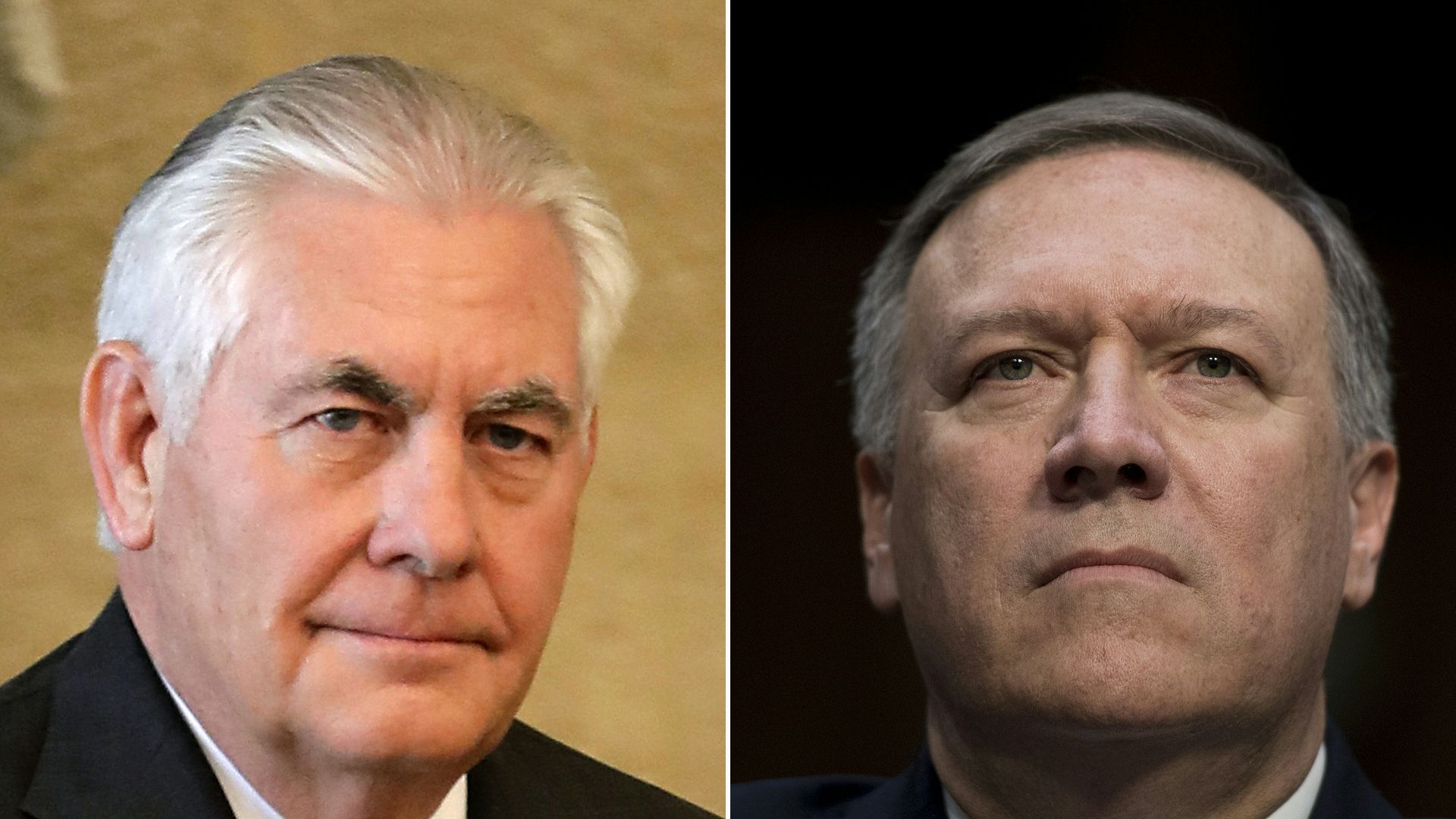
The firing of Secretary of State Rex Tillerson yesterday might impact U.S. climate policy, especially as the secretary-in-waiting, Mike Pompeo, has openly questioned the dominant scientific view on human-induced global warming.
The big picture: The rapid-fire departure of White House aides George David Banks, Gary Cohn, and now Tillerson means the disappearance of the more moderate voices — by Trump administration standards — on climate policy from the president's orbit.
A number of analysts quickly predicted that Secretary of State Rex Tillerson's ouster and Mike Pompeo's ascendance will ensure a more aggressive U.S. posture against two major oil producers: Iran and Venezuela.
Why it matters: Beyond the security and humanitarian considerations, potential new sanctions could also alter oil markets.
Pressure is growing on President Trump to replace Veterans Affairs Secretary David Shulkin, with reports that Energy Secretary Rick Perry is being considered as a replacement and an influential Republican calling for Shulkin to be fired.
The backdrop: As we reported this weekend, Trump has become increasingly fed up with Shulkin in recent days. A source with direct knowledge confirms the New York Times report that Trump has mentioned Perry as a possible replacement but other names are in the mix. Some senior staff will try to talk Trump out of picking Perry because that would mean two more confirmation votes (for Perry and his replacement) in addition to votes for the new secretary of State.
George David Banks, who until recently was a top White House international climate aide, predicts President Trump will reverse his decision to abandon the Paris climate accord.
Why it matters: If borne out —a gigantic "if" — it would mark a major reversal for an administration that has abandoned or sought to reverse a suite of Obama-era global warming policies.
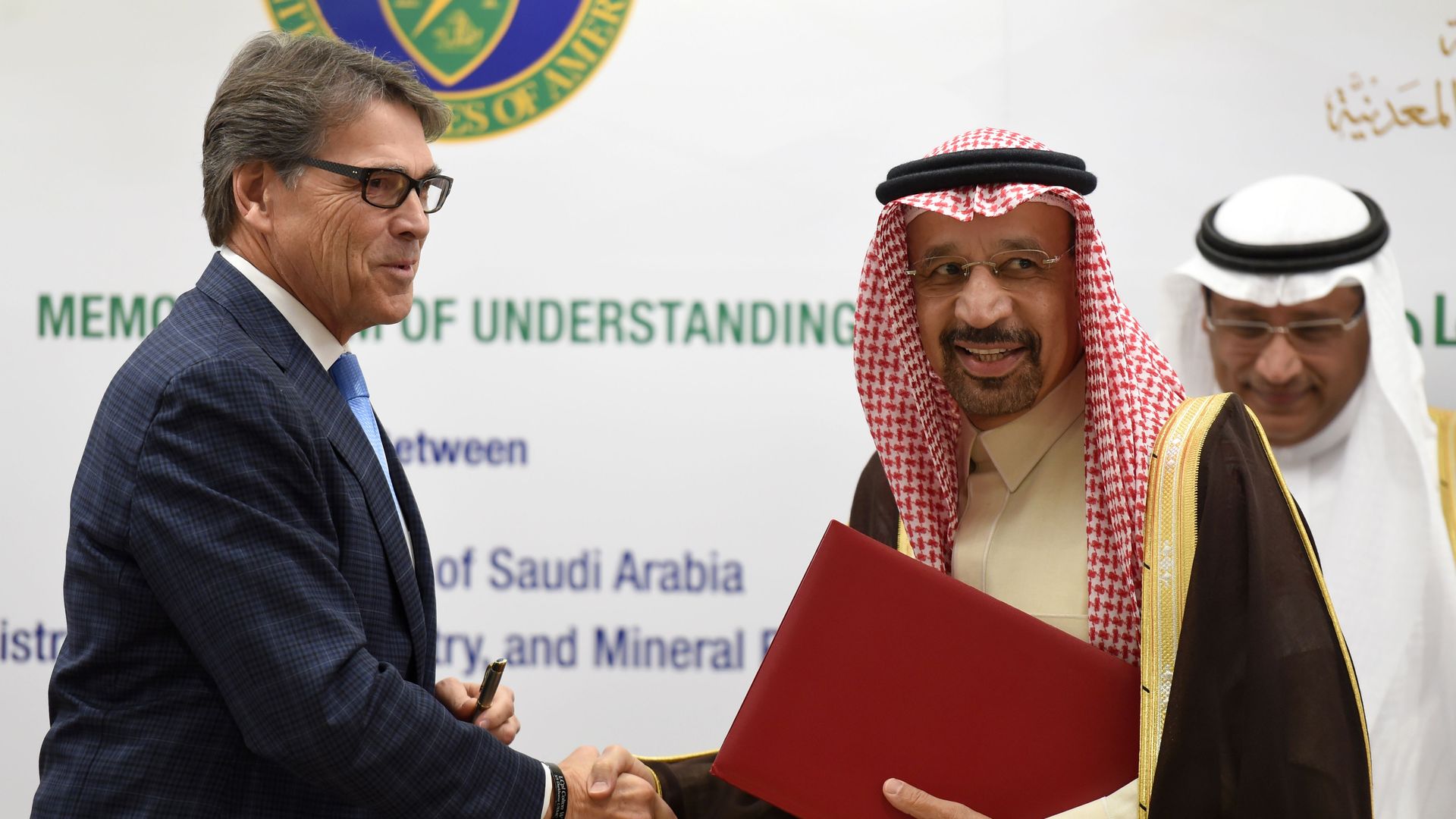
When Saudi Arabia opened the bid for construction of its first nuclear power plant, the U.S.–based manufacturer Westinghouse was eager to beat out Russia’s Rosatom and China's National Nuclear Corporation for the deal. Last week Energy Secretary Rick Perry traveled to London to discuss the potential for a nuclear cooperation agreement with senior Saudi officials.
Why it matters: In order to secure the deal, the Trump administration may relax the U.S.’s “gold standard” nonproliferation guidelines — conditions that would prohibit Saudi Arabia from enriching uranium or reprocessing spent fuel. In that case, neither outcome of the bidding process would come without downsides.
Occidental Petroleum, one of the biggest producers in Texas’ Permian basin, quietly issued its first-ever climate change report earlier this month.
Why it matters: Occidental’s report is the latest from a string of fossil-fuel companies responding to resolutions pushed last year by investors requiring more disclosure about what companies are doing to prepare for a carbon-constrained future. Occidental stood out last year because its measure was both the first to pass and saw record votes in support.