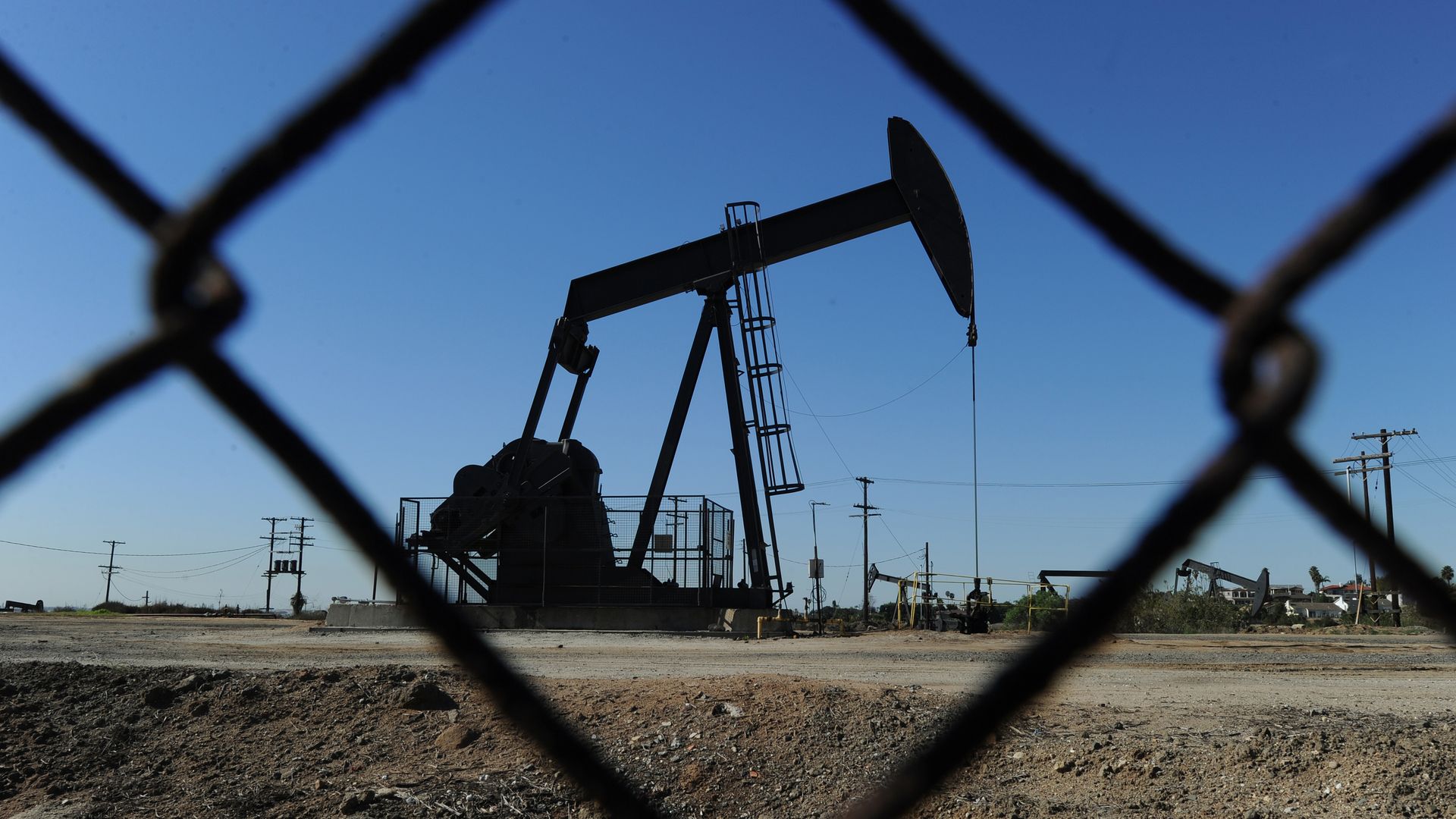
For the first time since 1970, U.S. crude oil production topped 10 million barrels a day in November, per CNBC, citing new government data released on Wednesday.
Why it matters: Unlike 48 years ago when an uptick was followed by a long decline, oil production is expected to grow in 2018, the report said. This comes as the Trump administration is seeking to vastly expand oil and natural gas drilling as part of an energy dominance agenda.
The chart above is reconstructed from this new Energy Information Administration report on the rise of hydraulic fracturing and horizontal drilling in the U.S. — the methods that have allowed production of huge oil and gas resources from shale formations.
Why it matters: The steep upward and downward slopes on that graphic show how the marriage of horizontal drilling and fracking have utterly remade the U.S. energy landscape.
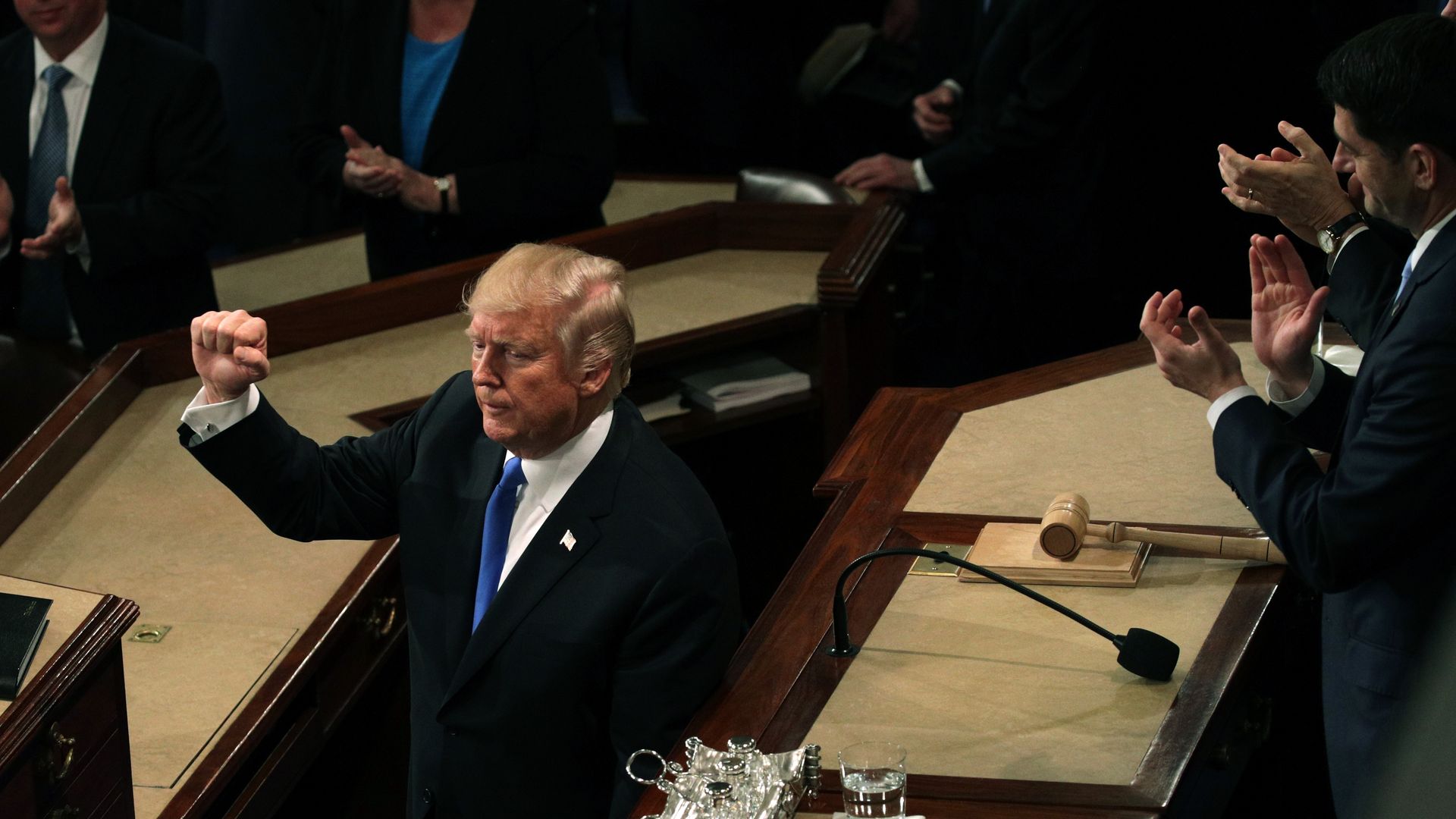
President Trump is set to tout his administration's record on energy in Tuesday's State of the Union address. He doesn't have it quite right. Here's what you need to know, based off prepared excerpts.
Here are the energy topics insiders at Davos were most obsessed with:
Tech in focus: Rapid declines in battery and renewable costs were celebrated, as was the disruptive potential of AI, machine learning and blockchain — enabling technologies like distributed microgrids and connected homes as well as innovations in oil-and-gas trading.
Shale: With U.S. oil production about to exceed 10 million barrels per day, the highest in its history, the reemergence of the U.S. as an energy superpower is a new dynamic in energy markets and a concern for Saudi Arabia, Russia and other producers struggling to prop up prices by cutting output.
One big question: Electric and autonomous vehicles and shared mobility will shake up transportation, but there's no consensus on how quickly they might cause oil demand to decline, given that passenger cars represent only 25% of oil use. Per the International Energy Agency, petrochemicals will provide the strongest lift to oil demand (barring a backlash against rising ocean pollution that stigmatizes plastics).
Yes, but: Despite the optimism, serious concerns remain. There is a yawning gap between the current emissions trajectory and the transformation needed to achieve commitments in the Paris agreement, let alone to limit the global temperature rise to two degrees Celsius. The rise of alternative fuels and potential “lower for longer” oil prices that could result from decreased demand also introduce a host of geopolitical risks — in addition to those from North Korea, Sunni-Shia tensions, the retreat from free trade in some advanced economies, and Trump's unpredictable foreign policy.
Jason Bordoff is Professor of Professional Practice in International and Public Affairs and Founding Director of the Center on Global Energy Policy at Columbia University.
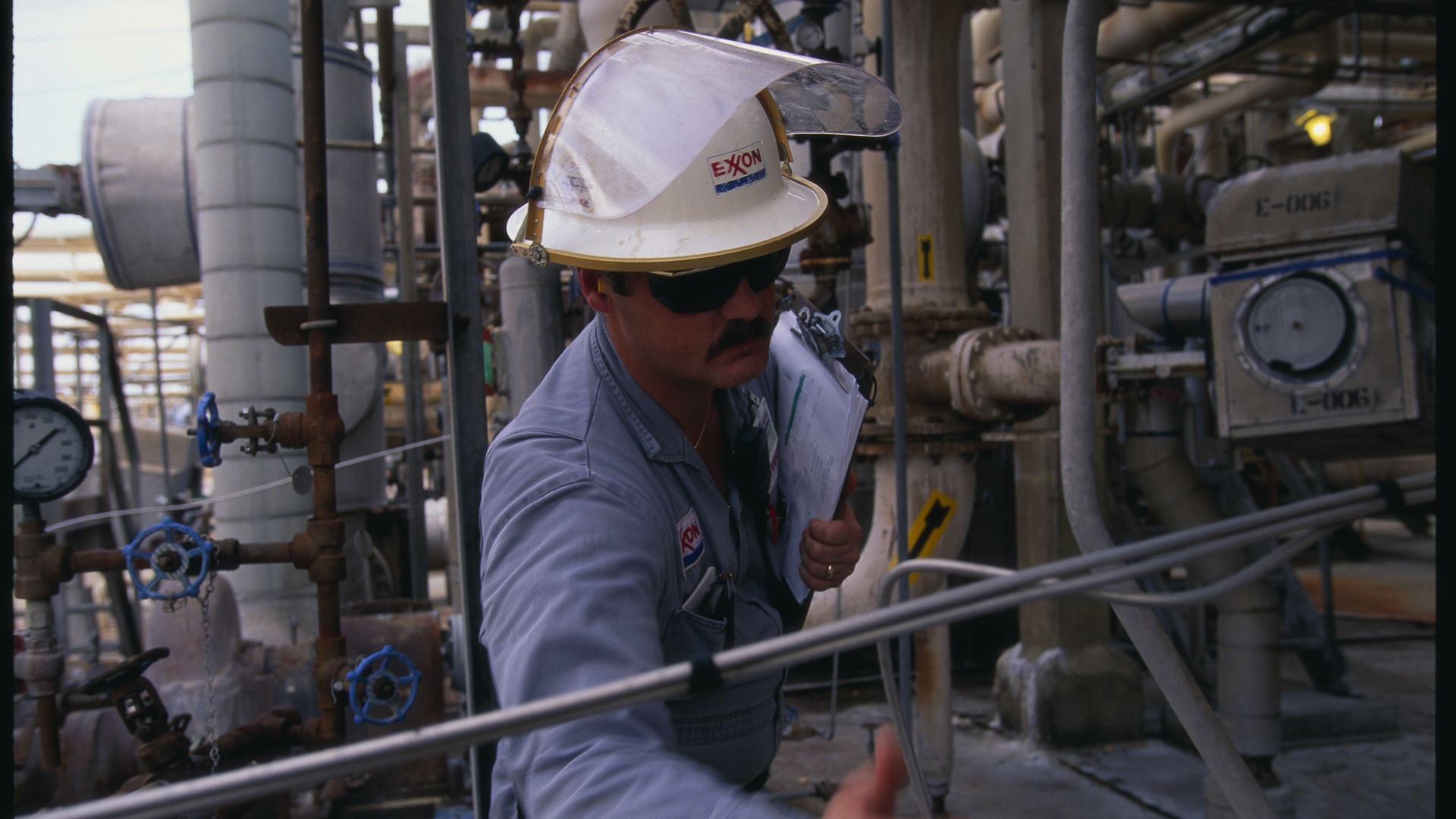
ExxonMobil is tripling its daily oil production in the Permian basin to more than 600,000 oil-equivalent barrels by 2025, the oil giant said Tuesday. It's also spending more than $2 billion to upgrade its transportation infrastructure in West Texas and New Mexico.
Why it matters: Exxon says the tax law has created an "environment for increased future capital," but these investments are also largely being driven by rising oil prices. Exxon’s announcement will likely please the White House and Republicans who have pitched reducing the corporate tax cuts from 35% to 21% as a boost for American workers and the economy.
Oil-and-gas behemoth ExxonMobil's newly announced plan to invest $50 billion in the U.S. over five years became quickly entangled in Beltway politics Monday — with an assist from the company itself.
Why it matters: Top Republicans, going further than the company's announcement, promoted the spending as a direct result of the new tax overhaul. The messaging burst shows how business decisions are now tethered to the volatile politics of the GOP's biggest win of the Trump era.
Bob Dudley, who has been CEO of BP since a few months after the firm’s 2010 oil spill, sat down recently with Axios in Washington for a wide-ranging interview. Here are excerpts from the interview, and links to other coverage from the conversation.
Dudley said the industry-wide lessons learned from BP’s 2010 well blowout, the largest in U.S. history, ensures companies won’t let up on safety no matter how the Trump administration overhauls federal regulations.
States have long been the battlegrounds where energy policies rise and fall, given the federal government’s bipartisan unwillingness to really tackle the issue.
This is truer than ever under President Trump, whose agenda is somewhere between status quo and rolling back everything his predecessor did. In just the last few days, we’ve seen several developments that indicate state-level policies are, like the states themselves, all over the map.