Michigan entrepreneur Ann Marie Sastry has left vacuum-maker Dyson, two years after it acquired her controverial lithium-ion battery company, Axios has learned. The $90 million all-cash buyout remains one of the richest lithium-ion deals ever.
Quick take: Sources with knowledge of the situation were not certain of the circumstances of Sastry's departure. But it comes eight months after Dyson relinquished Sakti3's core battery patents, and doubts remain in the field regarding her main claim, asserted repeatedly — that she was on the verge of commercializing much-sought-after solid state battery technology.
The Trump administration's plans to publicly debate climate-change science is on indefinite hold, E&E News reports.
Why it matters: This is the latest sign the administration is not looking to overtly challenge mainstream climate-change science, despite a few vocal skeptics of the science in and close to the administration.
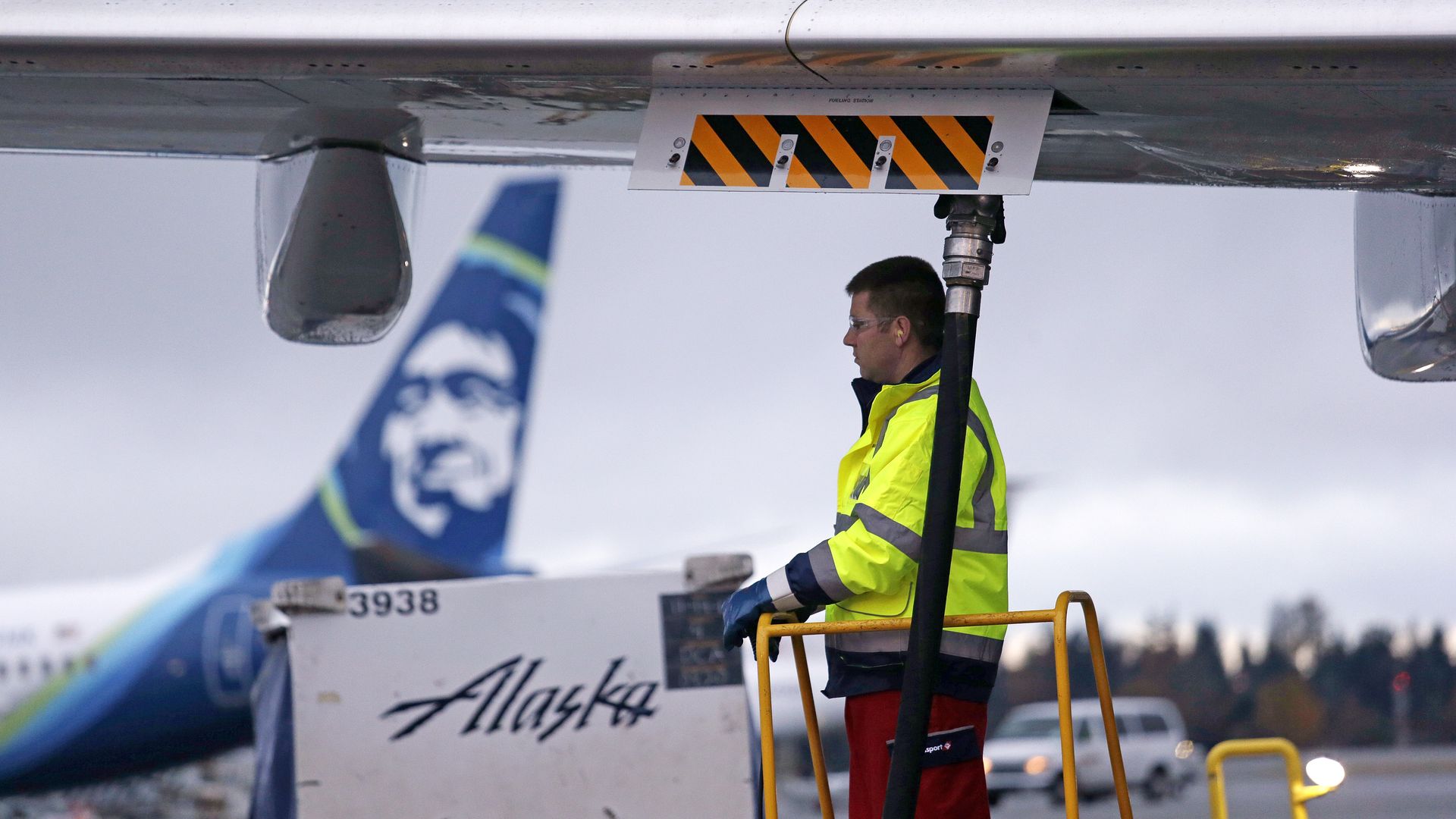
For the seventh year in a row, Alaska Airlines was the most fuel-efficient airline among U.S. carriers, according to a study from the International Council on Clean Transportation (ICCT).
Why it matters: Naya Olmer, the study's author, said Alaska Airlines "burns about 13% less fuel than the industry average, it's a profitable airline, and it's done this for seven years running...So, it's possible." The report also notes that aviation accounts for around 2.5% of global CO2 emissions, and U.S. carriers make up 30% of that.
On September 4, 2017, smoke from Western wildfires entered the gulfstream and spread across the country. Image: NASA Earth Observatory / Suomi NPP
2017 was a smoky year for the United States. In September, the haze was visible from space, appearing as a smear obscuring almost half of the country.
What's new: Climate change is increasing the length and severity of our fire seasons, and scientists are starting to quantify the health impacts of all that smoke. In a poster presented Wednesday at the fall meeting of the American Geophysical Union (AGU), Colorado State University atmospheric scientist Jeffrey Pierce estimated about 15% of the roughly 200,000 air quality related deaths in 2000 were caused by wildfire smoke. By 2100, he estimates it could reach 40%. That's just one model (some predict even more extreme fire seasons, some less) but it's clear that smoke poses a real and serious health risk.
We used to define fire by seasons: they varied from place to place, but there was a period of time that fires were not reliably seen before, and a date they probably wouldn’t be seen after. That is no longer the case, as the destructive fires burning this December in Southern California make clear.
The above chart shows all fires that burned over 300 acres each year from 2000 to 2017 in California, including this months’ blazes.
The future, right now: We tend to talk about extreme weather and fire events as a "glimpse into our future under climate change." But these previously-rare events are increasingly common. "If ‘unexpected’ becomes the norm, because we only talk about extreme weather, how do we change the conversation?" Jeff Rosenfeld, the editor in chief of the bulletin of the American Meteorlogical Society, asked at the American Geophysical Union's annual fall meeting on Wednesday.

"Today, nearly three months after Hurricane Maria., more than one-third of Puerto Rico is still without power and thousands of businesses remain closed," Bloomberg Businessweek reports.
Why it matters: "For a decade, Puerto Rico has experienced a steady erosion of economic opportunity, and now there's a fear that the storm has convinced too many residents, a critical mass, to pursue new livelihoods elsewhere."
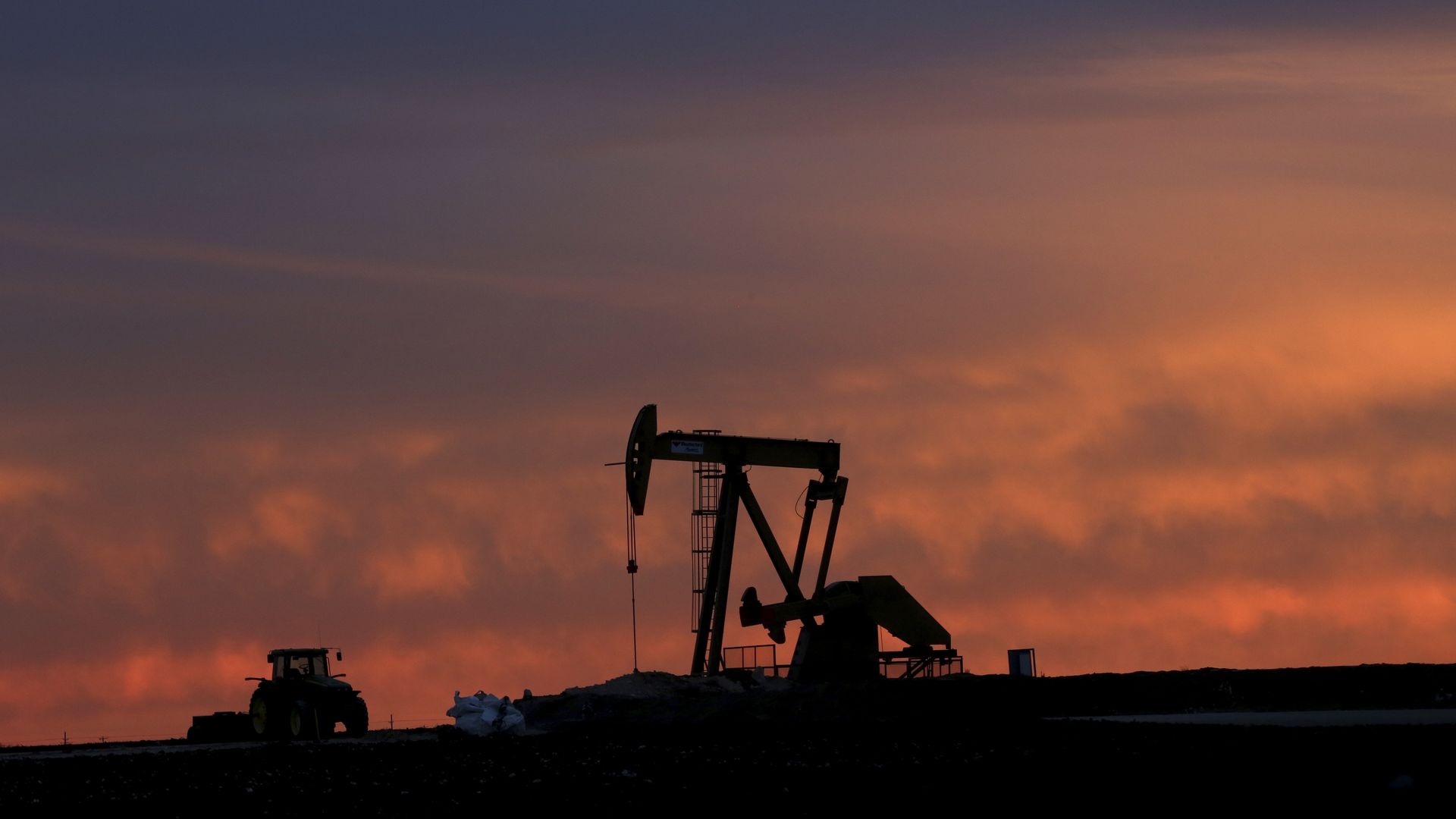
The commentary atop the International Energy Agency's monthly oil report published Thursday is headlined "Happy New Year?" — and the question mark there matters because IEA says it might not be joyous for OPEC. That's because rising U.S. shale production is blunting efforts by the cartel and Russia to tighten the market by extending their production-limiting through the end of 2018, a decision made last month in Vienna.
Why it matters: It's another sign of how the shale surge has re-shaped global crude markets and created big challenges for petro-states including Saudi Arabia and Russia.