Thursday's energy & climate stories

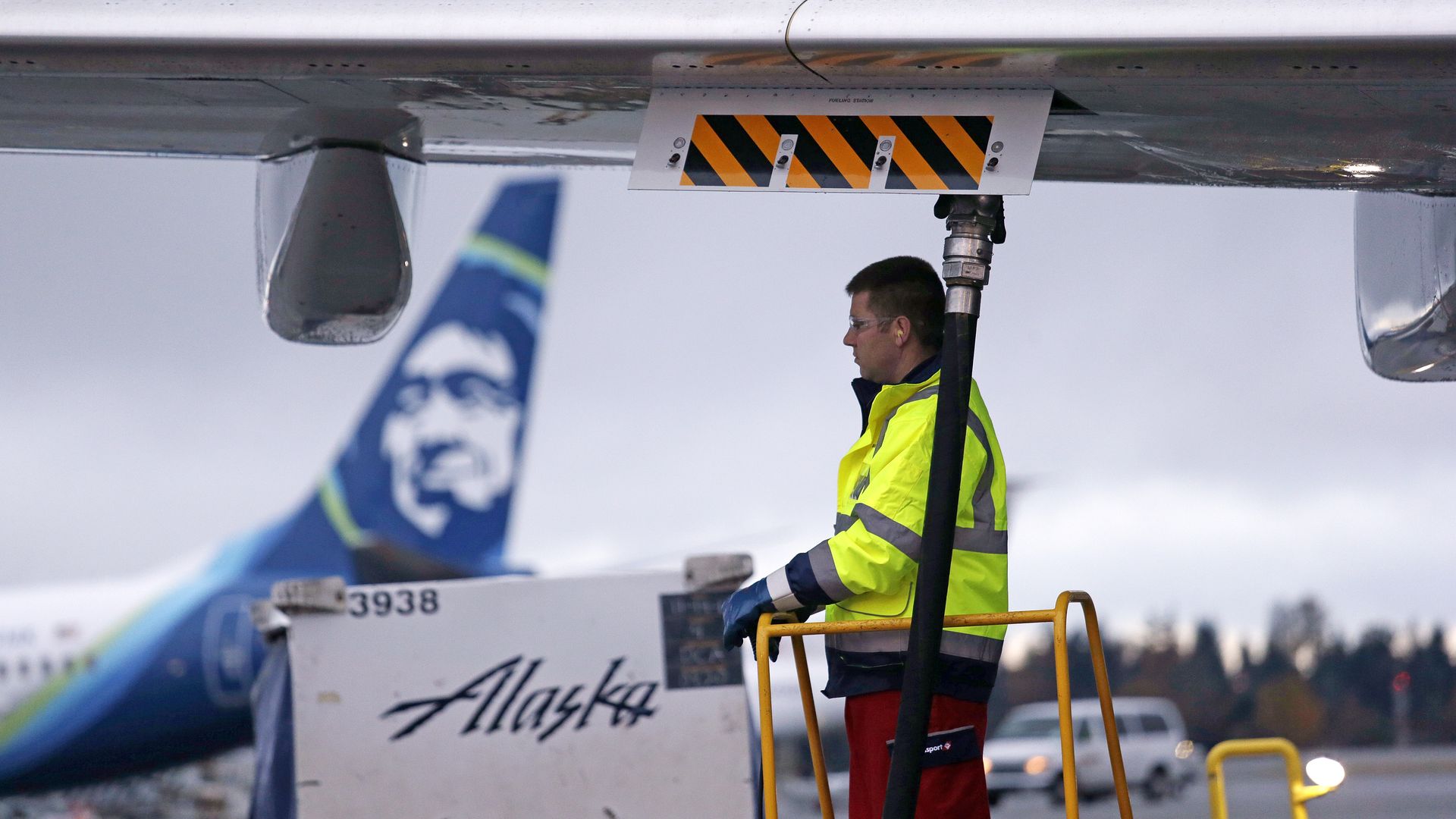
The most (and least) fuel-efficient U.S. airlines
For the seventh year in a row, Alaska Airlines was the most fuel-efficient airline among U.S. carriers, according to a study from the International Council on Clean Transportation (ICCT).
Why it matters: Naya Olmer, the study's author, said Alaska Airlines "burns about 13% less fuel than the industry average, it's a profitable airline, and it's done this for seven years running...So, it's possible." The report also notes that aviation accounts for around 2.5% of global CO2 emissions, and U.S. carriers make up 30% of that.

Where there’s fire, there’s smoke
On September 4, 2017, smoke from Western wildfires entered the gulfstream and spread across the country. Image: NASA Earth Observatory / Suomi NPP
2017 was a smoky year for the United States. In September, the haze was visible from space, appearing as a smear obscuring almost half of the country.
What's new: Climate change is increasing the length and severity of our fire seasons, and scientists are starting to quantify the health impacts of all that smoke. In a poster presented Wednesday at the fall meeting of the American Geophysical Union (AGU), Colorado State University atmospheric scientist Jeffrey Pierce estimated about 15% of the roughly 200,000 air quality related deaths in 2000 were caused by wildfire smoke. By 2100, he estimates it could reach 40%. That's just one model (some predict even more extreme fire seasons, some less) but it's clear that smoke poses a real and serious health risk.

Wildfires are burning longer and hotter each year
We used to define fire by seasons: they varied from place to place, but there was a period of time that fires were not reliably seen before, and a date they probably wouldn’t be seen after. That is no longer the case, as the destructive fires burning this December in Southern California make clear.


The above chart shows all fires that burned over 300 acres each year from 2000 to 2017 in California, including this months’ blazes.
The future, right now: We tend to talk about extreme weather and fire events as a "glimpse into our future under climate change." But these previously-rare events are increasingly common. "If ‘unexpected’ becomes the norm, because we only talk about extreme weather, how do we change the conversation?" Jeff Rosenfeld, the editor in chief of the bulletin of the American Meteorlogical Society, asked at the American Geophysical Union's annual fall meeting on Wednesday.

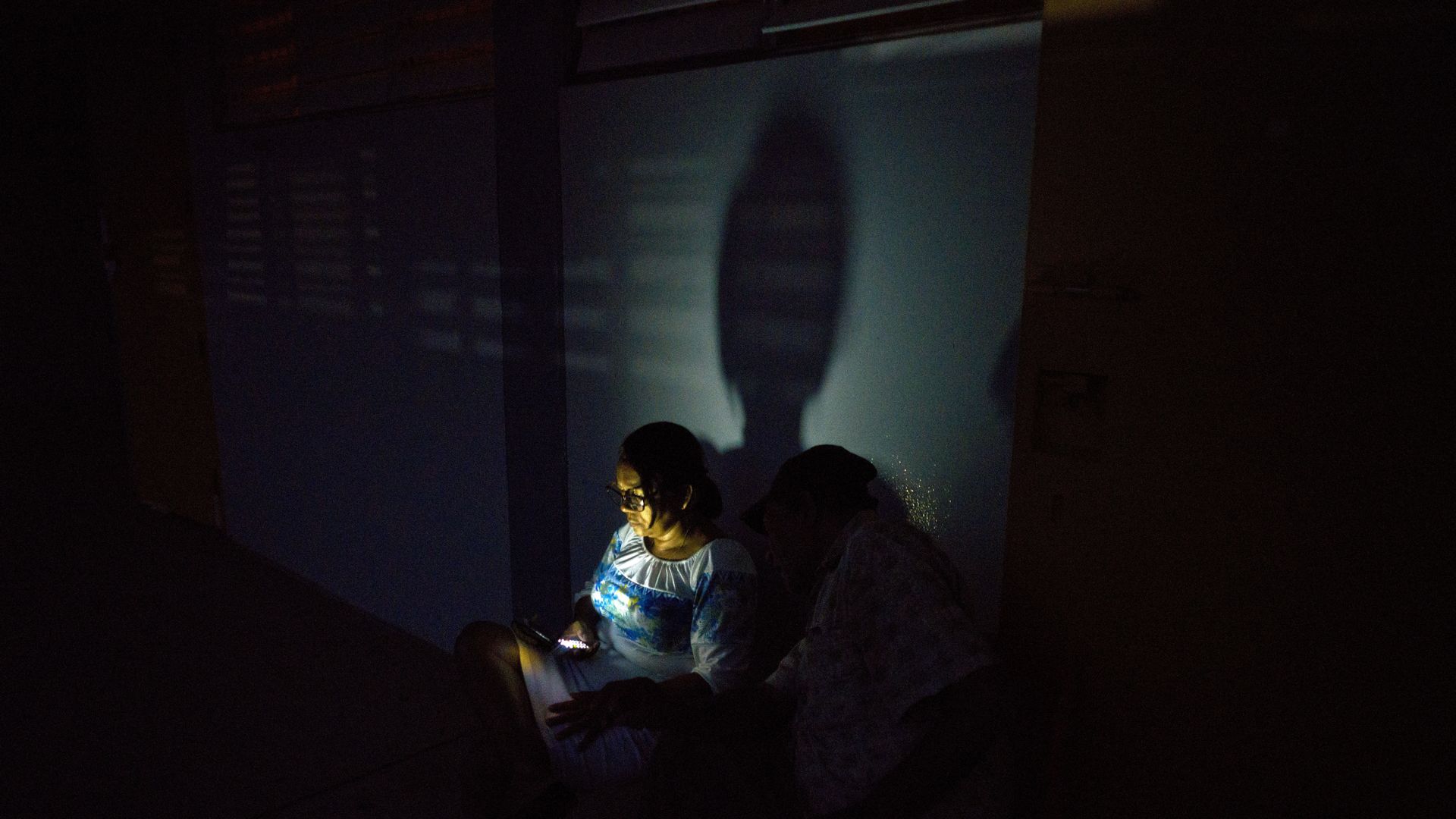
One-third of Puerto Rico still doesn't have power
"Today, nearly three months after Hurricane Maria., more than one-third of Puerto Rico is still without power and thousands of businesses remain closed," Bloomberg Businessweek reports.
Why it matters: "For a decade, Puerto Rico has experienced a steady erosion of economic opportunity, and now there's a fear that the storm has convinced too many residents, a critical mass, to pursue new livelihoods elsewhere."

U.S. shale might blunt OPEC efforts in 2018
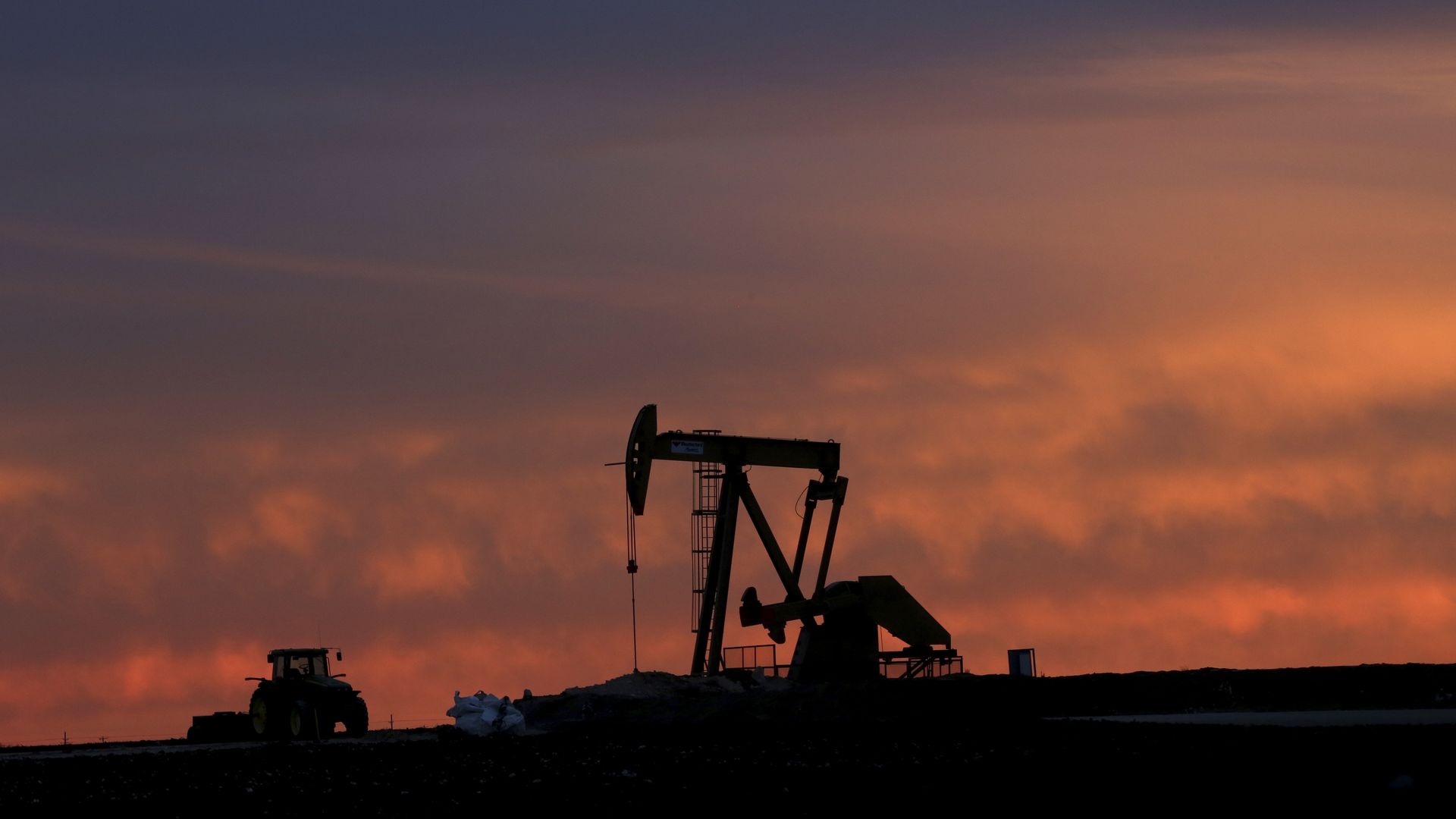
The commentary atop the International Energy Agency's monthly oil report published Thursday is headlined "Happy New Year?" — and the question mark there matters because IEA says it might not be joyous for OPEC. That's because rising U.S. shale production is blunting efforts by the cartel and Russia to tighten the market by extending their production-limiting through the end of 2018, a decision made last month in Vienna.
Why it matters: It's another sign of how the shale surge has re-shaped global crude markets and created big challenges for petro-states including Saudi Arabia and Russia.

New study links underweight babies to nearby fracking sites
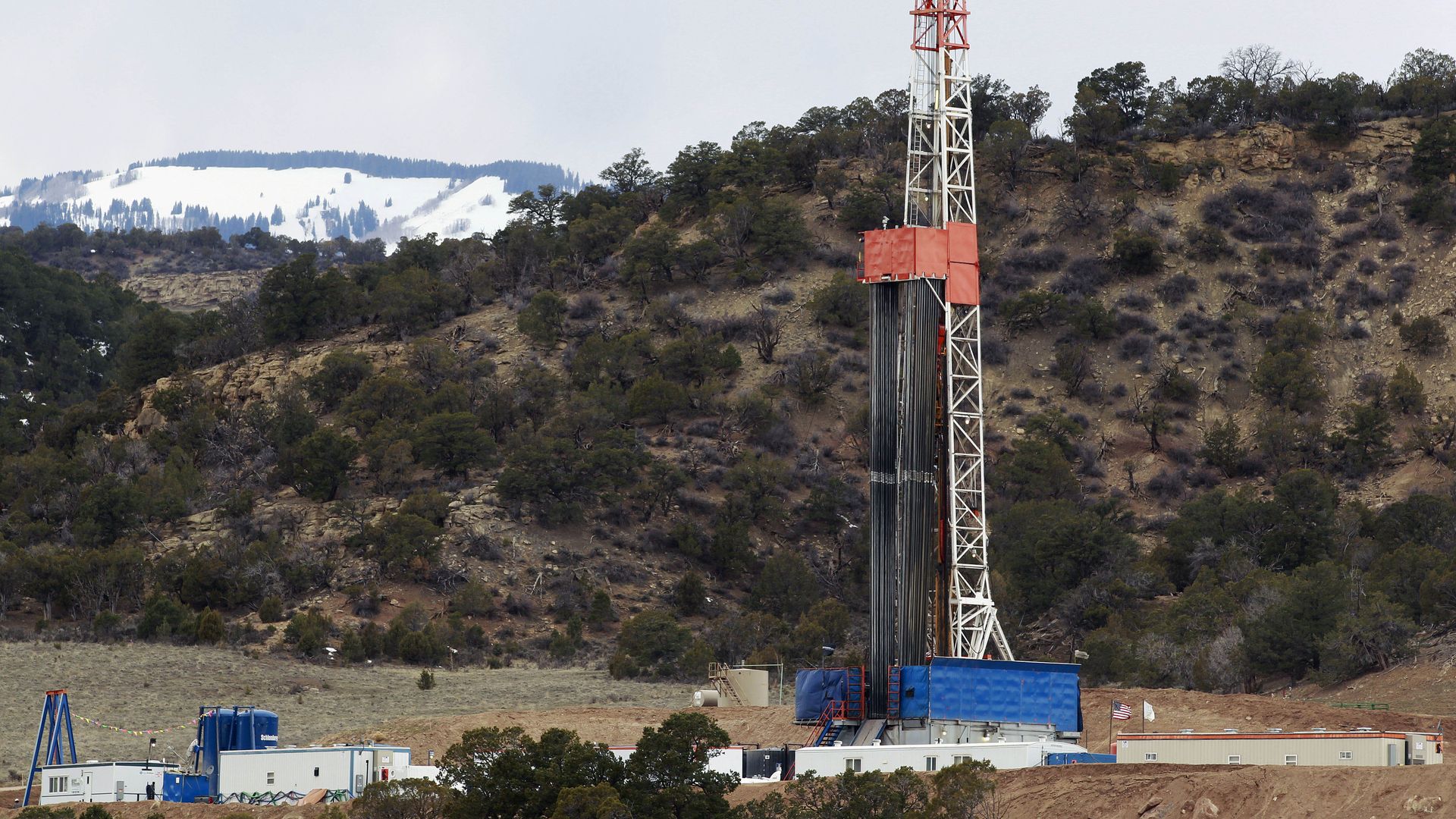
Women living within half a mile from hydraulic fracturing sites are 25% more likely to have babies with low birth weight than mothers who lived more than two miles beyond the sites, according to a new study released Wednesday.
Why it matters: The findings by researchers at the University of Chicago, Princeton University and the University of California, Los Angeles suggests that hydraulic fracturing — a technique used to force out oil and natural gas from the earth — imposes negative health impacts on locals despite the enormous economic benefits it generates. While most drilling operations are in remote areas, some sites in places that are heavily populated.

2016’s record heat not possible without climate change, says report
At least three instances of extreme weather would not have happened without climate change, according to the American Meterological Society’s annual report on extreme weather and climate change. Past reports found certain weather events were ‘influenced’ or made more frequent by climate change, but the tools researchers used weren’t powerful enough to measure just how much climate change played a role. This is the first time the report has definitively pointed the finger at global warming.
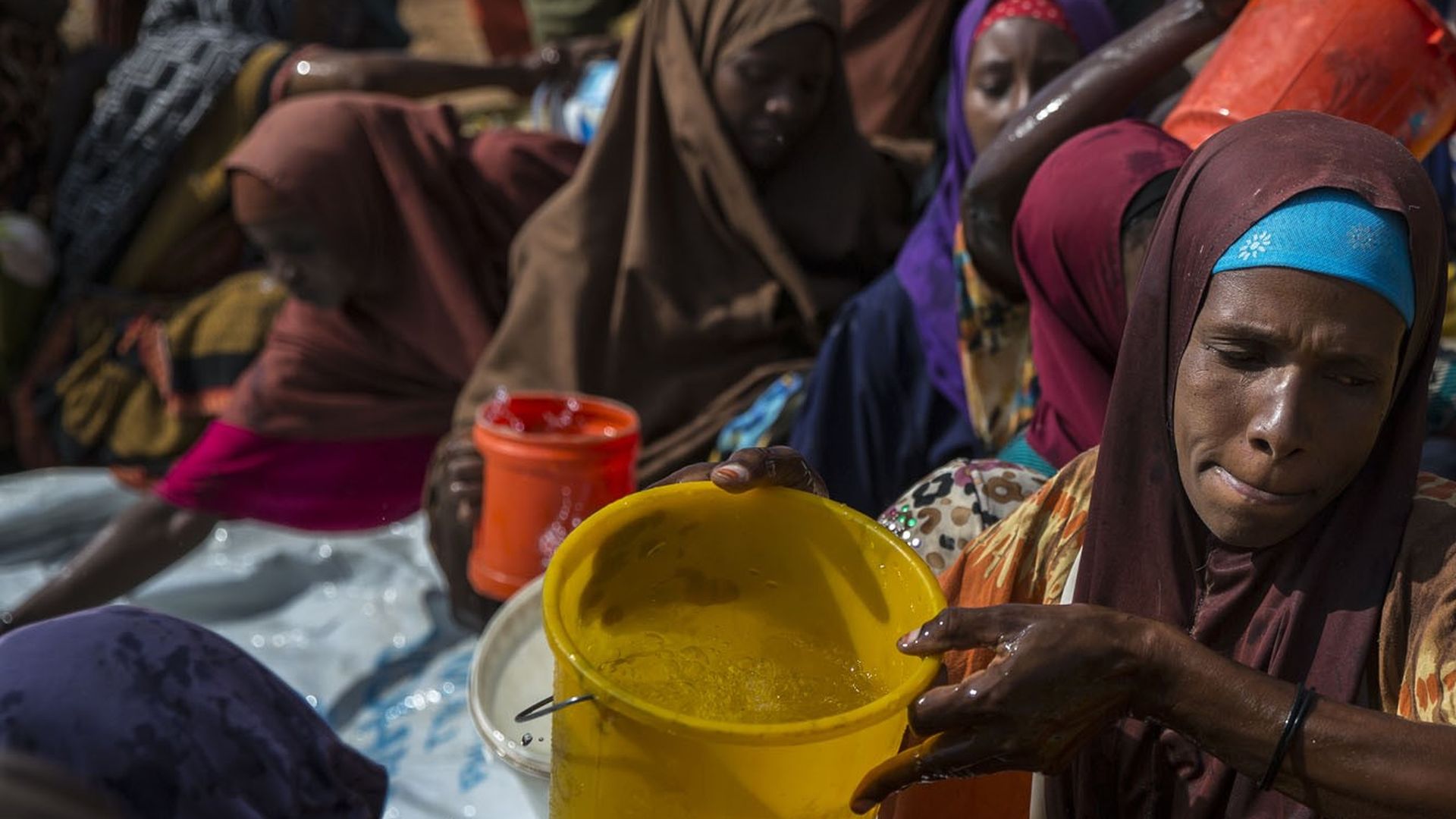
Why it matters: These weather anomalies are becoming more common, say the report authors, and they can have massive health and economic impacts. If the role climate change played in causing them can be pinpointed, researchers may be able to better predict how climate change might impact our future. For example, by understanding how marine heat waves change weather, scientists were able to predict the 2016/2017 Somalian drought, and mitigate some of the loss of life.

Harvey's extreme rainfall due to climate change
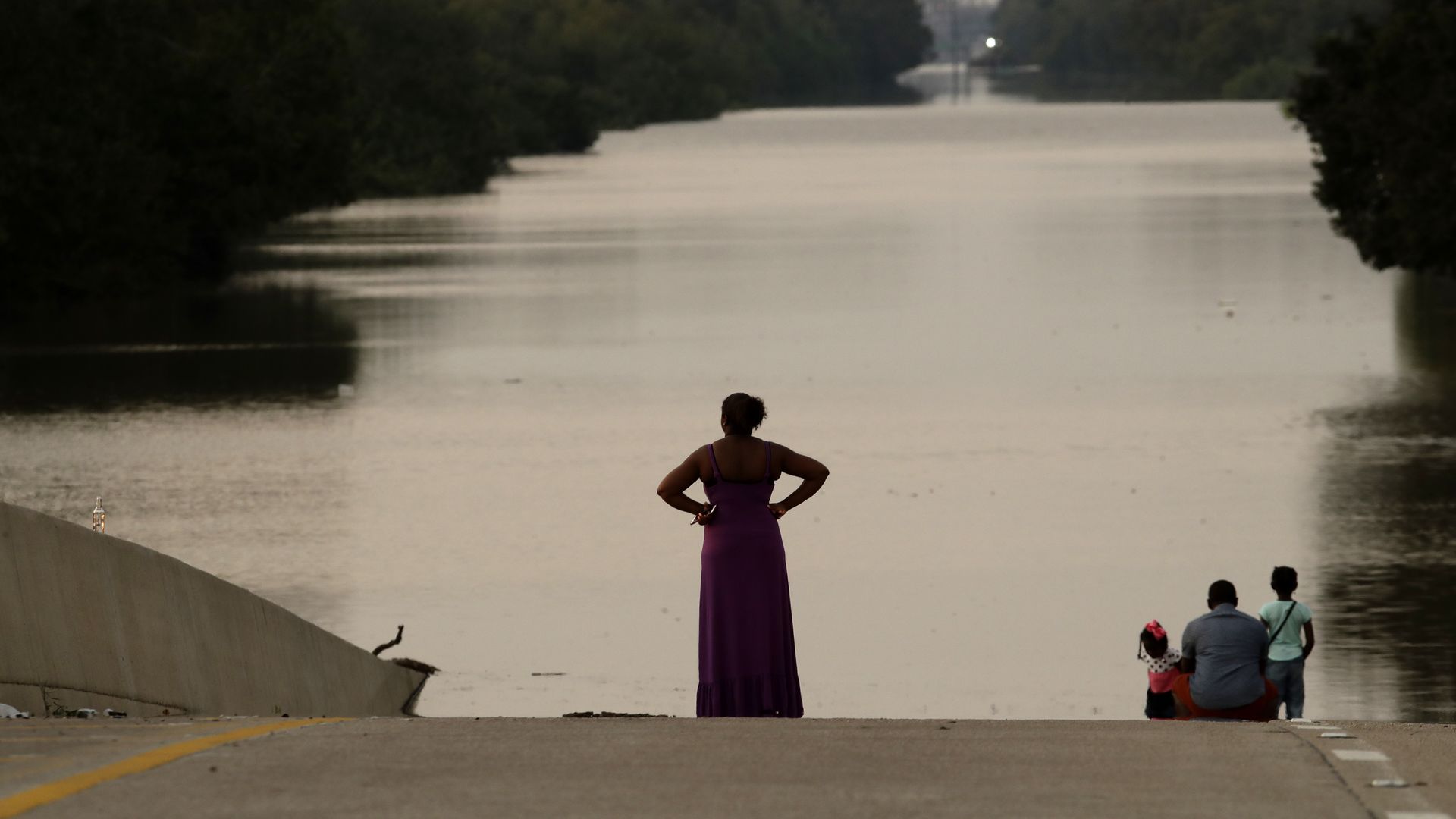
Rainfall from Hurricane Harvey, which struck Houston over the summer, was at least 15% heavier due to human caused climate change, according to two independent studies by researchers at the Lawrence Berkeley National Laboratory and Royal Netherlands Meteorological Institute. Hurricanes like Harvey are also three times more likely today than in 1900, researchers reported.
Why it matters: This isn't the first time scientists have attributed violent weather events to a warming planet, The Washington Post reports. Scientists have also warned of the increased likelihood of droughts such as the one in Texas in 2010 and floods similar to Colorado's in 2013. These findings suggest cities and communities may need to reassess their risk and find new ways to prepare for harsher weather as climate change continues.