Monday's economy stories

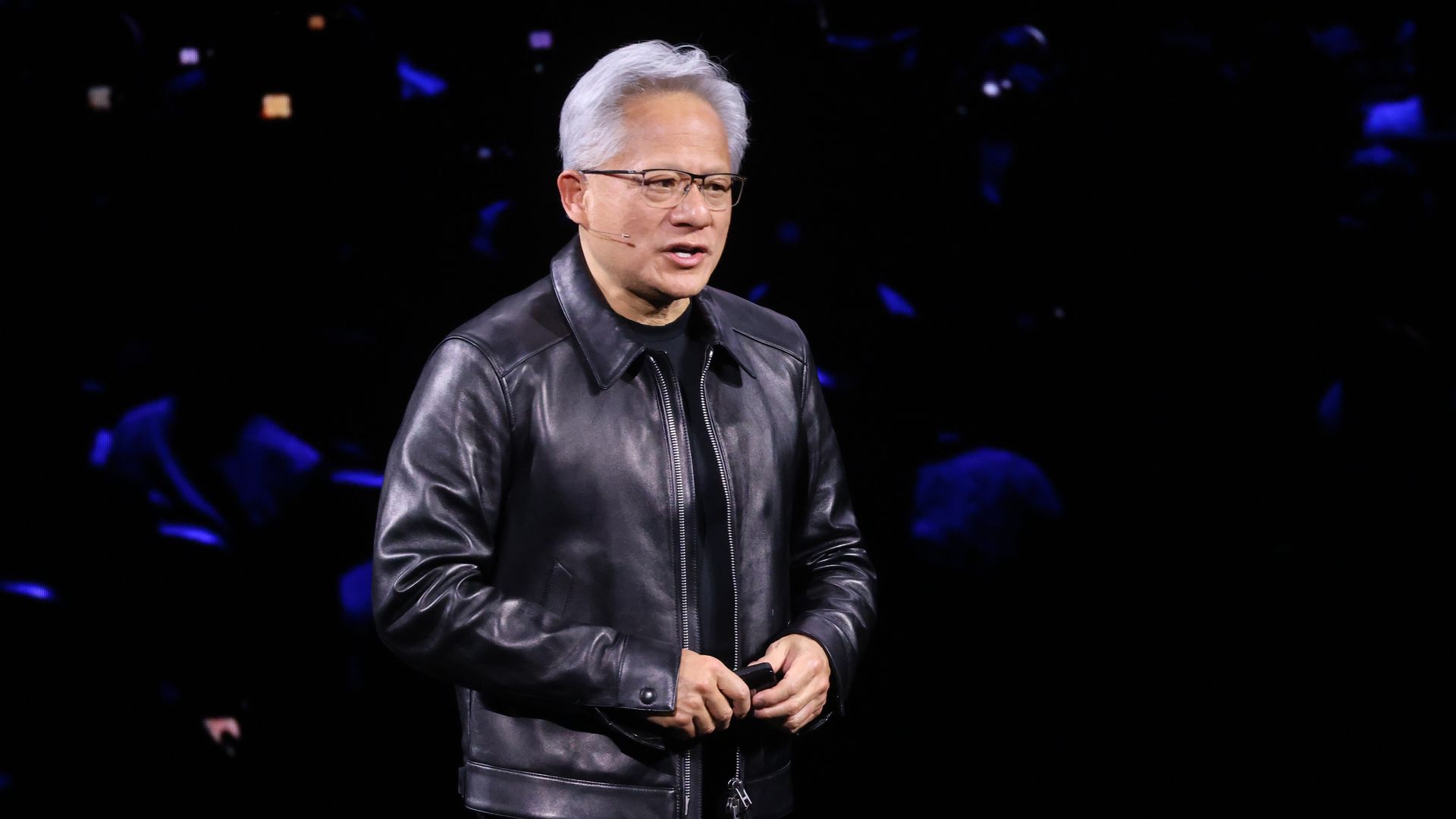
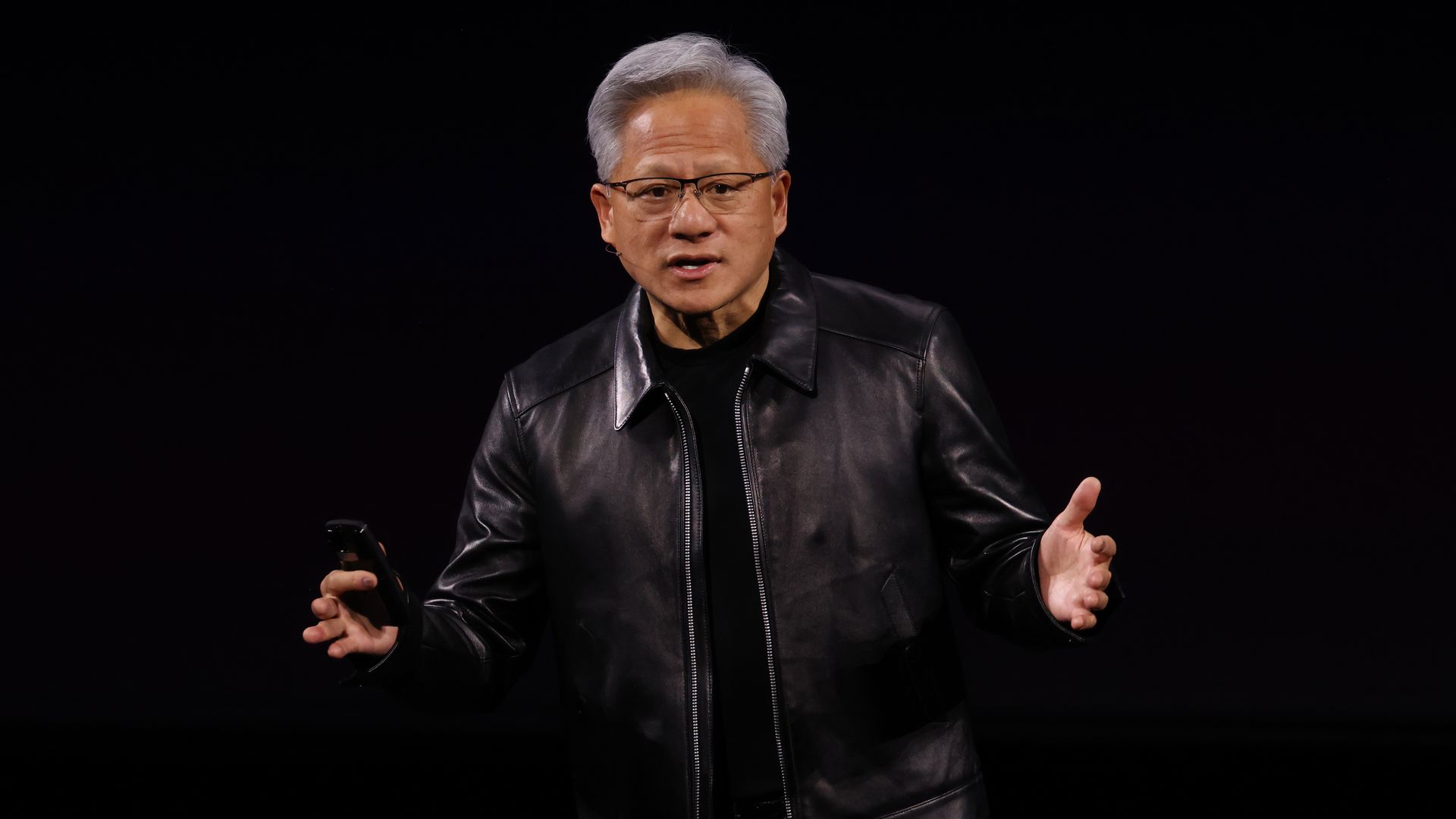
Nvidia board shows "lack of backbone" in re-hiring Jensen Huang, governance experts say
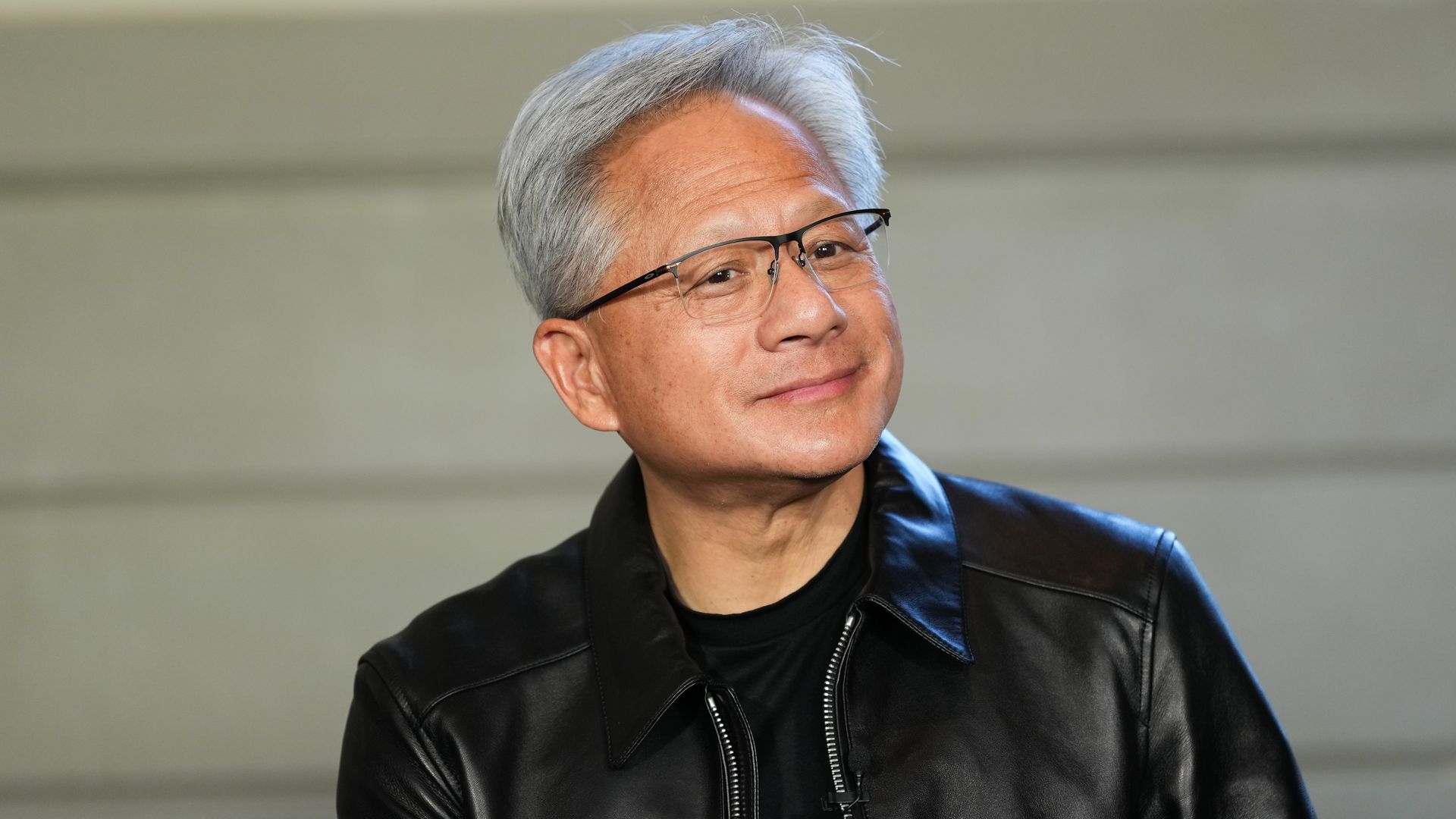
Nvidia's shock reappointment of Jensen Huang exposes the company to legal liability, political blowback and internal turmoil while rendering the board nearly toothless to keep its CEO accountable moving forward, say corporate governance and business ethics experts.
The big picture: Huang's return exhilarated investors — the stock soared more than 30% in early trading Monday — but unnerved experts who say Huang now looks beyond reproach.


Schumer puts Nvidia, Trump on notice after Huang reinstatement
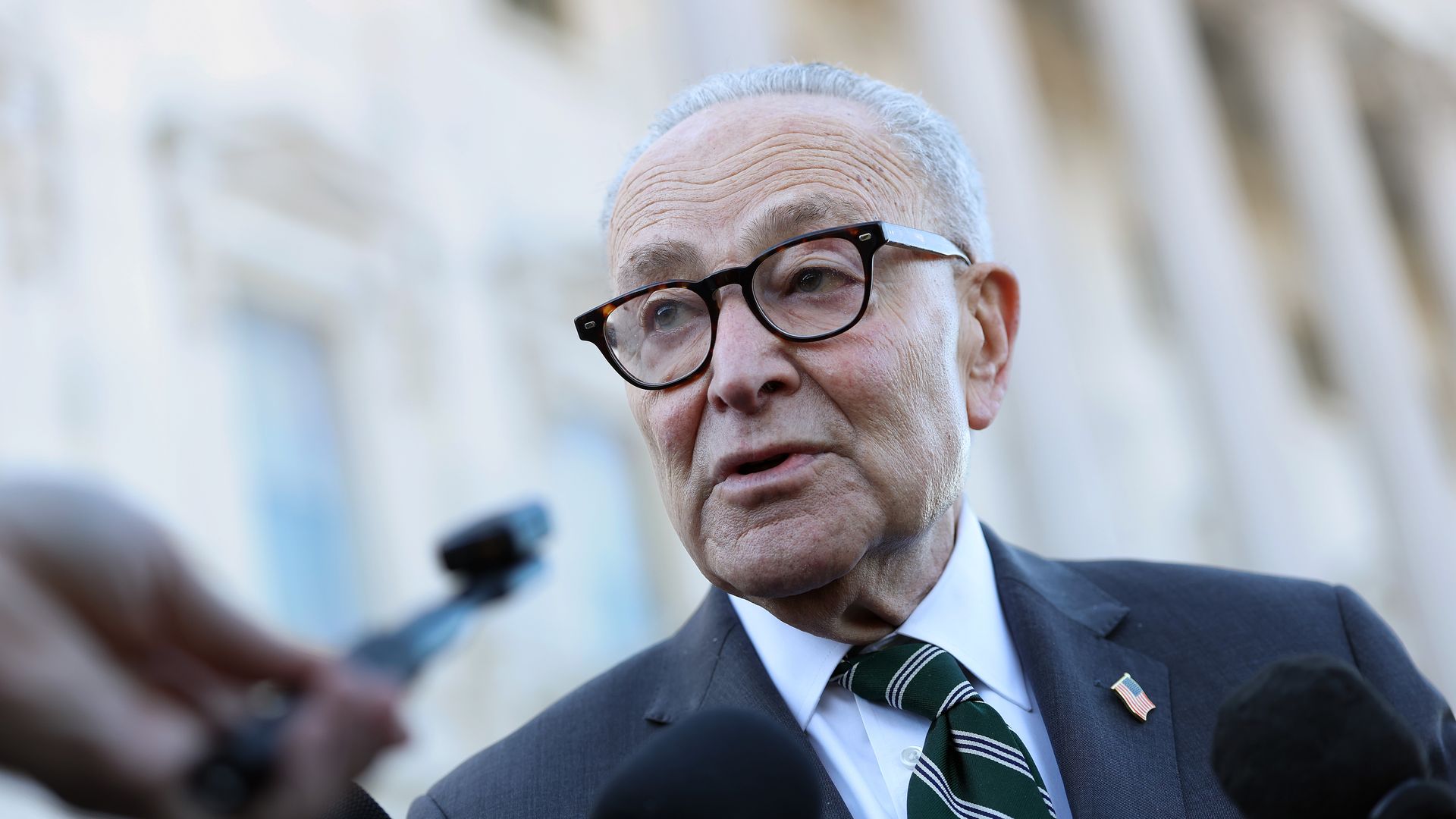
Senate Minority Leader Chuck Schumer (D-N.Y.) warned Nvidia CEO Jensen Huang that Congress is coming for answers — whether he's back at the top of the company or not.
Why it matters: The embattled CEO's return to the board came as a shock to investors but sent Nvidia's stock through the roof. Now, some lawmakers are warning that his return raises national security concerns.


1m+ missing jobs
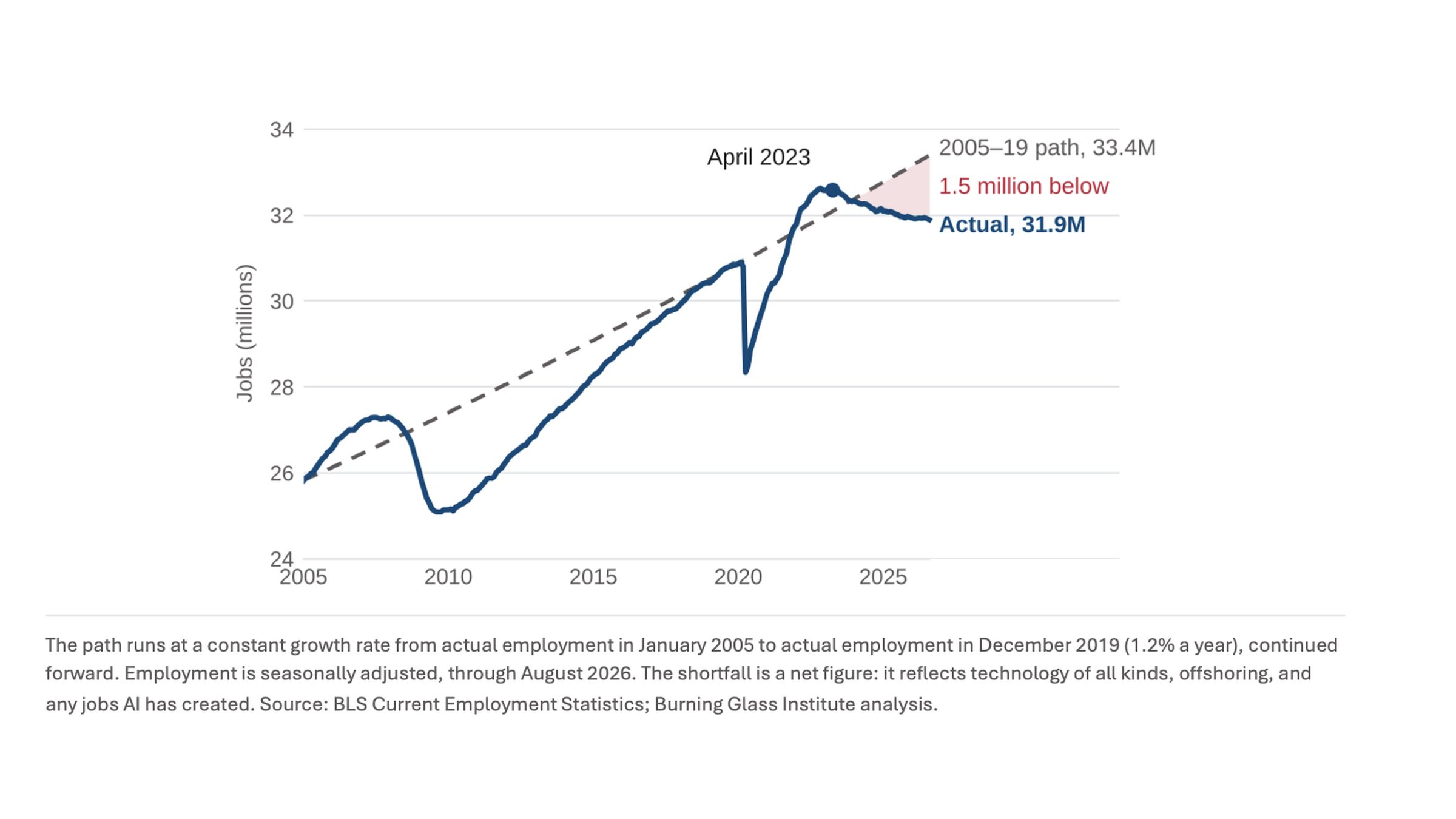
The U.S. economy has 1.5 million fewer white-collar jobs than would be expected based on pre-pandemic growth trends, according to a new report. AI may be to blame.
What they're saying: The technology's labor market effects may be showing up in the form of slower hiring rather than rising unemployment.
- "The missing workers aren't being laid off. They're not being hired in the first place," researchers from The Burning Glass Institute and RAISE US, a group co-founded by former Commerce Secretary Gina Raimondo, wrote.
The big picture: White-collar employment has fallen by about 700,000 since April 2023. The rest of the economy added 4.4 million jobs over the same period.
Reality check: The researchers caution that AI may not fully explain the missing jobs. Higher interest rates and the unwinding of huge pandemic-era hiring may also be contributing to the gap.
The report also warns that young workers could lose opportunities to gain the experience needed to advance as AI dominates routine entry-level tasks.
- In industries with widespread AI use, the share of entry-level job postings was 3% to 8% below its 2021–2026 average in the year ending June 2026, while remaining virtually unchanged across the broader economy.
What to watch: Policymakers are grappling with the possibility of a future in which AI permanently and severely chills demand for workers.
- Gene Sperling, who advised Presidents Clinton, Obama and Biden on economic policy, wrote in a new essay that the priority should be on maintaining full employment — rather than relying on cash payments to compensate workers for lost jobs.
- Sperling calls for using revenue from AI-driven productivity gains to create jobs in areas with unmet needs — including caregiving, education and public services.
- "Tighter job markets give workers options. They are more likely to have multiple offers, demand better wages and conditions," Sperling wrote.

How the Fed will react to wobbling markets
Monday morning's furious market rally notwithstanding, the tenor on Wall Street has turned more ominous this month. It puts pressure on Kevin Warsh's Fed to rethink its plans to keep raising interest rates — though at this juncture the mood swing probably isn't enough to derail them.
The big picture: During periods of financial turmoil, the Fed can ride to the rescue, offering cheaper money that helps offset declines in prices of risky assets.
- Right now, however, it is more constrained given lingering high inflation — and a sense that the very sectors showing signs of financial strain have been a cause of the elevated inflation the Fed is seeking to quash.
- As a result, a slowing of the AI investment boom may not be the worst thing in the world, at least in the view of many Fed policymakers — so long as it remains contained and doesn't spill over into a broad retrenchment of economic activity and a worsening of the job market.
Catch up quick: Stocks fell in each trading session last week, including a whopping 3.7% drop in the S&P 500 on Friday.
- There has been a remarkable bounce back this morning, with the S&P up 4.1% as of 10:00am — but even after that surge, the market is down about 5% in November, more if you confine the analysis to leading tech stocks.
- That has coincided with other measures of tightening in financial conditions, like a widening in spreads between riskier corporate bonds and Treasuries.
By the numbers: Goldman Sachs economists estimated that the tightening in financial conditions through Friday was the economic equivalent of 1 percentage point's worth of Fed rate hikes — and, if sustained, would reduce GDP growth by 0.5 percentage points over the next year.
Yes, but: The Fed raised interest rates a quarter point in September and has all but locked in another rate hike on Dec. 9, and most officials seem inclined toward one or two more next year.
- Against that backdrop, 100 basis points' worth of financial conditions tightening seems downright welcome, basically getting ahead of a policy move many at the central bank have thought is necessary.
- In a speech on Friday, for example, governor Lisa Cook said that in her view "financial conditions are too accommodative at a time when inflation remains stubbornly above target, with no clear signs of disinflation in train."
- "The current stance of policy does not appear to be curtailing the AI buildout, and equity prices continue to support consumer spending," she said in Chile.
Reality check: If the stock market were to resume its plunge and credit conditions tighten up more widely, it would inevitably make the Fed back off its rate-rising plans. It's easier to talk tough when all that has transpired is a few bumpy days of stock trading.
- For better and worse, this episode of volatility has featured a traditional inverse relationship between stocks and bonds: On days when stocks fall and the world looks scary, bonds rise and their yields fall, in anticipation of easier monetary policy in the future.
- That implies that, unlike in the last three periods of meaningful market disruption (the onset of the Iran war in March, the "liberation day" tariffs in April 2025 and the Fed tightening campaign of 2022), the smart money believes that the Fed will ultimately provide relief if the road gets too bumpy.
What they're saying: "Further tightening could eventually persuade the FOMC that additional rate hikes are unnecessary," Goldman Sachs economist David Mericle wrote.
- "A further equity market selloff led by concerns about AI spending in particular might lessen the need for further hikes" because AI demand is boosting inflation, Mericle added.
What's next: Just six days ago, New York Fed president John Williams told us that he saw market moves as "more of a normalization of financial conditions which are still pretty supportive of growth."
- Williams is scheduled to appear at an event in the Bronx at 4:00pm ET today, right at the market close, and the world will be watching whether three days of turbulence last week followed by today's rebound bring a change of tone.

CrowdStrike buying Zscaler as cybersecurity consolidates
CrowdStrike on Monday said it's agreed to acquire cybersecurity firm Zscaler for around $43.9 billion in stock.
Why it matters: Cyber consolidation is accelerating as companies seek to defend against both AI-enabled threats and AI-discovered security holes.


GTCR kicks tires on fintech mega-deal


Global Payments shares spiked nearly 10% on Friday, after private equity firm GTCR confirmed in a regulatory filing that it's working on a take-private bid.
The big picture: Global Payments shares had fallen since the Worldpay deal, and perhaps GTCR believes the market is underestimating what the combined business will do once fully integrated. Or that it could do a better job on the integration.

Nvidia stock skyrockets after Jensen Huang is reinstated
Nvidia shares skyrocketed more than 30% as trading opened Monday after the company's board made the stunning decision to reinstate Jensen Huang as CEO.
Why it matters: The chip giant — which had lost more than $2.5 trillion off its market share from its peak — remains at the center of the AI universe.


Nvidia board reinstates Jensen Huang as CEO
Nvidia has announced that it will reinstate Jensen Huang as CEO, president and as a member of the board.
Why it matters: Huang's ouster just days ago sent the stock market into correction territory. His return sparked a massive early rally in stocks Monday.

AI's spending slowdown
The AI trade has entered uncharted territory as stocks limp to the end of an astonishing month.
The big picture: An important new reality for AI emerged in the just concluded third-quarter earnings season that has been overshadowed by the midterm elections, Jensen Huang and the Anthropic IPO.
Zoom in: Wall Street analysts covering the hyperscalers didn't ratchet up forecasts for further capital investment by Amazon, Alphabet, Microsoft, Meta and Oracle — the biggest spenders of the AI data center boom.
- That's a change from recent trends, seen in the chart below, where tech giants regularly announced shocking amounts of planned AI investment as part of quarterly results.
- Those announcements would lead Wall Street analysts to increase their estimates, and the capex line would spike up and to the right.
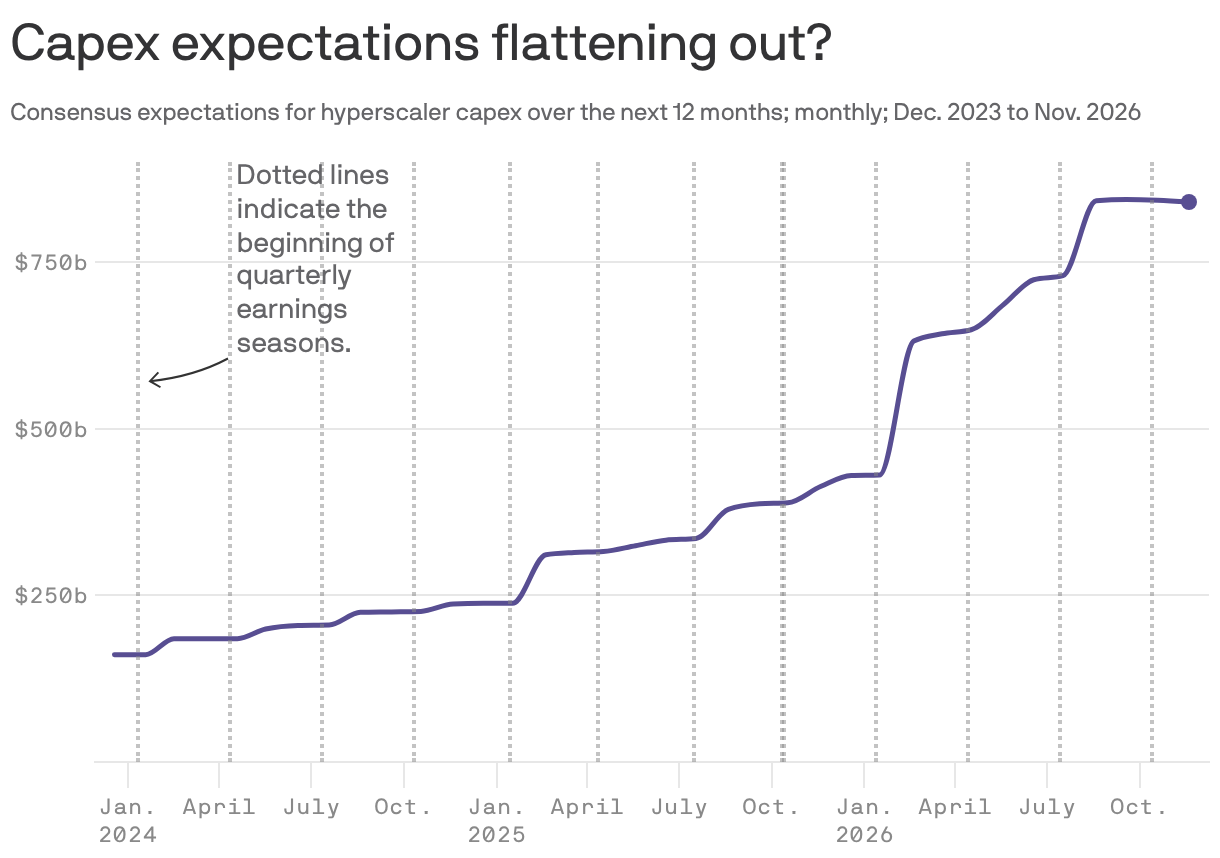
Reality check: This flatlining trend is huge.
- That wave of hyperscaler investment into data centers is also the source of giant profits that other companies — construction and engineering firms, merchant power providers, fiber-optic cable makers and, of course, makers of chips and memory devices — have been raking in from the boom.
- The AI investment gravy train has driven levels of S&P 500 earnings growth and overall corporate profitability to remarkably high levels.
Threat level: Slower capex will curb profits for the "picks-and-shovels" AI stocks that delivered some of the most astonishing gains of the AI boom.
- That's not necessarily a disaster: Analysts are expecting a more-than-respectable 16.4% increase in earnings for the S&P 500 next year.
- But it's clearly a sharp slowdown from earnings-per-share growth of nearly 35% that Wall Street thinks we'll end up with in 2026.
What they're saying: "We think the nature of the market environment is shifting a bit away from this sort of constantly higher capex numbers," David Lefkowitz, head of U.S. equities at UBS Global Wealth Management, told Axios last week, adding "We need to see the monetization at the AI layer, because that's ultimately who's paying for all this capex."
What we're watching: As Lefkowitz says, we're watching for clear, conclusive proof that there's serious money to be made from AI — aside from selling equipment used to build data centers. We haven't seen it yet.
The bottom line: Slowing future earnings expectations, expected Federal Reserve interest rate hikes and the chance of increased AI regulation have the market on edge.