1m+ missing jobs


Add Axios as your preferred source to
see more of our stories on Google.

Illustration: Sarah Grillo/Axios. Stock: Getty Images
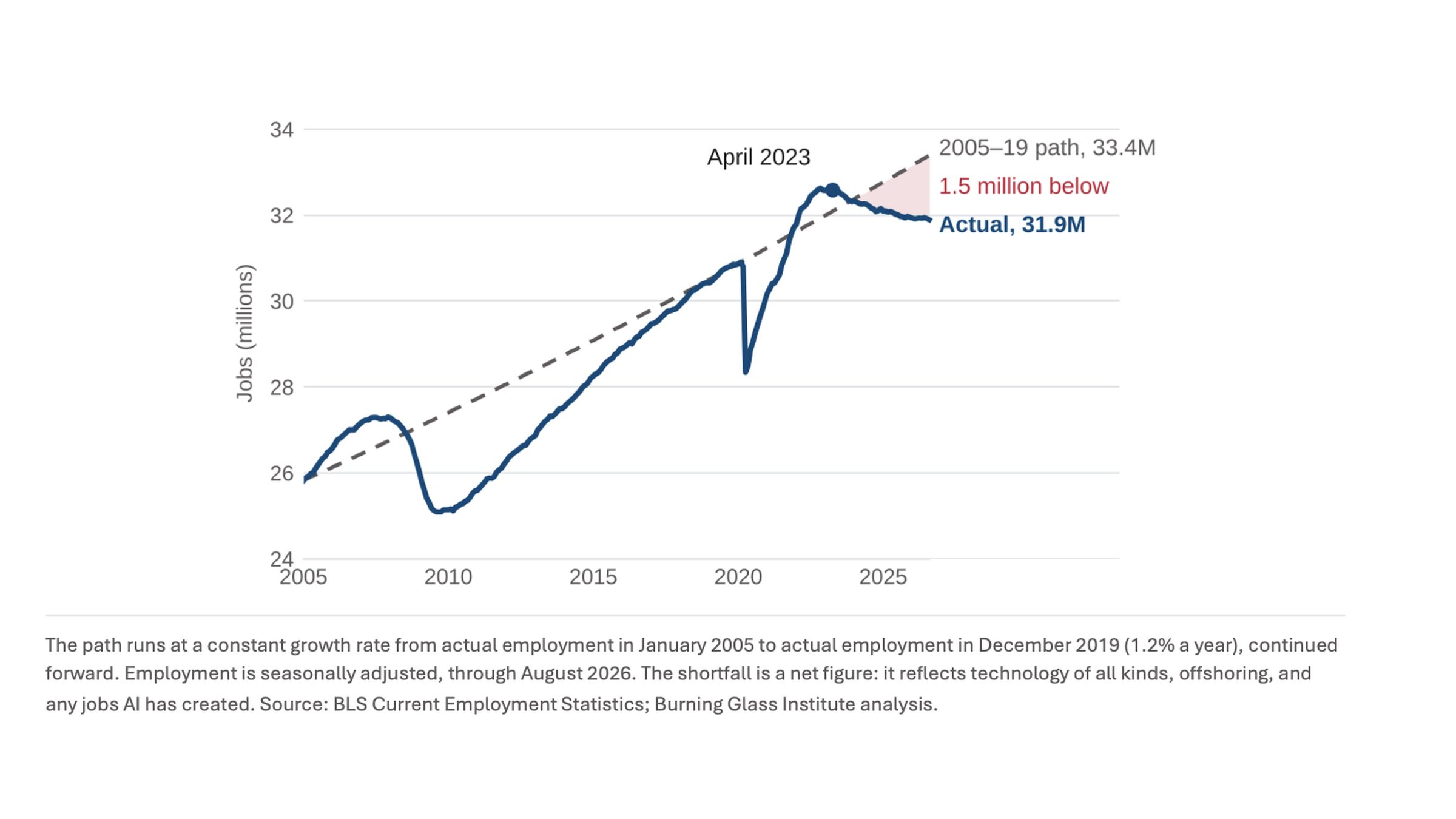
The U.S. economy has 1.5 million fewer white-collar jobs than would be expected based on pre-pandemic growth trends, according to a new report. AI may be to blame.
What they're saying: The technology's labor market effects may be showing up in the form of slower hiring rather than rising unemployment.
- "The missing workers aren't being laid off. They're not being hired in the first place," researchers from The Burning Glass Institute and RAISE US, a group co-founded by former Commerce Secretary Gina Raimondo, wrote.
The big picture: White-collar employment has fallen by about 700,000 since April 2023. The rest of the economy added 4.4 million jobs over the same period.
Reality check: The researchers caution that AI may not fully explain the missing jobs. Higher interest rates and the unwinding of huge pandemic-era hiring may also be contributing to the gap.
The report also warns that young workers could lose opportunities to gain the experience needed to advance as AI dominates routine entry-level tasks.
- In industries with widespread AI use, the share of entry-level job postings was 3% to 8% below its 2021–2026 average in the year ending June 2026, while remaining virtually unchanged across the broader economy.
What to watch: Policymakers are grappling with the possibility of a future in which AI permanently and severely chills demand for workers.
- Gene Sperling, who advised Presidents Clinton, Obama and Biden on economic policy, wrote in a new essay that the priority should be on maintaining full employment — rather than relying on cash payments to compensate workers for lost jobs.
- Sperling calls for using revenue from AI-driven productivity gains to create jobs in areas with unmet needs — including caregiving, education and public services.
- "Tighter job markets give workers options. They are more likely to have multiple offers, demand better wages and conditions," Sperling wrote.
