Nvidia shares plunged 14% and Anthropic shares surrendered most of their IPO gains Friday amid a brutal tech stock rout as the AI boom veered closer to bust.
Why it matters: Anthropic's record IPO has failed to save the flagging AI trade from the weight of declining confidence, tightening credit and a scandal at the world's most important chipmaker.
President Trump on Friday said he would block U.S. companies from building data centers overseas or impose a "tremendous tax" on them if they do.
Why it matters: Trump's push to keep AI infrastructure in the country comes just weeks after data center expansion became a midterm-election flashpoint, as voters raised concerns about the environmental and financial impacts they pose.
Why it matters: Anthropic (Nasdaq: ANT) was seen as a catalyst that could prop up the AI economy, but its IPO arrived at the same time as investors were losing faith.
Consumer sentiment has popped this month,amid midterm elections and a moderation in energy prices.
The big picture: Sentiment remains below its pre-Iran War levels, but Americans felt better about their personal finances this month — and view the soon-to-be divided government as better for their pocketbooks.
The AI boom is generating enormous fortunes, from stock-market gains (that are now under pressure) to the paper wealth being amassed as AI firms go public.
Why it matters: Changes in household wealth can ripple through the economy, influencing everything from housing prices in tech hubs to consumer spending nationally, even before much of that wealth is converted into cash.
But the stock market's recent sell-off underscores how the wealth effect cuts both ways — supporting spending as asset prices rise and weighing on it if the AI boom dramatically reverses.
Anthropic officially surpassed SpaceX to pull off the largest IPO in history after underwriters exercised the greenshoe option to purchase more shares, but the stock tumbled in the early hours on Friday amid a broader rout of tech stocks.
Why it matters: Anthropic may not be fully immune to Wall Street's broader tech uncertainty.
The average Thanksgiving dinner is up 6%, ending three straight years of price declines, according to the American Farm Bureau Federation.
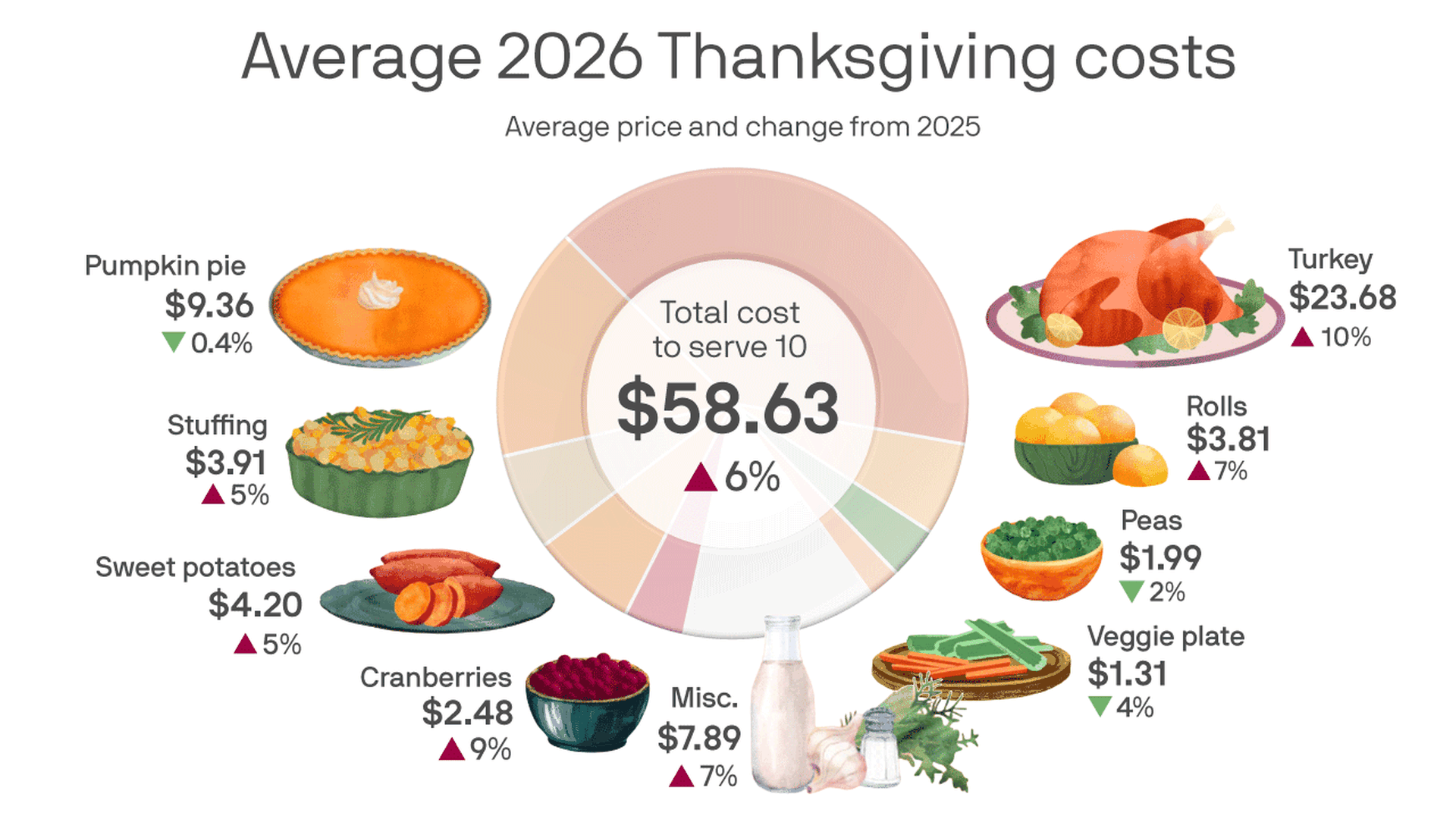
By the numbers: The traditional dinner for 10 now costs $58.63, or $5.86 per person, up from $55.18 last year, per the AFBF's latest annual survey.
Turkey drives much of the increase. A 16-pound frozen bird costs an average of $23.68, up 10% from 2025.
Cranberries are up 9%, while dinner rolls and sweet potatoes are up 7% and 5%, respectively.
Pumpkin pie ingredients and vegetable trays are among the few items that have gotten cheaper.
The big picture: The American dinner price is still 8% less than the 2022 peak of $64.05, but well above the last pre-pandemic cost of $48.91 in 2019.
The Farm Bureau attributes this year's higher prices in part to strong turkey demand, tight supplies and rising costs for fuel, labor and other agricultural expenses.
Zoom in: The same meal for 10 people can vary regionally. AFBF says it averages:
$61.57 in the Northeast.
$58.74 in the West.
$56.89 in the Midwest.
$54.33 in the South.
Between the lines: The survey's price checks were done earlier in November, possibly before deeper discounts or promotions. Shoppers willing to hunt for deals might spend considerably less.
Axios' Monica Eng put Aldi's $39 offer to the test, preparing a full holiday meal for 10 for $37.38 in Chicago — with leftovers, though a few traditional extras were missing.
Walmart touts a Thanksgiving meal basket for 10 people for about $35.
A separate report from The Wells Fargo Agri-Food Institute found that Thanksgiving foods cost 0.4% less than a year ago.
The studies use different menus and pricing methods. Wells Fargo analyzed retail data for the 52 weeks ending in September, while Farm Bureau volunteers checked prices during the first week of November.
The bottom line: Thanksgiving is getting pricier overall, but what you actually spend depends on where and when you shop, and what's on your menu.