Treasury Secretary Scott Bessent told "The Axios Show" he plans to propose a notification process between the U.S. and China if something goes wrong with AI, and said he thinks Beijing would agree.
Why it matters: Bessent's idea reflects what he calls China's realization that its own open-source AI poses a bigger threat than Beijing had realized.
The Justice Department will not reopen its criminal investigation into former Federal Reserve chair Jerome Powell over the central bank's costly headquarters renovation.
Why it matters: President Trump had asked Attorney General Todd Blanche to review the Fed watchdog's findings and decide "what to do" about Powell. But for now, the former Fed chief will not face a renewed criminal investigation.
Treasury Secretary Scott Bessent told Axios co-founder Mike Allen on "The Axios Show" that Trump Accounts will be the "most important benefit for young people since the GI Bill."
Why it matters: The Trump administration is making a sweeping bet that giving kids an early stake in the stock market can help a generation build wealth.
The U.S. healthcare workforce shortage is already straining access to care, and the Covista Healthcare Workforce Index, the latest in an ongoing series of research by Covista on the healthcare workforce, projects that the shortfall is on track to nearly double by 2040 without action.
Job creation was minimal in September and weaker over the summer than was thought, according to the federal employment report released Friday — taking some of the apparent buoyancy out of the labor market picture.
Why it matters: This is one of those instances where the data tells us more about what isn't happening than what is.
And the labor market decidedly doesn't look to be heating up — certainly not in a way that might compel more aggressive monetary tightening by the Fed.
Under the hood, the data on the September job market is more mixed — and in some ways even more optimistic — than gloomy headlines this morning might suggest.
Exclusive new data from Indeed Hiring Lab shows that communications and PR job postings in the U.S. are down about 31% since July 2023, compared with a 26% decline in all U.S. job postings.
Why it matters: Comms leaders are building teams while the work itself is changing, forcing new decisions about which roles, skills and levels of experience they actually need.
Tesla and Rivian topped expectations on electric vehicle deliveries over the past three months, an early sign that elevated gas prices may be giving EV demand a lift.
Why it matters: EVs had been down in the dumps for an extended period, but with gas now far above $4 per gallon, some consumers appear to be giving them a second look.
Change.org was founded as a venture-backed organization, before a 2021 restructuring that saw investors like Reid Hoffman and Sam Altman donate their shares to a nonprofit structure.
Now the group tells Axios that it's investing around $100 million of its own money to rebuild its core petitions platform via AI.
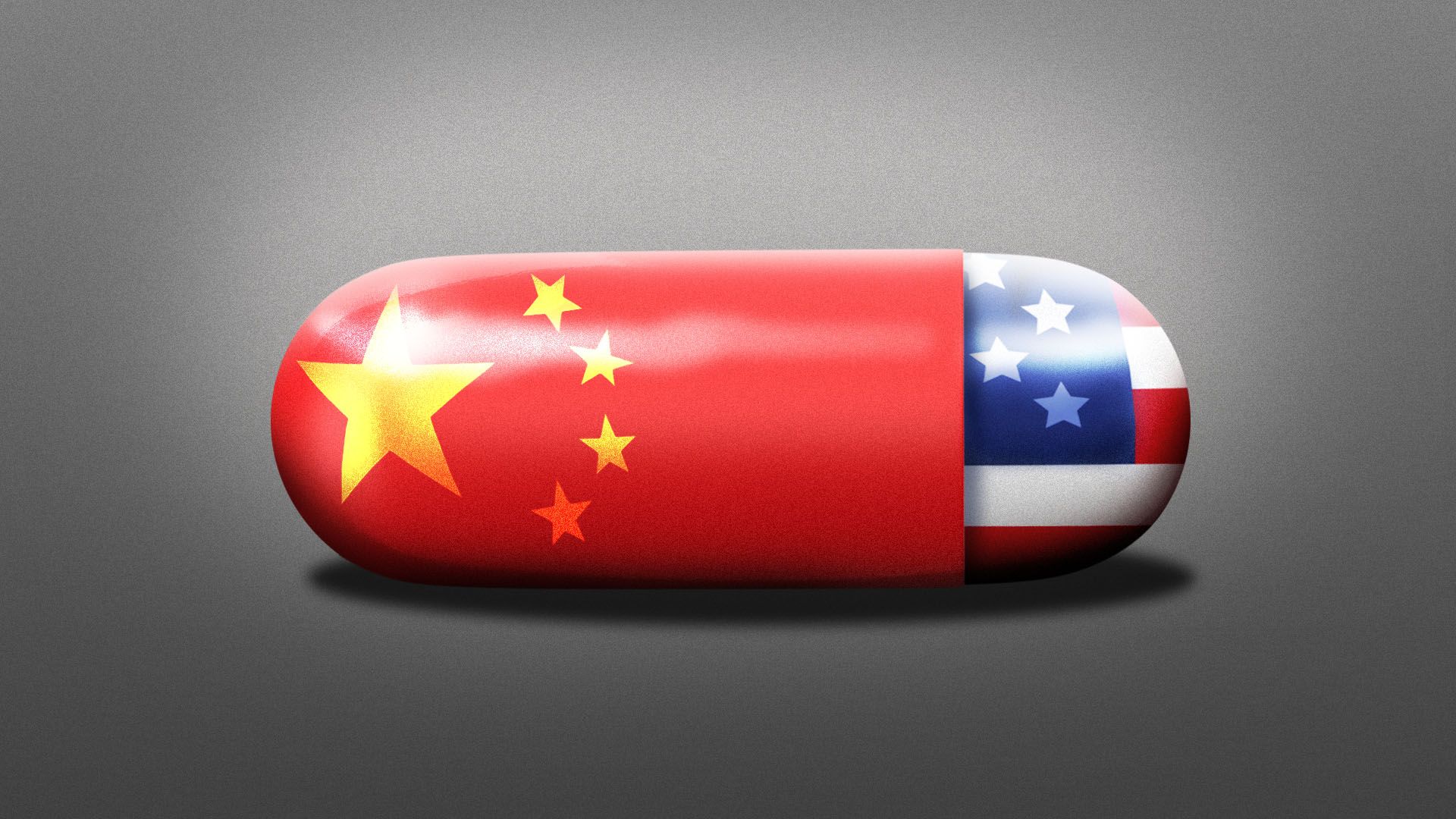
Novartis on Friday signed a drug licensing deal with China's Abogen Biosciences that could be worth up to $7.8 billion.
Why it matters: This is the latest example of a Western pharma giant partnering with a Chinese biotech — a trend that could presage China rivaling America as the world's top drugmaker.
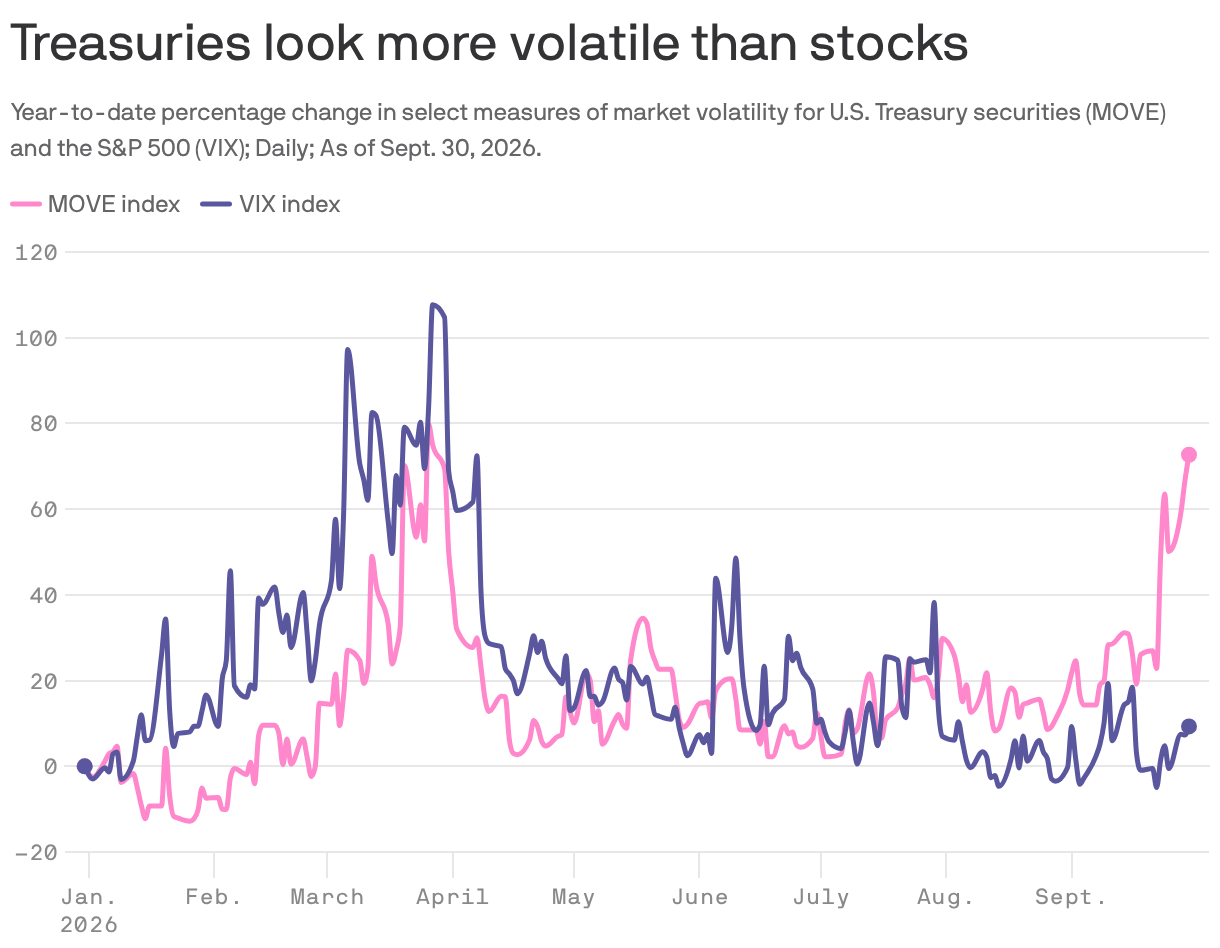
Equity investors expect big volatility, and Treasury investors typically don't. But like so much else in the current market, that truism has been flipped on its head.
Why it matters: Analysts have flagged jagged trading in the Treasury market — which translates into sharp moves in interest rates — as a potential risk for stocks.
Technical mechanics are one factor behind the spike in rates that's got the typically boring government bond markets on edge — and a reason we might be living in a higher interest rate world for a while.
Why it matters: The Treasury market is the plumbing of the world economy and, much like the pipes in your house, when it gets jammed up you have to pay attention.
A small cadre of elite AI researchers is wielding extraordinary influence inside OpenAI and other leading companies, challenging executives, shaping policy and complicating negotiations with Washington.
Why it matters: As a safety crisis has unfolded across the industry, it's an open question who is doing more to shape the national AI debate — top researchers or the executives they report to.