Monday's economy stories
Axios Live: What housing leaders say could ease the crisis
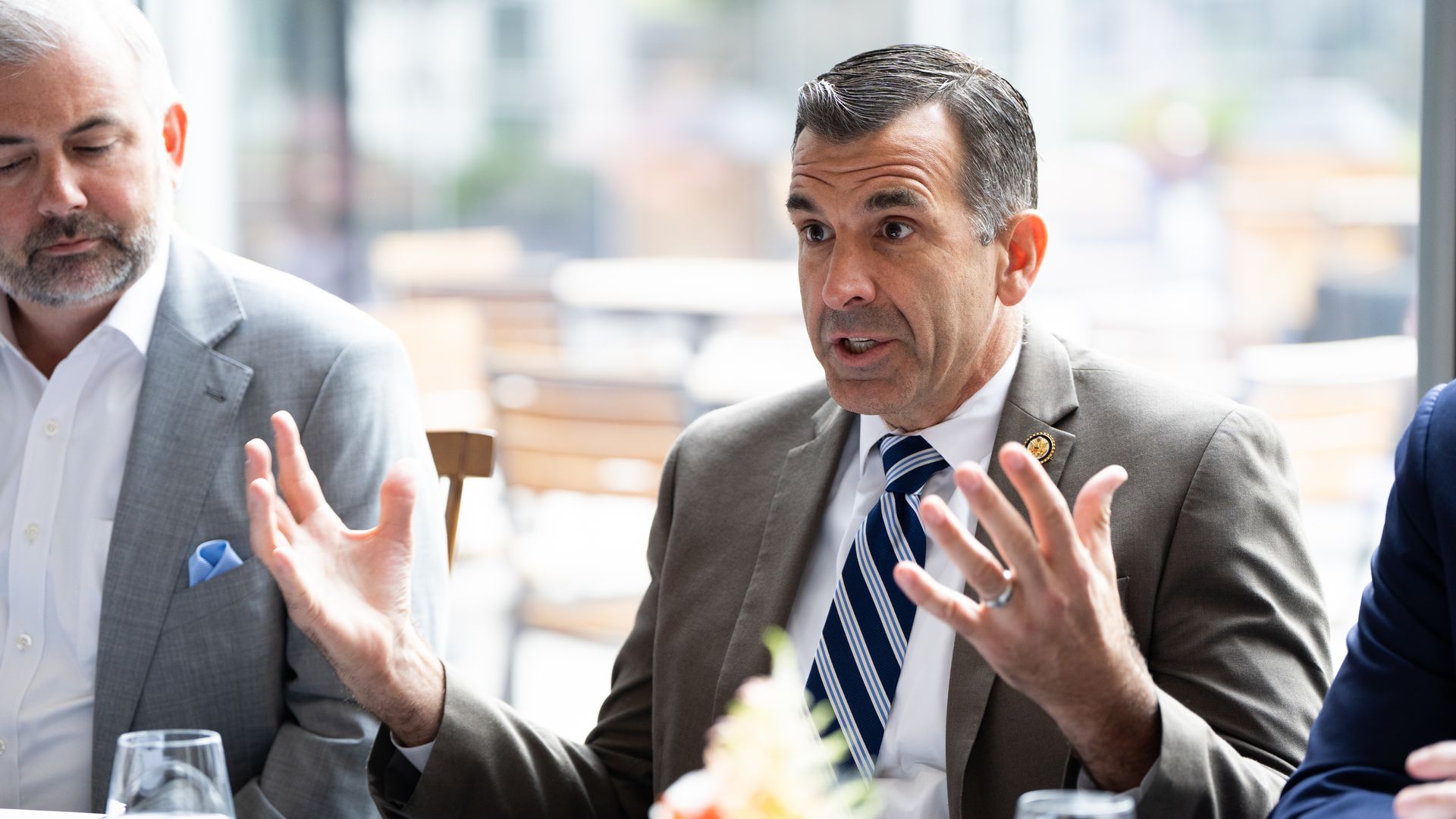
WASHINGTON — Addressing the cost of housing in the U.S. will require cooperation from local governments, targeted policy changes and sustained investment, said leaders in government, business and advocacy.
Why it matters: Home prices are soaring, and the passage of the bipartisan 21st Century ROAD to Housing Act signals momentum toward tackling the crisis.
Axios' Nathan Bomey and Neil Irwin moderated the July 16 roundtable discussion. The event was sponsored by Citi.
5 big takeaways from the conversation:
- The new law, which went into effect this month, is "a reflection of the magnitude of this issue" and a rare example of what Democrats and Republicans can agree on as a priority, Rep. Sam Liccardo (D-Calif.) said.
- "Connecting the federal government with the state and local governments will be a longer-term challenge," Bipartisan Policy Center executive vice president Dennis Shea said, but necessary to ensure all communities benefit from the legislation.
- The Department of Housing and Urban Development should monitor how local communities use the funds they're granted, said Sara Bronin, founder of the National Zoning Atlas and CEO of Land Use Labs.
- Leaders at the state level are focusing on cultivating pro-housing local leaders and improving salience as an "electoral issue for young families," said Haley Lemieux, chief of staff at the Maryland Department of Housing and Community Development.
- "Homeownership and housing are two separate issues," Vested Communities founder Jason Boseck said, and policy should extend to address renters' needs such as incorporating shared equity. The conversation also included mentions of housing vouchers and preserving existing affordable housing.
Content from the sponsor's remarks:
In opening remarks, Citi head of enterprise services and public affairs Edward Skyler said housing innovation in the U.S. isn't living up to its potential.
- In the next five years, Citi is "going to work with for-profit developers [and] nonprofit developers that are doing supportive housing service as well."

Jersey Mike's sets IPO terms
Blackstone-backed Jersey Mike's Subs said on Monday that it plans to sell 13.8 million shares in an IPO priced between $21 to $25 apiece, giving it a market cap of between $6.7 billion to $7.8 billion.
Why it's the BFD: There's hope that if the public market digests the offering well a feast of restaurant IPOs could follow.

AMC stock soars: "The Odyssey" delivers blockbuster weekend
AMC Entertainment shares soared Monday after a blockbuster showing for "The Odyssey" and a strong earnings report signaled that the movies have completed a journey of their own — back from the brink.
Why it matters: The pandemic bludgeoned the movie theater industry — and triggered the bankruptcies of multiple chains — while the surge of streaming services threatened to deal the final blow.

Don't count on AI to fix America's deficit problem
If the U.S. experiences an AI-fueled productivity boom over the coming years, it will mean stronger growth — but, at least under current tax policies, that would have limited benefits for the U.S. fiscal outlook, per a new analysis.
Why it matters: With the U.S. public debt high and rising rapidly, and the political will to reduce deficits by traditional means — spending cuts and tax increases — nowhere to be found, it would be awfully fortunate if America could grow its way out of its fiscal predicament.
- New modeling from the Budget Lab at Yale, however, suggests that in an AI-driven productivity boom, the fiscal situation would improve, but not by the leaps and bounds one might expect.

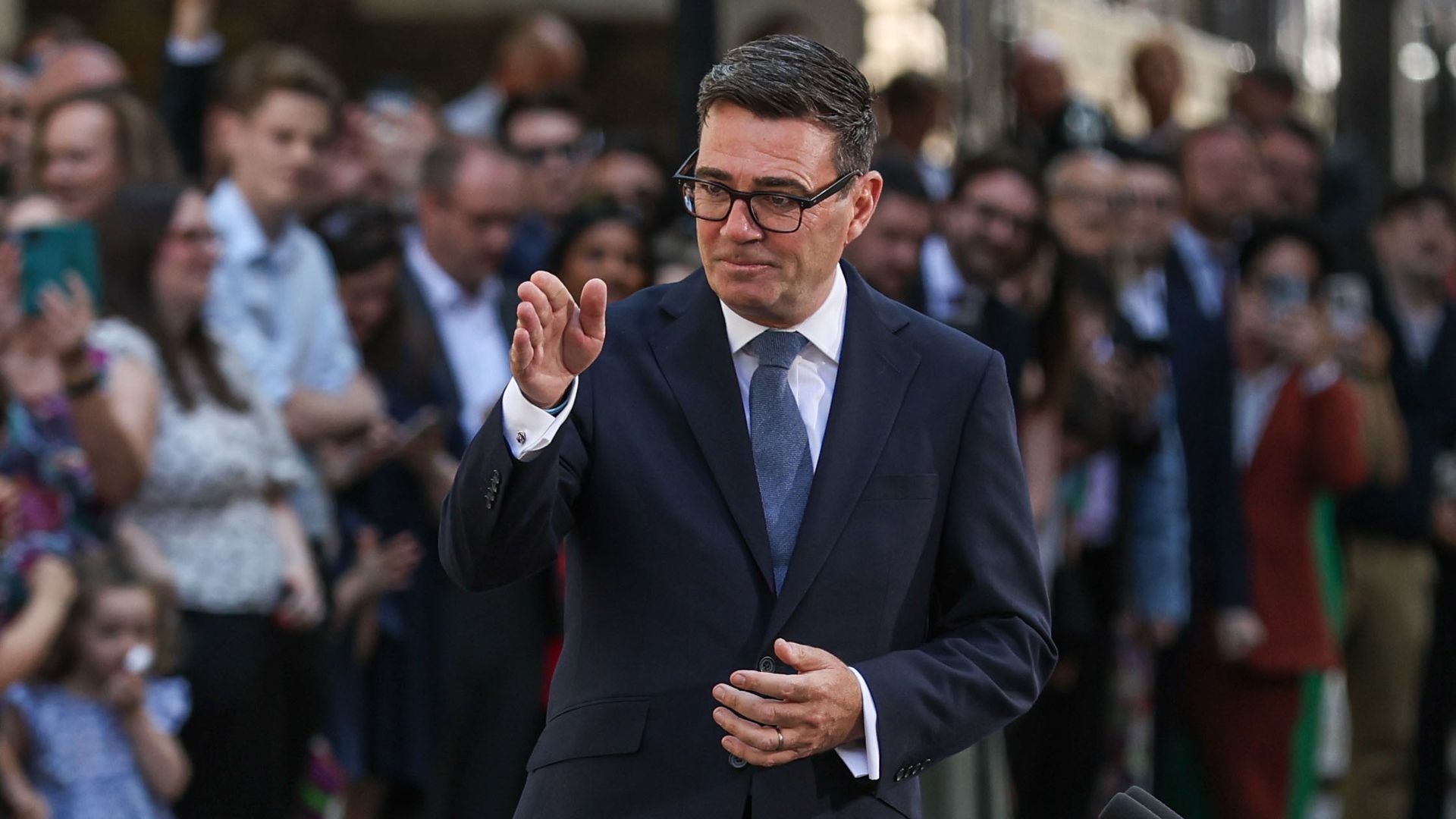
U.K. PM Burnham promises new economic model
Andy Burnham is the U.K.'s seventh prime minister in a decade, inheriting an economy constrained by weak growth, high debt and years of political turmoil.
Why it matters: Burnham is promising to remake Britain's economy just as growth has stalled, inflation remains elevated and public finances are stretched.

Whole Foods Market set to anchor new Durbin Park retail development
A new 106,054-square-foot mix of retail, dining and service tenants is coming to Durbin Park this fall.
The plan: The Berkeley at Durbin Park will act as a new grocery-anchored retail center, serving one of Northeast Florida's fastest-growing communities.
- Regency Centers will develop and own the site in the Durbin Park area of St. Johns County, Florida.

The great AI wealth transfer


No, we're not talking about Social Security. "Generational" is how some analysts describe the current transfer of money from hyperscalers to chipmakers.
Why it matters: The chip stock boom that preceded the current malaise was based on that simple reality, which is reflected in the above chart.
- In short, the massive investments that hyperscalers are making in "compute" are pumping cash into the coffers of the companies that make the products they need — computer chips foremost among them.

The priciest World Cup games to get into
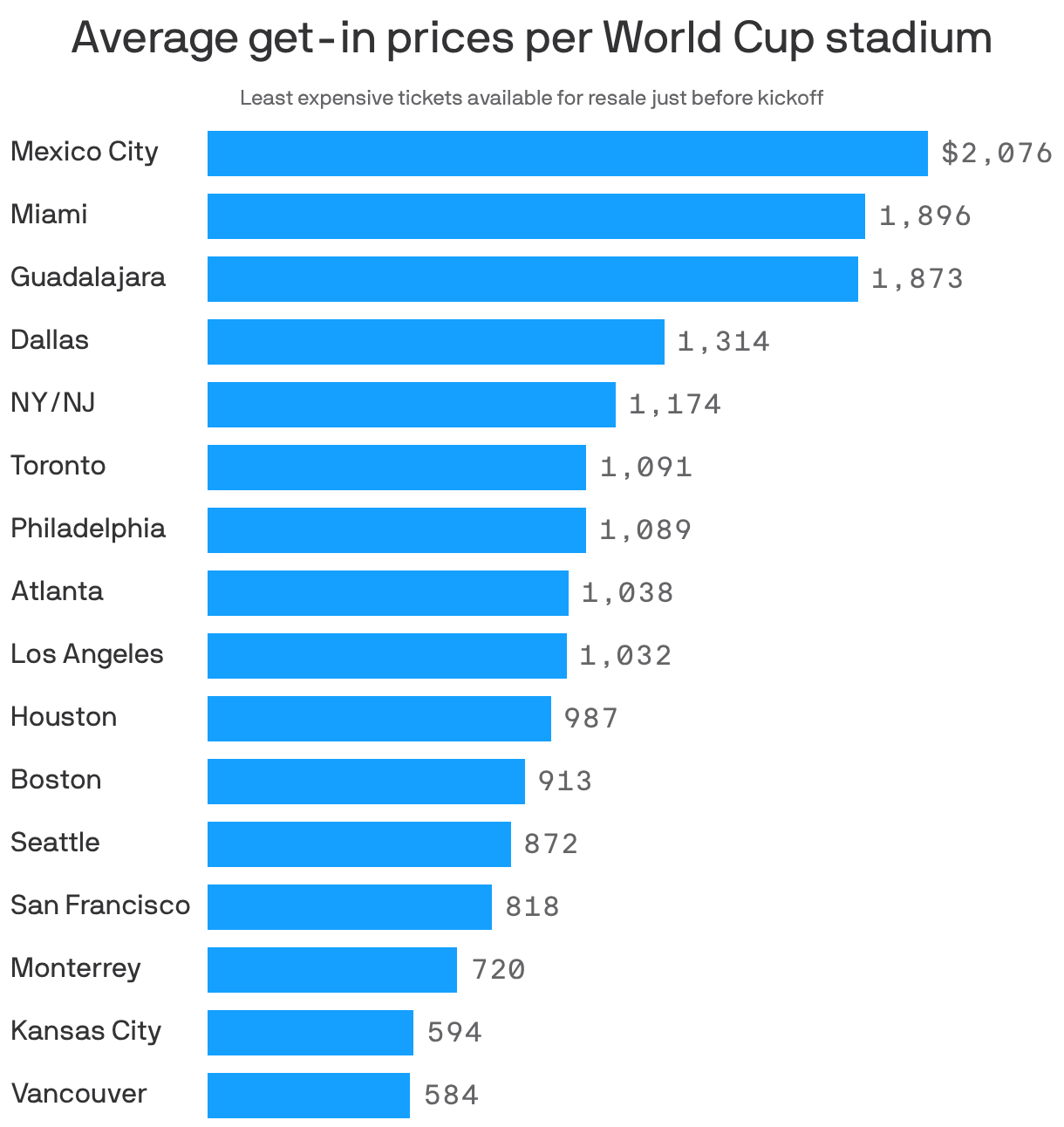
Even the "cheap seats" at most World Cup games were expensive, with last-minute prices reaching thousands of dollars for some matches.
The big picture: Get-in prices ranged from just over $300 for a group-stage match in Atlanta to nearly $7,500 for Sunday's final in East Rutherford, N.J.

Oil tops $90 as Middle East fighting escalates


Oil prices jumped above $90 per barrel Sunday in the first major trading since the deaths of three U.S. service members and escalating Middle East hostilities.
Why it matters: Higher oil prices could quickly translate into more expensive gasoline for consumers and diesel for freight carriers while increasing inflation risks worldwide.

Top Pentagon official blasts OpenAI's Dean Ball
A senior Trump administration official and key adviser are slamming OpenAI head of strategic futures Dean Ball's views on regulation, casting a shadow on the future of the company's relationship with the government.
Why it matters: The criticism targets a former White House architect of the administration's AI Action Plan who now works at OpenAI, potentially complicating the company's relationship with the Trump administration.

Investors blink on the AI trade


The boom that powered semiconductor stocks to record-setting heights just last month is now sputtering.
Why it matters: Chipmakers are the picks and shovels of the AI gold rush, and they are now looking shaky.
- A recent selloff, combined with new stress over competition from Chinese open-source AI models, is raising concerns over the durability of the AI trade more broadly.

Gas prices are rising again — and so is GOP grief in the midterms
Just when Republicans thought they'd caught a break on gas prices, the collapse of President Trump's Iran deal is derailing their best chance to change the inflation story before the midterms.
Why it matters: Falling gas prices are one of the most tangible ways to ease voter anger over inflation. Renewed combat — and the threat of escalation — has prices shooting back up.