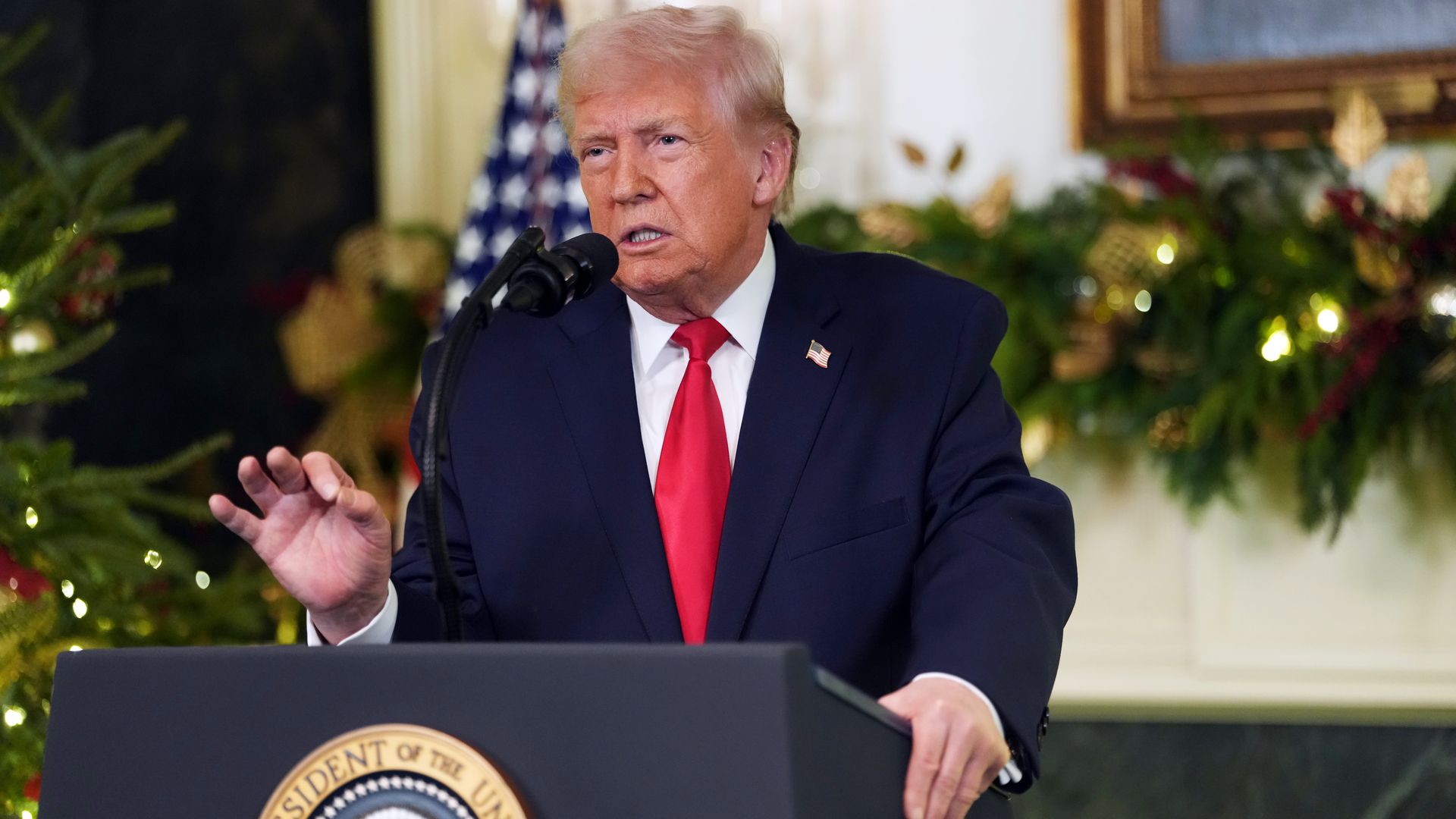
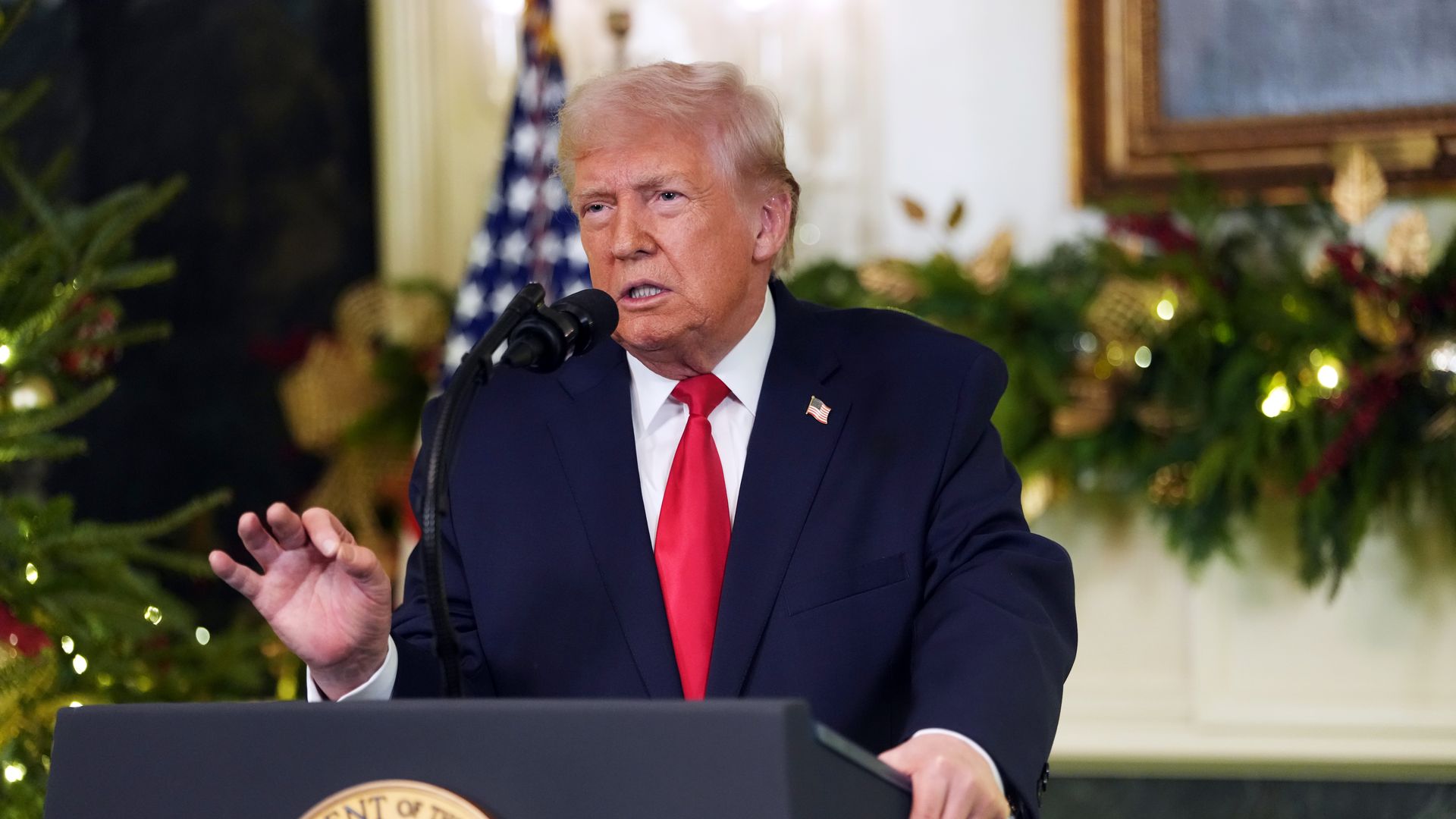
President Trump announced Wednesday night that some members of the military will receive a $1,776 "warrior dividend," while touting his tariffs and economic policies more broadly.
Why it matters: The president's move comes as the administration tackles an affordability problem that has been hurting Republicans in recent elections, and as Trump's approval ratings on his handling of the economy have reached a record low.
The U.S. will build "Trump-class" military vessels that the president on Monday suggested are new-age battleships, inching the country closer to construction of what the administration is advertising as "the Golden Fleet."
The big picture: President Trump has in his second term obsessed over seapower — long a sign of a country's strength. Here, he again inserts himself.
This holiday season, JPMorgan Chase appears to be having a change of heart on crypto.
Why it matters: JPMorgan CEO Jamie Dimon has long derided cryptocurrencies like bitcoin, famously calling it a "fraud," "stupid" and "worthless" — and even saying he'd fire any employees found trading it.
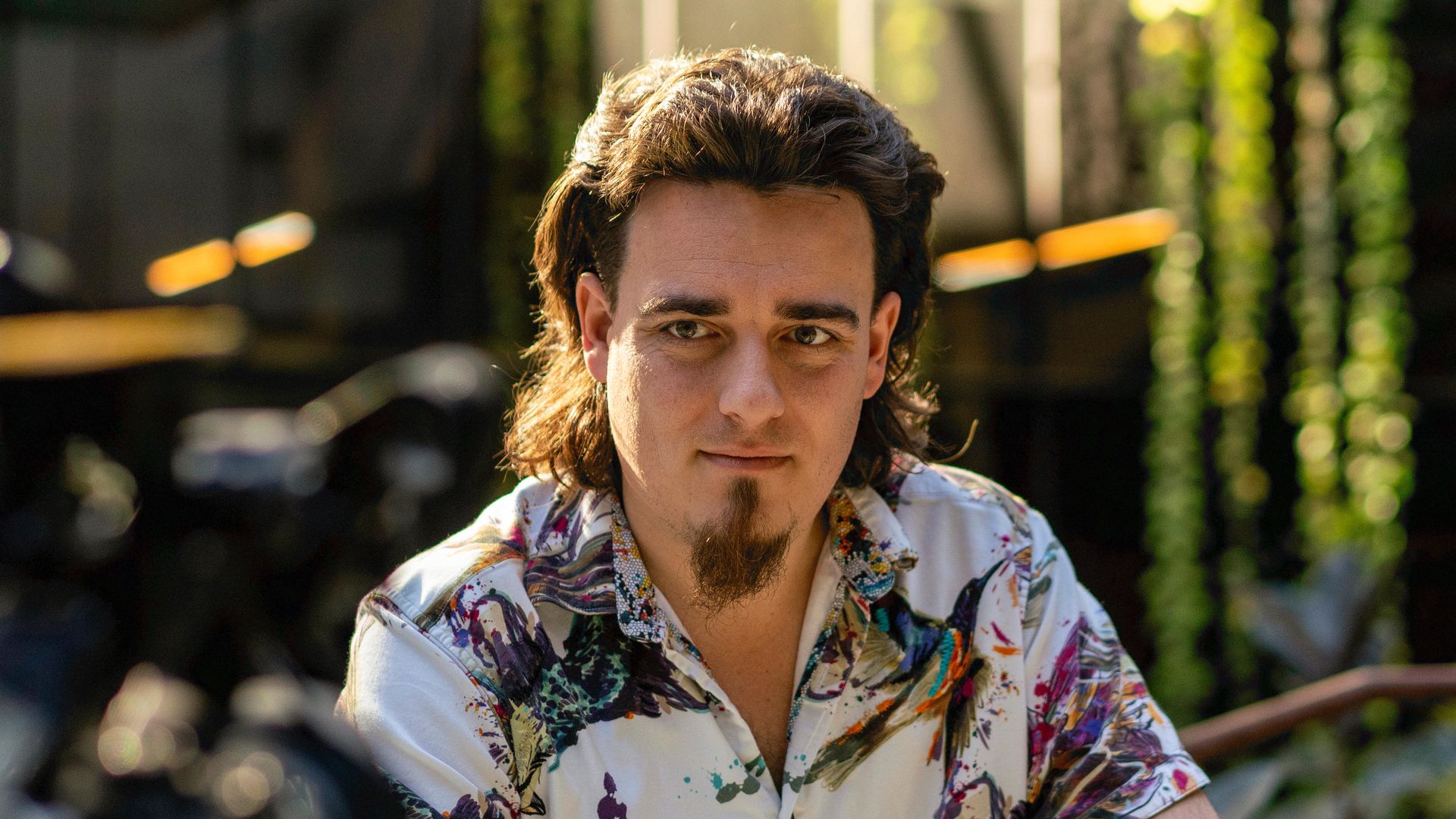
Erebor, a new digital bank co-founded by Anduril's Palmer Luckey, has quietly raised $350 million at a $4.35 billion post-money valuation, Axios has learned from multiple sources.
Why it matters: Investor excitement in the stablecoin banking startup is reaching AI levels.
It will be a challenging 2026 for American workers, even as overall growth remains solid. That, in a nutshell, is the Axios Macro Consensus.
The big picture: About 500 of you entered projections in the last several days. The median entrant saw the unemployment rate surging to 5%, with still-elevated inflation and continued GDP growth.
Private equity firms Permira and Warburg Pincus have agreed to acquire Clearwater Analytics, a Boise, Idaho-based investment and accounting software maker, for $8.4 billion (including assumed debt).
The big picture: It's a boomerang buyout for Permira and Warburg Pincus, which both invested in Clearwater in 2020 and helped take it public one year later.
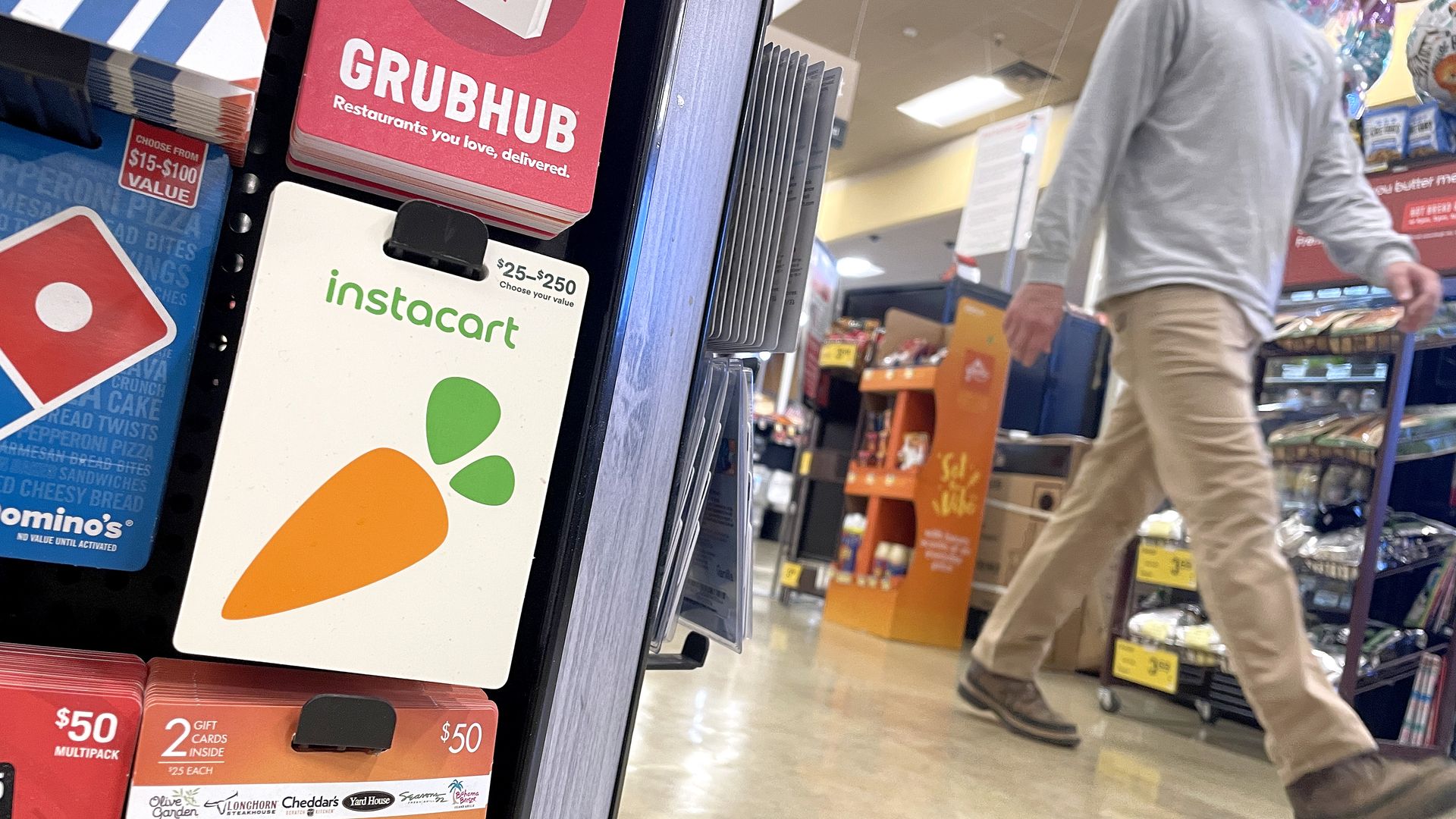
Instacart said on Monday that it's discontinuing a recently exposed program that offered some customers different prices for the same items.
Why it matters: The controversial program called attention to the concept of dynamic pricing, in which businesses set variable price points for goods and services based on different factors.
Why it matters: TheWhite House faces growing pressure to address affordability as it heads into a critical midterm. The president is betting that his "big, beautiful" law will boost the economy while pinning any lingering pain on his predecessor.
Declines in tech stocks? Healthy movement. Local officials stopping data centers? Prevents overbuild. Valuations high? Well, they deserve to be.
Why it matters: Every risk for the AI trade is framed as a positive by Wall Street bulls who are adamant we are in the early stages of the AI revolution.
'Tis the season to put a ring on it — and thanks to lab-grown diamonds, those rings are bigger and cheaper than ever.
Why it matters: Lab diamonds continue to reshape the engagement ring market, with the prices of all diamonds dropping and more fingers dripping in multiple carats.
By the numbers: A natural 3-carat diamond could cost an average of 16 times the cost of a lab-grown version, according to data from independent diamond industry analyst Paul Zimnisky.
The Knot's latest study found more than half of engaged couples (52%) had rings with lab-grown stones — a first for the annual survey.
And the stones went from an average of 1.5 carats in 2021, to 1.7 carats in 2024. According to Zimnisky, demand has particularly spiked for 2- to 3-carat natural diamonds and 3- to 5-carat lab diamonds.
Meanwhile, December (and Christmas Day, specifically) remains the most popular time of year to pop the question, per The Knot.
It's part of "engagement season" which goes from Thanksgiving to Valentine's Day, when The Knot says almost half of couples get engaged.
To the naked eye, lab and natural diamonds look nearly identical — even gemologists need special instruments to tell them apart — though Zimnisky says that most lab diamonds lack the yellow tint that natural diamonds have from the presence of trace nitrogen.
What they're saying: "I think we will eventually get to a point where most lab diamonds sell for under $1,000," Zimnisky tells Axios.
What we're watching: Vintage, old mine cut diamonds have gotten more popular — and can be replicated in lab versions.
Data: Paul Zimnisky; Note: For generic, round, near-colorless diamond with VS clarity and VG cut grade; Chart: Axios Visuals