Monday's economy stories

Hinge Health files for IPO
Digital physical therapy startup Hinge Health on Monday filed for an IPO.
Why it matters: IPOs have been hard to come by for digital health, and for VC-backed startups in general.

Musk quotes Monty Python to shrug off $16 billion loss
Not many people can laugh off losing $16 billion in a day — but then again, it's different when it comes to Elon Musk,
Why it matters: The world's richest man seemed unfazed about the 15% decline in Tesla's stock Monday, a plunge that led the worst market day of the year.
What they're saying: Confronted with a litany of recent bad news headlines in a Fox Business interview, Musk shrugged it off with a chuckle: "But look on the bright side! Always look on the bright side of life!"
- Monty Python fans will, of course, recall the reference to the closing song of "Life of Brian."
Catch up quick: It's been a tough few days for Musk.
- Last Thursday, SpaceX's Starship rocket exploded minutes after launch from Texas, the second such mishap this year.
- Friday, the New York Times reported President Trump was moving toward limiting Musk's previously free-ranging power after outrage from top Republicans.
- On Saturday, the "Tesla Takedown" movement fanned out nationwide at the company's showrooms, including in Manhattan, where hundreds protested.
- On Monday, Tesla shares plunged, leaving the company the worst-performing stock on the S&P 500 this year.
- Meanwhile, his social media platform X also went down Monday due to a purported cyberattack.
The intrigue: Musk pointed to foreign actors in the X outage.
- "We're not sure exactly what happened but there was a massive cyberattack to try to bring down the X system, with IP addresses originating in the Ukraine area," Musk said.
- Asked how he was running all of his other businesses while also dealing with DOGE's slash-and-burn government restructuring, Musk paused and said "with great difficulty."
Reality check: All that notwithstanding, he's still worth $300 billion.

Stocks suffer worst day of 2025 as recession fears rise


U.S. stock markets cratered on Monday, with investors fearful that the economy could be headed into a recession.
Why it matters: This could put new pressures on consumer confidence and the Trump administration, all just days ahead of a possible government shutdown.


The real "stagflation" risk: No help from Washington
Wall Street is talking about stagflation, a combination of stagnant growth and elevated inflation. The real risk is not just that stagflation could arrive, but that the usual policy tools to fight it won't be in play.
The big picture: The president and his advisers have been blasé about the risk of a growth slump or new inflation spike, believing that it's necessary to jolt the economy into a better long-term condition.

Auto dealer megadeal could become a legal headache
Asbury Auto Group last month agreed to pay $1.34 billion to acquire a New England auto dealership network called Herb Chambers.
Why it matters: It's a huge deal by sector standards, but also could exacerbate legal headaches for Herb Chambers, which is being sued by a dealership finance manager for allegedly failing to pay overtime and related wages.

ServiceNow paying $2.85 billion to buy Moveworks
ServiceNow on Monday announced an agreement to buy Moveworks, a Silicon Vallry provider of enterprise employee AI assistants, for $2.85 billion in cash and stock.
Why it matters: This is the largest acquisition ever by ServiceNow, a $175 billion company that's spending big to keep pace in the AI age.

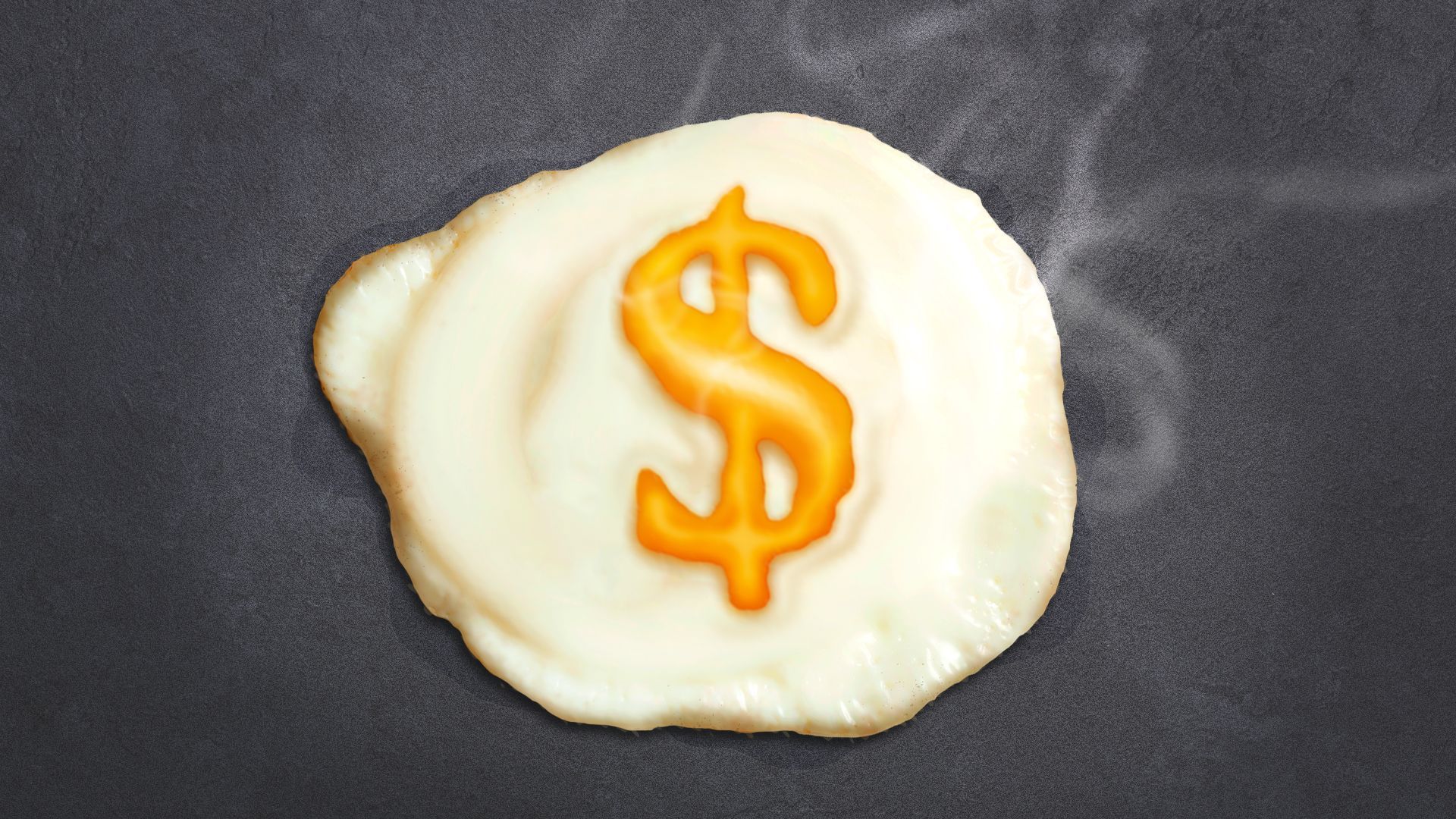
It's good to be an egg producer
The Justice Department is reportedly in the early stages of investigating egg producers for antitrust violations, but proving criminal activity won't be easy.
Why it matters: High egg prices alone don't suggest collusion is happening. To understand why, we need to turn to Microeconomics 101, and specifically the question of price elasticity.
The big picture: Price elasticity measures the degree to which consumers are willing, or unwilling, to pay higher prices for certain items.
- Eggs, it turns out, have astonishingly low price elasticity: Demand barely falls as price rises. As a result, even modest reductions in supply are likely to result in huge price increases.
Follow the money: Berkeley economist Aaron Smith has run the numbers on egg price elasticity and found that it took a 228% increase in the price of eggs to reduce the number of eggs purchased by a mere 4%.
- Elasticity is determined by a mathematical formula, where the closer you are to zero, the less elastic the price of a commodity is. Overall, Smith found demand elasticity for eggs to be somewhere between -0.02 and -0.06.
- That's astonishingly low, lower even than the super-low price elasticity for eggs of -0.1 cited in "Microeconomics," the standard textbook by Paul Krugman and Robin Wells.
- By comparison, gasoline has a short-run price elasticity of around -0.3, some 15 times greater than we've recently seen in the egg market. (Over the long run, when consumers can switch to more fuel-efficient vehicles, the price elasticity is closer to -0.5.)
How it works: "Egg demand is inelastic because there are few good substitutes and it doesn't take up a huge portion of most people's budget," Smith wrote. While it's not pleasant to pay more for eggs, he noted, "most people are willing and able to do it."
Where it stands: Wholesale egg prices have finally started to fall, but that's more because there have been no significant outbreaks of the avian flu over the past couple of weeks, per the USDA, than because demand is fallen in response to high prices.
- The respite, USDA staff wrote, "has provided an opportunity for production to make progress in reducing recent egg shortages."
- And as Karyn Rispoli, managing editor for eggs in the Americas for price-reporting service Expana, told Axios' Kelly Tyko, "the market is suddenly faced with a surplus of eggs" and therefore a potential decrease in prices.
Between the lines: It's great to be in a business where price elasticities are low and supply is shrinking, because whatever you lose in volume, you more than make up for in higher prices.
- Normally, those excess profits get competed away: Your competitors will invest in new supply and undercut you unless you lower your prices. But that takes time.
The bottom line: When shrinking supply is the result of a shock like bird flu, it can take a full year for the industry as a whole to rebuild supply, during which time it may make very fat profits.


Why food prices are still high, five years after COVID
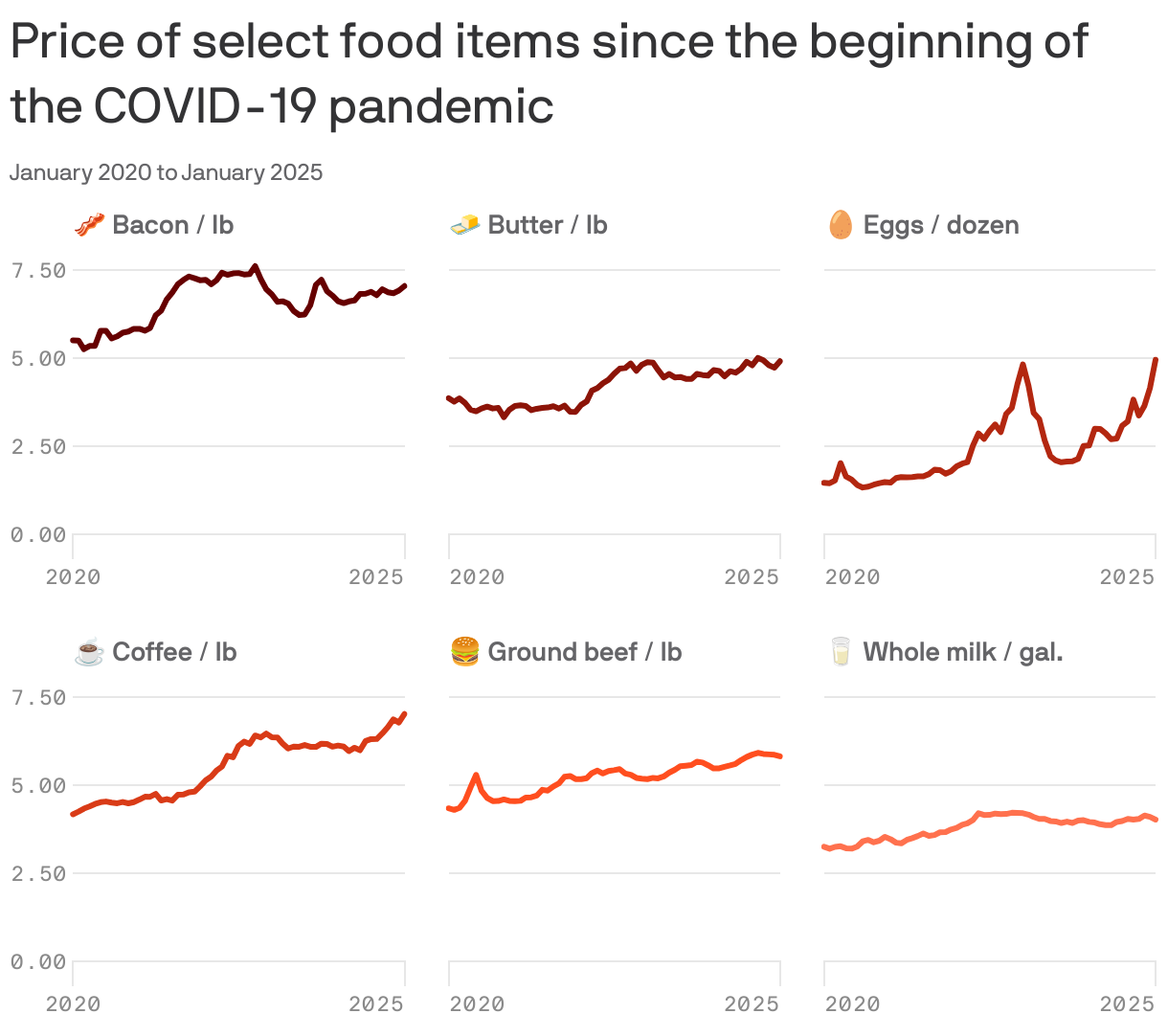
Sticker shock at the grocery store became a fact of life during the pandemic as food prices skyrocketed.
Why it matters: Higher prices have been unavoidable ever since — but five years since the start of COVID, new tariffs and retaliatory action could cause food prices to rise again.

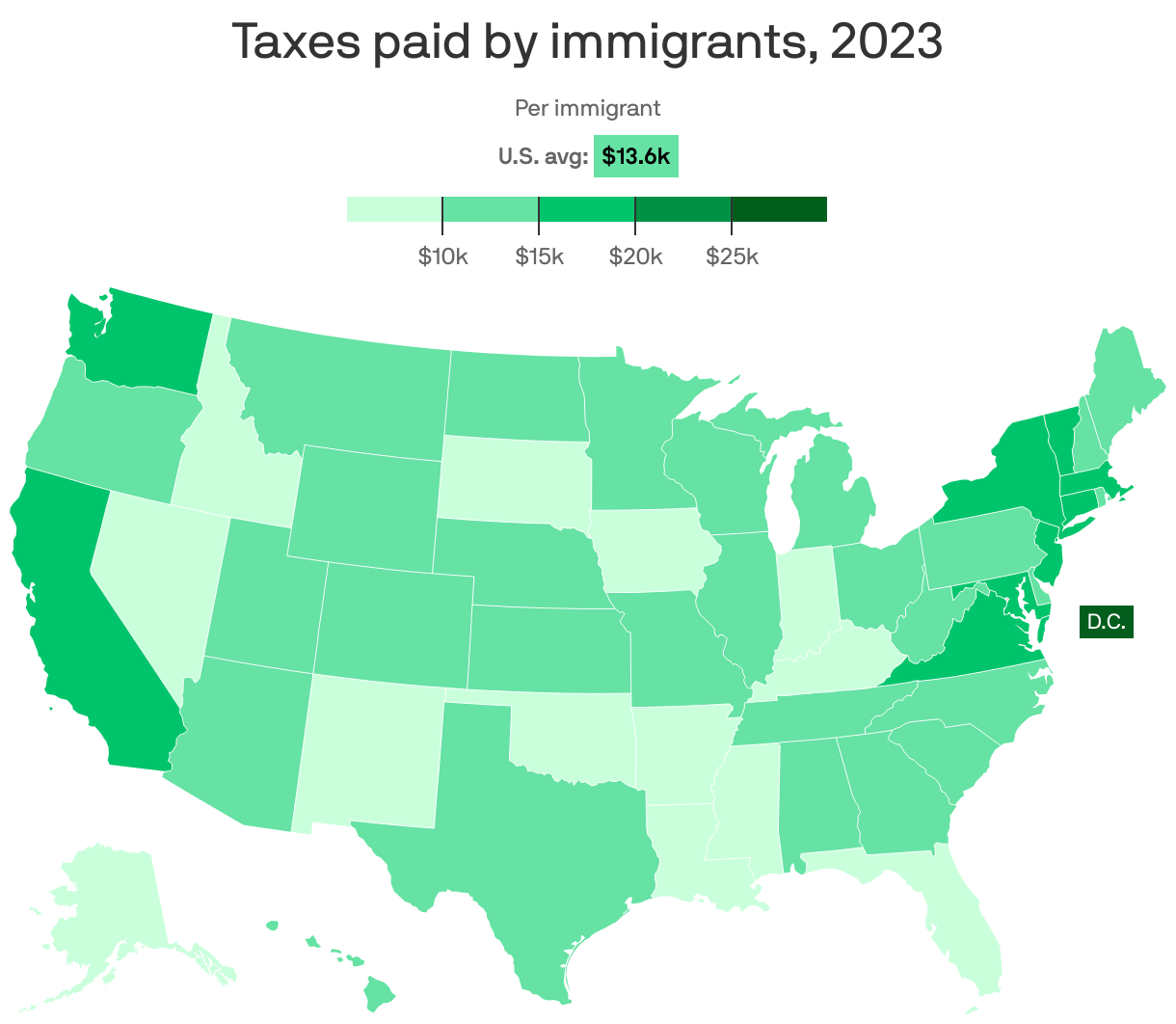
Where immigrants pay the most taxes

The country's 47.8 million immigrants paid nearly $652 billion in taxes in 2023, per a recent analysis, with undocumented immigrants paying nearly $90 billion of that total.
Why it matters: The numbers underscore how immigrants, both documented and otherwise, contribute to the U.S. economy and government services, even as the Trump administration looks to increase mass detention and deportation.

The auto industry changed forever after COVID


The fallout from the COVID-19 pandemic permanently changed the U.S. auto industry, which isn't likely to see car sales bounce back to 2019 levels any time soon.
Why it matters: Supply chain vulnerabilities delivered hard lessons that changed the way automakers think about sourcing components, pricing their vehicles and controlling inventories.


Exclusive: Science and tech agency cuts spark industry pushback
The tech industry is throwing its weight behind science and tech work in government in response to the rollercoaster of federal employee firings and rehirings and the specter of more job and budget cuts.
Why it matters: Chaos at federal agencies is taking a toll on universities and could impact the private sector — the government's key partners in pushing forward AI and other new technologies.