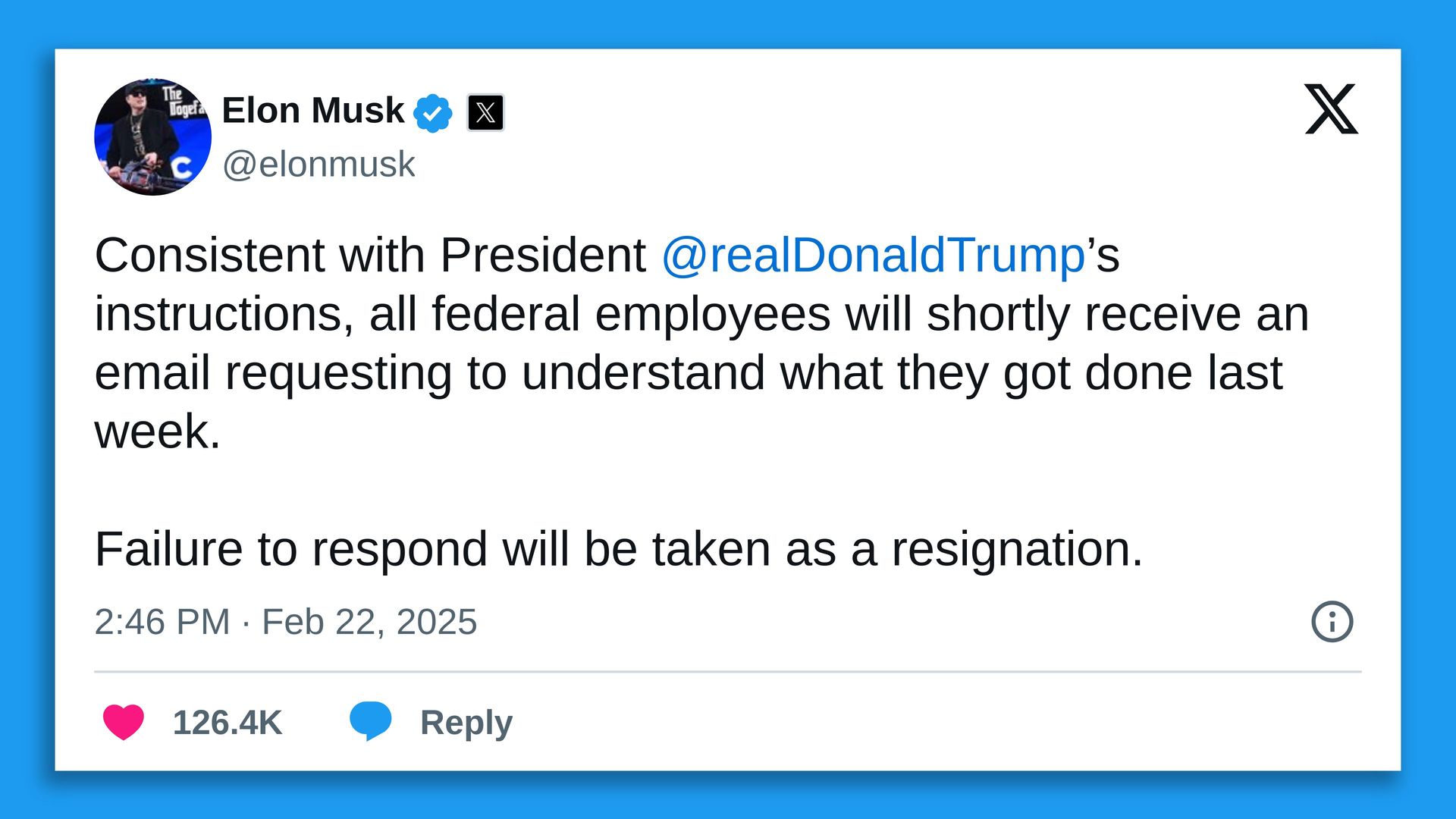
Elon Musk on Saturday said all federal employees will be required to send an email reporting what they accomplished in the last week — and failing to do so will be considered a resignation.
Why it matters: It's a page straight out of the playbook Musk used when he took over Twitter, making workers justify themselves to stay employed.
The pipeline for new apartments in old offices is growing.
Why it matters: Converting offices is easier said than done, but cities and developers see it as one of the best ways to reduce vacancies while adding housing.
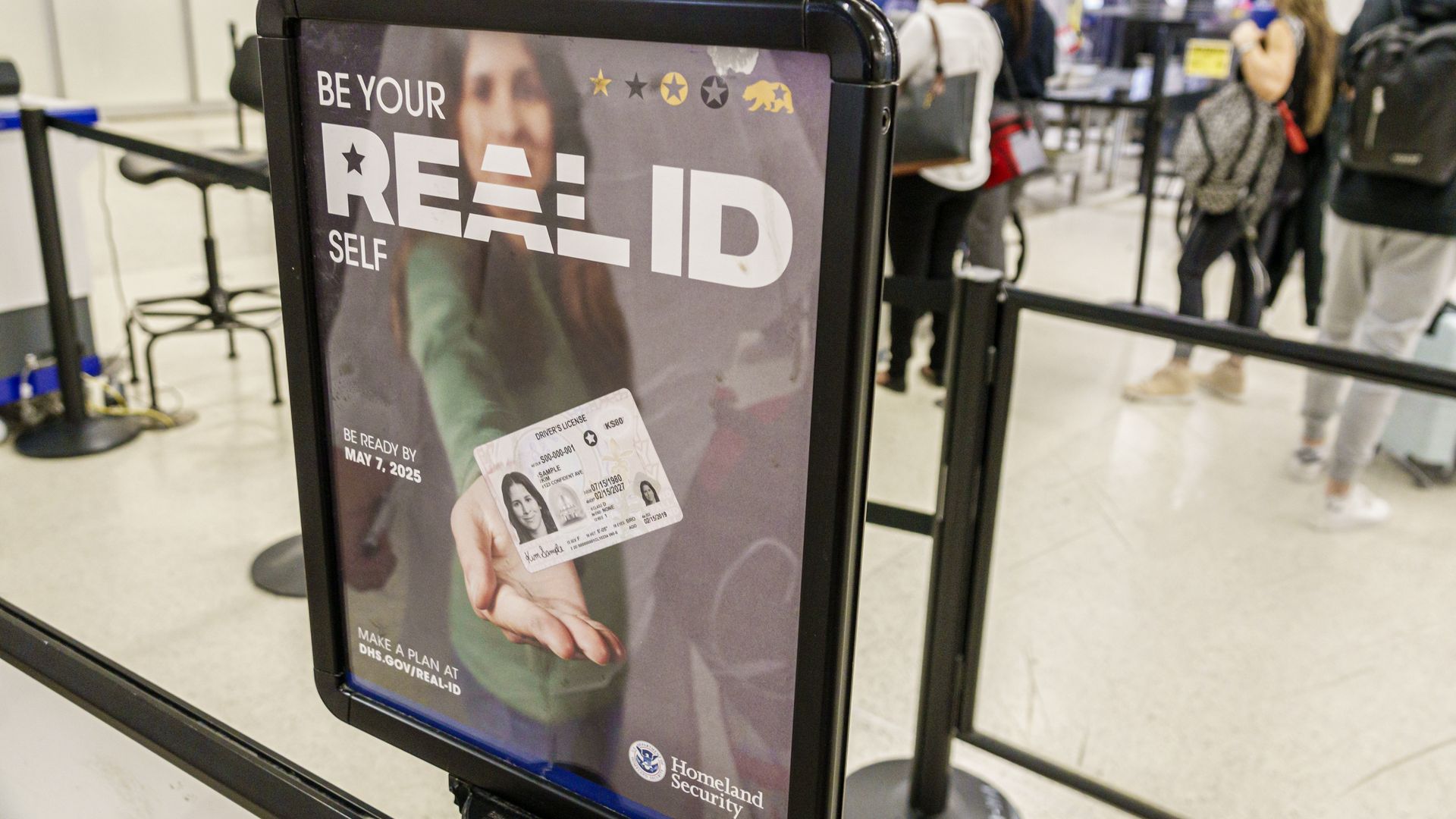
If you have travel plans for May or beyond, check your ID to see if it meets federal requirements.
Why it matters: Starting May 7, a Real ID compliant license or identification card — or another acceptable document — is needed to board a commercial aircraft in the U.S.
Ozempic and Wegovy, the popular GLP-1 drugs for diabetes and weight loss, are no longer in short supply, the FDA declared today.
Why it matters: That's good news for Novo Nordisk (whose stock rose 5% today) and potentially bad news for Hims & Hers (-26%).
Between the lines: Novo makes Ozempic and Wegovy, while Hims has been making quite a bit of money offering copycat versions of the drugs in the U.S. for a fraction of the price.
The legal ability to sell these "compounded" versions of brand-name drugs relies, in large part, on the FDA's shortage designation.
State of play: That's setting up a potential standoff between Novo and Hims, who recently traded barbs after Hims' Super Bowl ad.
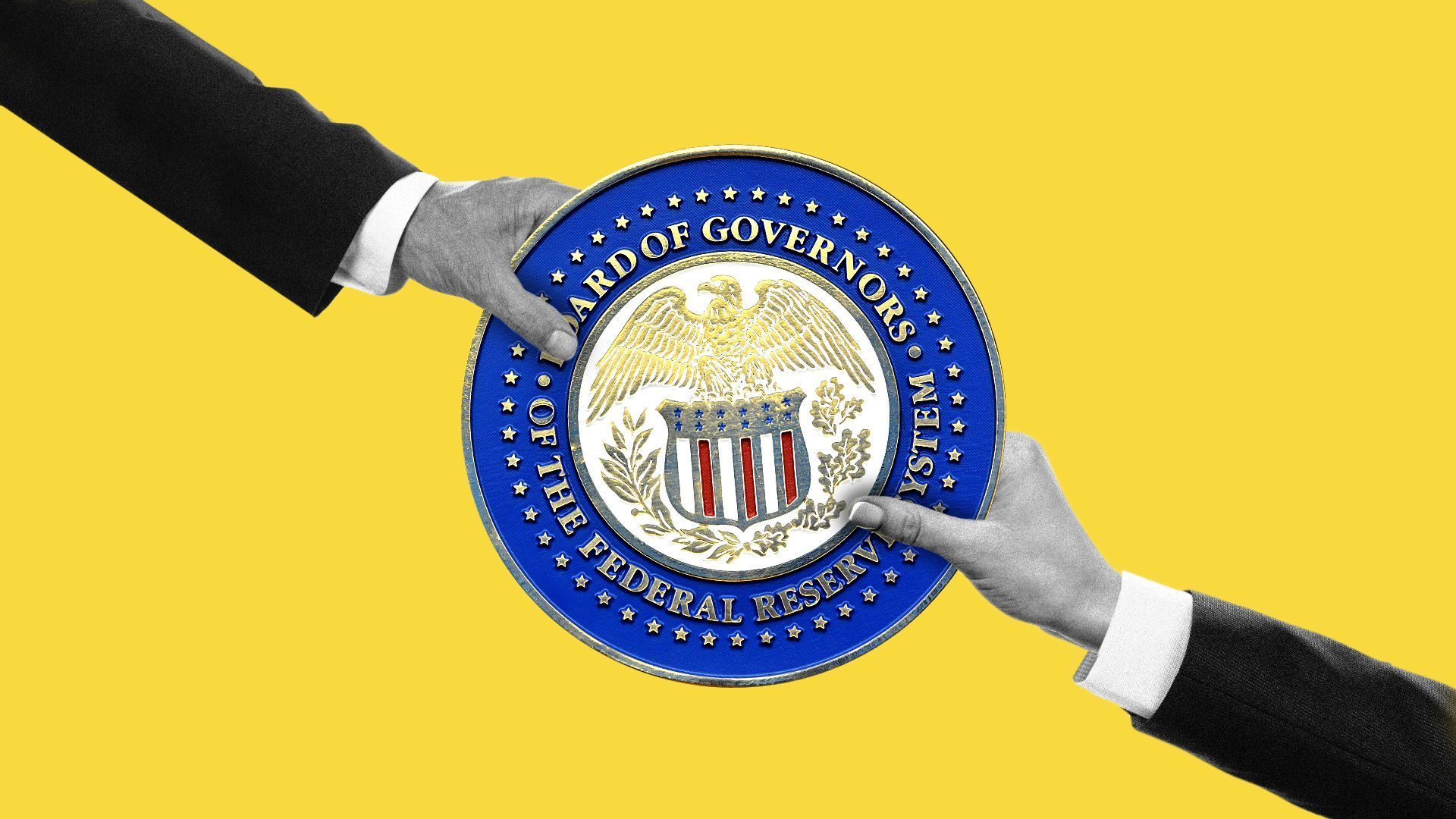
Since President Trump's executive order claiming new power over historically independent federal agencies this week, Fed watchers have been trying to parse what it means for America's central bank.
Some answers can be found in the law that created the Fed, plus a legal footnote.
Why it matters: The Fed's independence from direct political influence is more deeply established in law and precedent than some of the discussion around Trump's assertion of power might suggest.
DOGE has started firing thousands of IRS workers, right in the middle of tax season.
Why it matters: The move is likely to decrease the effect that restrains wealthier Americans from underreporting their taxable income.
The big picture: A new paper from Policy Impacts calculates that the government ends up receiving $12 in extra revenue for every $1 it spends auditing top-decile earners, thanks in large part to what the paper calls the "individual deterrence effect."
How it works: Enforcement actions from the IRS result in collections of about $63 billion, per the Bipartisan Policy Center, but end up increasing the total amount paid in tax by much more than that.
Taxpayers are deterred from underreporting by the fear that they might face an audit.
More importantly, taxpayers are significantly less likely to underreport in the years after receiving an audit.
Effectively, the IRS collects extra money for many subsequent years even without doing any more audits.
The deterrence effect, as Policy Impacts puts it, produces at least three times more revenue than the initial audit.
The intrigue: Most American households get a refund at tax time, which means they want the IRS to process their return and send out their refund as quickly as possible.
Richer Americans, by contrast, including most of President Trump's billionaire-dominated Cabinet, generally have a much more adversarial relationship with the agency.
Commerce Secretary Howard Lutnick said this week that Trump's goal is to "abolish" the IRS altogether.
The bottom line: If you're worried about being audited by the IRS, you're probably delighted by the prospect that its enforcement action is going to be curtailed.
President Trump hasn't implemented most of the tariffs he's announced, but the uncertainty over when — or even if — he'll do so is already hurting the auto industry.
Why it matters: It's a tumultuous time for automakers, which are already grappling with regulatory uncertainties and worries about consumer acceptance of electric vehicles.