Today we got more insight into the health of the nation's leading financial institutions via earnings reports:
💵 Bank of America: The company's stock rallied after it projected $14.5 billion in net interest income in the fourth quarter, up $600 million from its most recent period and, according to Bloomberg, topping expectations.
💰 Goldman Sachs: The bank's fixed income business came in higher than expected, while its provision for loan losses came in lower than expected, CNBC reported.
🏦 Morgan Stanley: The company's investment banking fees soared 51% amid signs that dealmaking is enjoying a resurgence, Yahoo Finance reported.
Rumors of the death of U.S. economic buoyancy have been greatly exaggerated. That is the takeaway from key economic headlines Tuesday morning.
Why it matters: In the lastseveralweeks there have been emerging signs of weakness in the U.S. economy. Tuesday brought powerful reminders that — while the cracks are real and the future uncertain — the basic picture remains one of robust economic activity.
Trader Joe's is bringing back its popular mini insulated tote bags Wednesday — six weeks after they sold out.
The big picture: The $3.99 mini coolers are the grocery chain's latest affordable item to go viral after its mini canvas tote bags became a huge hit earlier this year.
Ethereum's coin of the realm, ether (ETH), will be available as an exchange-traded product next week, multiple news outlets are reporting.
Why it matters: Ethereum is the unchallenged second-biggest blockchain in the world, and an exchange-traded product is likely to be helpful for ether's price, as it has been for bitcoin.
Details: Sources are telling reporters that fund issuers are being asked to send final versions of their filings to the SEC, with those expected to go effective Monday after the market's close to allow trading as soon as Tuesday, July 23.
The agency gave exchanges permission to list the instruments in May.
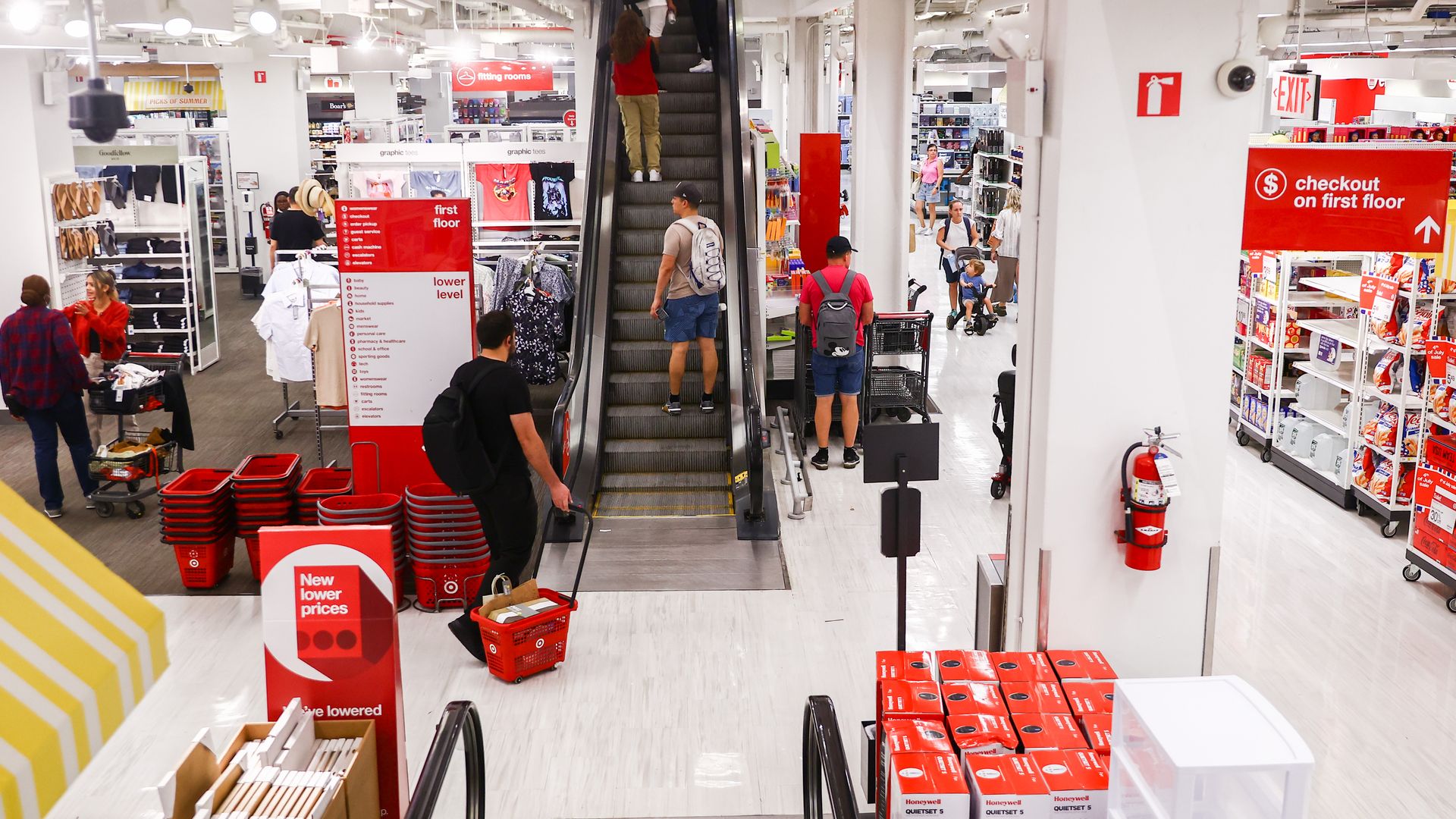
Retail sales were flat in June as big price declines in gasoline and a cyberattack in the auto sector dragged down the overall spending figure, the federal government said on Tuesday.
Why it matters: Stripping out autos and gas, American consumers spent at a healthy rate — defying other data that suggested spending had cooled.
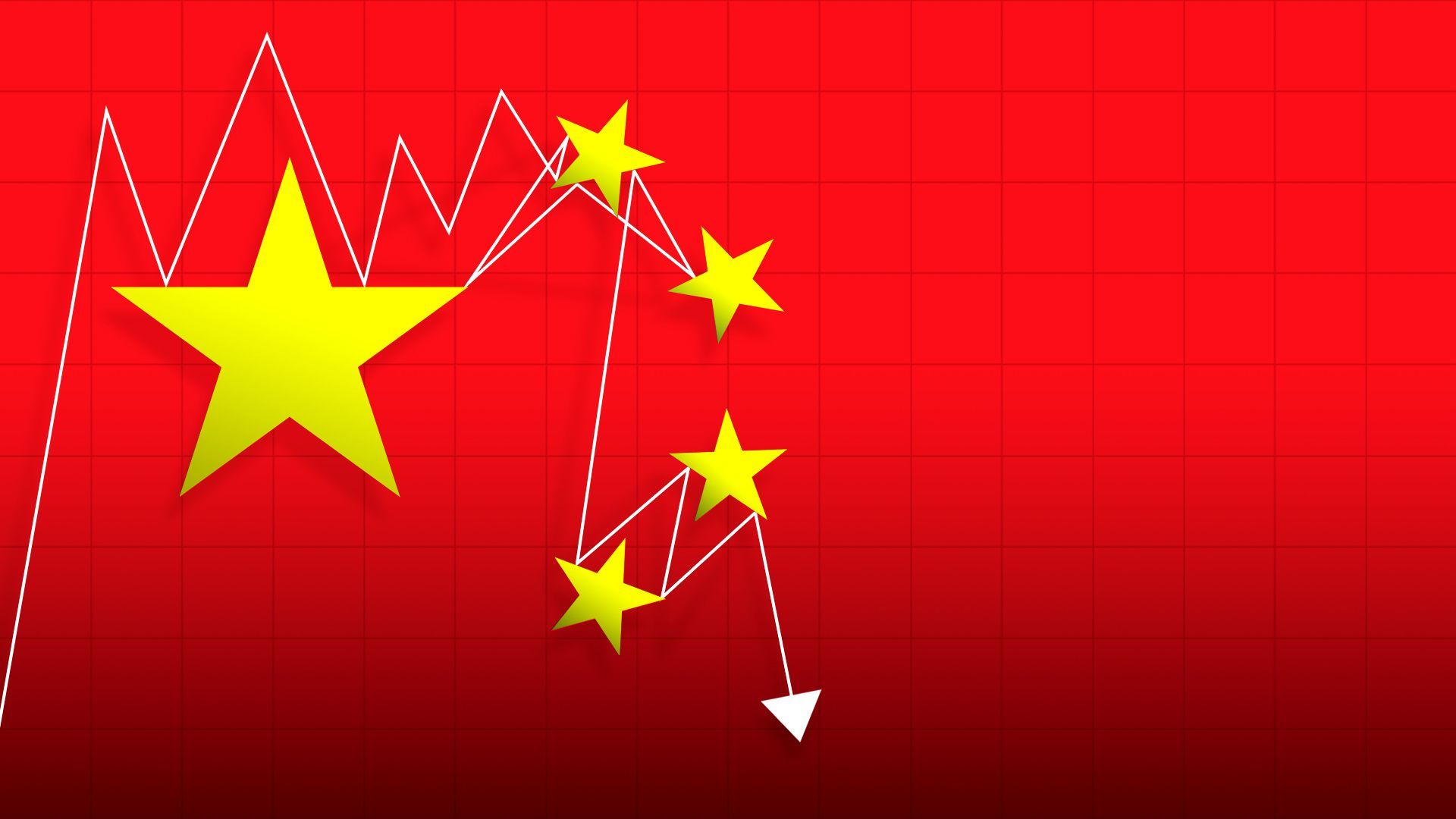
China's consumers have plenty of money. The problem is they're not spending enough of it.
Why it matters: In the U.S., higher savings rates are often viewed as a sign of healthy consumers. In China, they're a reminder of lackluster demand constraining growth.
BlackRock, the world's largest asset manager, grew even bigger in Q2, hitting a record $10.65 trillion in AUM thanks to its ETFs.
Goldman Sachs' storied investment banking division underperformed rivals' with a 21% growth in fees versus more than 50% for both JPMorgan Chase and Citigroup.
Burberry's comparable store sales fell 21% in its latest quarter as a growing share of global consumers pulled back on luxury. Shares of the company, which replaced its CEO, are now at their lowest in 14 years.
Swatch Group felt the sting from a spending slowdown in China in H1 that drove a 70% decline in operating profit.
You thought you had an expensive wedding? This should make you feel better:
The months-long wedding ceremonies in India of the youngest son of Asia's richest man, Mukesh Ambani, and the daughter of pharma tycoons finally concluded this past weekend and reportedly cost at least $132 million, according to the BBC.
What that paid for: A rumored$10 million for Justin Bieber to perform.
Constructing 14 temples in part to provide a backdrop for the wedding.
And a mass wedding for 50 underprivileged couples, among countless other extravagances.
Yes, but: With each event since festivities began earlier this year, public criticism has grown.
While the remarkable displays of love and celebration mark a larger shift taking place inside India where "wealth must speak as loudly as possible," some view the opulence as being tone-deaf given that income inequality may now be worse than it was under British rule, according to the World Inequality Lab.
Why it matters: The SEC is reportedly allowing some exceptions when it comes to the now infamous guidance memo called SAB 121 that asks banks that hold digital assets to account for them a certain way.
Turns out there is a way banks and brokerages can sidestep reporting their customers' crypto on their balance sheets, according to a Bloomberg report last week.
Between the lines: The SEC, in a statement to Axios, denied that the staff guidance creates "exceptions," but said that "certain broker dealers and custody banks" have sufficiently addressed the risks identified in SAB 121.
Between the lines: It's tracking 60 countries with some kind of rules around the asset class.
"Among the 60 countries we studied, cryptocurrency is legal in 33, partially banned in 17, and generally banned in 10," the tracker notes in its highlights.
"Even for countries with partial or general bans in place, adoption rates remain high, suggesting that bans are generally ineffective."
Affluent Americans say the economy is just fine — and they're spending like it is, too. Meanwhile, lower-income consumers are feeling the brunt of a slowdown.
Why it matters: Deteriorating economic sentiment and activity among poorer Americans suggest the economy is at a turning point, even if it doesn't show up in headline data, since higher-income consumers make up a disproportionate share of aggregate spending.
Amazon Prime Day is expected to drive record online spending in the U.S. this week, according to a new report from Adobe Analytics published Monday morning.
Why it matters: Prime Day has become an industry-wide shopping phenomenon, and it will be even more crucial this year for retailers that are struggling to sell products that typically go on sale during this period.