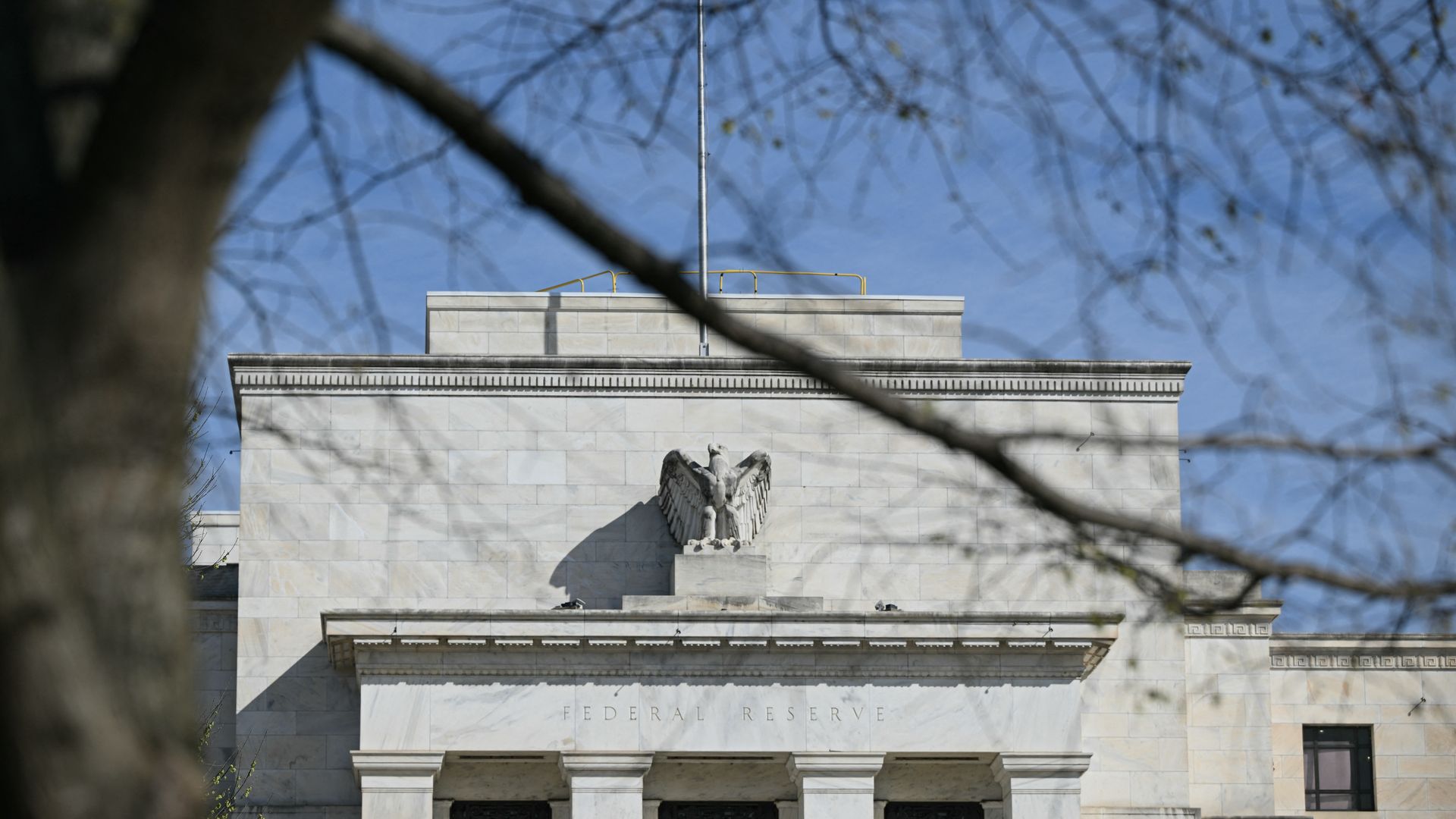
The Fed left interest rates unchanged today for the fifth straight time, and it tweaked projections in ways that suggest less rate-cutting than previously envisioned may lie ahead, Axios' Neil Irwin and Courtenay Brown write.
Why it matters: The Fed's announcements suggest that its plans to bring rates down this year remain intact, though the questions of "when" and "how much" are uncertain.
State of play: Several inflation indicators for the first two months of 2024 have come in higher than expected, undermining the case for imminent interest rate cuts.
Speaking to reporters, Fed chair Jerome Powell said that data hasn't "really changed the overall story, which is that of inflation moving down gradually, on a sometimes bumpy road, toward 2%."
ETFs have been touted as an entry point for new investors to bitcoin.
For any newbies that jumped in the game since trading started in January, it's been a wild ride.
They've seen a record high for the so-called orange coin. 🥳
And they've seen it fall more than 11% since. 😕
What they're saying: "The ETFs are being used as a small 'hot sauce' allocation to core portfolios, meaning investors will have a greater tolerance for volatility," Bloomberg Intelligence analysts noted earlier this month.
Intel was awarded $20 billion in federal grants and loans today to expand its semiconductor production, Axios' Hans Nichols writes.
Why it matters: It's the biggest award in the $52 billion Chips and Science Act President Biden signed into law in 2022.
By the numbers: In addition to the $8.5 billion in grants, Intel is eligible for up to $11 billion in loans from the Commerce Department.
Those awards, along with a separate tax credit from the Treasury Department, will lead to an estimated $100 billion in private investment from Intel.
The administration expects Intel will use the money to help build or expand facilities in Arizona, Ohio, New Mexico and Oregon and help add a total of 30,000 new jobs.
Driving the news: Denise Dresser, CEO of Slack, one of the most popular communications platforms in the world, told me during Axios' What's Next Summit yesterday that she uses the punctuation mark even when texting with her kids.
"To show good grammar and show them that there's still grammar to be had, because I don't understand half of the words they use with me."
Context: Periods mean different things to different people.
Use of formal and proper punctuation in digital communications can come off as passive-aggressive or cold, particularly to younger people.
💭 Hope's thought bubble: It's all relative. If someone who doesn't usually use a period uses it one day, then that's probably a sign that something is off. Periodt. (peer-ee-uht)
Nearly 300 pages of letters from all over the world, detailing what victims actually lost in the collapse of the crypto exchange FTX, was sent Monday to the federal judge handling the criminal case against its founder.
The intrigue: Every unhappy creditor is unhappy in their own way, but many said that being made whole isn't good enough — what they want are their coins.
The Federal Reserve left interest rates unchanged Wednesday and officials tweaked projections in ways that suggest less rate-cutting may lie ahead than previously envisioned.
Why it matters: The Fed's announcements suggest its plans to bring rates down this year remain intact, though the questions of "when" and "how much" are uncertain.
Some of the most important instruments of U.S. global power are deployed not by the warfighters at the Pentagon or the diplomats at the State Department, but by bureaucrats at 1500 Pennsylvania Avenue — the U.S. Treasury Department.
The big picture: A new book out this week brings to life the narrative of how Treasury officials have used the U.S. dollar as a tool of American foreign policy over the last three decades — along with the hazards that has created.
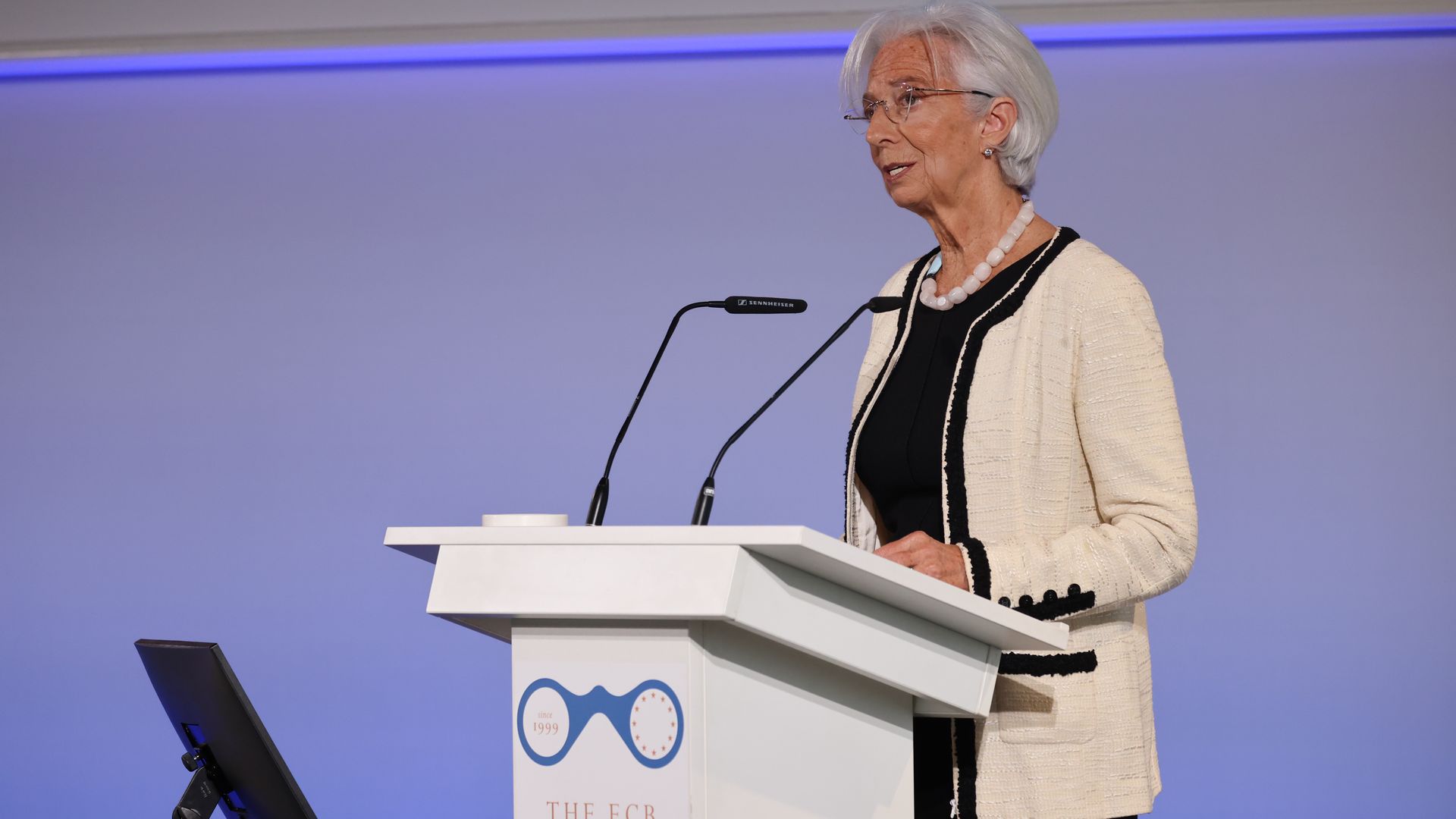
In Europe, as in the U.S., interest rate cuts look to be on the horizon — but there isn't enough evidence to definitively say so just yet.
Why it matters: That's the takeaway from a nuanced speech Wednesday by European Central Bank president Christine Lagarde, who laid out what she needs to see before easing policy in the 20 countries using the euro.
Total assets in employee share ownership plans exceeded $2 trillion in 2021, and have almost certainly risen since then.
Why it matters: Unions exist to ensure that owners share corporate wealth with their workers. Under an ESOP, where companies are owned and controlled by their employees, that happens automatically.
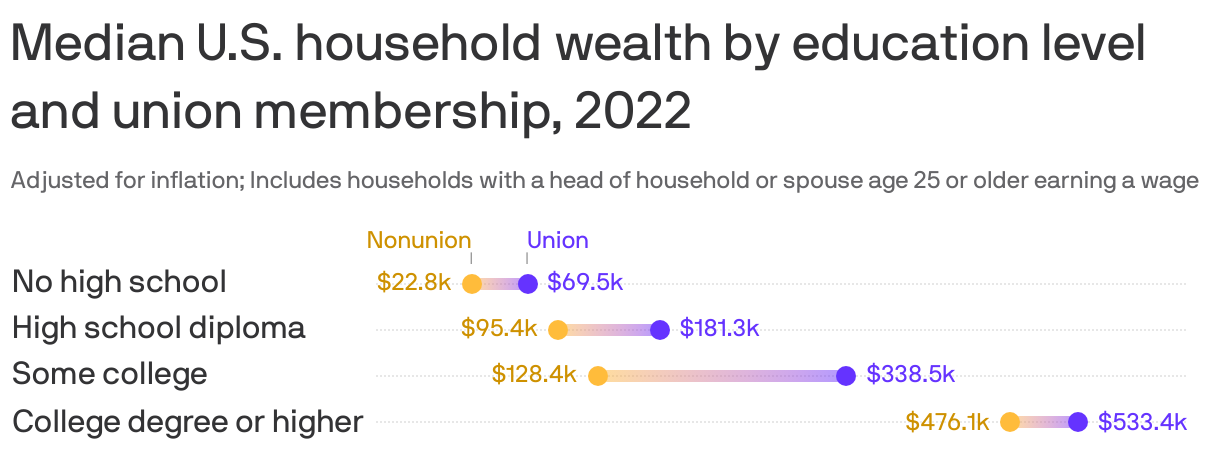
Data: Center for American Progress analysis of Federal Reserve and BLS data; Note: "Union" households include a head of household or spouse covered by a union contract; Chart: Axios Visuals
There's a massive wealth gap between workers in unions and nonunionized workers, across education levels, finds a new analysis from the liberal think tank Center for American Progress shared first with Axios.
Why it matters: Typically, unionized workers earn about 10%-20% more than their nonunion peers, but these wealth gaps are far wider, an indication that the benefits of union membership accrue to workers over time.
Companies expect to give out 4.5% raises this year — a dip from the 4.8% average bump given in 2023, per a new survey of human resources professionals out Wednesday morning.
Why it matters: It's another sign that the job market is cooling but still strong — raises will likely outpace inflation in 2024.
The jackpot for Friday's Mega Millions drawing grew to an estimated $977 million — the 10th-largest U.S. lottery prize ever — up from $893 million Tuesday.
Why it matters: Only five Mega Millions jackpots have been bigger. All of them eventually surpassed $1 billion, lottery officials said in a statement.


/2024/03/19/1710879988876.gif?w=3840)





/2024/03/19/1710872517778.gif?w=3840)


