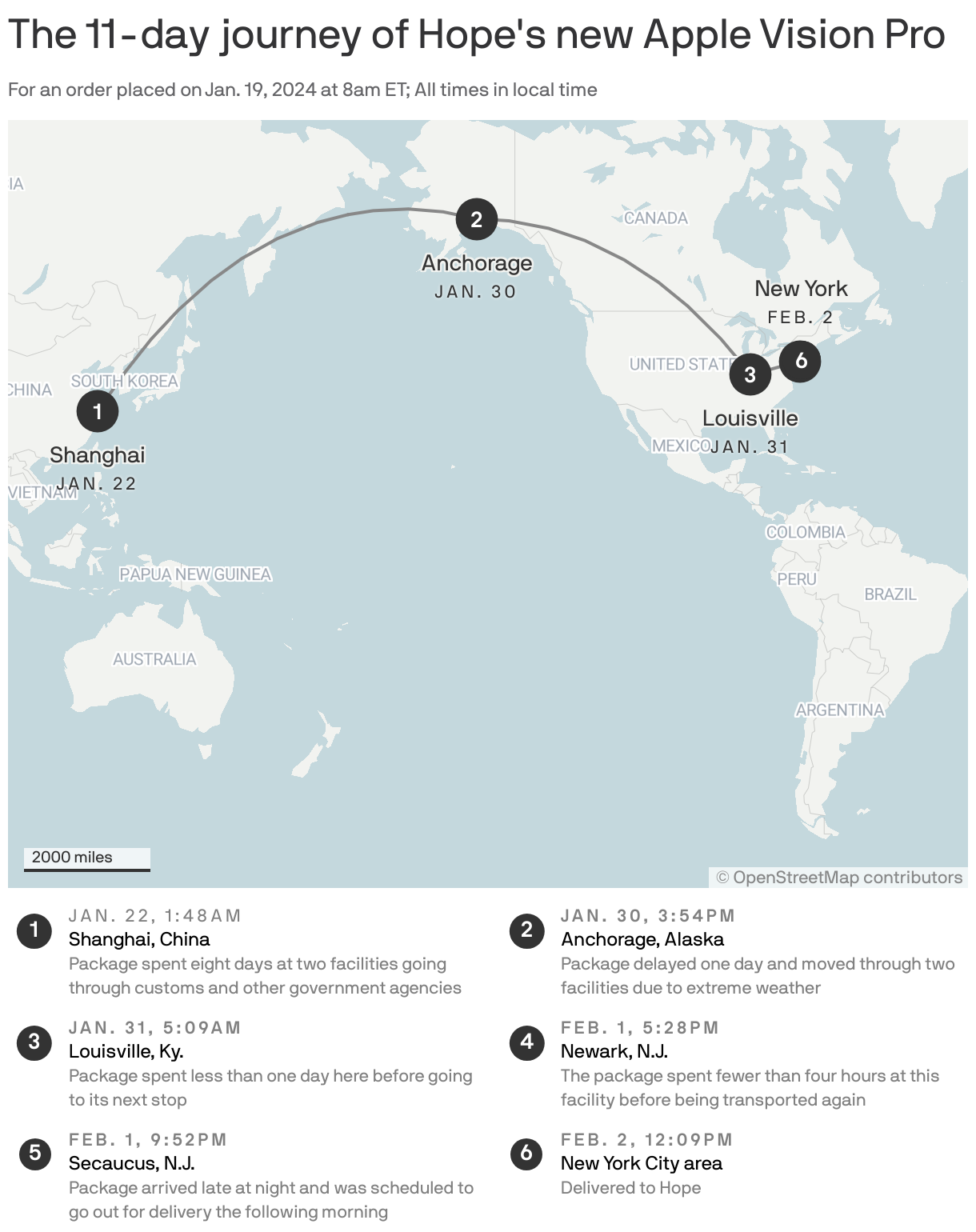
Be smart: Apple's preference is to always be the tortoise, rather than the hare, in the electronics industry.
The fact that engineers fit a dozen cameras, a LiDAR scanner and a half-dozen microphones into a form factor slightly bigger than an iPhone (even at about 1.5 pounds) is a testament to that strategy, which has reportedly been in the works for more than 10 years.
💠Hope's thought bubble: Ultimately, from an industry standpoint, I don't think it matters how many of these first-gen devices Apple sells right now — because every other consumer electronics company will be chasing the Vision Pro for the kind of oxygen that Apple takes up when it releases a new device.
VR headsets are not hats, and they're not glasses. The Vision Pro is just under 1.5 pounds, but suspended to your face, it feels a lot heavier — and progressively so with each minute. (This was true for other headsets as well.)
At first, I was optimistic that it would lessen the desk hunch posture and allow me to sit upright. But over time, I began to be concerned about drooping cheeks — something people pay a lot of money to reverse.
Luckily, as someone who doesn't like to use technology more than needed, 15-20 minutes at a time has been and will continue to be plenty for me with VR.
And if I need to, I can always lie down to let gravity do some of the work.
As for the price:Â Starting at $3,500 before tax, it's not for everyone.
The Fed's strategy over the last two years has been to push interest rates upward to the point that they are restrictive, slowing down economic activity. But robust growth in the face of those higher rates is raising new questions about just how restrictive these rates really are.
Why it matters: If rates north of 5% aren't enough to slow the U.S. economy — as was the case in 2023 — it raises the possibility that the world is in a new normal, with persistently higher borrowing costs than prevailed in the 2010s.
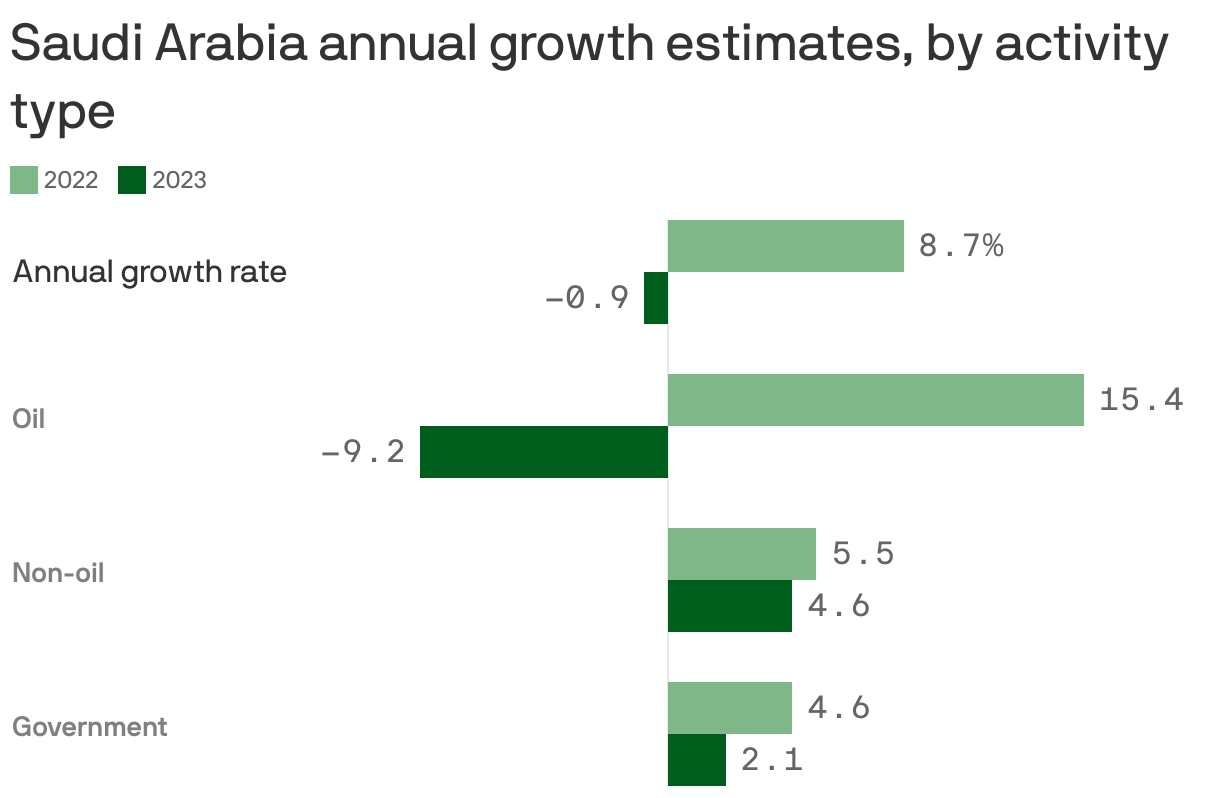
One look at Saudi Arabia's latest growth figures explains why the Gulf giant has struggled mightily to boost global crude prices.
Driving the news: With oil prices capped despite widespread geopolitical turmoil, Saudi Arabia's growth turned grim in 2023, with gross domestic product tumbling by -0.9 percent, compared with 8.7 percent in 2022.
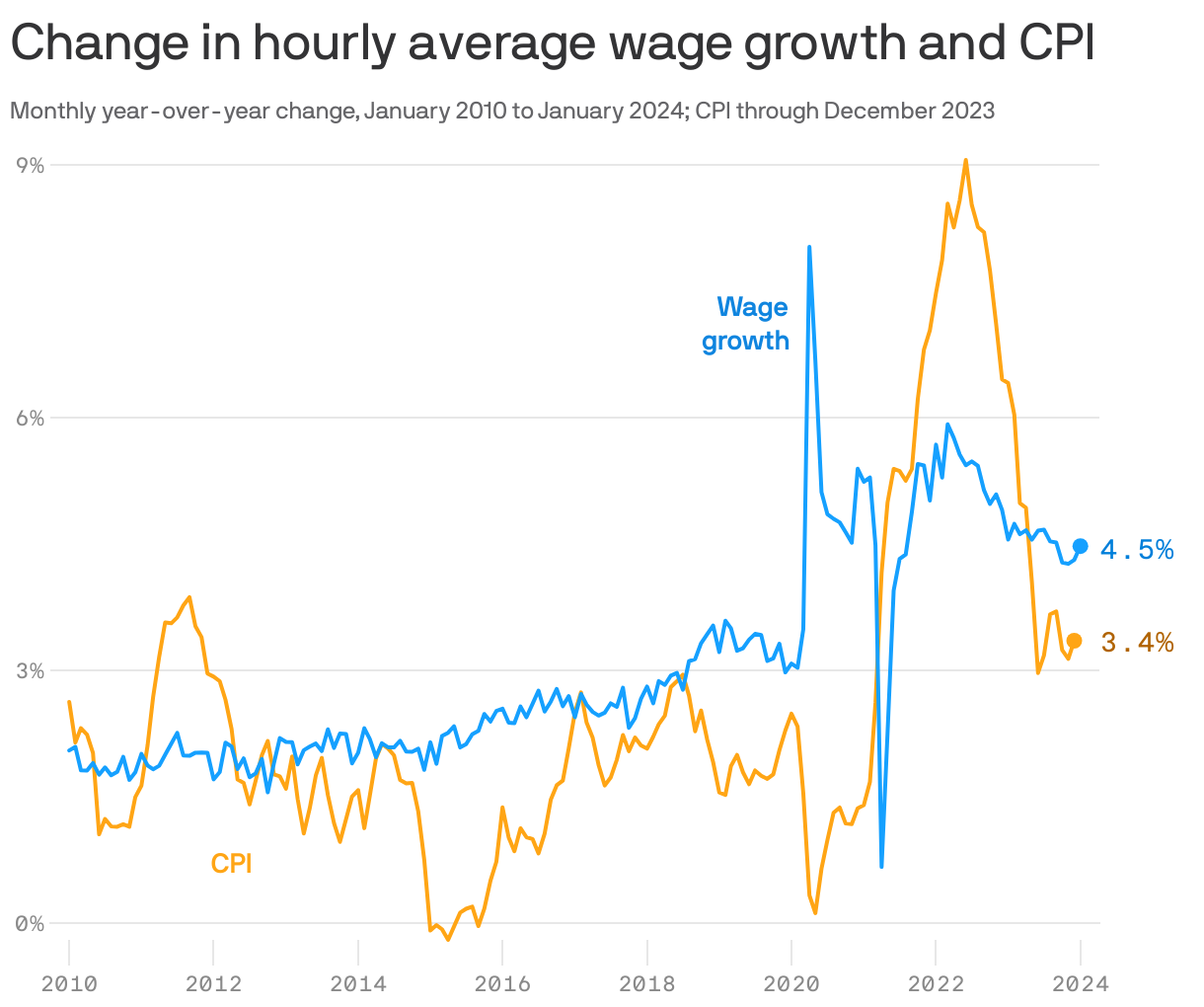
Workers are winning. Hourly wages rose 0.6% in January from the previous month and are up 4.5% from a year earlier — outpacing inflation.
Why it matters: The pay numbers, part of an absolute banger of a jobs report released last Friday, are another sign that the labor market is strong and workers, in some industries, still have leverage.
Giant companies now dominate the stock market in a way we haven't seen in 50 years.
Why it matters: It's the financial representation of how the largest firms — most of all, the giant tech companies known in the stock market as "the Magnificent Seven" — increasingly stand astride corporate America and the broader economy as colossi.
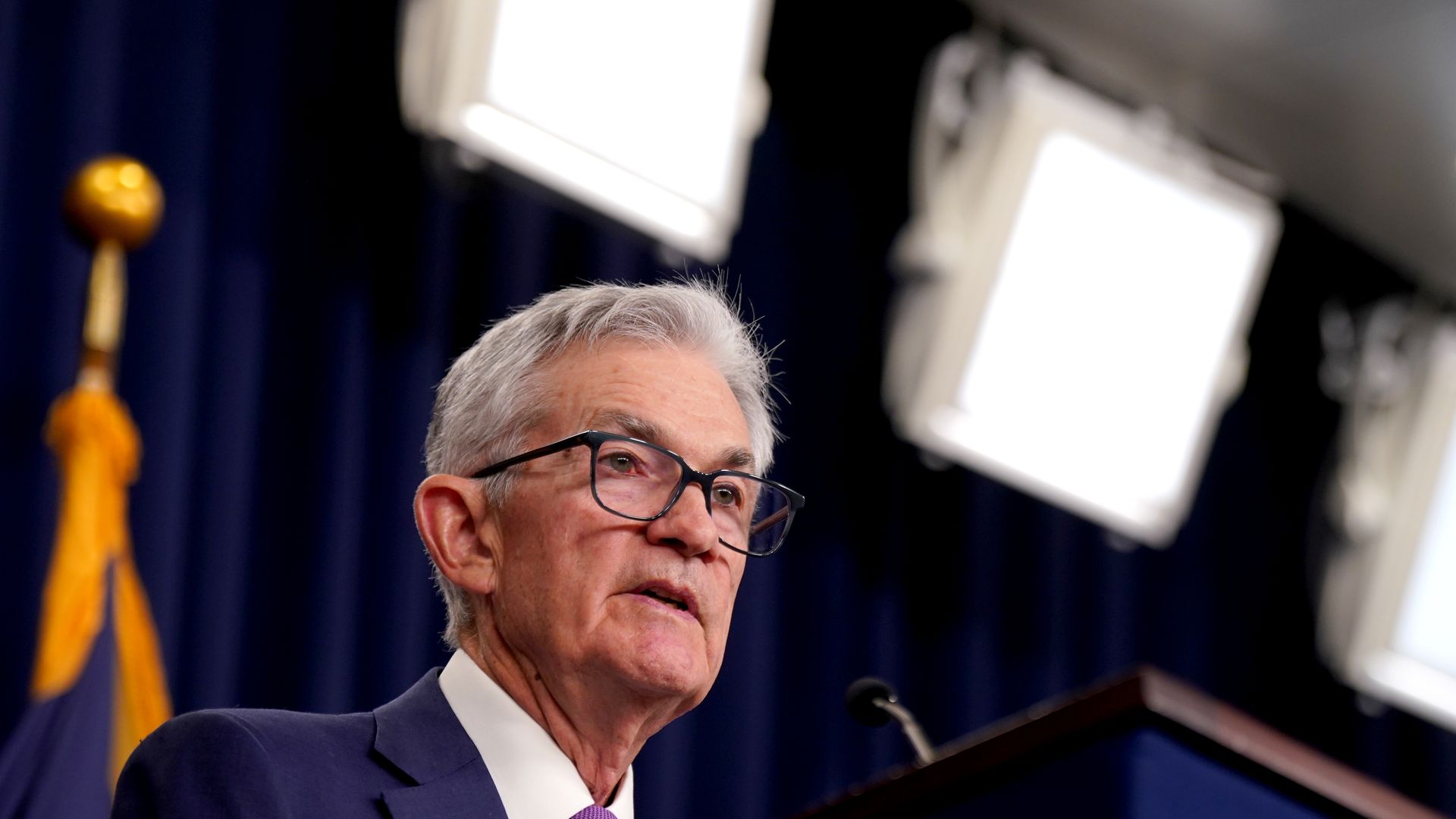
Federal Reserve chair Jerome Powell asked Americans to be patient as the effects of high interest rates ripple through the economy, while noting he still anticipates multiple interest rate cuts this year.
Why it matters: In a rare television interview with CBS' "60 Minutes," Powell acknowledged the side effects of the Fed's inflation-fighting efforts in recent years have resulted in difficulties for prospective homebuyers.