NIAID Director Anthony Fauci told CNN Monday that "some of the things" Fox News reports about the coronavirus "are outlandish."
What he's saying: "If you listen to Fox News, with all due respect to the fact that they do have some good reporters, some of the things that they report there are outlandish, to be honest with you," Fauci said in speaking about misinformation surrounding the coronavirus.
New peril for employers: Wrongful death "take home" lawsuits from the coronavirus, using the prior examples of asbestos.
Why it matters: Employers enjoy legal protections and liability caps under workers' compensation laws, but these lawsuits could skirt those protections, Reuters reports.
President Trump paid no federal income tax in 10 of the past 15 years, and just $750 in 2016 and 2017, according to a new report from the New York Times. He also is reported to have hundreds of millions of dollars in outstanding debts, most of which would come due during a second term.
Axios Re:Cap focuses on what is and isn't surprising about the revelations, plus how real estate developers are taxed, with Francine McKenna, an independent financial journalist and certified public accountant.
A federal court judge on Sunday granted TikTok's request for a temporary restraining order against a ban by the Trump administration.
Driving the news: Judge Carl Nichols on Monday unsealed his opinion, in which he concluded that the ban seeks to regulate the exchange of "informational materials" — something that's expressly exempted from the law laying out the emergency powers Trump invoked.
The oil-and-gas producers Devon Energy and WPX Energy are merging in a roughly $2.6 billion all-stock transaction that comes as U.S. producers are struggling with depressed prices and demand.
Why it matters: The deal between two companies active in the prolific Permian Basin of Texas and New Mexico will help create economies of scale and improved margins, they said this morning.
More companies are releasing earnings guidance for the third quarter and raising expectations, but the number of S&P 500 companies providing guidance remains well below traditional averages.
By the numbers: Just 53 S&P companies issued future guidance in the second quarter, about half of the five-year average (104) and the lowest number since record keeping began in 2006, FactSet's data show.
The gap between the weighting of the five largest companies in the S&P 500 and the 300 smallest rose to the highest ever at the end of August, according to data from the Leuthold Group.
Why it matters: The concentration of wealth in a few massive U.S. tech companies has reached a scale significantly greater than it was before the dot-com bubble burst.
Big businesses continue to push funding toward fighting inequality and racism, with the 100 largest U.S. companies' monetary commitments rising to $3.33 billion since the death of George Floyd at the hands of Minneapolis police earlier this year, according to an Axios analysis.
Why it matters: The continued pace of funding commitments shows that months after Floyd's death there remains pressure for the wealthiest corporations to put their money behind social issues and efforts.
A judge has restored Uber's operating license in London after the company appealed the city's decision from Nov. 2019 not to renew it, citing at the time a "pattern of failures by the company including several breaches that placed passengers and their safety at risk."
Why it matters: London is one of Uber's biggest markets around the world.
The New York Times has obtained more than two decades' worth of tax-return data from Trump and the companies that make up his business, writing in an explosive report that the documents "tell a story fundamentally different from the one [the president] has sold to the American public."
Why it matters: The Times' bombshell report, published less than seven weeks before the presidential election, lays bare much of the financial information Trump has long sought to keep secret — including allegations that he paid $750 in federal income taxes in 2016 and 2017, and has over $300 million in personal debt obligations coming due in the next four years.
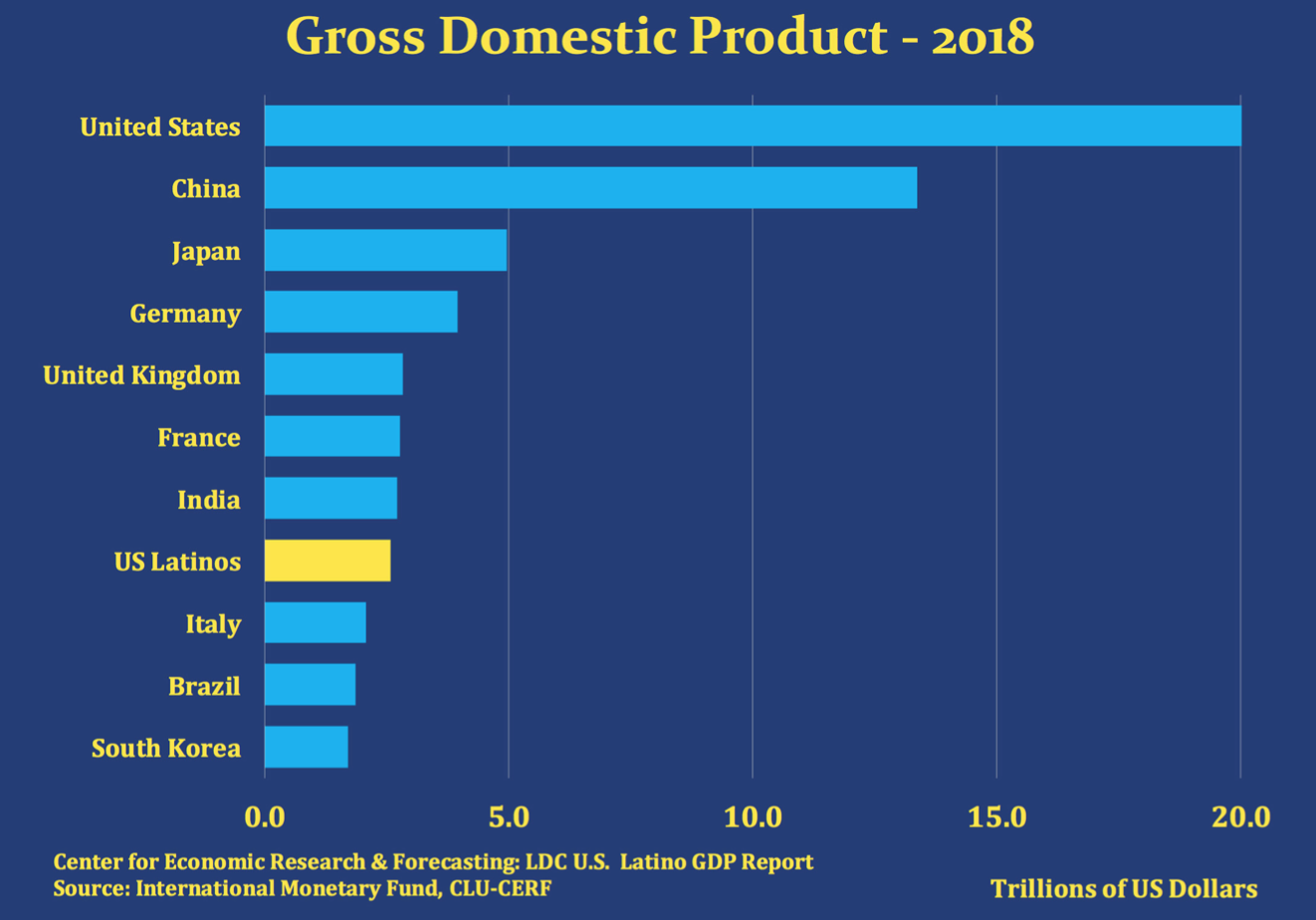
Sol Trujillo — former CEO of U.S. West and Telstra, and chair of the Latino Donor Collaborative — tells me that in 2017–18 (most recent census data), the U.S. Latino cohort was the fastest growing economy in the world.
Driving the news: That's part of a new report, "2020 LDC U.S. Latino GDP," unveiled at the four-day L'Attitude virtual business conference co-founded by Trujillo, showcasing U.S. Latino contributions in business, media, politics, science and technology.