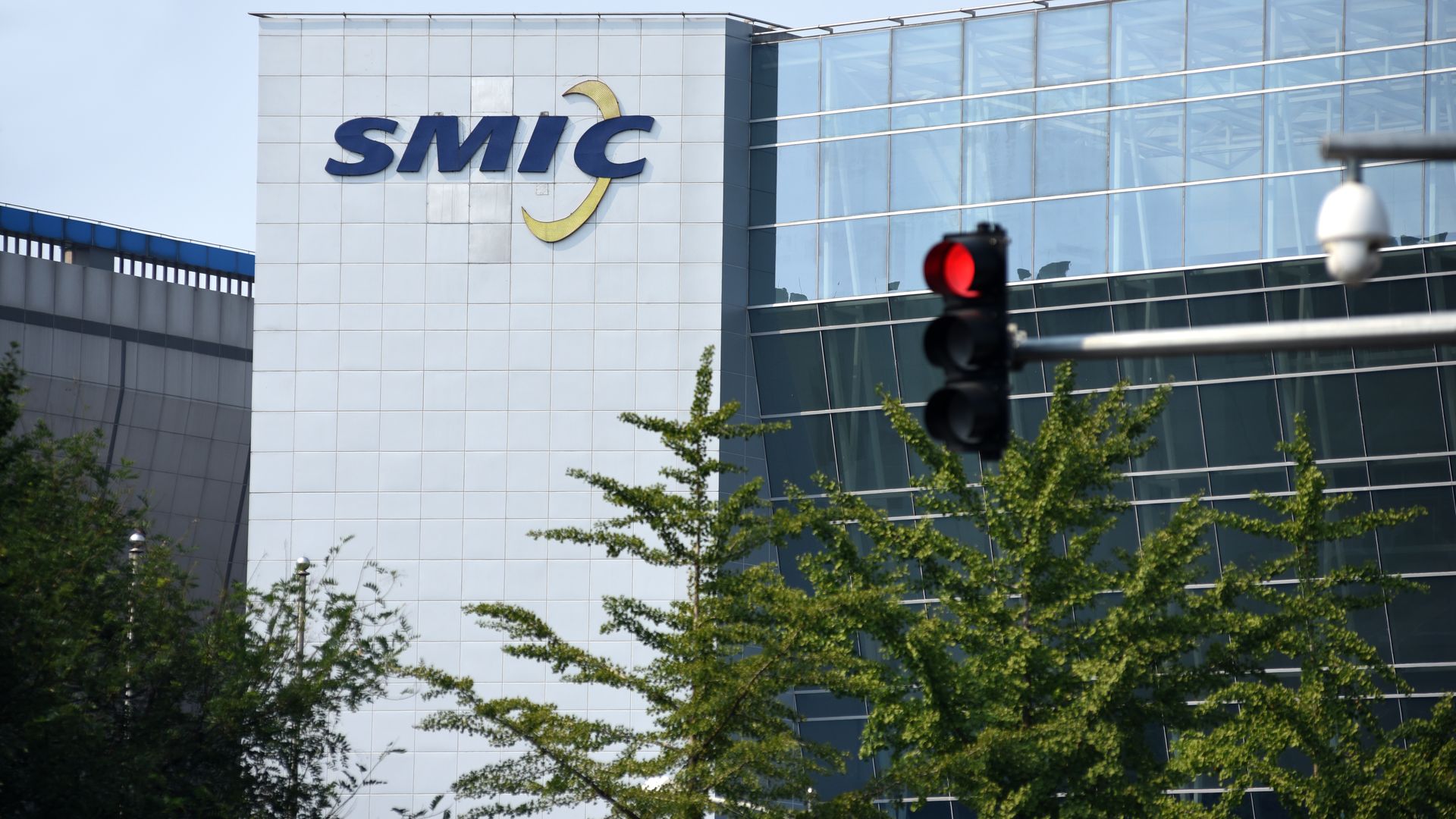
The Trump administration put in place restrictions on U.S. technology exports to China's biggest chipmaker, Semiconductor Manufacturing International Corp., the WSJ reported Saturday.
Why it matters: The curbs are the latest restrictions issued by the Trump administration to limit China's efforts to compete in advanced technology, per WSJ.
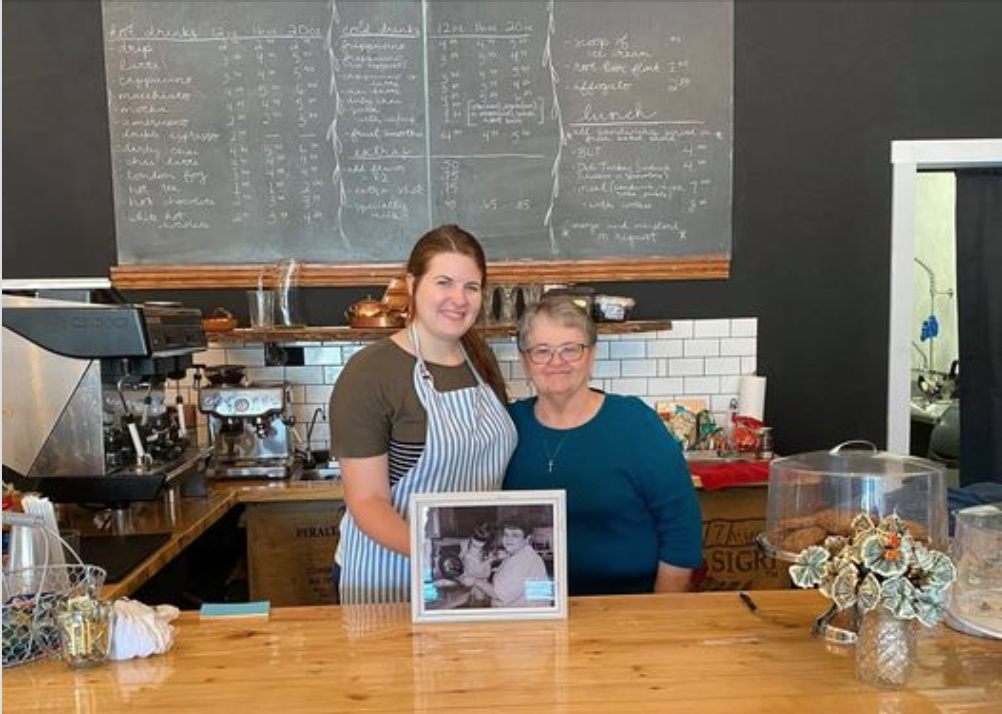
Madison Schneider (shown with her Grandma Lela) opened Lela's Bakery and Coffeehouse in Haviland, Kan., on Sept. 12. Photo via Facebook
The pandemic closed hundreds of thousands of U.S. businesses. But now applications for new businesses are rising at the fastest rate since 2007, the Wall Street Journal reports.
Why it matters: "Applications for the employer identification numbers that entrepreneurs need to start a business have passed 3.2 million so far this year, compared with 2.7 million at the same point in 2019," according to the Census Bureau.
A new survey of hundreds of executives shows how the pandemic is altering the workforce of the future.
The big picture: The COVID-19 pandemic has thrown millions of people out of work, and the jobs that will emerge from the carnage won't be the same. While some fields may benefit, others risk being left further behind.
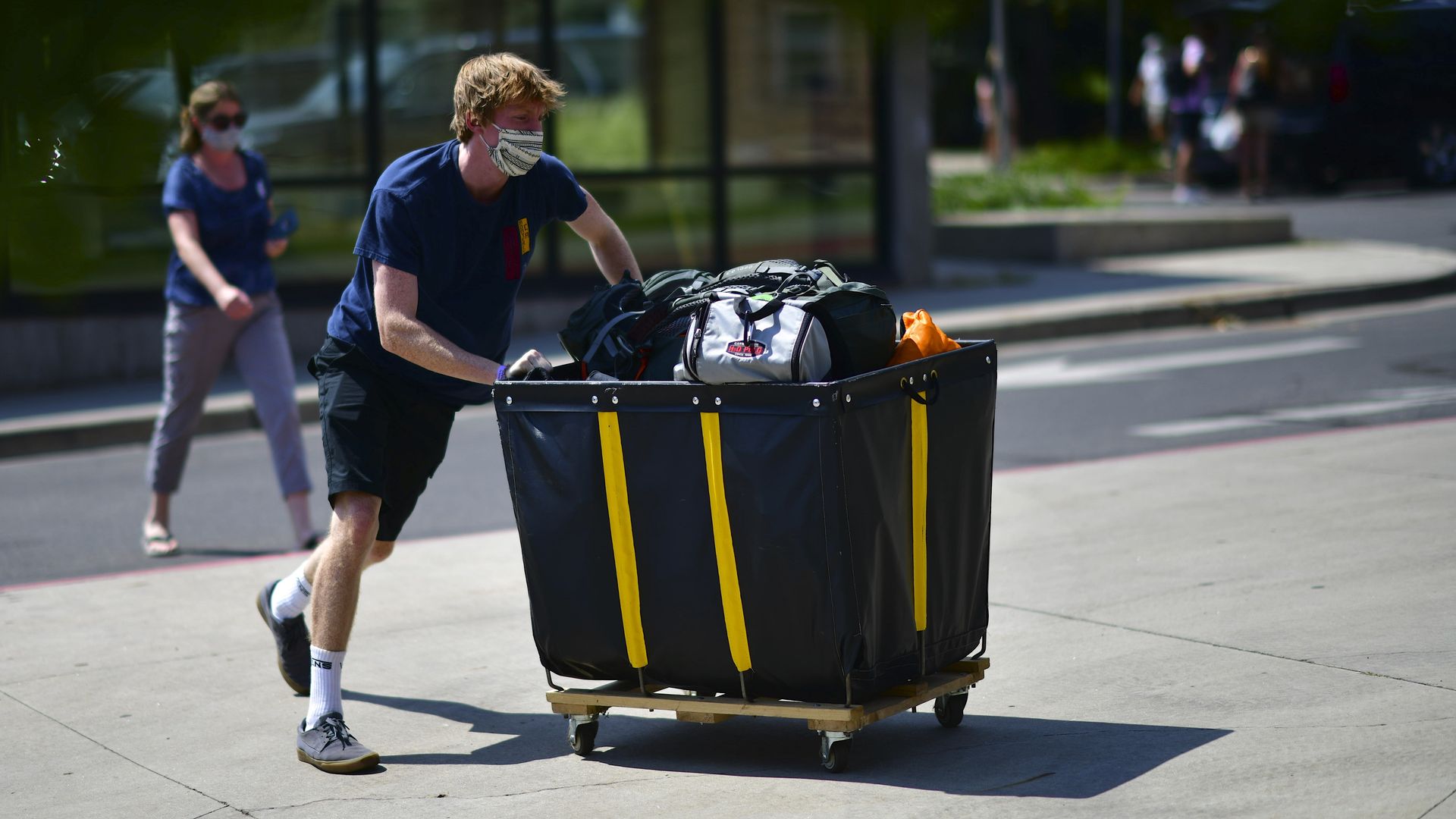
Community college enrollment for the summer dropped nearly 6% since last year, along with declines in Black and male student enrollment in colleges and universities overall, a report from the National Student Clearinghouse Research Center reveals.
Why it matters: Colleges need students to survive. The data show how the coronavirus pandemic could be affecting the fiscal health of higher education institutions, including demographic shakeups.
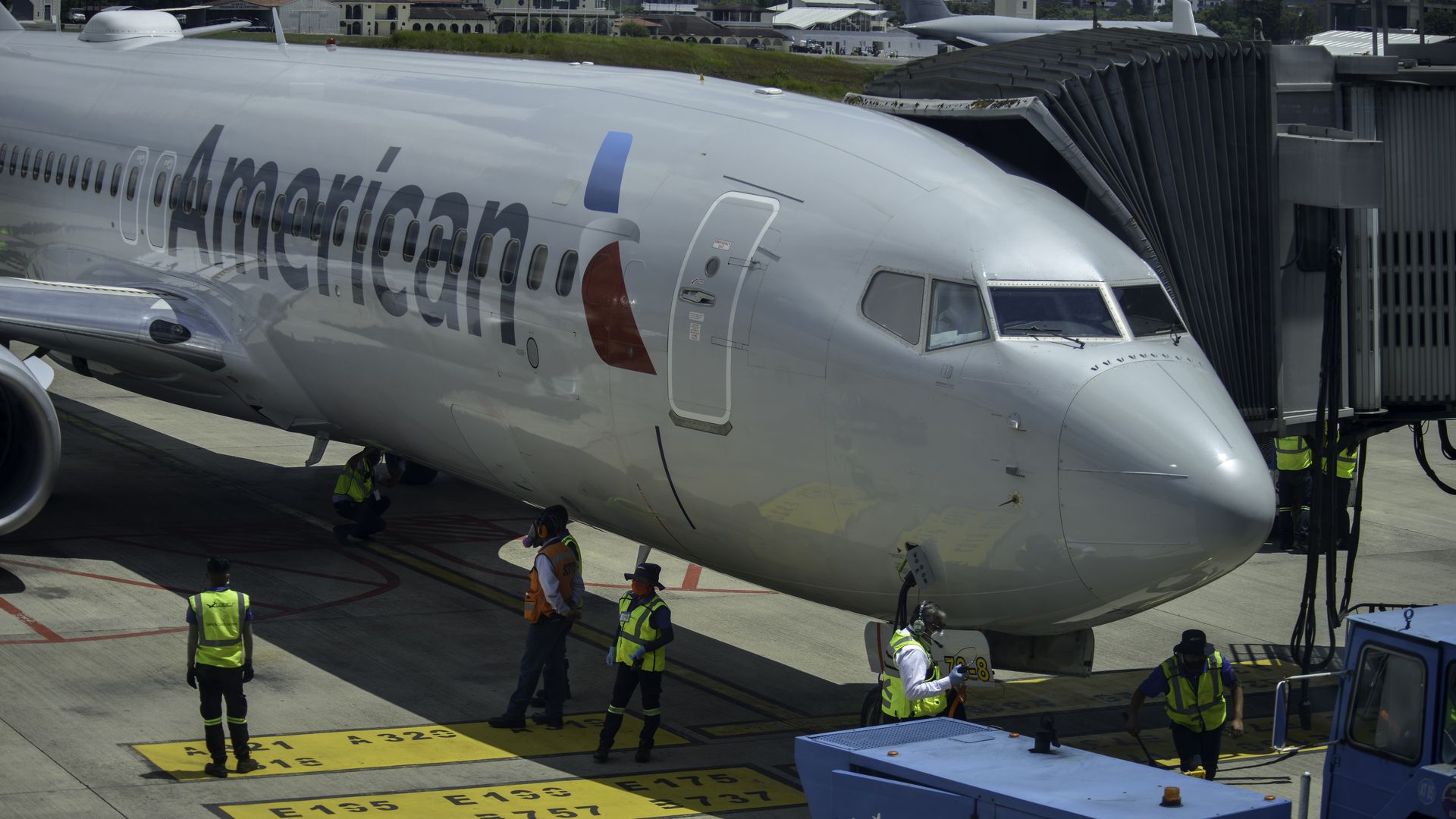
American Airlines on Friday said it accepted a $5.5 billion loan through the Treasury Department, and may be allowed to tap billions more in October, per Reuters.
The state of play: Thecompany was initially allotted $4.75 billion, but after other carriers, including Delta Air Lines and Southwest Airlines, said they don't plan to take their portion of the $25 billion package earmarked in the CARES Act, more funds were available for other airlines.
Google parent company Alphabet has settled a 2019 shareholder lawsuit over its handling of sexual harassment claims, agreeing to limit mandatory arbitration and non-disclosure agreements in such cases, to prevent executives under investigation from receiving severance or accelerating stock sales, and to commit to investing $310 million over a decade in a diversity council.
Why it matters: Google is among the highest-profile tech companies to face a backlash— including a large employee walkout — for covering up sexual harassment.
The U.S. Department of Justice on Friday filed legal opposition to TikTok's request to delay a ban on downloading the app, with a federal judge in Washington scheduling a hearing on the request for Sunday morning.
Why it matters: The White House could have simply postponed the ban on its own for another week or two, as it did last Friday. This move suggests it's seeking to use the ban as leverage in ongoing negotiations.
Traditional media models, and even some of the digital ones, are either under pressure or outright broken. Some journalists have responded by going out on their own, leveraging a new group of startups that help them self-publish and monetize their work.
Axios Re:Cap digs in with Chris Best, CEO of Substack, which has more than 250,000 paying subscribers on its writer network.
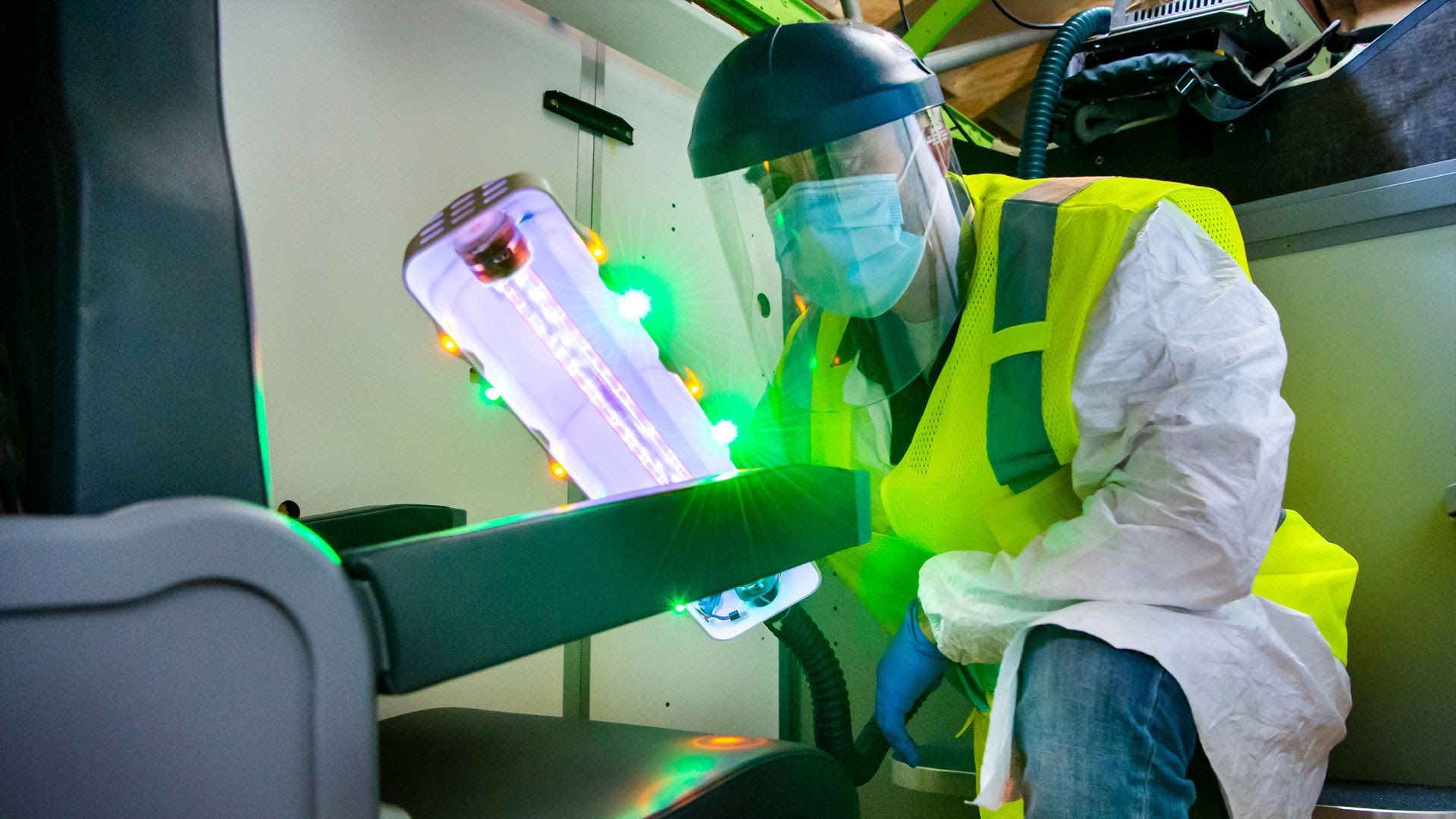
Airlines could soon have another tool to help disinfect their airplanes and protect passengers from the coronavirus.
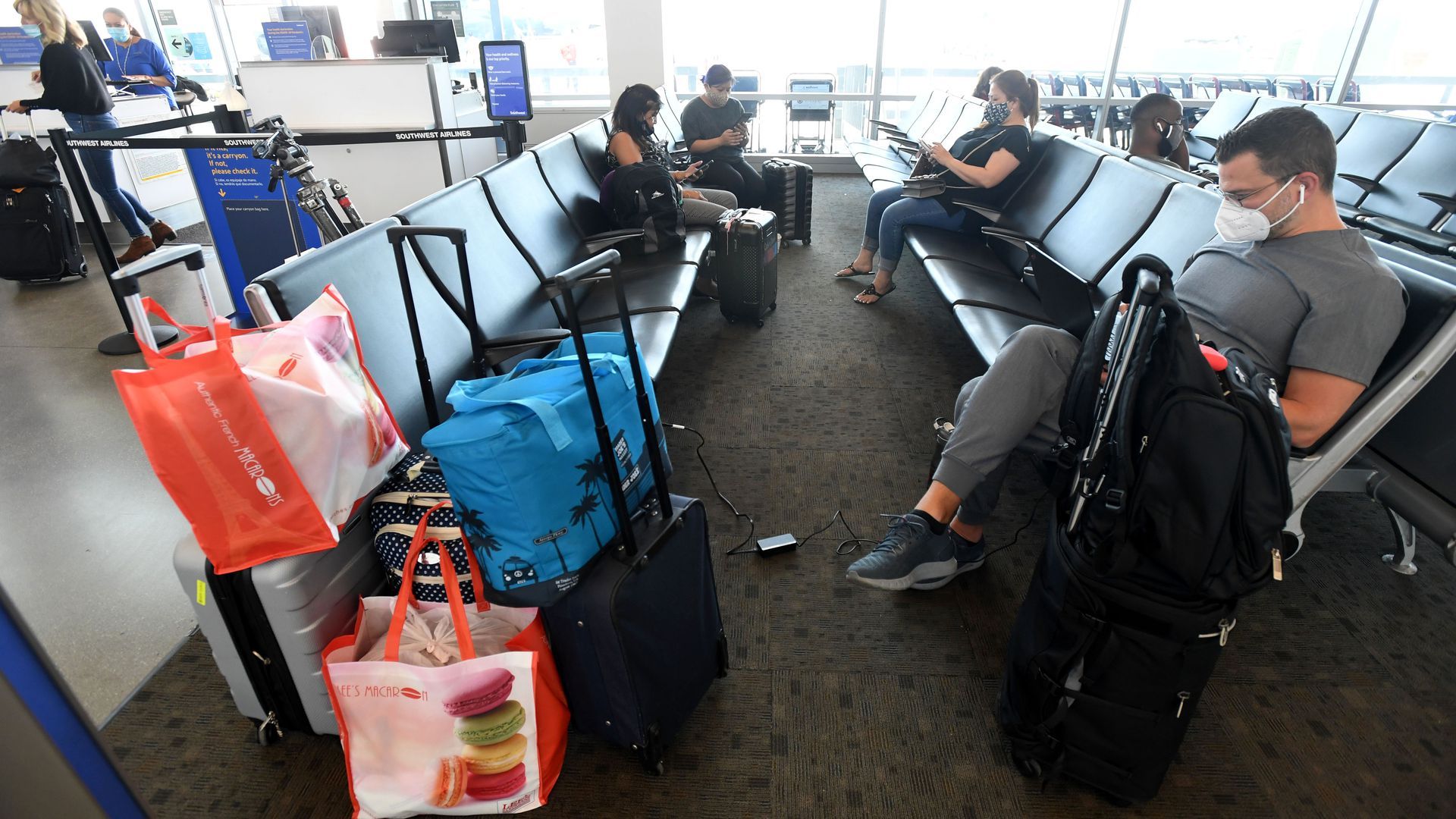
Why it matters: Air travel remains severely depressed since the beginning of the coronavirus pandemic. The industry won't recover until passengers feel confident they won't be infected in flight by fellow travelers.
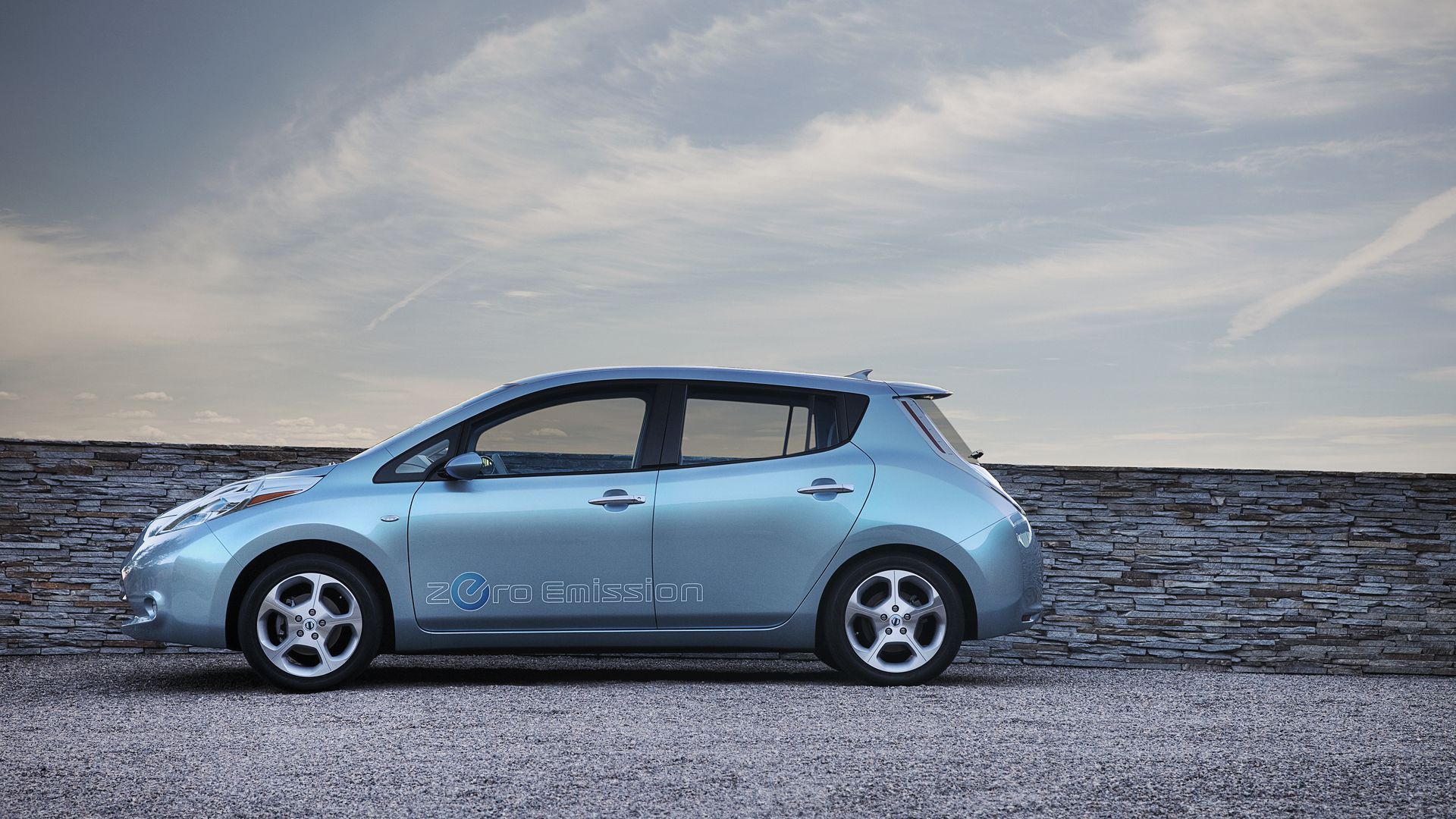
Gasoline-powered carsmay be going the way of the woolly mammoth, even if it will take decades to replace them and seems hard to fathom today.
The big picture: Internal combustion engines (ICEs) have powered automobiles for more than 100 years. But the shift to electric vehicles, slow to materialize at first, is now accelerating due to tightening government policies, falling costs and a societal reckoning about climate change.
My latest ride is the 2020 Land Rover Defender 110 SE, an SUV with a tough-looking stance for our times.
The big picture: The original Defender is a cult vehicle for off-road enthusiasts, having been sold in the U.S. for just four years in the mid-1990s. Now it's back, rounding out the Land Rover lineup.
Recurrent, a new Seattle-based startup, aims to answer the most commonly asked question by people considering a used electric vehicle: "How much battery life is left?"
Why it matters: You can get a decent idea of how long a traditional used car will last by knowing how many miles are on the odometer. But longevity in an electric vehicle is harder to predict and depends on many factors, including how and where the vehicle was driven and the battery's charging history.
As it fights for an upcoming ballot measure to exempt it from a California law that could force it to classify drivers as employees, Uber argues that not only are "full-time" drivers a small minority of its total drivers, but also that they are responsible for just a quarter of all trips in the state.
Why it matters: If that ballot measure, known as Proposition 22, fails in November, ride-hailing and delivery companies will be forced to reclassify their drivers as employees.
The S&P 500 hit its highest level ever earlier this month — but as September closes out, the index is teetering on the brink of correction territory.
Where it stands: As of Thursday’s close, the S&P 500 has sunk 9.3% below its record high. Slight gains on Thursday pushed it a bit further away from the 10% decline that would mark a correction — but investors say volatility could be here to stay.
A program supporting Americans who are typically ineligible for unemployment benefits will expire at the end of the year, with millions still relying on it as the labor market sputters.
Why it matters: The result could be catastrophic for the economic recovery that Wall Street fears is already fragile.