Corporate America has an opportunity to make meaningful changes to the firearms industry while Congress dithers. But, so far, businesses are staying on the sidelines.
Transsion, a Chinese mobile phone maker focused on African markets under the Tecno brand, plans to raise upwards of $426 million in a Shanghai IPO.
Why it matters: It's a reminder of how many Chinese companies have major trading partners besides the U.S., which also was reflected in last night's better-than-expected export data. Sounds obvious, but it can sometimes be lost to myopia.
After buying back more than $1 trillion of their own stock last year, public companies are slowing their share repurchases in 2019, and that will add to troubles for the market and the economy.
Why it matters: Buybacks have been a major catalyst for the market’s rise in recent years and remain an important driver of higher prices, as earnings growth has slowed and investors have become net sellers of equities.
The stock market rebounded Wednesday, with major U.S. indexes finishing the day slightly higher or little moved from where they opened, but prices on safe-haven assets like gold, the Japanese yen and U.S. government debt continued to rise.
What happened: Gold prices rose to a 6-year high, above $1,500 per troy ounce, while the yen broke through 106 per dollar, nearing a 5-month high, and U.S. Treasury prices rose, taking down yields on the benchmark 10-year note below 1.6% in early trading.
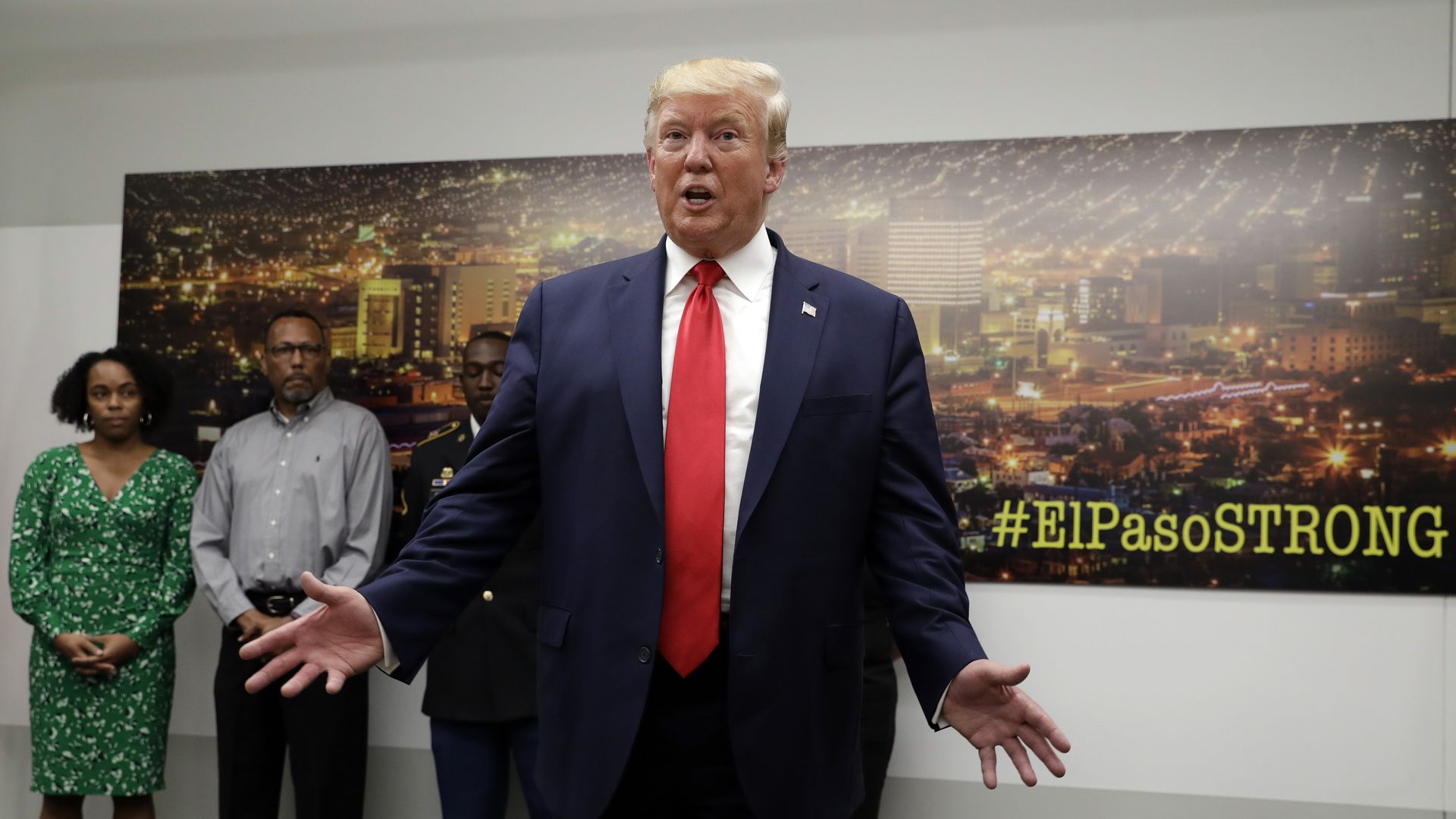
President Trump met with first responders and survivors of last weekend's mass shootings in Dayton, Ohio, and El Paso, Texas, Wednesday, in a visit he hailed as "incredible." But it was also marked by divisive rhetoric against the media and political rivals — including local politicians.
Details: In a series of tweets after visiting victims of the mass shooting in Dayton, Ohio, Trump accused Sen. Sherrod Brown (D-Ohio) and Dayton Mayor Nan Whaley of lying in a press conference, insulted 2020 candidate Joe Biden as "boring," and called Fox News' Shep Smith worse than "Fake News CNN."
Chinese tech giant Huawei has found itself in the middle of the escalating U.S.-China trade war, hurting both its business and those of its big U.S. suppliers.
CFR President Richard Haass, author of "A World in Disarray," suddenly needs a more dire title. Pointing to "the world’s deterioration," he's eyeing the "U.S.-China trade war, hottest July ever, Hong Kong on the edge, odds of US-Iran, Turkish-Kurdish conflicts mounting, new India-Pakistan Kashmir crisis, Japan-S Korea diplo/eco confrontation, looming Brexit."
Why it matters: None of those are passing events. All are long-term crises that require expertise and bandwidth that are lacking in the always short-staffed Trump administration.
Snap priced $1.1 billion of convertible notes, due in 2026. This is slightly up-sized from a $1 billion offering size, and expectations are that it will close by Friday.
Why it matters: It reflects how Snap has become tech's comeback kid. The "camera company" was valued at $29 billion in its first day of post-IPO trading in early 2017 — or $26.05 per share — before bottoming out at less than $5 per share at year-end 2018. Last week it briefly regained its $17 IPO price on better-than-expected Q2 earnings, and the $1.1 billion infusion should help it invest more in both content and features.
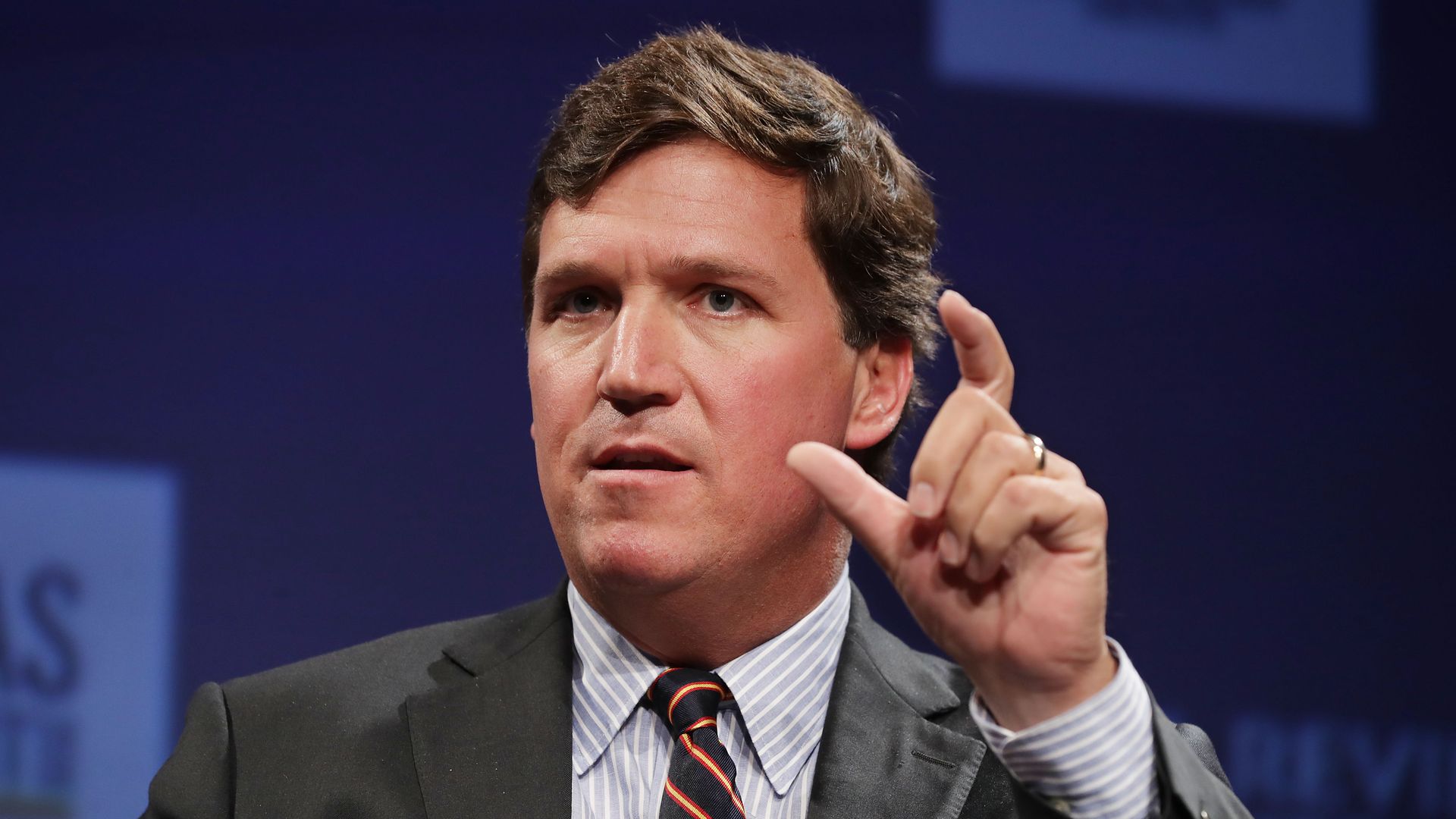
Fox News host Tucker Carlson claimed on his show "'Tucker Carlson Tonight" Tuesday that white supremacy is a "hoax" and "actually not a real problem in America."
Why it matters: A racist manifesto complaining about a "Hispanic invasion" was posted online by a writer identified as the suspected gunman before the El Paso mass shooting Saturday. Per Axios' Jim VandeHei and Sara Fischer, white-extremist active shooters in the U.S. were responsible for 65 deaths in 7 episodes in the past 18 months.


/2019/08/08/1565263984307.gif?w=3840)