Longtime CBS chief executive and current Chairman Les Moonves admitted to unwanted advances towards women between the 1980's and late 2000's in a statement to The New Yorker, which appeared in an investigative piece authored by Ronan Farrow detailing allegations of sexual misconduct.
Why it matters: The saga could compromise his leadership position within the company and could complicate CBS's messy fight for independence with its parent company, that's being led by Moonves.
More than half of the American workforce could be participating in the gig economy within the next 10 years, but the U.S. Bureau of Labor Statistics is underprepared when it comes to collecting who's actually in it, according to Recode.
The big picture: Participants like Uber drivers and Airbnb hosts are becoming an integral way for people to make extra money aside from a 9-to-5 job. However, measuring the data has been so inconsistent, the percentage of gig workers could be anywhere from 4% to 40%. In order for state and local governments to consider different policies like portable benefits and understand what jobs people are accepting in their areas, data will be needed to track mobility.
“The idea that a primary job will pay for most expenses and can be relied on is no longer the case for working Americans.”
— Louis Hyman, director of Cornell’s Future of Work project and a co-director of the Gig Economy Data Hub, told Recode.
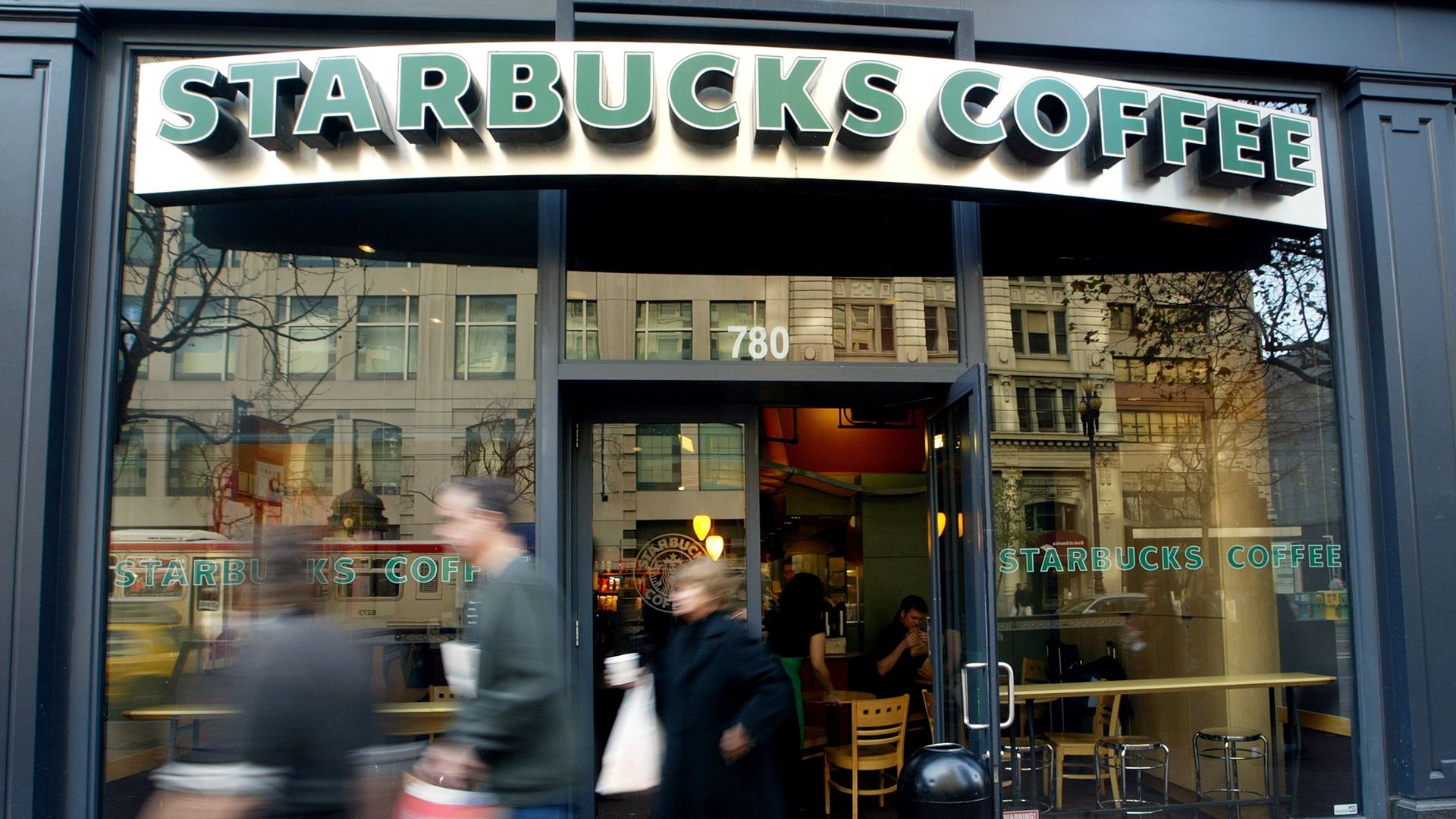
The California state Supreme Court ordered Starbucks Thursday to pay its employees who routinely perform tasks after their scheduled shift, such as store closings.
The backdrop: This comes after Douglas Troester, a Starbucks employee, filed a complaint in court arguing that he should get paid for his time spent closing up the shop, activating the alarm and walking coworkers to their cars — in compliance with the company’s policy.
The CEOs running S&P 500 companies cumulatively took home $10 billion in 2017, an amount that is 44% higher than what is usually reported, according to an Axios analysis of Securities and Exchange Commission filings. The big reason: CEOs cashing in their stock.
Why it matters: Annual proxy filings bury the fact that many of America's top executives are sometimes paid even more than what headlines suggest, due almost entirely to the huge gains they reap from the stock market. Meanwhile, worker wages are stagnant, the average household is living on $59,000 a year, and income inequality has become one of the most visible political rallying cries.
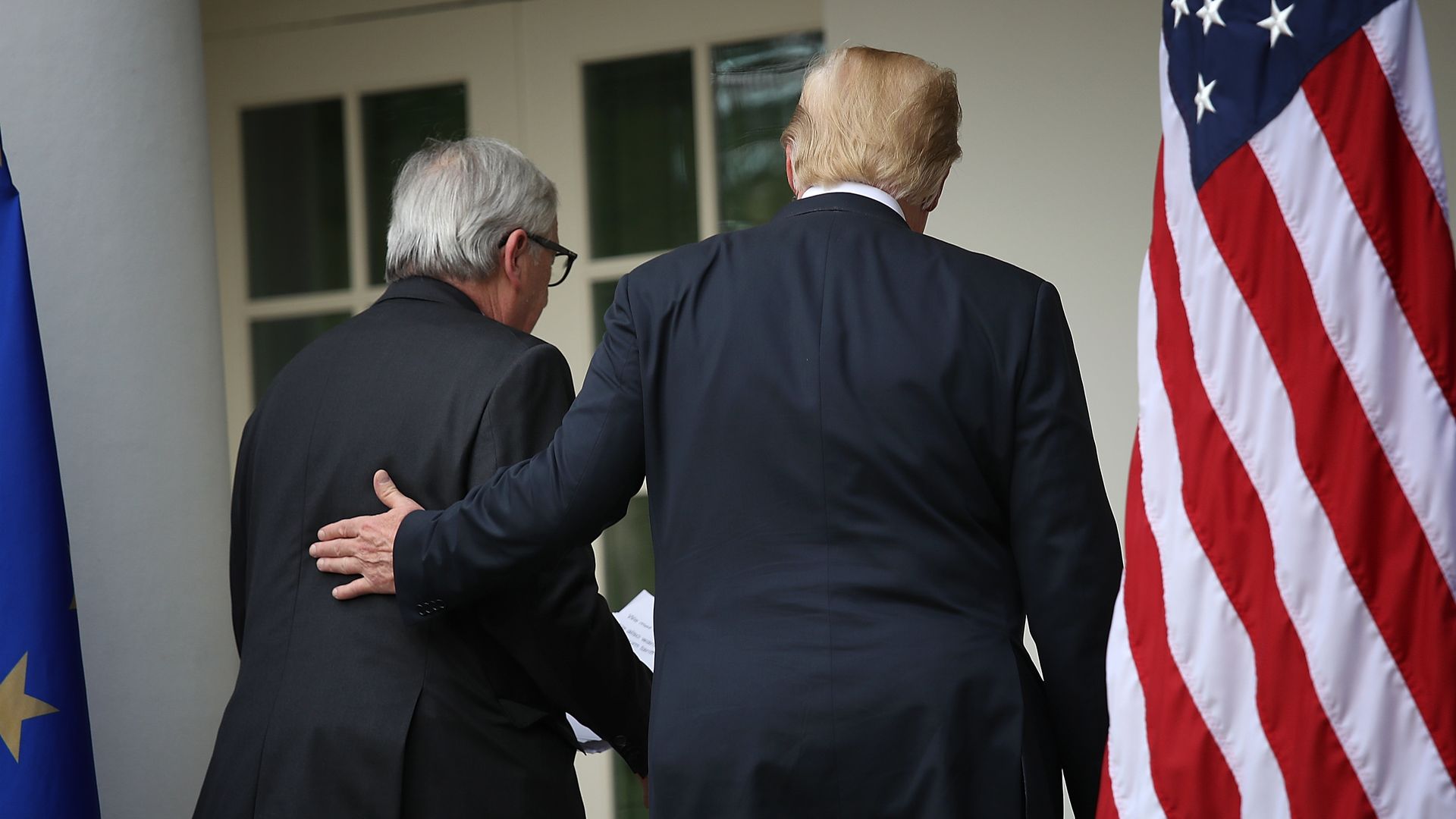
President Trump took a victory lap in the Rose Garden after achieving at least a rhetorical de-escalation of his trade war during a visit by European Commission President Jean-Claude Juncker.
Between the lines: Critics will say Trump was taking credit for solving a problem he caused, but free traders were relieved that at least for now, there's a pause in new tariffs for the Continent. And they hope that Trump has found an exit ramp — a face-saving way to back out of an escalating round of tit-for-tat sanctions that have already begun to hurt Trump Country farmers.
For nearly a decade, social media networks have dominated the tech economy, but as the experience becomes more saturated and invasive, users are turning to private networks, like encrypted messaging.
Why it matters: The transition is rocking the businesses of some of the biggest and fastest-growing tech companies of all time.
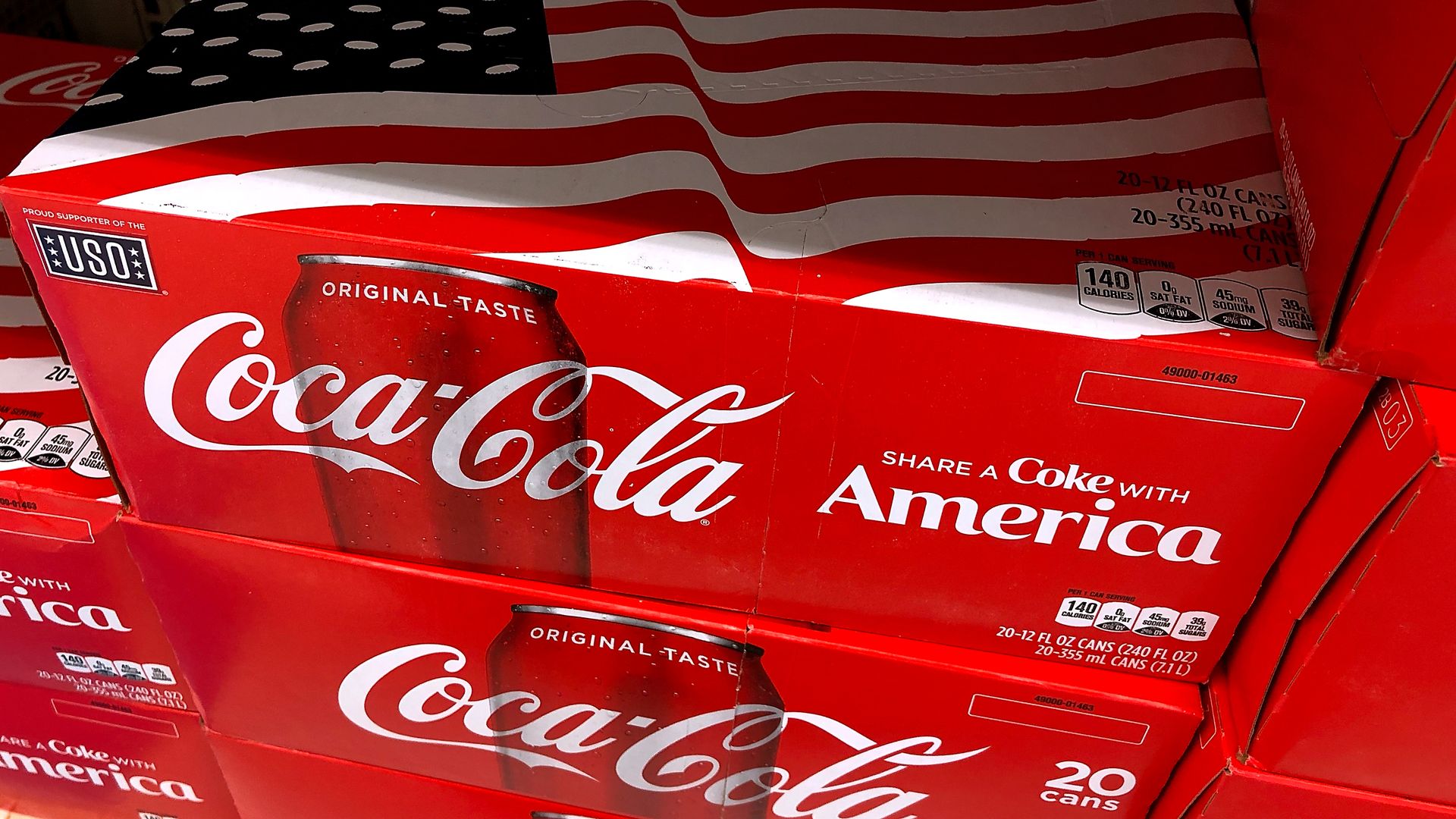
Coca-Cola CEO James Quincey told CNBC on Wednesday that the company will raise prices on its carbonated sodas later this year in response to President Trump's tariffs on imported steel and aluminum on some of the U.S. closest allies, which have slapped retaliatory duties.
"We had to take with our bottling partners an increase [in prices] in our sparkling beverage industry in the middle of the year, which is relatively uncommon. That's the metal steel and aluminum going up. The labor going up."
— Quincey said on CNBC's Squawk on the Street after Coke reported earnings.
He added, however, that the company has a slight advantage over others because its products are American-made. "We're very focused on creating local businesses, with local factories, with local jobs, with local blue collar," he told CNBC. "Less trade and more tariffs will mean less economic growth in the end and that will affect us."