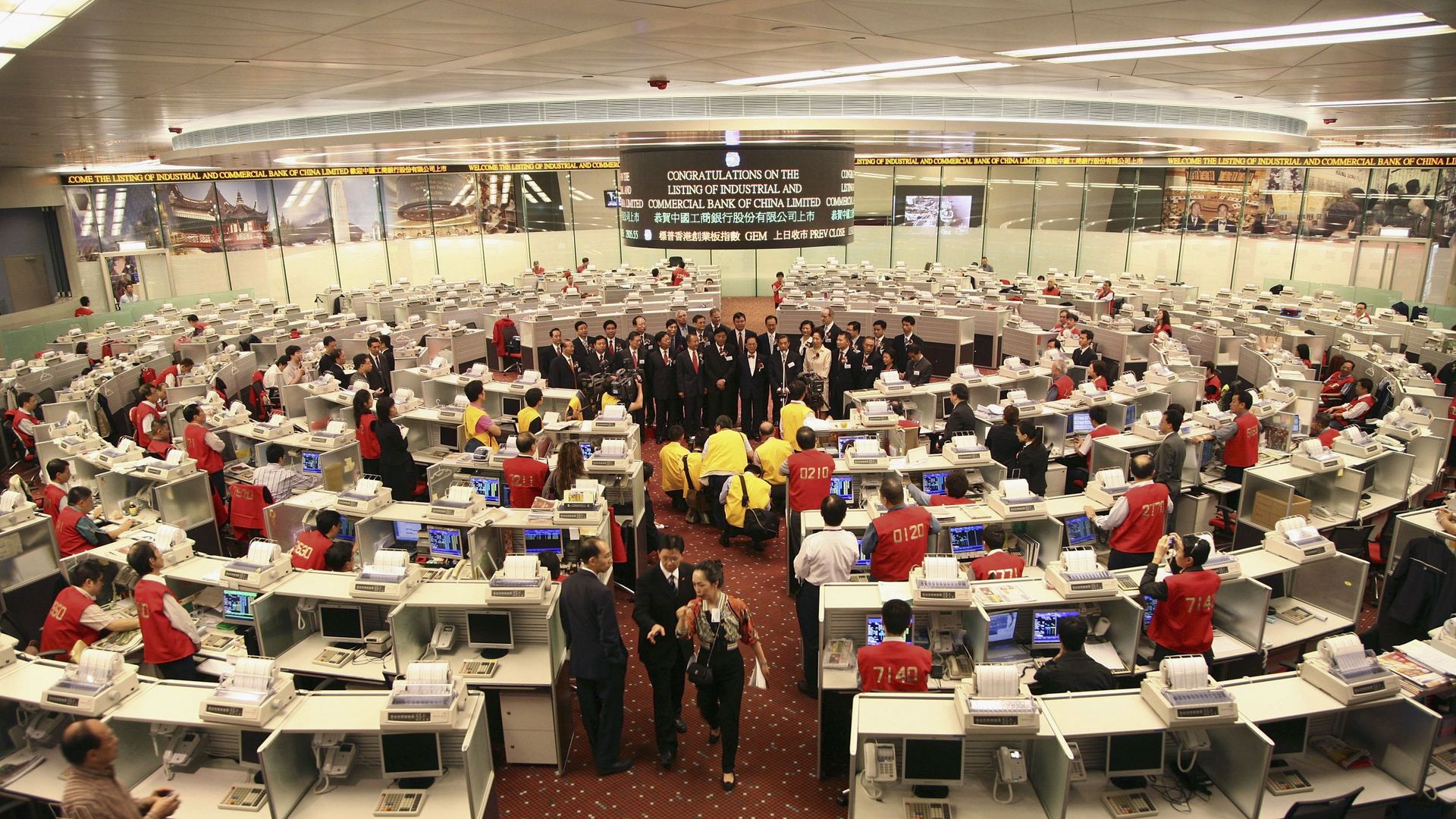
Swiss bank UBS has been suspended from sponsoring Hong Kong IPOs for the next 18 months, likely due to its role in the 2009 IPO of China Forestry Holdings (which later collapsed). UBS disclosed the suspension and $15.2 million fine in its annual report — without identifying China Forestry — and said that it will appeal.
Why it matters: This could be a record year for Hong Kong IPOs, aided by plans to accept dual-class share listings.
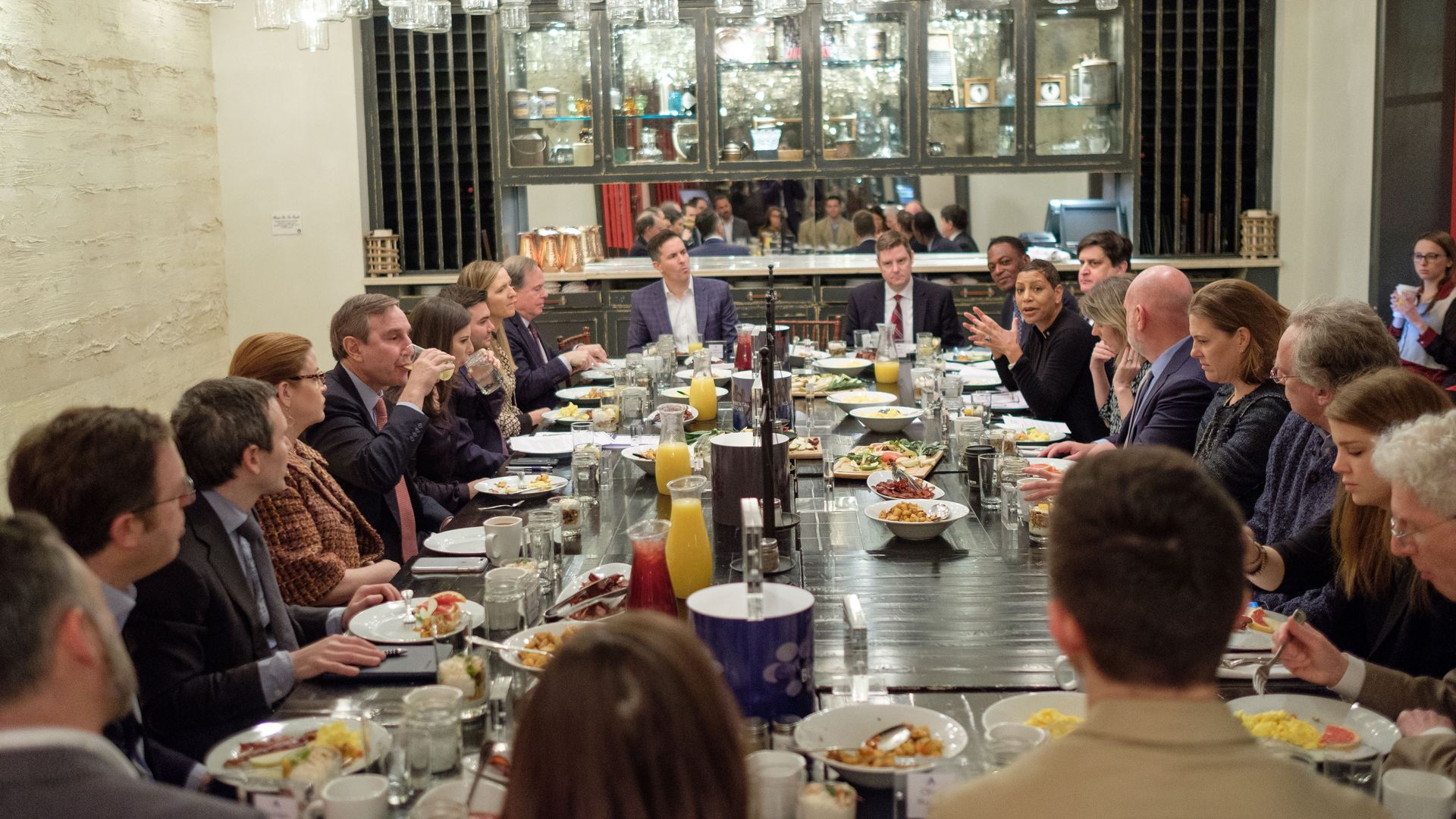
Experts in media, tech, business and politics came together in D.C. on February 7th to discuss the status of trust in institutions. Thought leaders dialogued about what affects trust over breakfast at The Lincoln—a restaurant filled with subtle (and obvious) nods to the president remembered for his honesty.
Why it mattered: This year, Edelman's annual trust barometer report revealed that the U.S. is facing the biggest decline in institutional trust since the report started in 1999.
Secretary of Education Betsy DeVos made the rounds on the morning news shows Monday after her "60 Minutes" interview last night where she struggled to answer questions about her school choice policies.
File storage and sharing company Dropbox on Monday disclosed terms for its upcoming IPO.
Share details: 36 million being offered at between $16 and $18 a piece.
Valuation: At the high end of its range, Dropbox would have a fully-diluted value of $7.9 billion (or $9.9 billion, if including of shares reserved for future equity compensation). That's below the reported $10 billion that it most recently received from private investors.
Sen. Elizabeth Warren said Sunday that she approves of President Trump's move to bring tariffs into the trade conversation. "What I'd like to see us do is rethink all of our trade policy. And, I have to say, when President Trump says he's putting tariffs on the table, I think tariffs are one part of reworking our trade policy overall," she told CNN's Jim Acosta on State of the Union.
Why it matters: Warren is one of Trump's most vocal opposers, but as Democrats near the 2018 midterms, the party must appeal to the blue collar workers who voted for the president — some of whom support his tariffs — if they want to win back the House. It's also a reminder that Trump is closer to the left wing of the Democratic Party on trade than he is to mainstream Republicans like Paul Ryan.