Nearly half of workers in the technology field fear losing their jobs because of their age, according to a survey from Indeed.com. 18% of respondents "worry about it all the time."
A growing problem: 22.8% of employment-discrimination complaints filed to the EEOC in 2016 were age related, up from 19.6% twenty years ago. But age discrimination can be difficult to prove, and the Supreme Court made it more difficult in 2009 when it instituted a stricter standard for proving age discrimination than other types of workplace discrimination.
Who has it worst: Those facing the harshest economic effects of ageism may be the already unemployed and female. A recent study by economist David Neumark showed that female workers aged 64-66 who applied for an administrative role were 47% less likely to be called back than equally qualified applicants aged 29-31.
The National Hispanic Media Coalition (NHMC) President and CEO Alex Nogales has written a letter to Verizon Chairman and CEO Lowell McAdam threatening to rally Latino leaders across the country against "Verizon products and services," if Verizon doesn't reinstate access to Univision for East Coast consumers.
Why it matters: The letter, obtained by Axios, shows particular concern over the fact that the signal was pulled Monday night from Verizon's Fios and mobile products without warning and that it was removed at a time when Hispanic viewers need coverage of catastrophic events affecting families and businesses in Mexico and Puerto Rico. Verizon argues in a letter to FCC Chairman Ajit Pai that they have offered alternative programming options to consumers and outlined the carriage fee negotiations.
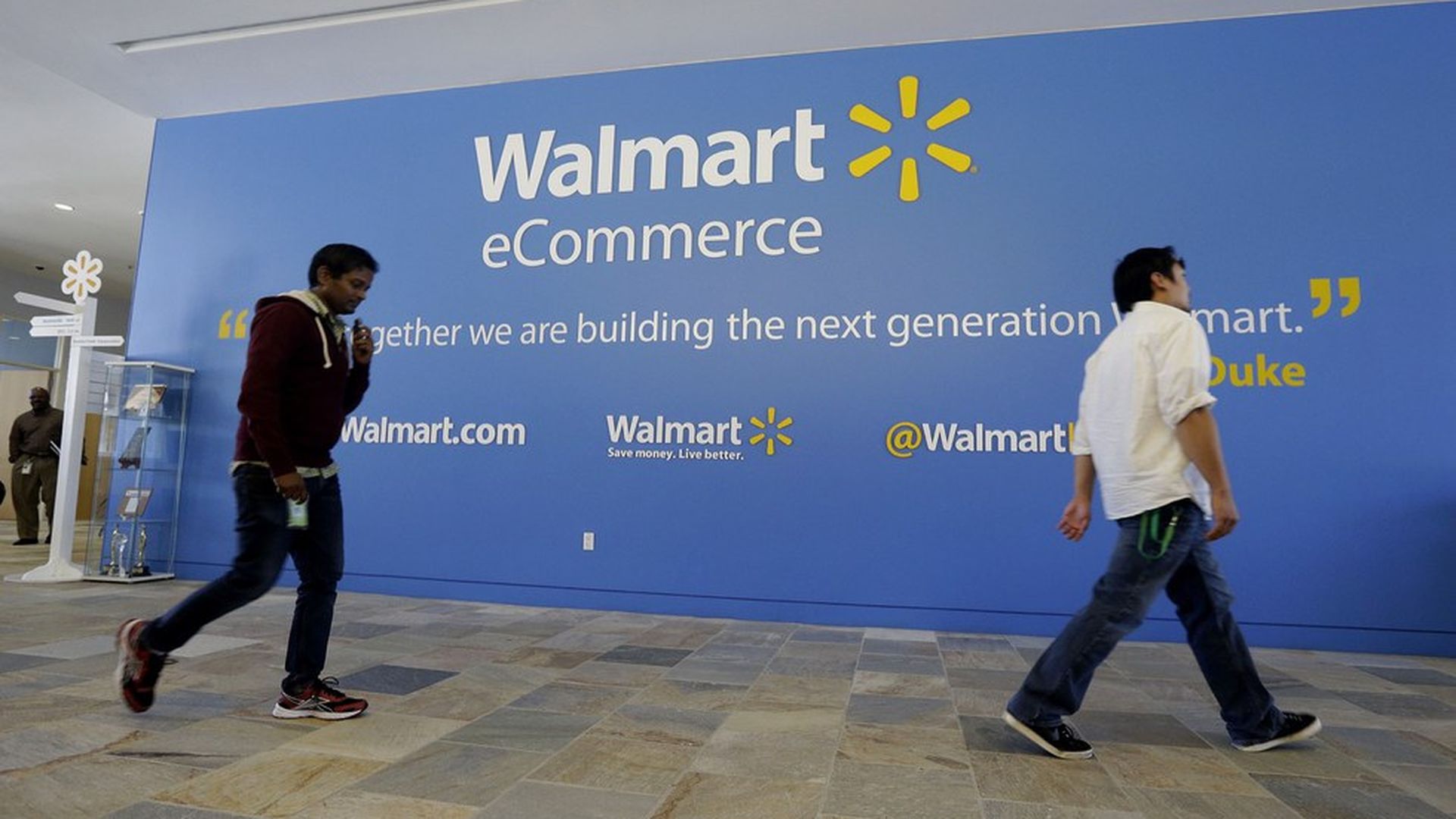
Walmart is nearing a deal with Lord & Taylor, which would give the department store a dedicated space on Walmart.com, reports the Wall Street Journal, citing an unnamed source who says that the move "would be the first step in creating an online mall that shoppers could access from Walmart's website."
Why it matters: Walmart has swiftly grown its online business in recent quarters, and has convinced investors that the firm has the will and the way to take on Amazon in the battle to dominate American e-commerce. Traditional retailers like Lord & Taylor have taken notice, and now see Walmart as a potential distribution partner in a world where customers are eschewing the shopping mall for the online retail experience.
Today is the 30th anniversary of Oct. 19, 1987, the "biggest single-day stock market collapse in history — a 23 percent drop" that "rendered once-trusted ideas useless and redefined the financial landscape for market professionals," Bloomberg recalls.
Why it matters: "Black Monday ... is part of financial history's fossil record, a divide between old and new markets. It was the first significant instance of computer-driven trading run amok."
That 46% is largely divided on partisan lines — 76% of Republican voters think media make up stories about Trump while only one in five Democrat voters think that, a Politico and Morning Consult poll shows. Those who strongly approve of Trump's job performance are very likely (85%) to think the media makes up stories.
Those who don't believe the media makes up stories: 11% of Republican voters and 65% of Democrats. That's for a total of 37% of voters who think the media do not invent stories about Trump.
It's no secret that many Midwestern cities have lost population as jobs evaporated in recent decades. But while traveling through four cities last week, I heard a surprising number of people talking about the opposite: the younger generation coming back home.
Why it matters: Rust Belt cities have suffered severe "brain drain" the past three or so decades, the result of a decline of manufacturing jobs. Many young graduates left their home towns to find job opportunities in larger cities like San Francisco, New York and Chicago. But as the cost of living in such bigger cities soars, some of these young professionals are looking for ways to return to their roots. And local employers are seizing the chance to get them back.