Thursday's economy stories

More users getting news on Twitter, Snapchat, YouTube
Two-thirds (67%) of U.S. adults get news from social media sites, up from last year's figure of 62%, according to a Pew Research Center study out today. But not all platforms are equal in delivering news to users:
- Facebook still beats out every other social media site as the top news bearer among social media sites, with 45% of Americans reporting getting news from Facebook. That's indicative of the fact that a larger percentage of Americans (66%) use Facebook than the other social media sites in the survey.
- For Twitter, 74% of its users get news there (up 15 percentage points from last year). 29% of Snapchat users get news on the platform (up 12 percentage points from last year).
- For YouTube, 32% of its users get news there (up 21 percentage points from last year).

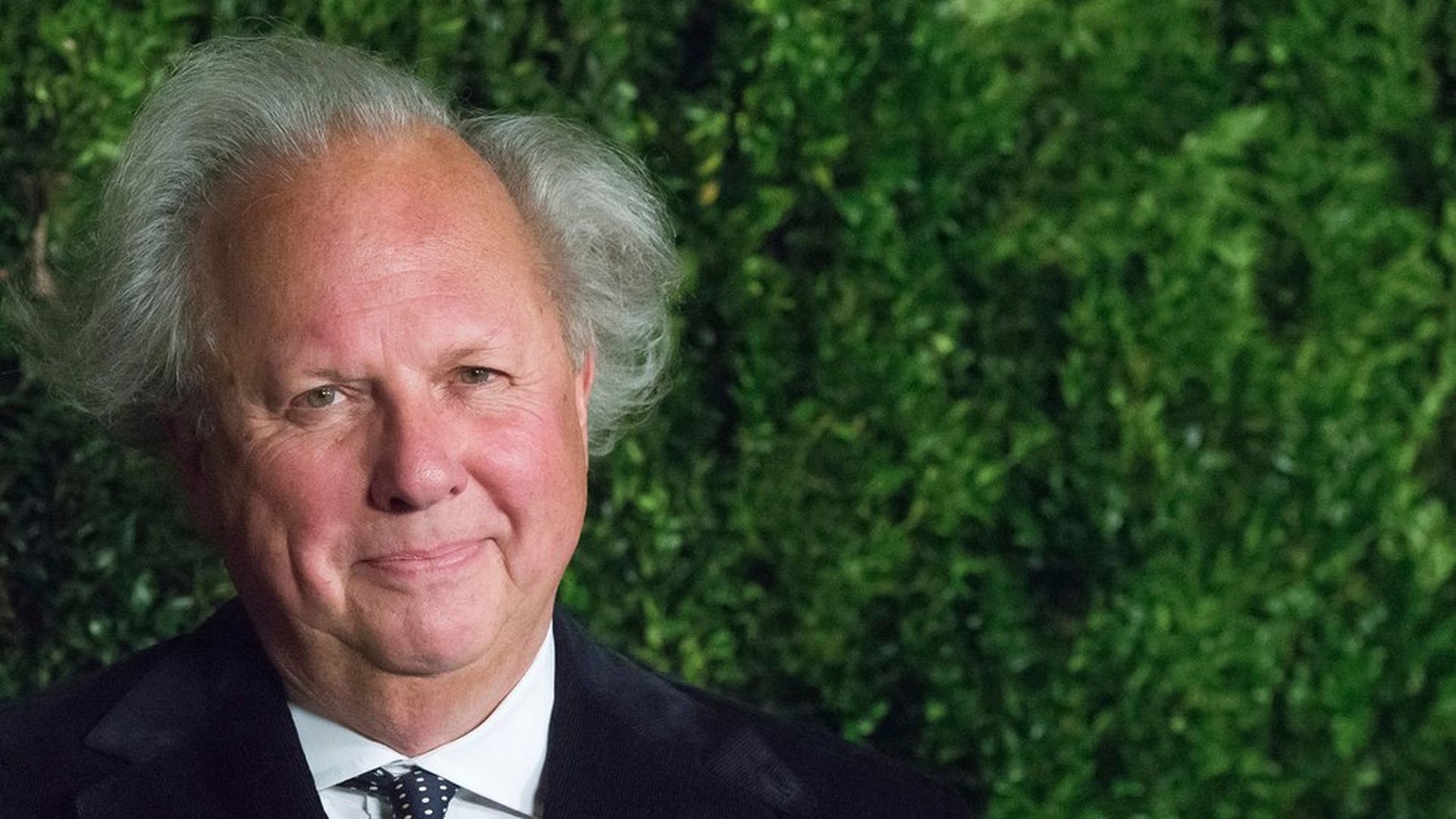
Graydon Carter to step down as editor of Vanity Fair
Graydon Carter, the editor of Vanity Fair, announced today that he'll step down from his post at the influential magazine's helm at the end of the year.
- From the press release announcing his departure: "I've loved every moment of my time here and I've pretty much accomplished everything I've ever wanted to do. I'm now eager to try out this 'third act' thing that my contemporaries have been telling me about, and I figure I'd better get a jump on it."
- Think back: Carter started the "tiny hands" meme against President Trump years ago after branding him a "short-fingered vulgarian" in the pages of Spy, causing him to become a frequent target of Trump's ire.
- Why it matters: As Michael Grynbaum pointed out on Twitter, Carter is one of the last celebrity editors in American publishing, so his departure marks the end of an era.

Eli Lilly slashes 8% of workforce
Pharmaceutical giant Eli Lilly is cutting 3,500 jobs, or more than 8% of its entire workforce, to put more money toward developing new drugs and to "improve its cost structure," the company said Thursday. Most of the job cuts, expected to save $500 million, will come from early retirement buyouts.
- Another major reason for the job cuts: Drugs losing patent protection. Cialis, Lilly's erectile dysfunction drug, which had $2.5 billion in worldwide sales last year, loses its patent in November. Patents on the diabetes drugs Humalog and Humulin have already expired, but they are biologic drugs without generic competitors.
- Yes, but: Lilly had a 17% profit margin in the latest quarter. The company is not hurting for cash.

Retailers are begging Amazon to buy them
If you can't beat em', join em.
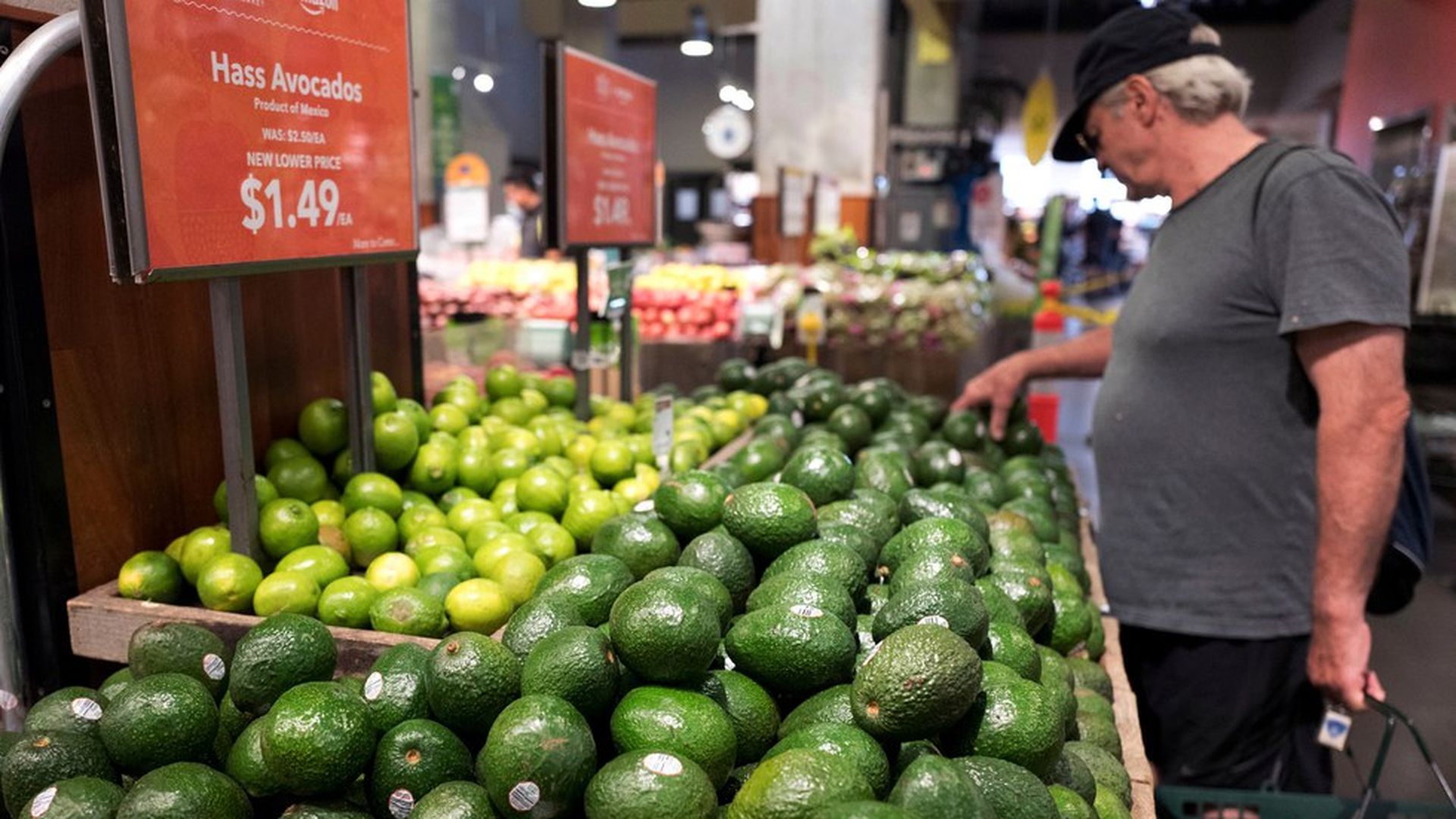
That's the attitude some retailers competing against Amazon are taking, as to the Financial Times reports that following Amazon's acquisition of Whole Foods, investment bankers are hearing an upsurge in requests from clients to pitch their companies as acquisition targets for the ecommerce giant. "All these desperate retail companies think that the solution to their problems will be solved by Bezos . . . they are all praying for a new Amazonian era of retail . . . in which they are members of the [Bezos] club," one banker tells the FT.
Why it matters: A significant portion of Amazon's success comes from its willingness to accept razor-thin or non-existent profit margins in return for higher market share. In such a competitive landscape, shareholders are better off accepting the premium typically offered when one company buys out another (a 27% mark-up in the case of Whole Foods), than trying to compete with Amazon on price.

Vitamin World to file for Chapter 11 bankruptcy
Vitamin World, the nutritional supplement chain with nearly 350 stores, plans to file for Chapter 11 bankruptcy as soon as this month, per Reuters.
- The reasoning: The company wants to be able to escape some of its most expensive lease agreements, which are hurting Vitamin's World bottom line.
- Why it matters: Brick-and-mortar specialty stores like Vitamin World are increasingly becoming obsolete as online stores allow consumers to compare and purchase their products with ease.

Executives say AI will change business, but aren't doing much about it

American business executives expect artificial intelligence to have a large impact on their companies, but few are actually doing anything with AI, according to a new MIT- Boston Consulting Group survey.
Key takeaways, per co-author and BCG senior partner Martin Reeves:
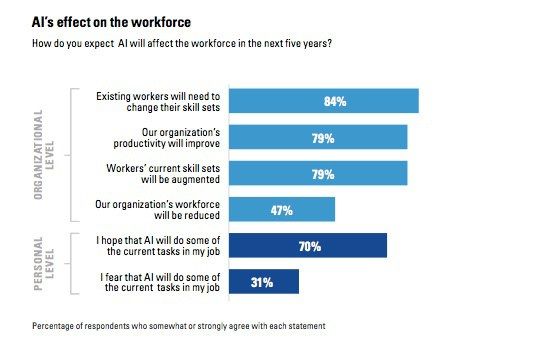
- Nearly 85% of the 3,000-plus executives surveyed expect AI will give them a competitive advantage.
- But their adoption of AI isn't matching up: just 1 in 5 of the companies use AI in some way, and only 1 in 20 incorporate it extensively. "Less than 39% of all companies have an AI strategy in place," they wrote.
- The barriers for adoption include: access to data to train algorithms, an understanding of benefits to their business, a shortage of talent, competing investment priorities, security concerns, and a lack of support among leaders.
One big question: Where does competitive advantage reside in an AI world? "There is a difference between efficiency and competitive advantage. I may be able to do something 10 times faster, but if everyone else can do it 10 times faster or 10 times more accurately, then actually all I've done is increase my cost of doing business. I haven't actually created a competitive advantage," says Reeves.What it means: The survey found "cautious optimism" about how AI will affect employment. Most don't expect AI to reduce their work force in the next five years, but say it will require employees to acquire new skills. Quoting MIT professor Erik Brynjolfsson, co-author of The Second Machine Age, the report says: "AI won't be able to replace most jobs anytime soon. But in almost every industry, people using AI are starting to replace people who don't use AI, and that trend will only accelerate."

GrubHub driver's labor trial another test case for gig economy
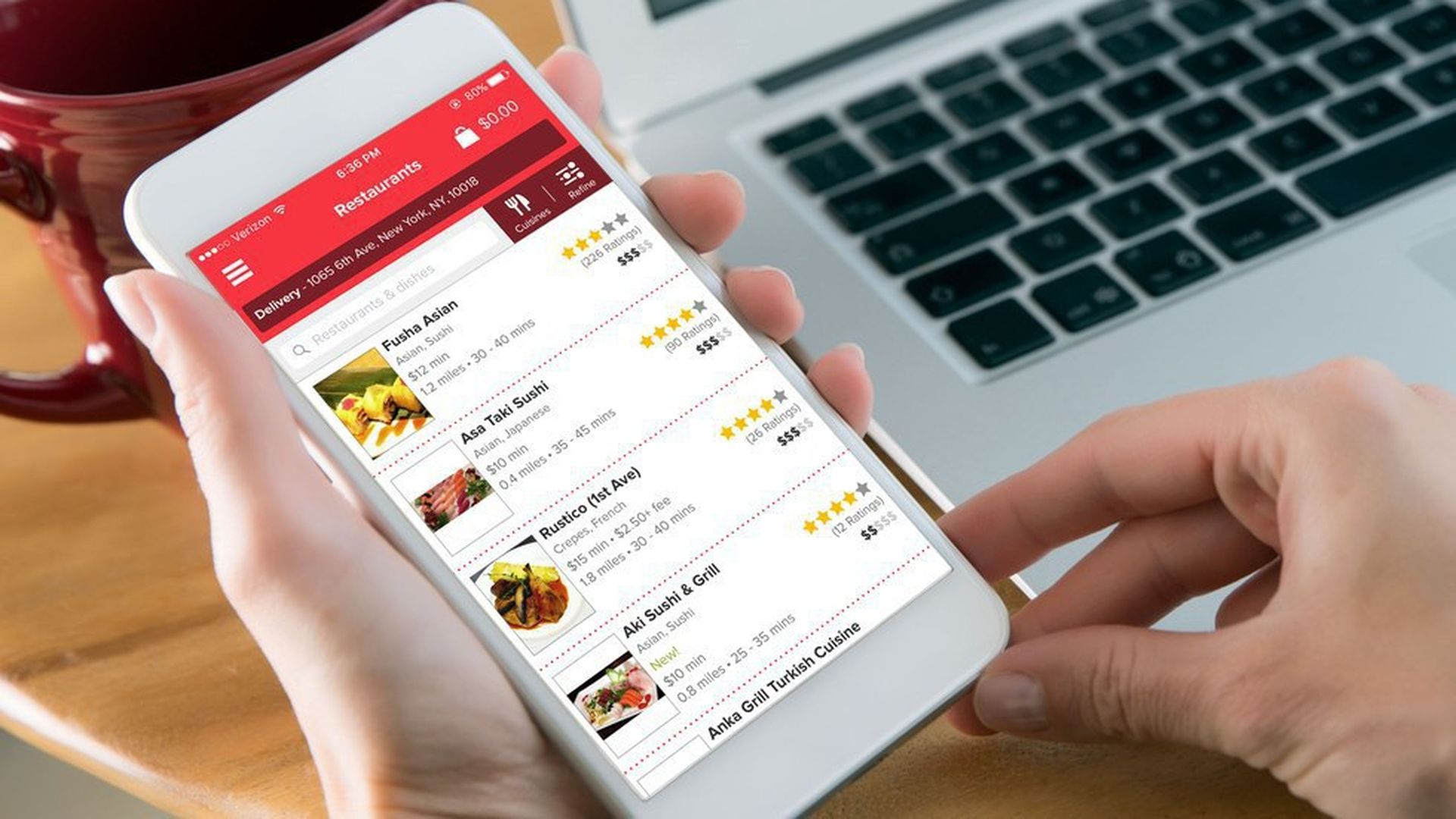
Is a gig economy driver an employee or a contractor? That's the question at the center of a bench trial (meaning, without jury) that kicked off on Tuesday in San Francisco federal court as a former driver for GrubHub faces off against the meal ordering company. At the first hearing, both sides mainly spent their time outlining their arguments.
Why it matters: This question has yet to be answered despite several high-profile lawsuits against gig economy companies, including Uber and Lyft. And because this one focuses on the plaintiff's experience as a driver for GrubHub, it may not settle the question either beyond just his own situation.

Thomas Piketty on the Russian kleptocracy
Russia is widely thought of as an oligarchy run by President Vladimir Putin and a handful of billionaire cronies whose main accomplishment is looking out for their own financial interests. In a new paper, three economists say forensic evidence bears that out.
Economists Thomas Piketty, Filip Novokmet, and Gabriel Zucman found that income inequality is as great in Russia as the United States, with the top 1% of earners garnering upwards of 25% of national income, well above China and other former communist countries like the Czech Republic.
An offshore treasure trove: Piketty and Zucman have studied rising income and wealth inequality all over the world, and what makes Russia unique is how much cash is held offshore. They estimate that nearly $1 trillion in Russian assets is held outside the country, likely by a handful of oligarchs, most of which doesn't show up in official statistics.

LinkedIn goes after tech giants with major advertising update
Microsoft-owned LinkedIn is launching LinkedIn Audience Network, an advertising feature that will let marketers promote native ads to certain audiences on sites and apps other than LinkedIn. Previously, advertisers could only reach LinkedIn's audience of professionals on Linkedin's platform — mainly within its version of a news feed. Now, they can reach them by targeting ads to certain demographics or behavioral groups with data from Linkedin, wherever they may be on the web.
Why it matters: Some of Microsoft's biggest advertising competitors, like Google, Facebook and Twitter, rely on this type of marketing solution to generate large chunks of advertising revenue, particularly on mobile.