Tuesday's economy stories

Fox News will no longer be broadcast in the U.K.
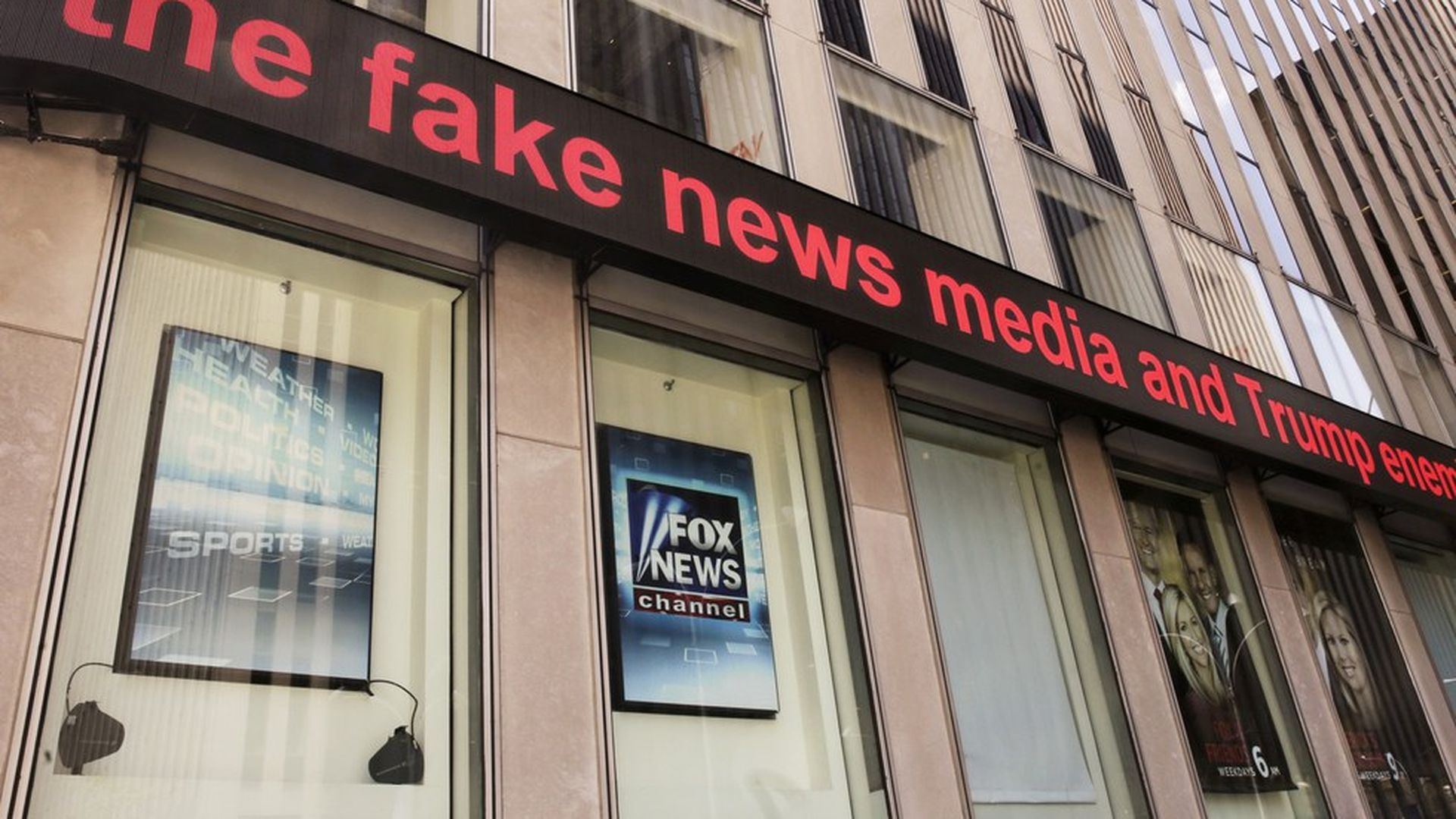
Sky will no longer broadcast Fox News in the United Kingdom after low viewership numbers made the network commercially unviable, per Reuters.
From 21st Century Fox: "Fox News is focused on the U.S. market and designed for a U.S. audience and, accordingly, it averages only a few thousand viewers across the day in the U.K."
Why it matters: Even if low viewership ultimately led to the decision, Fox News has caused headaches for the Murdoch family in the U.K. recently. Rupert Murdoch has long been waiting to buy out the 61% of Sky that his 21st Century Fox doesn't already own, but Fox News' retracted Seth Rich story led British media regulators to reexamine that deal earlier this month.

Apple's Tim Cook on "moral responsibility"
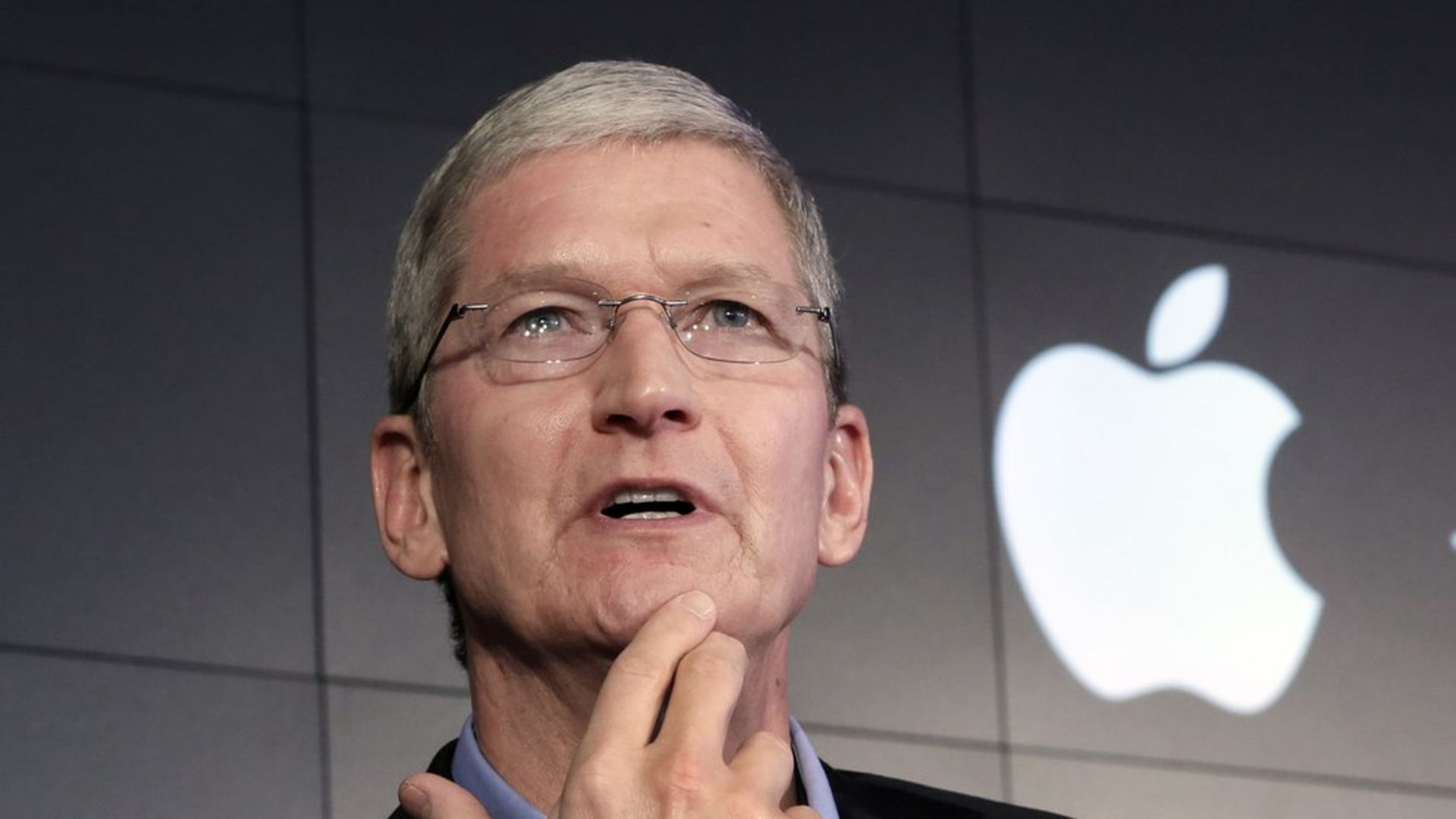
In another sign of corporations' rising voice amid frustration with President Trump, Apple CEO Tim Cook tells the N.Y. Times' Andrew Ross Sorkin: "I think we have a moral responsibility to help grow the economy, to help grow jobs, to contribute to this country and to contribute to the other countries that we do business in."
Why it matters:
Tim Cook, an Alabama native who came up through the industry's operations and engineering side, has kept a mostly low profile during his six years as CEO. That makes these comments quite telling, both about his rising comfort in the spotlight, and his embrace of a more public face for the world's most profitable company.
- Sorkin ate breakfast with Cook in Austin during the CEO's "mini-tour across the country during which he focused on topics usually reserved for politicians: manufacturing, jobs and education."
- Sorkin writes in his "DealBook" column: "Watching Mr. Cook over the years, I've been fascinated to see how he has become as animated when talking about big issues like education and climate change as he is when talking about Apple. ... Cook is most passionate when he talks about education."
- Key fact: "Over the past several years, Mr. Cook has gotten all of the company's corporate facilities in the United States to run on wind and solar energy — in their entirety."
- Sorkin's kicker hints at a political role for Cook: "Is his focus on jobs and speeches in front of American flags a hint at something bigger? After all, Mark Zuckerberg's name is now regularly bandied about in discussions of potential presidential candidates. 'I have a full-time job,' Mr. Cook said. 'I appreciate the compliment ... if it is a compliment."


What happens to billboards and radio when cars drive themselves
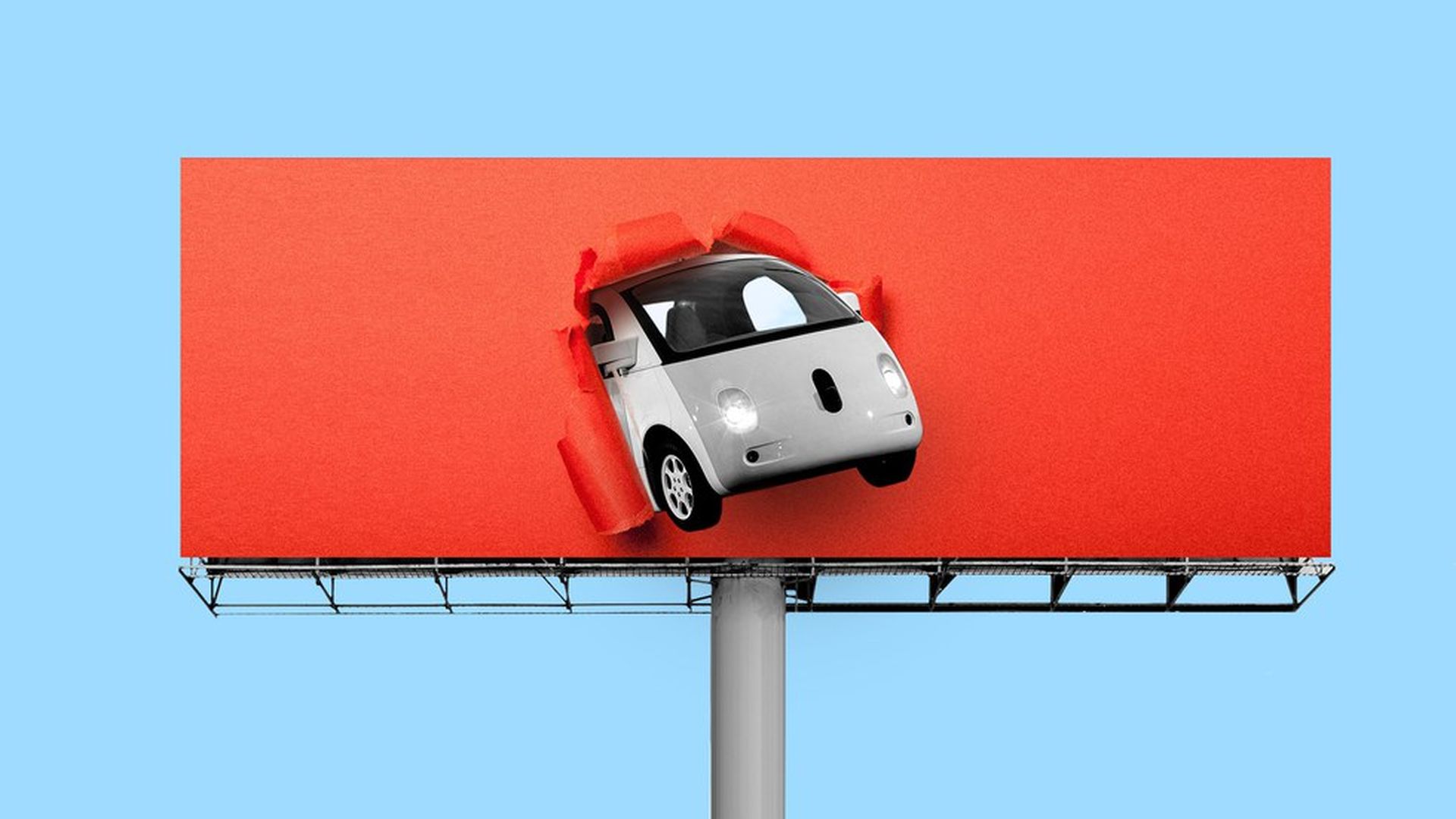
Billboards have long been fixtures on the sides of highways and the radio dial has been a permanent staple of the automobile dashboard to cater to the most captive audience in cars — the driver. But those advertising avenues are going to shift as new forms of media compete for the attention of drivers who will no longer need to keep their eyes on the road.
The future of in-vehicle media: Media companies are already looking for ways to take over devices, surfaces and airtime in self-driving cars as human behavior on the road changes. "How cars are presently advertised to will have to change dramatically," said Dan Jaffe of the Association of National Advertisers. "No longer will these ads be able to focus primarily on the drivers' perspective."

Whole Foods rivals may die, but shoppers love price cuts

The shares of most major U.S. grocery chains sank after the first day of price-slashing by Amazon at its new Whole Foods subsidiary, but shoppers appeared unmoved by the possibility that food could end up like books — largely the preserve of a single national seller.
Kroger, Costco and Walmart saw their share price fall in after-hours trading yesterday evening, as they have ever since Amazon announced June 16 that it was buying Whole Foods for $13.7 billion. Costco is down by 15% since then, and Kroger by 28%. Walmart, which is putting up the toughest battle against Amazon, has done better: its share price had been down by as much as 7% six weeks ago, but it has all-but completely recovered since then.

What a world run by virtual humans will be like
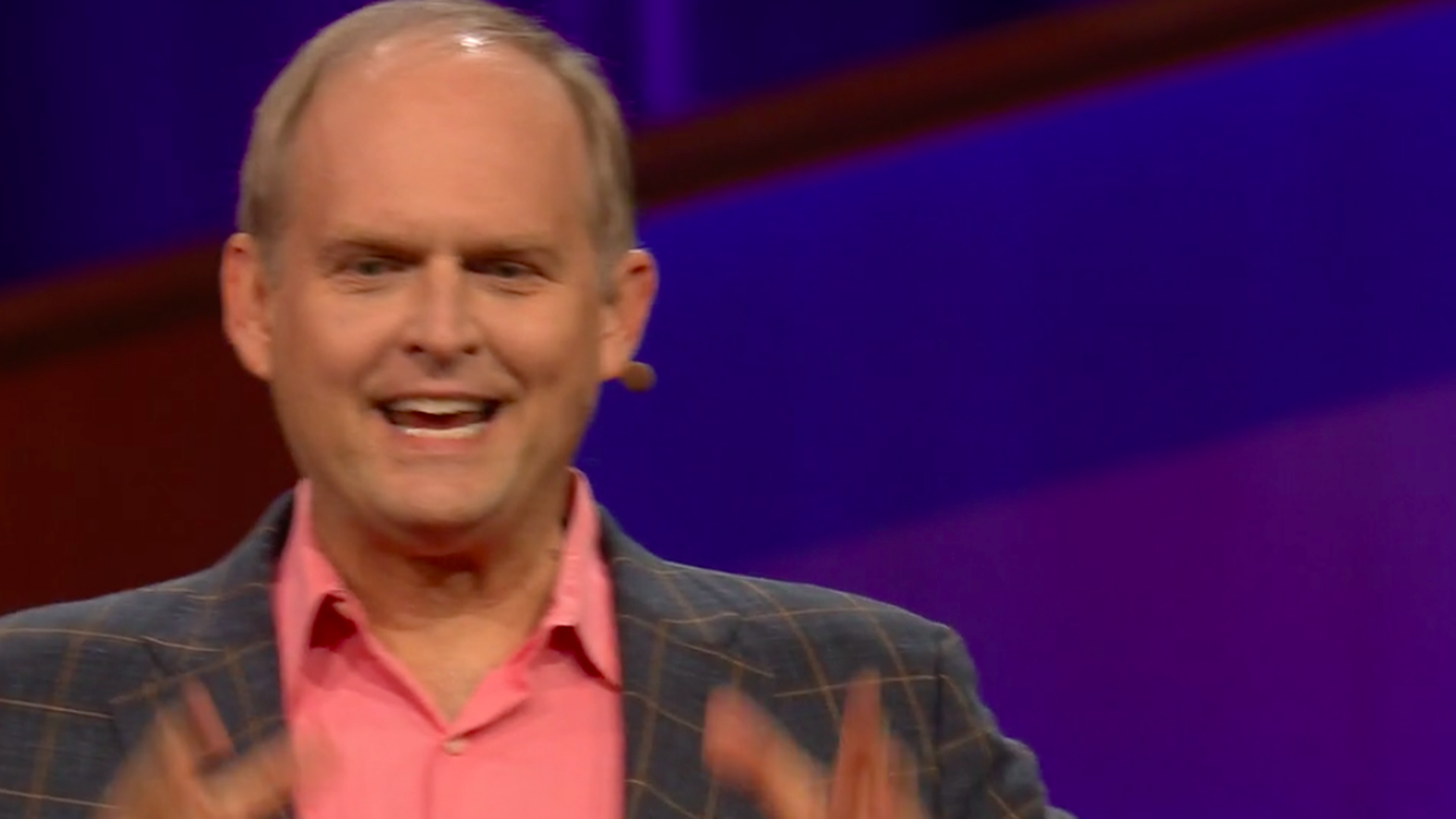
Economist Robin Hanson is the latest to weigh in on the thorny questions accompanying the future of AI, but approaches it with the tools of a macroeconomist to describe how emulated human brains—or as he calls them, "ems"—will interact with us in the economy of the future.
What Hanson predicts: In a recent Ted Talk, Hanson argues that in a world in which we have figured out how to recreate the human brain using computers, human labor will instantaneously become obsolete, because "they just can't compete" with artificial brains that will be as capable as the most intelligent humans (though not more so, as Hanson is not theorizing about the so-called "singularity" when artificial intelligence becomes super-human).