Monday's economy stories

Google economist: tech will help workers get new skills
Google's chief economist says that technology will help people transition into new roles, even as it changes the nature of jobs. Hal Varian noted that technology has made it easier for people to learn crucial job skills — while on the job. Drivers, he noted, no longer need to have a perfect grasp of a city's geography; they can learn as they go because technology exists to help with navigation. Online content, such as Khan Academy, can help teach new skills.
"This cognitive assist is really a big deal because it allows for the kind of on the job training you're talking about," he said Monday at the Technology Policy Institute's annual conference.
Why it matters: Some argue that the tech industry has a responsibility to help workers who are impacted by automation, robotics and artificial intelligence. Varian told Axios that helping people pick up new skills is also good for business.

Investor demands Community Health Systems fire CEO
Investment firm ASL Strategic Value Fund has written a letter to the Community Health Systems board of directors that demands the immediate ouster of CEO Wayne Smith. ASL also urged the board to "claw back significant portions" of compensation from existing and retired executives as the for-profit hospital company continues to bleed losses and flirts with bankruptcy.
Key quote: "Management's previous missteps have resulted in billions of dollars of shareholder losses, all the while reaping tens of millions of dollars in compensation."
Why it matters: ASL's letter was dated Aug. 8 but was just publicized Monday — a week after our report on the collapse of CHS. The company did not respond, and now there's immense pressure on the board to do something. But one hospital industry observer told Axios that Smith has kept his job for so long because CHS' board is "populated with friends of Wayne."

Bannon vs. Murdochs
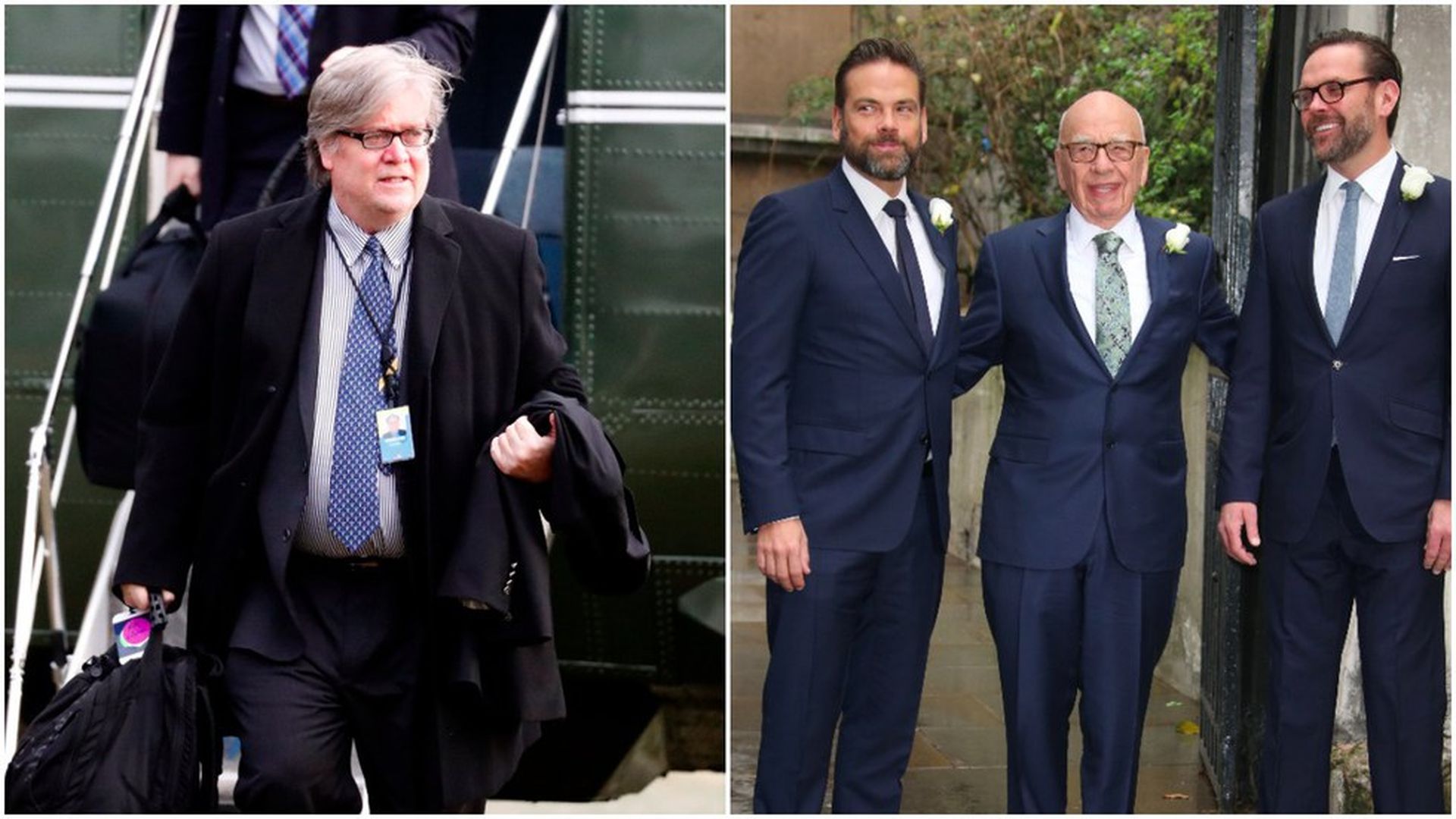
The coming war between Steve Bannon and the "globalists" inside the White House promises to be a public spectacle, and a continuing distraction for the Trump administration. But it's Bannon vs. the Murdoch sons that could really define conservatism — or at least conservative media — far beyond the Trump era.
- We reported this weekend that Bannon, backed by the billionaire Mercers, has dreams of the Fox rival in the video/TV space. It will be unapologetically nationalist, and unapologetically at war with the Republican establishment, globalism and anyone who sides with either.
- Oh, and Bannon has the added incentive of knowing Rupert Murdoch — executive chairman of 21st Century Fox, the parent of Fox News — pushed for his ouster.
- Bannon vs. the sons — Lachlan and James, the next-generation leaders — will be even more intriguing. The sons tell anyone who will listen that they fancy themselves globalists who one day would like to steer Fox away from its hard-right roots and sexist, white-men's-club reputation and reality.

A brick and mortar juggernaut in the Amazon economy

The economic recovery is in its 7th year, and unemployment has sunk to levels rarely seen in a generation. Retail sales are picking up, too, growing at their fastest pace in seven months. But you won't see these trends reflected in the performance of most well-known retailers, as department stores like Macy's close stores, and household names like Sports Authority go bankrupt altogether.
This raises a question: Where exactly are consumers spending their money if not at the shopping mall? One answer is Amazon, but it's not alone in avoiding the retail apocalypse: LVMH, the French conglomerate and owner of brands Louis Vuitton and Sephora, had a 15% rise in first-half 2017 revenue, and that did not come by running fire sales — profit was up 23%. Investors have responded enthusiastically, sending up its share price by 20% this year, outperforming retail and and luxury sector indexes.
How to invest in the singularity
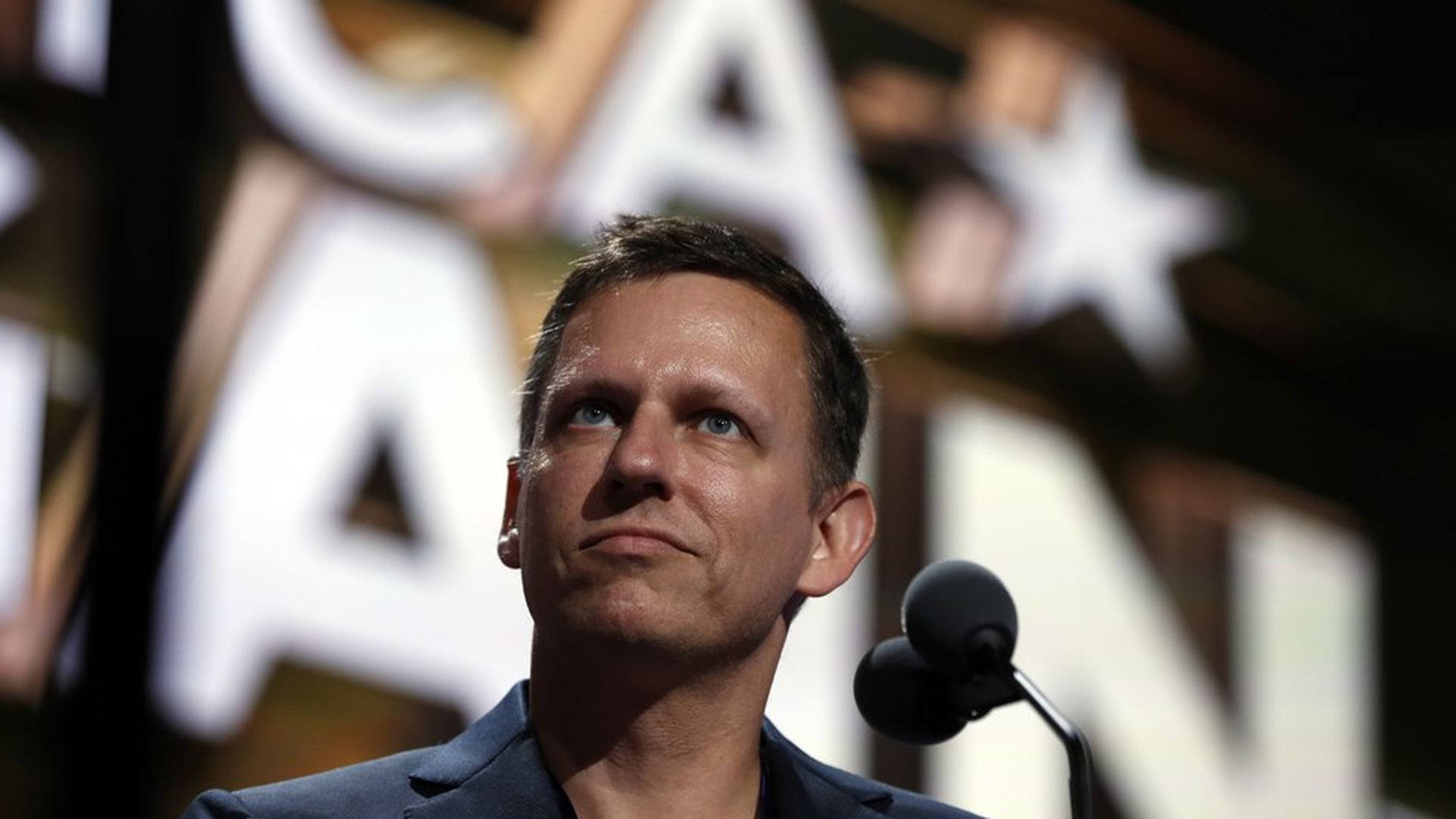
Peter Thiel has made some shrewd bets in his lifetime: a half-million dollar wager as Facebook's first outside investor, earning him roughly $1 billion when he cashed out in 2012; and more recently, his contrarian political bet on Donald Trump.
Need more evidence to recommend Thiel's foresight? Check out this video from the 2007 Singularity Summit (ignore the erroneous year in the video title), in which Thiel suggests how to bet on the singularity, the inflection point when machines achieve super-human intelligence.

The U.S. is risking an academic brain drain

Linsen Li is a Chinese-born, 30-year-old specialist in advanced batteries — a postdoc in MIT's material science and engineering program. He received his Ph.D in chemistry from the University of Wisconsin, in all spending the last seven years in the U.S. His infant son, William, is an American citizen.
But he's reluctantly going home: Li tells Axios that, having received no teaching offers in the U.S., he's accepted a $65,000-a-year teaching slot at Shanghai's Jiao Tong University, along with the equivalent of a fat $900,000 in research funding, in addition to $250,000 to buy a house.

Future of Work
Welcome back. Please invite your friends and colleagues to join the conversation. Let me know what you think about what you are reading here and in the daily stream. Just reply to this email, or drop me an email at [email protected]. Let's start with our changing opinion about big tech.