Data: Oil Price Information Service; Chart: Axios Visuals
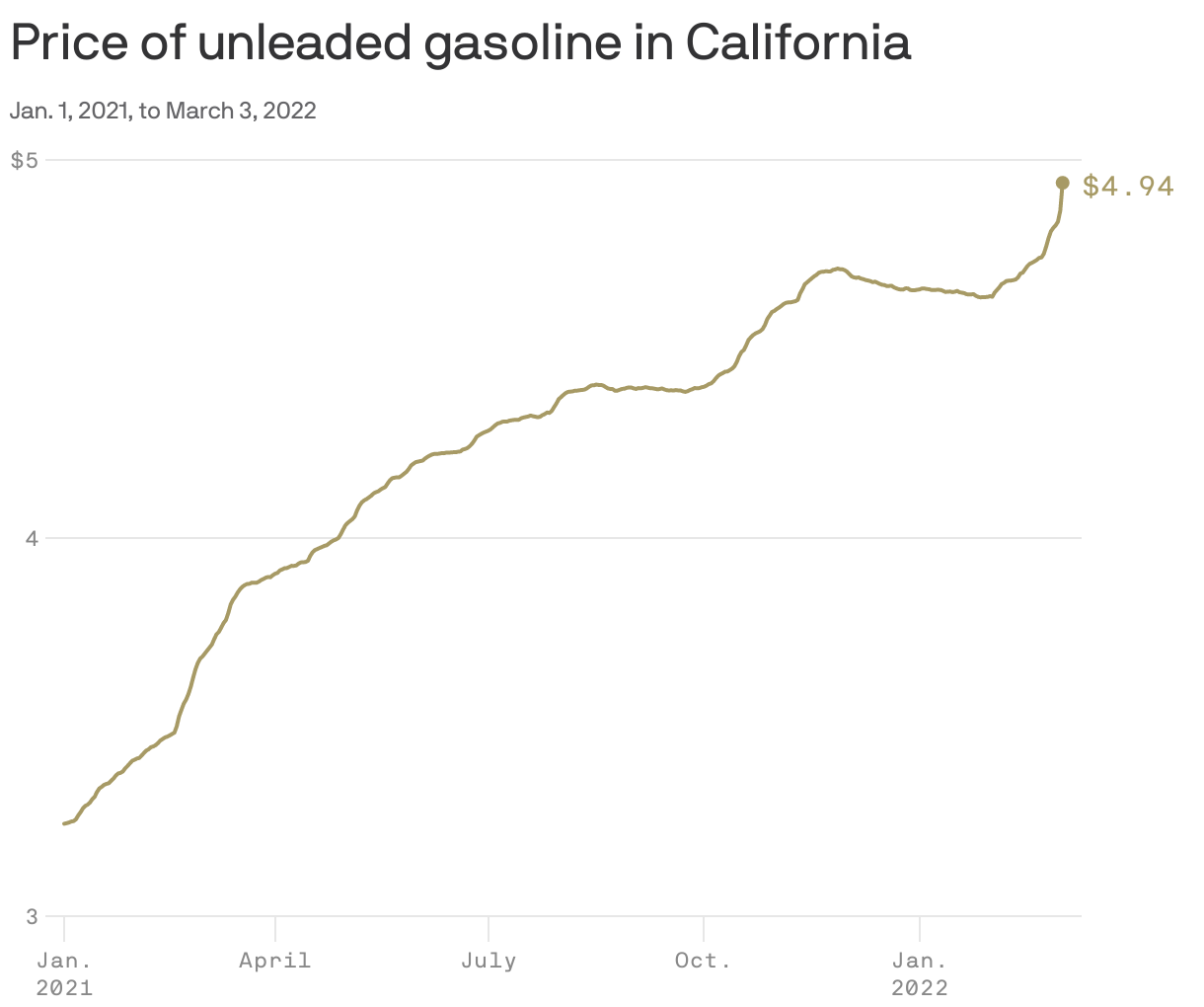
California is on a collision course with $5-per-gallon gasoline.
Driving the news: The average price of unleaded fuel in the Golden State reached $4.94 on Thursday, up 17 cents in the last week and up $1.25 from a year ago.
These days, it feels like we’re holding things together by a thread.
Why it matters: The well-known stresses on supply chains — borne from pandemic-induced labor shortages and a surge in demand for goods — have left no slack in the system. Today, smaller disruptions in remote corners of the supply chain are having outsized ripple effects.
What’s happening: Startup electric vehicle maker Rivian irked reservation holders earlier this week by hiking the price of vehicles they were set to buy — only to reverse course today after an outcry.
Why it matters: Automakers have been quick to embrace reservations, which bring the benefits of deposit cash flows and efficient planning. But inflation could throw a wrench in those plans as production costs balloon unpredictably in the time since customers placed their orders.
Western banks have seriously cut back on their exposure to Russia since the 2014 Crimea invasion. But that doesn't mean they aren't exposed to substantial losses as the nation is cut off from the global financial system.
Why it matters: The Western banking system doesn't look to be as exposed to Russia-related losses as would have been the case a few years ago. That reduces the risk of the war in Ukraine spurring a broader financial crisis.
It can be risky to draw too many historical parallels when analyzing the economy. Whatever the similarities between the current economic moment and any past episode, they're usually dwarfed by the differences.
Driving the news: Still, the surge of commodity prices that has accompanied the Russian invasion of Ukraine makes for a striking parallel between the 2020s and the 1970s.
Money is memory, as the economist Narayana Kocherlakota once wrote. Ultimately, the dollars in a person's wallet, or checking account, are a record of having produced something of value to someone else, an entry in a cosmic ledger.
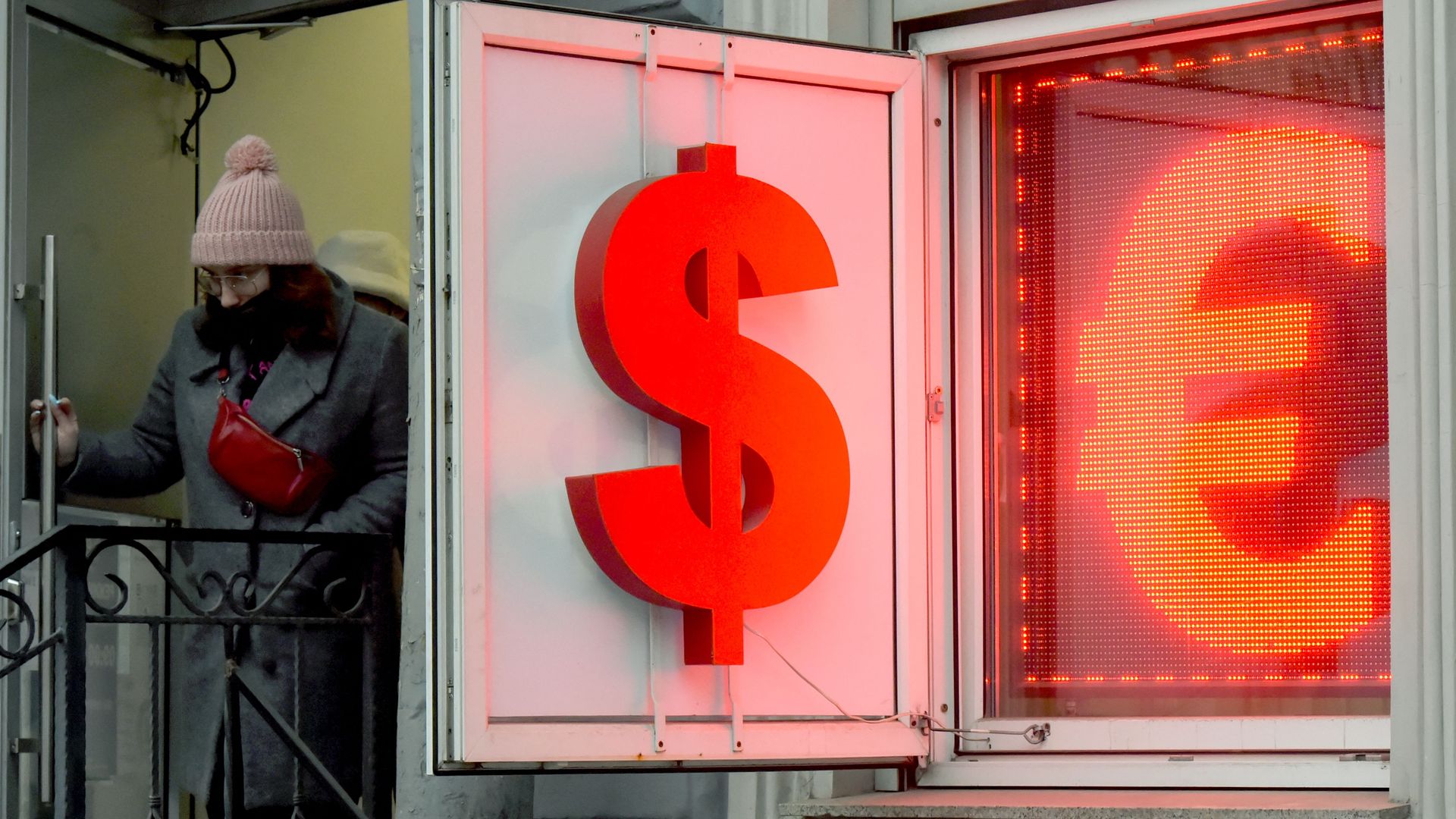
Driving the news: But memories can be forgotten. The Russian government and countless Russian companies and individuals are learning that the hard way.
RT America is ceasing production and laying off most of its staff, according to a memo from a production company behind the network, CNN reports.
Why it matters: Under pressure to respond to Russian state media's role in spreading disinformation about Russia's war with Ukraine, American TV distributors have begun to drop the network.
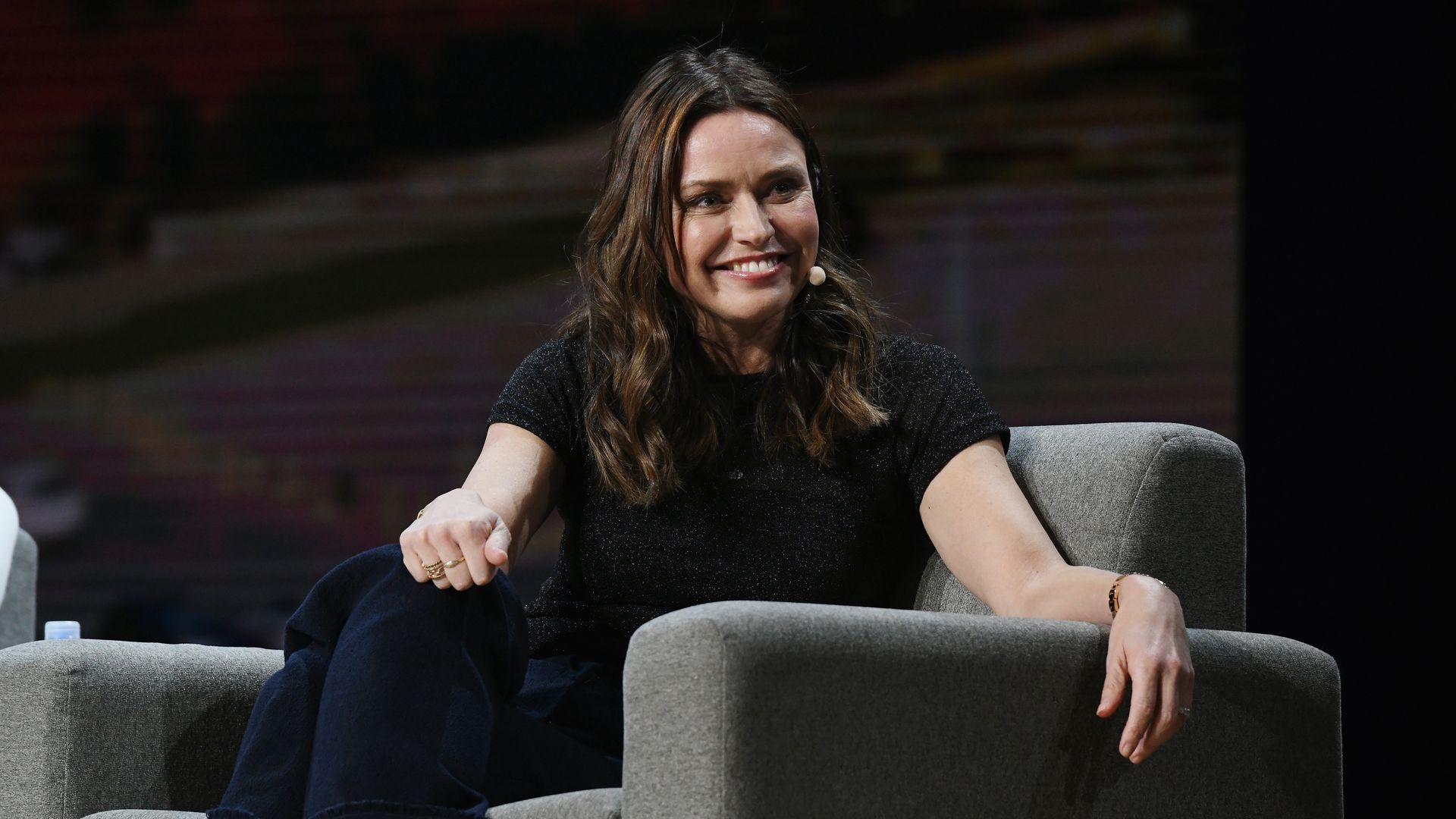
Now is not the time to take a company public, Forerunner Ventures founder Kirsten Green said Thursday during an Axios Pro Insights event.
"I'm not sure I would take a company public if I was one of our portfolio companies right now. I would have said that in January and I'm certainly saying that today. The level of uncertainty just went through the roof."
Vox Media told employees Thursday it plans to lay off 3% of employees following the completion of its merger with Group Nine Media, according to an internal memo obtained by Axios.
Why it matters: Synergies are to be expected following major mergers. Sources tell Axios that some of the positions affected were duplicative roles that needed to be eliminated at the senior level.
As part of its open-ended strike that began March 1, the roughly 100 GMG Union members at G/O Media have begun asking people to send a letter of support to Great Hill Partners, the digital media company's private equity owners.
Why it matters: Private equity ownership has caused employee frustration across media, as workers allege the firms are not investing in either journalism or in staffers' well-being.
SEC chair Gary Gensler has a new target: ESG-focused funds.
Wait, what? No, Gensler doesn't oppose funds whose strategies include a focus on environmental, social and governance issues. But he does want ways to measure and verify that funds are using ESG as more than a buzzword to attract investment.
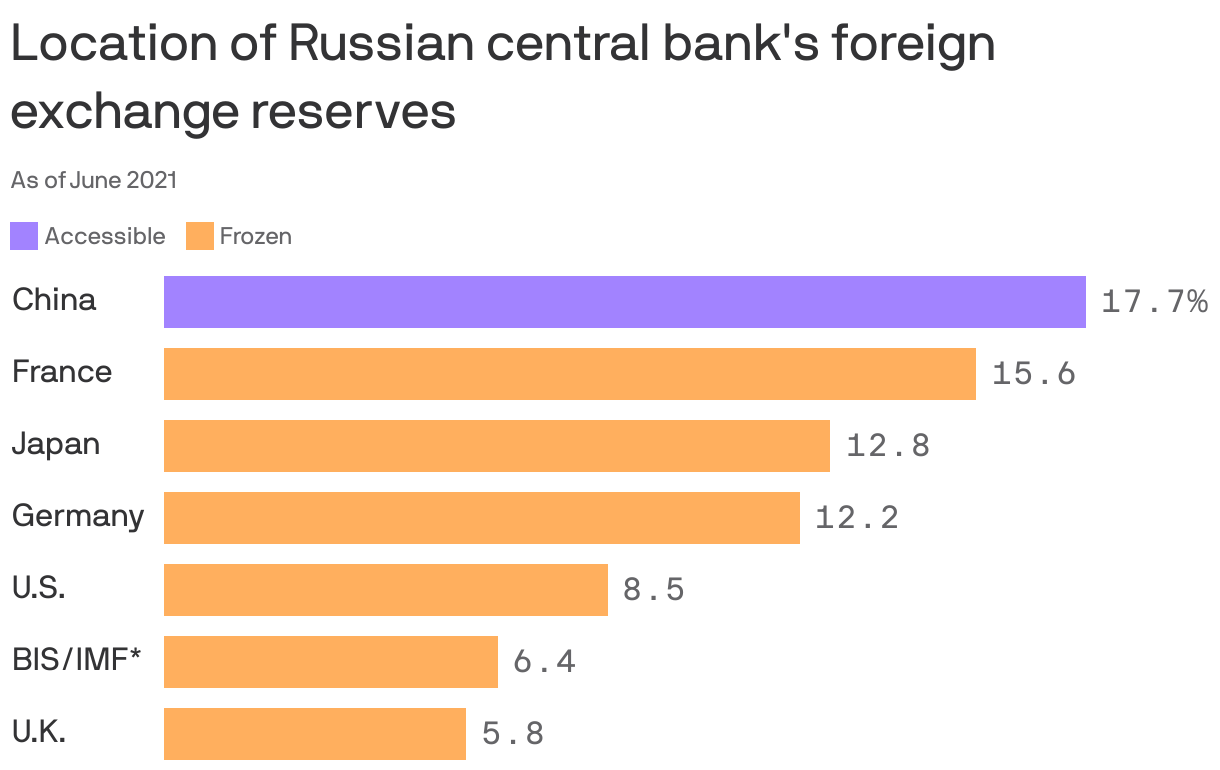
Re-created from the Atlantic Council's GeoEconomics Center; Chart: Axios Visuals; Does not include gold held domestically. *This value also encompasses smaller financial institutions. The status of these reserves is unclear.
Russia spent seven years building a financial “fortress” that could help it withstand the impact of sanctions imposed by the West — and the keystone was $630 billion in central bank foreign exchange reserves.
Driving the news: Presumably, Russia didn’t expect the G7 nations to go so far as to freeze those reserves, which they did this week — a move nearly unprecedented in scope.
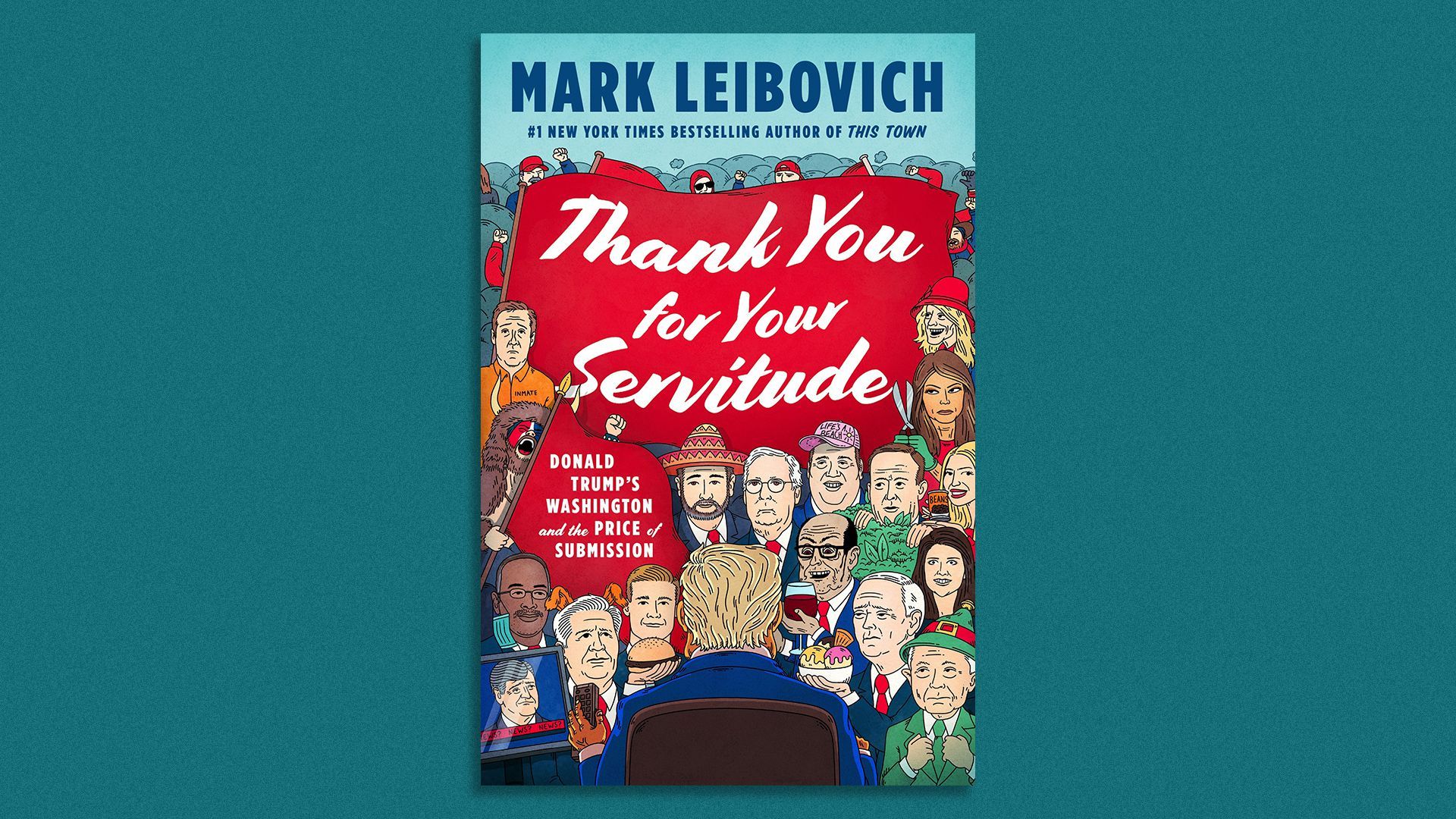
Mark Leibovich — author of the bestselling "This Town," about Beltway rituals — will be out July 12 with a new vivisection, "Thank You for Your Servitude: Donald Trump's Washington and the Price of Submission."
Why it matters: Leibovich told me this is about people who allowed Trump to happen — "Republican collaborators who helped and enabled and rehabilitated him despite profound misgivings about his character and where he was leading their party, their country and themselves."
A golf course is so yesterday: The thing to have if you're building a new luxury real estate development is a pickleball court, Architectural Digest reports.
Why it matters: When prominent architects and high-end developers sink their teeth into a consumer lifestyle trend, it's likely to stick around and attract big dollars.
A team of former Space-X engineers and boating enthusiasts is aiming to transform recreational boating with a new speedboat that zips across the water on electricity instead of gas or diesel fuel.
Why it matters: Like automobiles, motorcycles and small airplanes, boats are beginning to go electric, which could make lakes and rivers more serene — and less polluted.
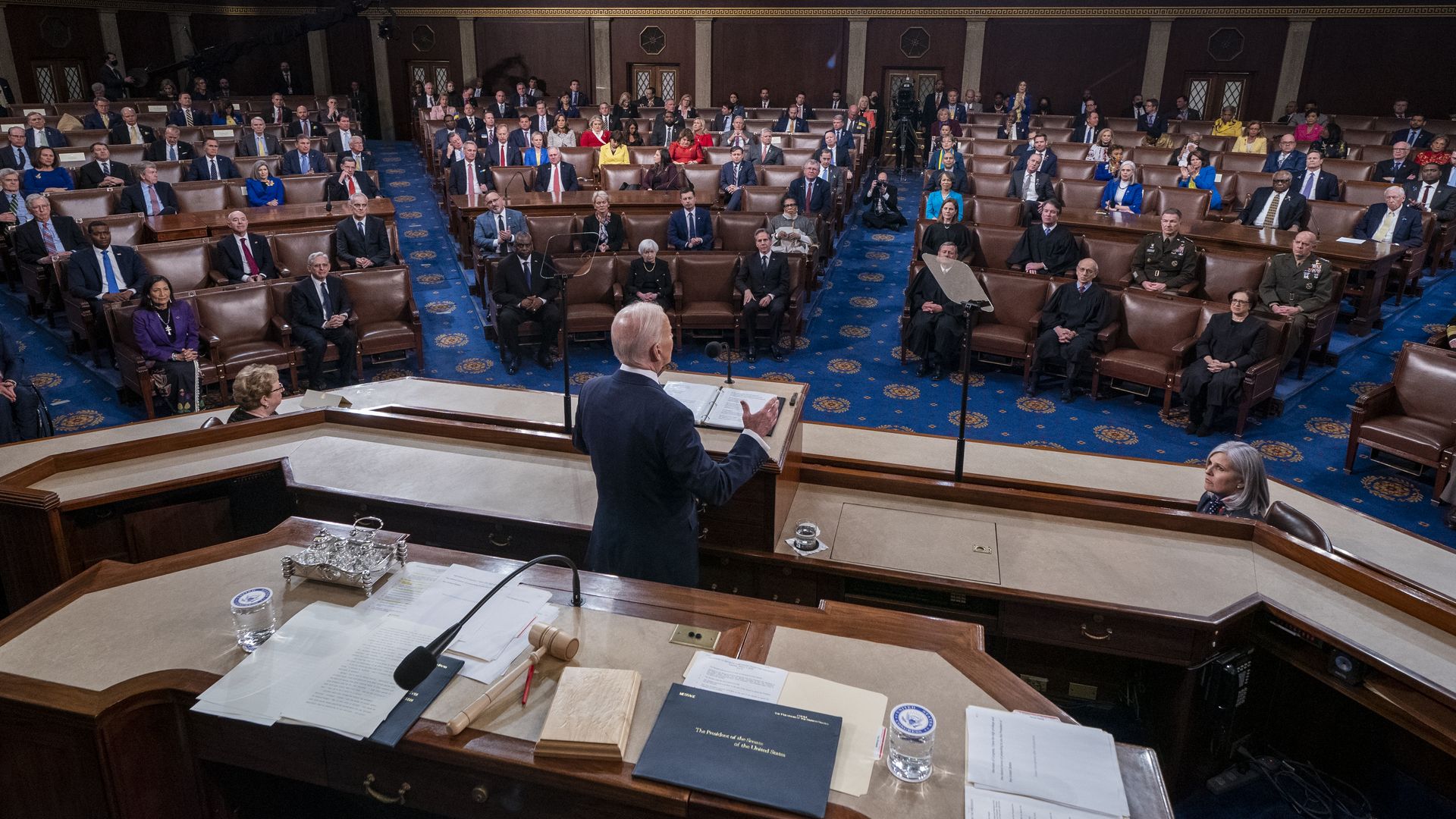
An estimated 38.2 million people watched President Biden's first State of the Union address on television Tuesday evening, according to Nielsen, up 42% from his speech to a joint session of Congress last April.
Why it matters: His speech was highly anticipated, given the crisis surrounding Russia's war in Ukraine. Biden announced new measures to sanction Russia during the address, including banning Russian planes from flying in U.S. airspace.