“Future expectations” used to be a tough economic concept for students to grok, said Morgan Taylor, an economics professor at University of Georgia in Athens. It was hard to grasp a situation in which, say, you would expect a shortage of something, and that would change your demand for a good.
Then came the great toilet paper rush of 2020. We all hoarded TP, expecting supply to run out. These days, students get the idea pretty easily.
To get inflation under control, auto assembly lines have to run full-throttle. And despite some positive data points, things still seem to be sputtering.
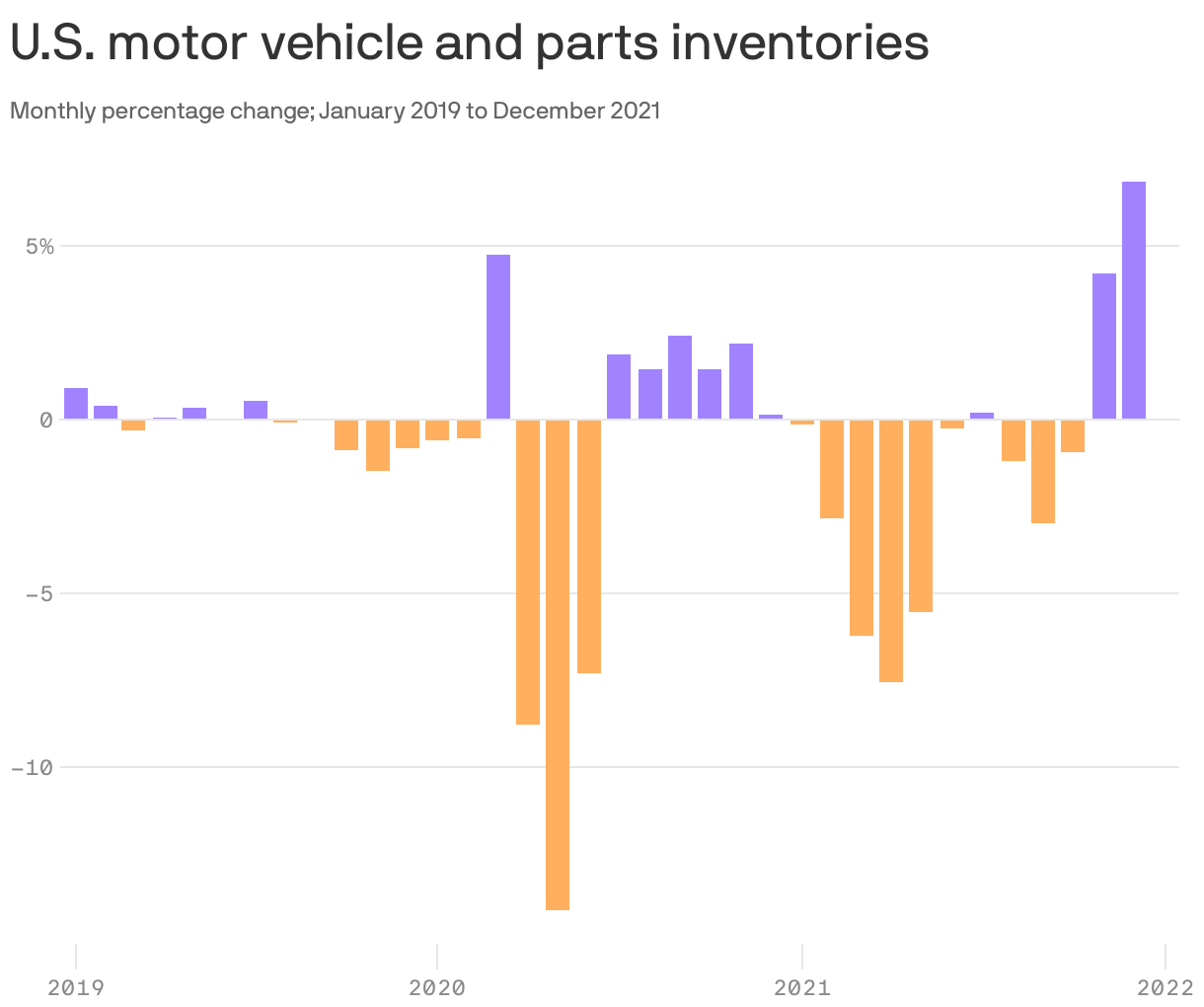
Driving the news: On the plus side, inventories of cars and parts surged 6.9% in December — the biggest jump on record — following a couple of months of revving car production, the Census Bureau reported Wednesday.
For decades,politicians have talked about the U.S. achieving energy independence, a seemingly elusive goal of producing enough fuels to avoid relying on the rest of the world to fill up gas tanks and keep electricity flowing.
The intrigue: It's elusive no more. The U.S. produced more petroleum than it consumed in 2020, and the numbers were essentially in balance in 2021, according to the Energy Information Administration.
On the rare occasion they’re greenlit, TV shows by and about Latinos have an unusually short lifespan.
The big picture: Latinos are avid TV, streaming and film consumers but are rarely featured on screen or behind the scenes. Over the last couple of years, Latino-led shows that garnered rave reviews and had loyal followings have been canceled quickly, leaving fans and advocates for Latino representation discouraged.
There's a gender gap in the Great Resignation, with women quitting their jobs at higher rates than men.
Between the lines: That gender gap is widest in the states with the most child care disruptions, according to a new report from the payroll company Gusto.
Mattel’s future relies increasingly on a strategy that looks like Disney’s playbook — in reverse.
Driving the news: The toymaker presented its new growth strategy today and it involves taking its brands like Barbie, Fisher-Price and American Girl and turning them into an "IP-driven" engine for the company.
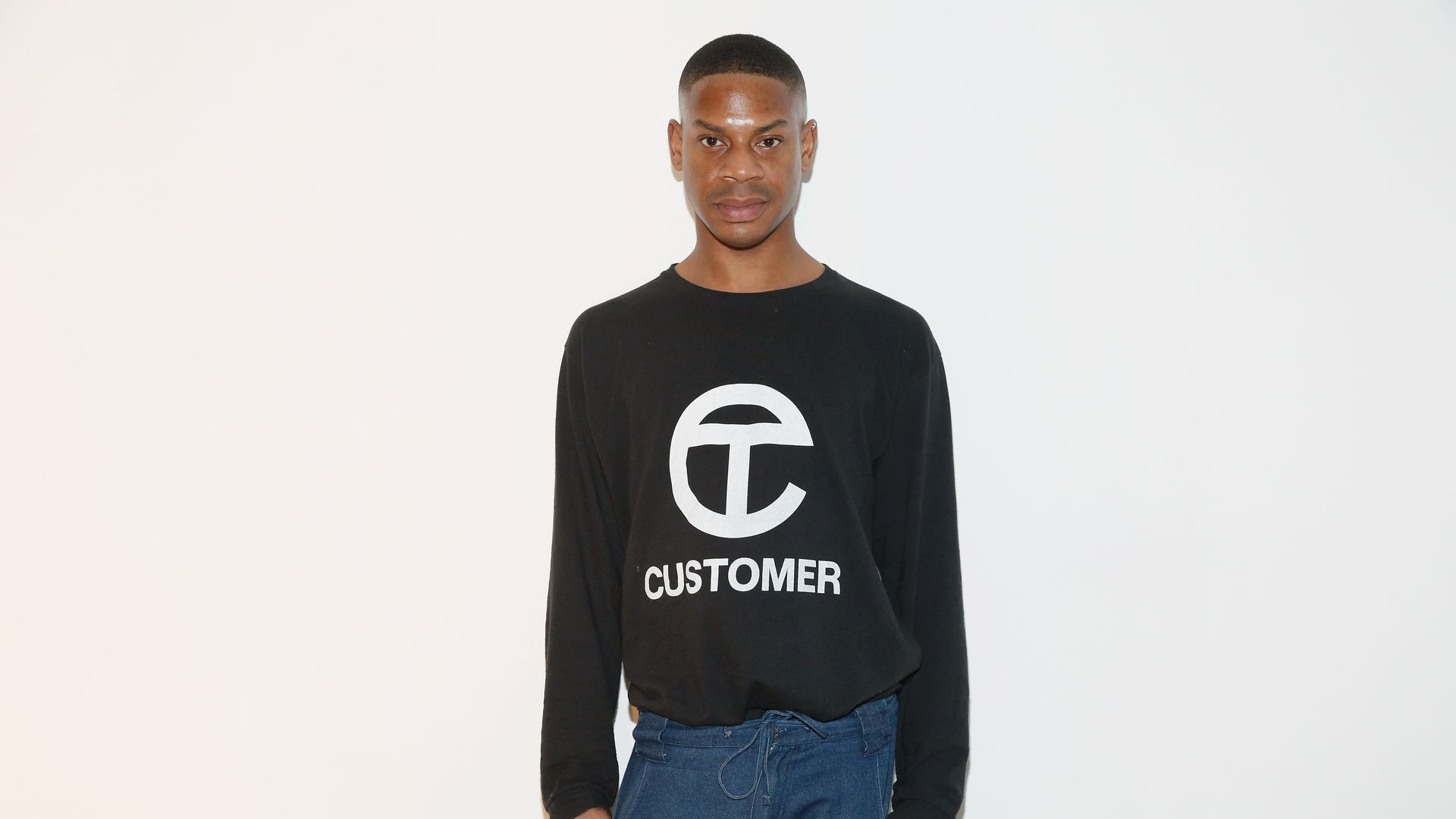
Telfar Clemens, the designer behind "the Bushwick Birkin" closed out this season's New York Fashion Week.
Why it matters: The show itself — ambitious and the opposite of subdued — and its timing are harbingers of change, writes Vanessa Friedman, chief fashion critic at the New York Times.
Investors seem to be asking for the over/under on when an online sportsbook can start making money. DraftKings today reported fourth quarter results and laid out a long-term vision for profitability, but investors balked — sending shares down more than 21%.
Why it matters: Online sports betting is a huge and growing market, but competition is fierce. And every time new revenue opportunities open up — like additional states legalizing sports gambling — companies are prepared to spend big for new customers, in the form of advertising and promotions.
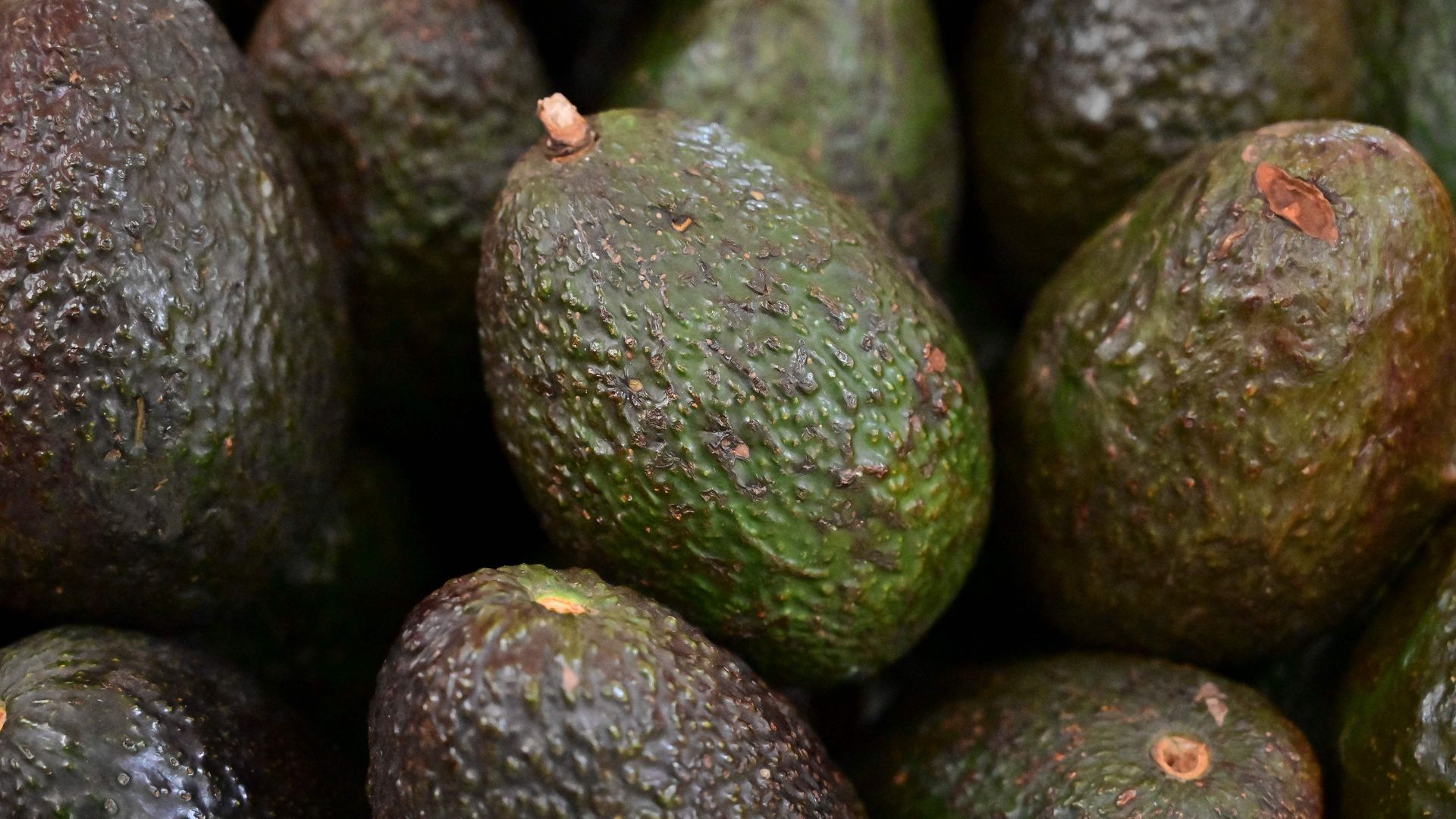
Why it matters: Drug cartels regularly extort avocado growers in the state ofMichoacan, where the inspection and threat occurred, though almost 80% of the avocados grown there went to U.S. markets in 2020 and 2021.
The Federal Reserve has published new rules that prohibit its senior leaders from trading securities that might be affected by the central bank's actions.
Driving the news: After a scandal involving Fed officials trading during the early days of the pandemic that led to three top leaders resigning, the central bank has codified new limits.
Celanese (NYSE: CE) agreed to buy most of DuPont's (NYSE: DD) mobility and materials business for $11 billion in cash, reportedly beating out private equity firms like Apollo Global Management and Carlyle.
Why it matters: This is the chemical industry's largest merger in two years, and the richest ever for Irving, Texas-based Celanese.
The existential question of crypto "utility" continues to roil the tech community, pitting some Web 2.0 icons against their web3 cousins. Enter into the buzz a recent New York Times feature about Helium, a crypto company whose business is centered on a real-world, non-financial application.
Driving the news: Helium recently raised $200 million in Series D funding at a $1.2 billion valuation, Axios has learned.
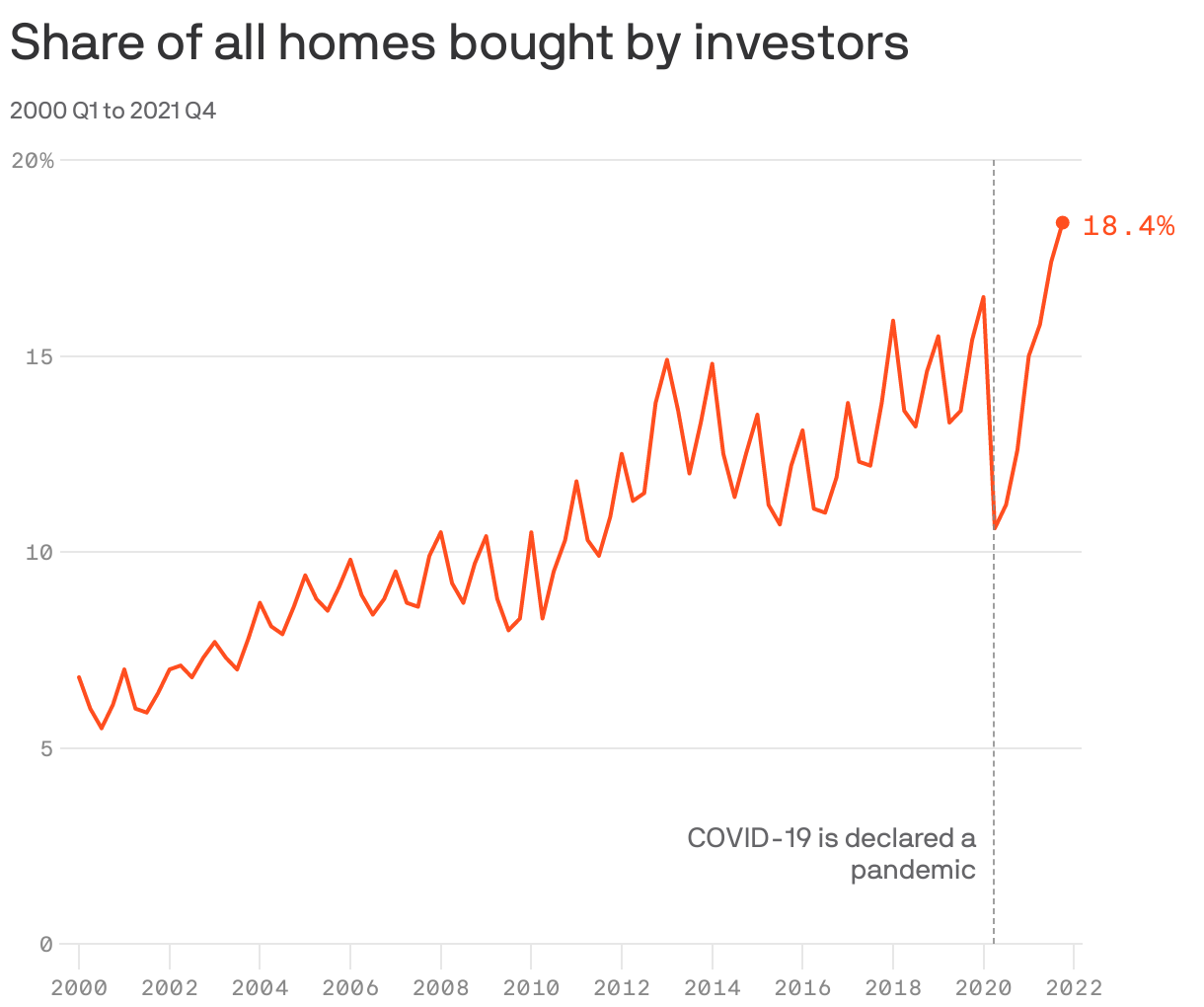
Investors are draining an increasingly large share of American homes from the market, leaving traditional homebuyers with fewer options, at higher prices.
Why it matters: Homeownership is the single most important way Americans build wealth. Families are now increasingly facing off with cash-rich institutional investors bidding for houses, as they try to climb onto the property ladder.
You don't see this every day: A SPAC buyer just revised a deal with its target company, doubling the latter's valuation.
Driving the news: Stablecoin issuer Circle inked a new merger agreement with Concord Acquisition Corp., the SPAC it agreed to combine with last July. The new deal values Circle at $9 billion — compared to $4.5 billion under the original terms.
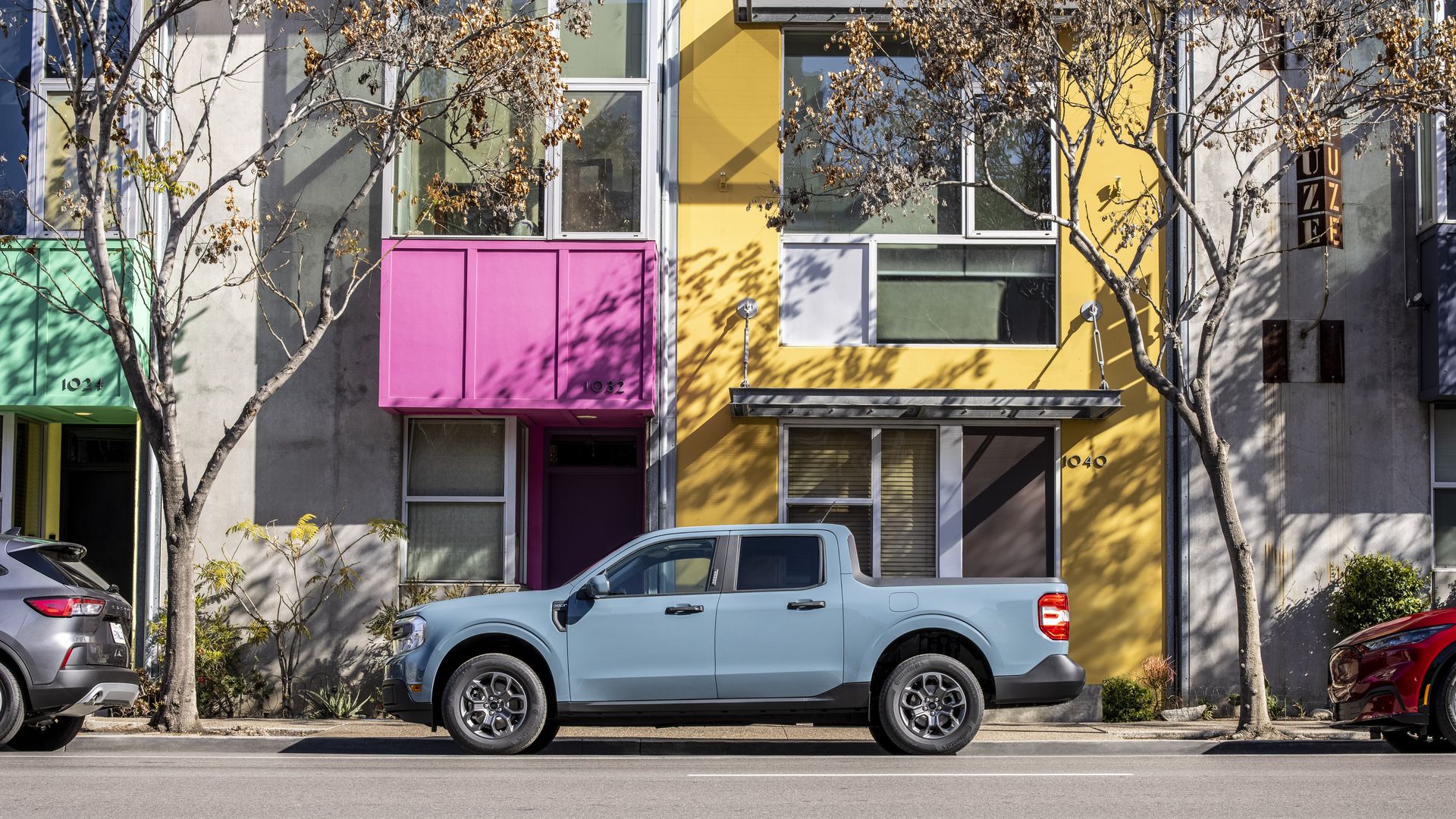
It's rare that a vehicle can satisfy so many people with such diverse needs, but the 2022 Ford Maverick scores big on multiple levels.
Finally, a pickup truck that people can afford — and that's not impossible to park.
And it's a hybrid, which means it gets great gas mileage — up to 42 mpg in city driving.
With a starting price under $20,000, it's also a surprising entry-level model for a brand that no longer sells small cars.
Why it matters: Today's trucks have gotten bigger and more expensive over the years, pricing many would-be buyers out of the market.
The average transaction price of a mid-sized pickup is $39,669, according to Kelly Blue Book, while a loaded Ford F-150 or Chevrolet Silverado can easily top $80,000.
The Maverick, on the other hand, is within reach for many, provided you don't insist on a lot of fancy features.
It comes in three trim levels: XL ($19,995), XLT ($22,360) and Lariat ($25,860).
On the base model, you'll have to adjust the mirror and cloth seats manually, and there's no cruise control or blind-spot monitoring.
Trade up and you get a nicer interior, with vinyl seats (no leather), a push-button start and modern safety features.
Infotainment is optional on a small 8-inch screen, but at least Apple Carplay and Android Auto are standard.
The Maverick's design is so clever, however, you probably won't miss those niceties.
A series of notches in the truck bed enable do-it-yourself improvements like bike racks and dividers.
Ford is even offering instructions for DIYers to 3D-print their own accessories.
It can't match the towing or cargo-hauling capabilities of the F-150, but as the Detroit Free Press noted, the Maverick "looks and feels like a well-made tool."
The bottom line: There's no other vehicle on the market that offers the value of the Ford Maverick.
As electric vehicles grow in popularity, there's a related challenge on the horizon: how to dispose of worn-out EV batteries.
Why it matters: If the U.S. can salvage those end-of-life battery packs, it could reuse the critical minerals inside to make new batteries, creating a sustainable domestic supply chain.
AMN Healthcare, one of the largest health care staffing firms, reported record travel nurse revenue and profits last year, especially in the fourth quarter.
Why it matters: The Omicron variant of the coronavirus battered hospital staffs, especially among nurses, and pushed hospitals to pay up for whatever help they could get — and those same forces benefited companies who place traveling nurses.