Disney shares were up nearly 5% in after-hours trading Monday after the entertainment giant announced it would be shifting its entertainment strategy to have streaming be its "primary focus."
Why it matters: The company is facing investor pressure to invest more in streaming, its strongest-performing sector. Its other business lines, like movies, parks and cable, are being heavily impacted by the pandemic.
SoftBank is planning to launch a blank check acquisition company in the upcoming weeks, according to comments made today at the Milken Virtual Conference by senior SoftBank executive Rajeev Misra.
Details: Axios has learned that Goldman Sachs and Citigroup would manage the IPO process, and that the intention is not to acquire an existing SoftBank portfolio company and bring it public.
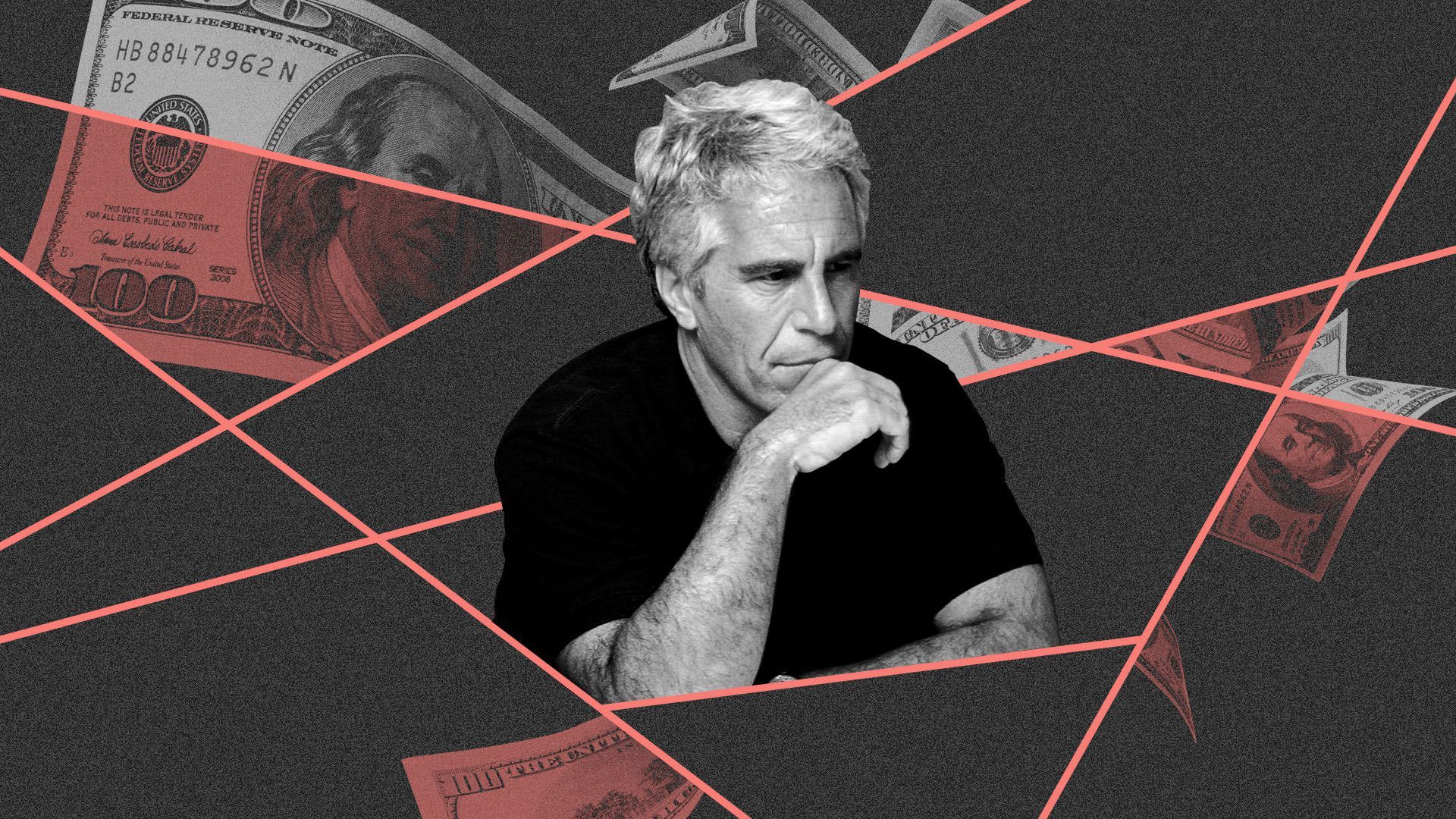
Jeffrey Epstein died more than a year ago, but the investigation into how he made his money is heating up. The latest is a New York Times report that private equity titan Leon Black might have paid Epstein to up $75 million over the years, which is much more than was previously disclosed.
Axios Re:Cap goes deeper with Matthew Goldstein, a New York Times business reporter who co-authored today's story.
Wall Street billionaire Leon Black expressed remorse for his personal business and philanthropic relationship with Jeffrey Epstein on Monday in a letter sent to investors and obtained by Axios.
Driving the news: Black's letter follows a bombshell New York Times report that revealed that ties between Black, co-founder and CEO of Apollo Global Management, and Epstein were deeper than previously disclosed, including upward of $75 million changing hands.
Facebook CEO Mark Zuckerberg announced Monday that the tech giant would be expanding its hate speech policies to ban any content that "denies or distorts the Holocaust."
Why it matters: Zuckerberg was caught flat-footed in a 2018 interview with Kara Swisher, then host of the Recode Decode podcast, when he said that he didn't believe Facebook should take down Holocaust denial content because "I think there are things that different people get wrong," even if unintentionally.
Oil prices can't seem to reach escape velocity, spelling more pain for producers as the COVID-19 pandemic continues to weigh on demand.
Why it matters: The chart above provides a glimpse at why prices remain too low to pull the U.S. sector — which is seeing rising bankruptcies — out of jeopardy.
Twilio (NYSE: TWLO) agreed to buy Segment, a San Francisco-based cloud customer data infrastructure company, for around $3.2 billion in stock.
Why it matters: The tie-up reflects how cloud company values have soared in the pandemic, with Twilio's market cap rising from $15 billion in mid-March to over $45 billion at Friday's market close.
The latest reportfrom the Association of American Railroads showed the slow recovery in rail shipping in September.
What's happening: While the report notes that rail volume overall continues to be down from 2019, one bright spot is intermodal shipping, or the transport of finished products and raw materials.
The New York Fed's index of real-time data indicators perked up again last week after moving lower the previous week. The Weekly Economic Index has been choppy since July showing that U.S. growth continues to recover but is sputtering.
Markets got a shot in the arm from fiscal stimulus expectations last week, but it's not negotiations between House Speaker Nancy Pelosi and the Trump administration that's got investors' attention — it's the largesse of spending expected from Pelosi, President Joe Biden and a Democratic Senate in 2021.
What's happening: Trump's polling numbers have fallen through the floor since the first presidential debate on Sept. 29.
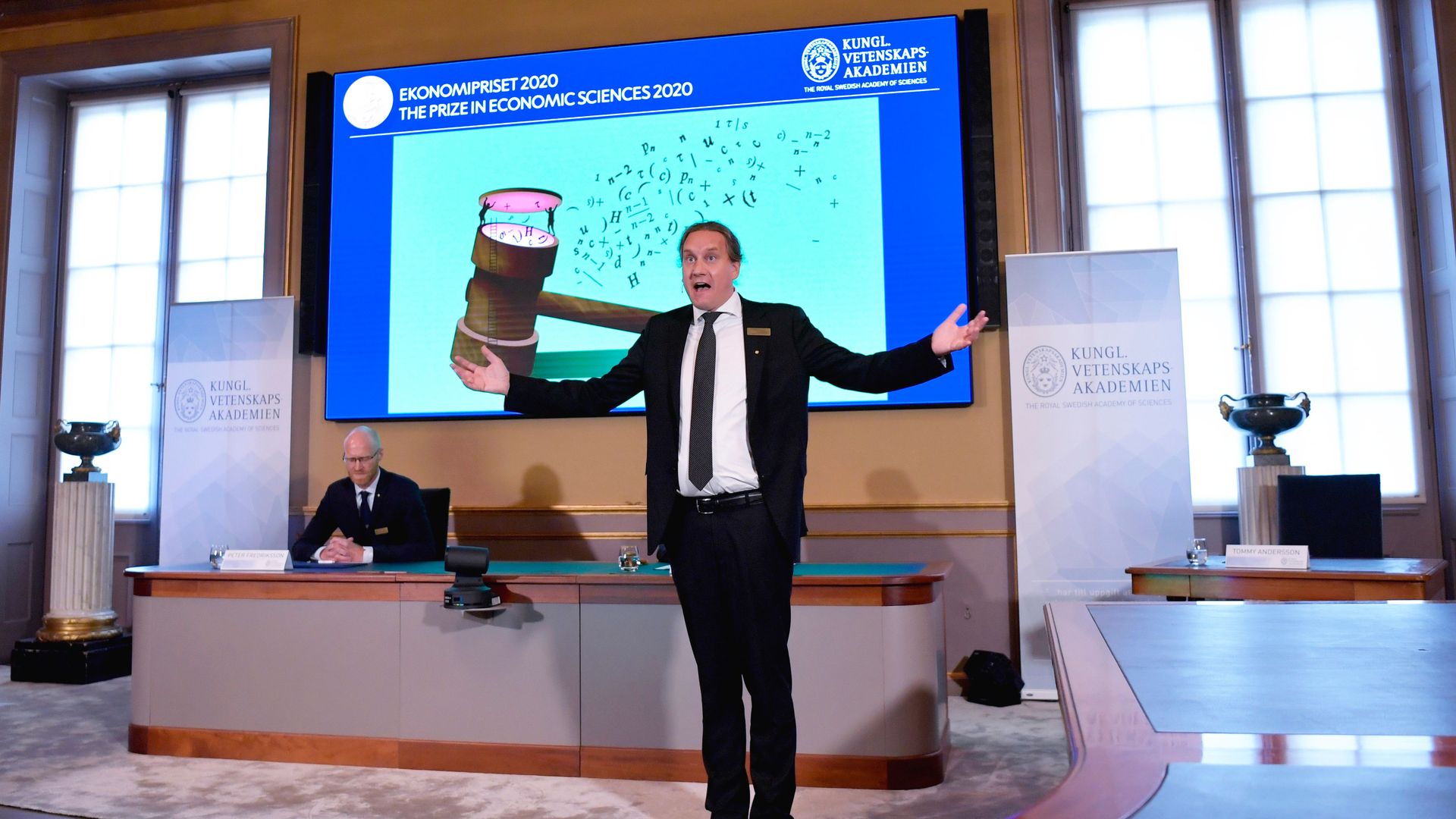
Two Stanford professors, Paul Milgrom and Robert Wilson, on Monday won the Nobel Prize in economics for "improvements to auction theory and inventions of new auction formats."
Why it matters: New auction formats have been used for radio spectrum, fishing quotas, aircraft landing slots and emissions allowances, Reuters reports.
Major League Baseball clubs try not to tip their financials, thus giving them better leverage when negotiating new players contracts or new stadium deals. But that might be about to change.
Driving the news: Fenway Sports Group, whose assets include The Boston Red Sox and Liverpool F.C., is in advanced talks to sell a minority stake to Redball Acquisition, a blank check company formed earlier this year by Moneyball maven Billy Beane and private equity investor Gerry Cardinale.
The weather is getting colder and the days are getting shorter — accelerating the economic and psychological damage of the coronavirus pandemic.
The big picture: During the summer, businesses took advantage of outdoor dining, exercise and shopping, and families and friends safely gathered outside and at a distance. As the season changes, much of what made the last several months bearable will vanish.