Roadie, an Atlanta-based company that got its start using gig drivers to deliver lost baggage for Delta Air Lines, now figures to play a big role in delivering holiday purchases this year.
Why it matters: Demand for same-day shipping exploded during the pandemic, and is likely to increase even more during the holidays. Traditional parcel carriers have strained to keep up, often slapping surcharges on deliveries, leaving a lane for Roadie to help manage peak demand.
After years of unmet promises, hydrogen vehicles could finally be catching on. If so, it'll be a convoy of clean semi-trucks — not a bunch of quirky passenger cars — leading the way.
The big picture: We've been hearing about zero-emission, fuel-cell vehicles for decades as the answer to our worries about fossil fuels and climate change. But even now, the economic and practical challenges are still too difficult to overcome — except, perhaps, for commercial truck fleets.
After two years of tightly controlled operation in Chandler, Ariz., Waymo is opening up its driverless taxi service to the public.
Why it matters: This is a big deal — a real driverless taxi service, with no one in the driver's seat — that is open to anyone who downloads the Waymo One app.
Twitter said Friday it would be making a slew of significant new product and enforcement changes to help clamp down on misinformation leading up to the election.
Why it matters: It's the most aggressive set of changes that Twitter has rolled out to date to curb election-related misinformation on its platform.
AMD is in advanced talks to acquire rival chip company Xilinx in a deal that would value the latter at more than $30 billion, according to the Wall Street Journal.
Why it's the BFD: This is the latest in a string of notable semiconductor deals, including Nvidia's recent agreement to acquire ARM from SoftBank for $40 billion.
Flashy startup acquisitions with big price tags get all the media attention — as do their investors if they’re getting hefty returns from their venture capital gambles.
Yes, but: There’s a quiet world of tiny acquisitions for equally small businesses that rarely show up on the media radars, as entrepreneur and investor Andrew Gazdecki has witnessed with his marketplace MicroAcquire.
Amazon has taken the wraps off the first electric delivery van developed with the Rivian, the EV startup slated to begin mass producing vehicles for the e-commerce giant.
Why it matters: It shows that Amazon is moving to turn its pledge to be carbon neutral by 2040 into concrete steps and technology deployment.
The huge multinational oil-and-gas company Total SE is investing in the hydrogen fuel cell truck and bus startup Hyzon Motors, the companies announced this morning.
Why it matters: It's the latest sign of increasing interest in hydrogen-powered heavy vehicles amid moves by startups and legacy automakers alike. It also shows how European-headquartered oil giants are boosting their alternative energy portfolios, even though hydrocarbons remain their dominant business lines.
The government has a newfound interest in looking into discrimination in the tech industry, which is overwhelmingly male and has a big problem with underrepresentation of Black and Latinx employees.
The Trump administration, far from seeking greater diversity, is asking whether corporate goals to boost Black representation are a form of discrimination.
Why it matters: Experts say concrete goals are needed to ensure aspirations turn into results.
More than 25.5 million people were collecting unemployment benefits as of mid-September, and nearly 1.3 million people filed first-time jobless claims last week — more than 800,000 for traditional unemployment and 464,000 for the Pandemic Unemployment Assistance program.
The state of play: That number excluded any new claims from the largest state in the country, California, which paused its program to implement fraud prevention technology and comb through a backlog of claims that had reached nearly 600,000 and was growing by 10,000 a day.
Bond yields are rising in the U.S. but falling in Europe as investors are betting on a new round of central bank policy divergence.
What's happening: Benchmark U.S. 10-year Treasury yields are holding near their highest since early June. Yields jumped after minutes from the Fed’s September policy meeting did not mention plans to shift quantitative easing bond purchases toward longer-dated maturities, which many investors had been pricing in for months.
The number of business bankruptcies and insolvencies in most countries has declined this year through the coronavirus pandemic as the world is seeing far fewer bankruptcies than it did in 2019.
Yes, but: That is largely thanks to assistance from central banks and government measures restricting things like foreclosures.
A quarter of Americans say they know someone who has gone into work while feeling unwell, according to a survey provided exclusively to Axios by the Paid Leave for All campaign.
Why it matters: We will not be able to get the pandemic under control unless people can stay home when they're sick. Clearly, many Americans are not able to do that — especially people of color — without risking their job or their paycheck.
President Trump will be interviewed on camera during Friday's episode of Fox News' "Tucker Carlson Tonight" by Dr. Marc Siegel, the network announced.
Why it matters: It will be the president's first on-camera sit-down since being diagnosed with coronavirus last week. He called into Maria Bartiromo's Fox Business show and Sean Hannity's Fox News show on Thursday.
One group of Americans needs a fresh stimulus package more than any other: The 2.4 million Americans — and rising — who have been unemployed for more than six months.
Why it matters: While the economic recession looks like it ended in April, rising long-term unemployment acts as a drag on the broader economy. Without new stimulus, the number of jobless could end up being almost as bad as the Great Recession of 2008-9.
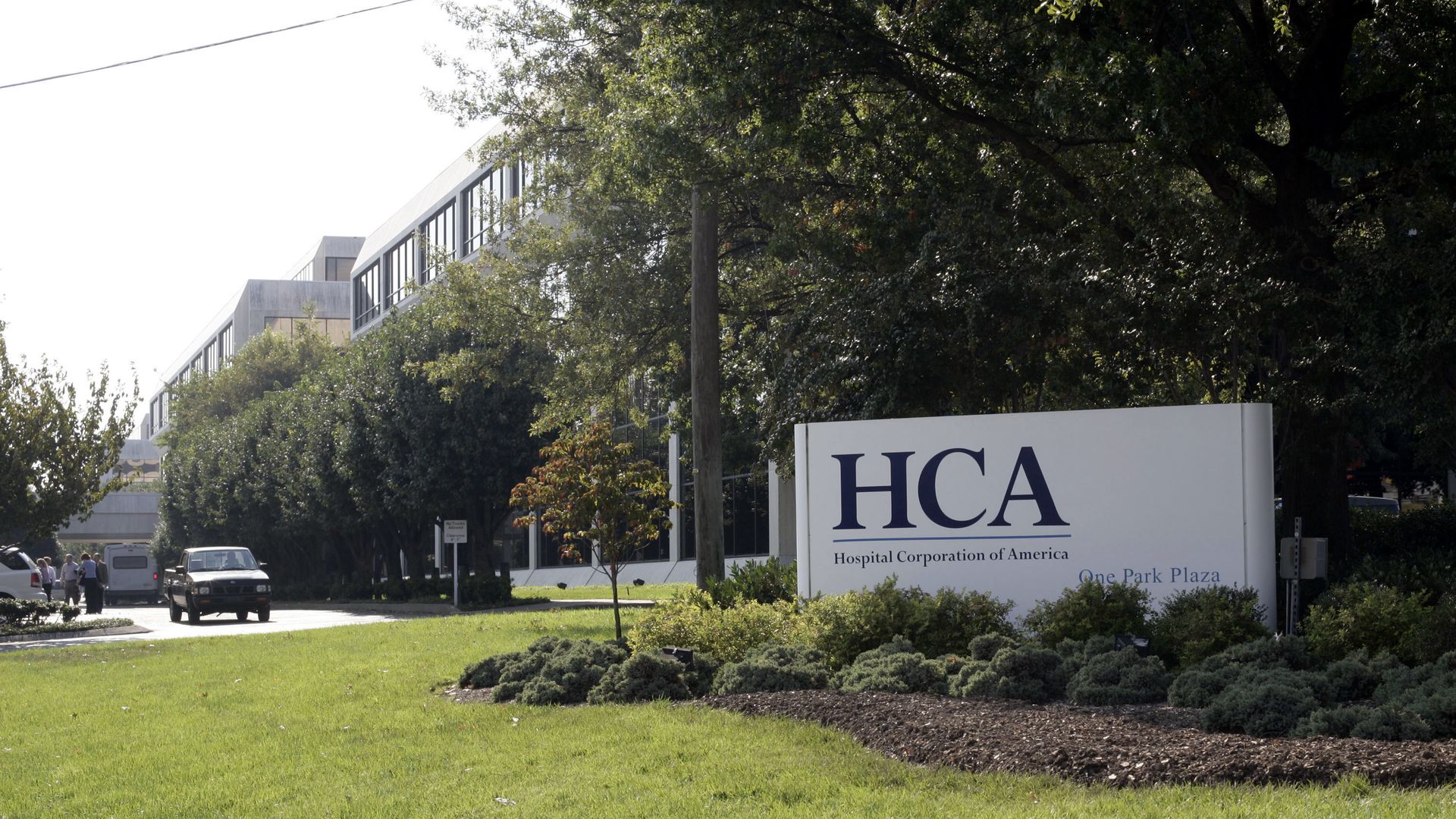
HCA Healthcare is giving back $1.6 billion of federal bailout payments and paying back $4.4 billion in Medicare loans early. The money was intended to help hospitals weather the pandemic as patients delayed elective care.
Why it matters: Over the summer, the hospital industry said the pandemic was resulting in "the greatest financial crisis we have ever faced in our history." But HCA expects to report higher revenue and adjusted profits in the third quarter.















/2020/10/09/1602244964081.gif?w=3840)