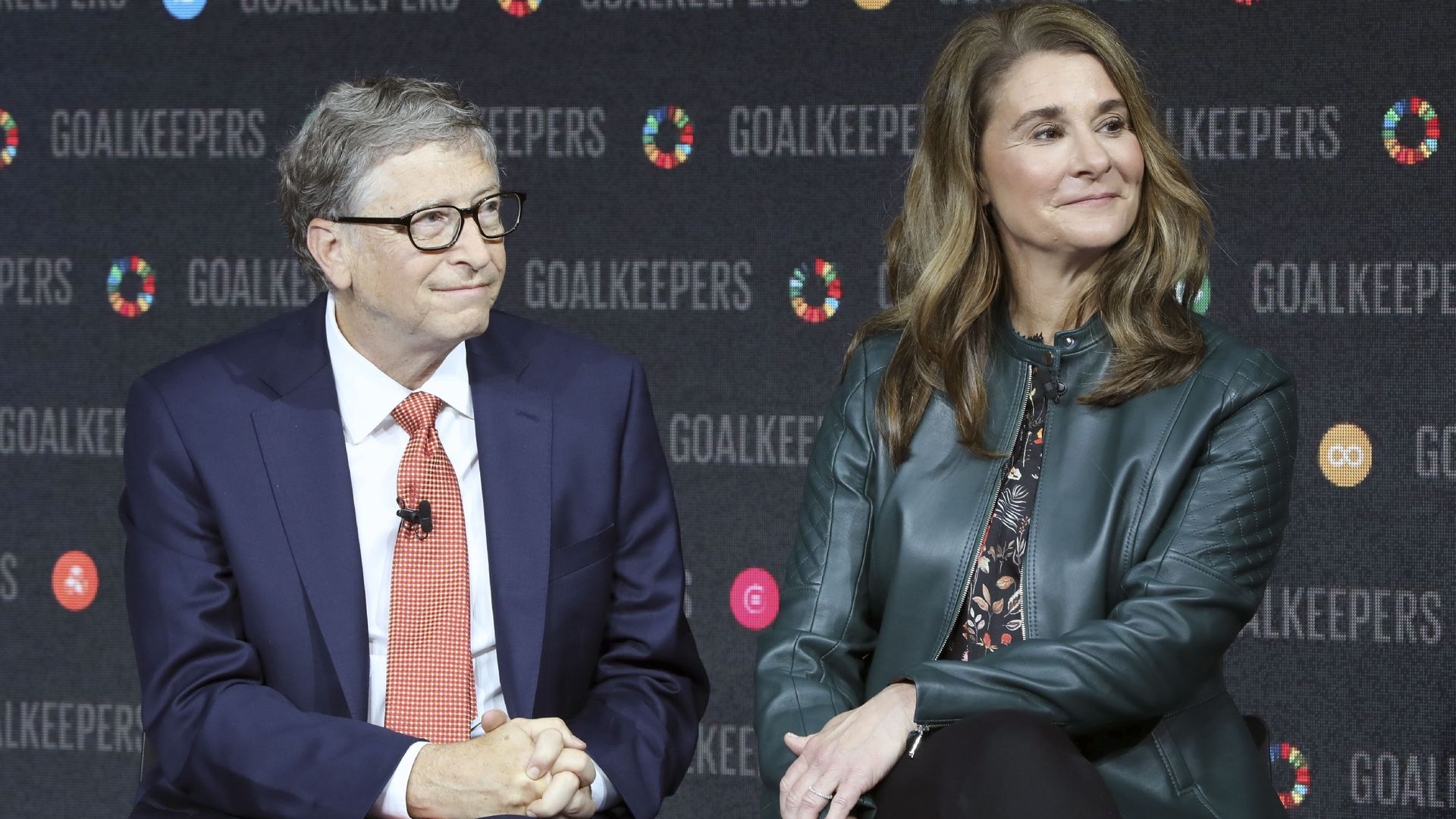
The Bill and Melinda Gates Foundation is putting $150 million into an effort to distribute coronavirus vaccines to low-income countries in 2021, global vaccination alliance Gavi announced on Friday.
Why it matters: Poorer countries have been most affected by the pandemic's disruption for noncommunicable diseases, the World Health Organization reports. Even in wealthy countries like the U.S., low-income people are among the most likely to become seriously ill if infected with the virus, along with minority populations.
General Motors is trying to revive an incendiary lawsuit against Fiat Chrysler Automobiles with explosive new allegations including bribes paid from secret offshore bank accounts and a union official acting as a double agent between the two automotive giants.
Why it matters: The extraordinary legal battle is occurring amid earth-shaking changes in the global auto industry that threaten to turn both litigants into dinosaurs if they aren't nimble enough to pivot to a future where transportation is a service, cars run on electrons and a robot handles the driving.
The coronavirus pandemic has been a boon to enterprise technology companies that don't typically get as much attention and recognition as their social media counterparts.
Driving the news: Computer, electronics and video companies like Zoom, IBM, Dell, Samsung, Apple and Microsoft lead the way when it comes to consumers' opinion of their ethics, trust and vision, while social networks like Facebook and Twitter lag because of concerns about misinformation, according to a new Axios/Harris 100 poll.
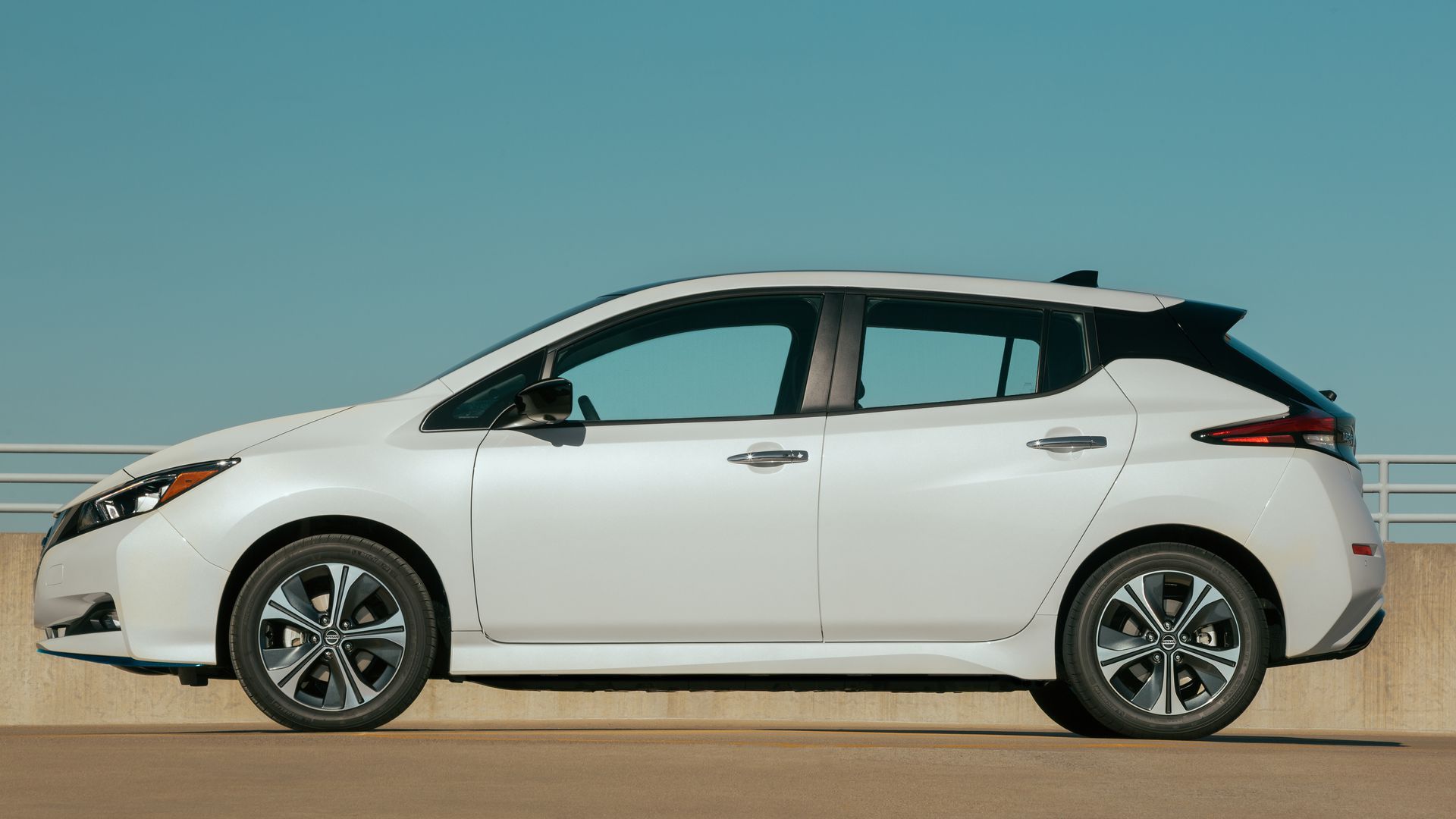
This week I'm driving the all-electric Nissan Leaf SL Plus, with a sticker price of $46,045.
The big picture: The Leaf has been around since 2010, but has long since been eclipsed by the Tesla Model 3, and other battery powered entries like the Chevrolet Bolt EV, Kia Niro EV and the Hyundai Ioniq.
Wall Street still views General Motors as yesterday's news, so one way for GM to get credit for its in-house capability is to spin off its electric vehicle operations as a stand-alone business.
Why it matters: Pure plays on electric vehicles are all the rage among investors — just look at Tesla's valuation.
Intercontinental Exchange agreed to buy Ellie Mae, a Pleasanton, Calif.-based provider of mortgage finance software, from Thoma Bravo for $11 billion.
Why it matters: This is the largest acquisition ever for Intercontinental Exchange, as it only spent $8.2 billion to buy the New York Stock Exchange in 2012. It also pushes ICE much further into the mortgage finance market, following smaller deals for MERS (2016) and Simplifile (2019).
TikTok has become a Rorschach test for how U.S. politicians view China, with little consensus on the specifics of its threat to homeland security.
The big picture: Much of what D.C. fears about TikTok is fear itself, and that's reflected in President Trump's executive order to ban the app by Sept. 20 if it's not sold by parent company ByteDance — alongside another focused on Chinese messaging app WeChat and its parent company Tencent.
While overall energy use declined when coronavirus-induced lockdowns took effect, residential power costs rose for many people, the Wall Street Journal reports.
Why it matters: It shows how staying at home means moving energy costs from offices to homes, "a shift that, with the accompanying expense, could make things worse for those already suffering financially as a consequence of the pandemic."
Cadillac on Thursday unveiled the Lyriq, the luxury brand's first all-electric model and GM's first consumer electric vehicle unveil since the Chevy Bolt several years ago.
Why it matters: It's the first reveal by GM of an electric vehicle that will use the company's new modular platform and Ultium battery system — technologies meant to underpin the 20 electric vehicles that GM plans to launch by 2023.
President Trump escalated his campaign to claw apart the Chinese and American tech worlds Thursday evening, issuing executive orders that threaten to ban both TikTok and massive global messaging app WeChat.
The big picture: Trump's orders come against a backdrop of heightening tension with China, the steady unfolding of a hard "decoupling" between the world's two largest economies, and the Trump campaign's effort to wave a "tough on China" banner.
TikTok said Friday that it was "shocked" by President Trump's executive order that will ban Americans from dealing with ByteDance, its China-based owner, in 45 days.
Why it matters: TikTok argued that Trump's move "risks undermining global businesses' trust in the United States' commitment to the rule of law, which has served as a magnet for investment and spurred decades of American economic growth."
The U.S. added 1.8 million jobs last month, while the unemployment rate fell to 10.2% from 11.1% in June, the Labor Department said on Friday.
Why it matters: The labor market continued to recover but the pace of job growth slowed significantly from June’s 4.8 million job gain, suggesting a stalled improvement as coronavirus cases surged and states pulled back on reopening plans.
Americans cut back on credit cards and increased savings during the worst three-month economic period in U.S. history, as household debt fell for the first time in six years, data from the New York Fed showed.
By the numbers: Total debt declined 0.2% to $14.27 trillion in the second quarter, led by a $76 billion drop in outstanding credit-card balances.
Thursday's jobless claims report showed U.S. unemployment appears to be turning a corner, but it may not be the one those anxious for an economic recovery are hoping for.
What happening: Unadjusted initial jobless claims for the week ending Aug. 1 fell below 1 million for the first time in 20 weeks, while the number of people receiving traditional unemployment benefits fell below 16 million for the first time in 17 weeks for the week ending July 25. Continued claims are reported with a two week lag.
The Nasdaq closed above 11,000 for the first time on Thursday, ending the session higher for the seventh time in a row and eighth session in nine. It has gained nearly 10% since July 1.
Why it matters: It's not just tech stocks that have rallied recently. Just about every asset class has jumped in the third quarter, including many that typically have negative or inverse correlations to each other.
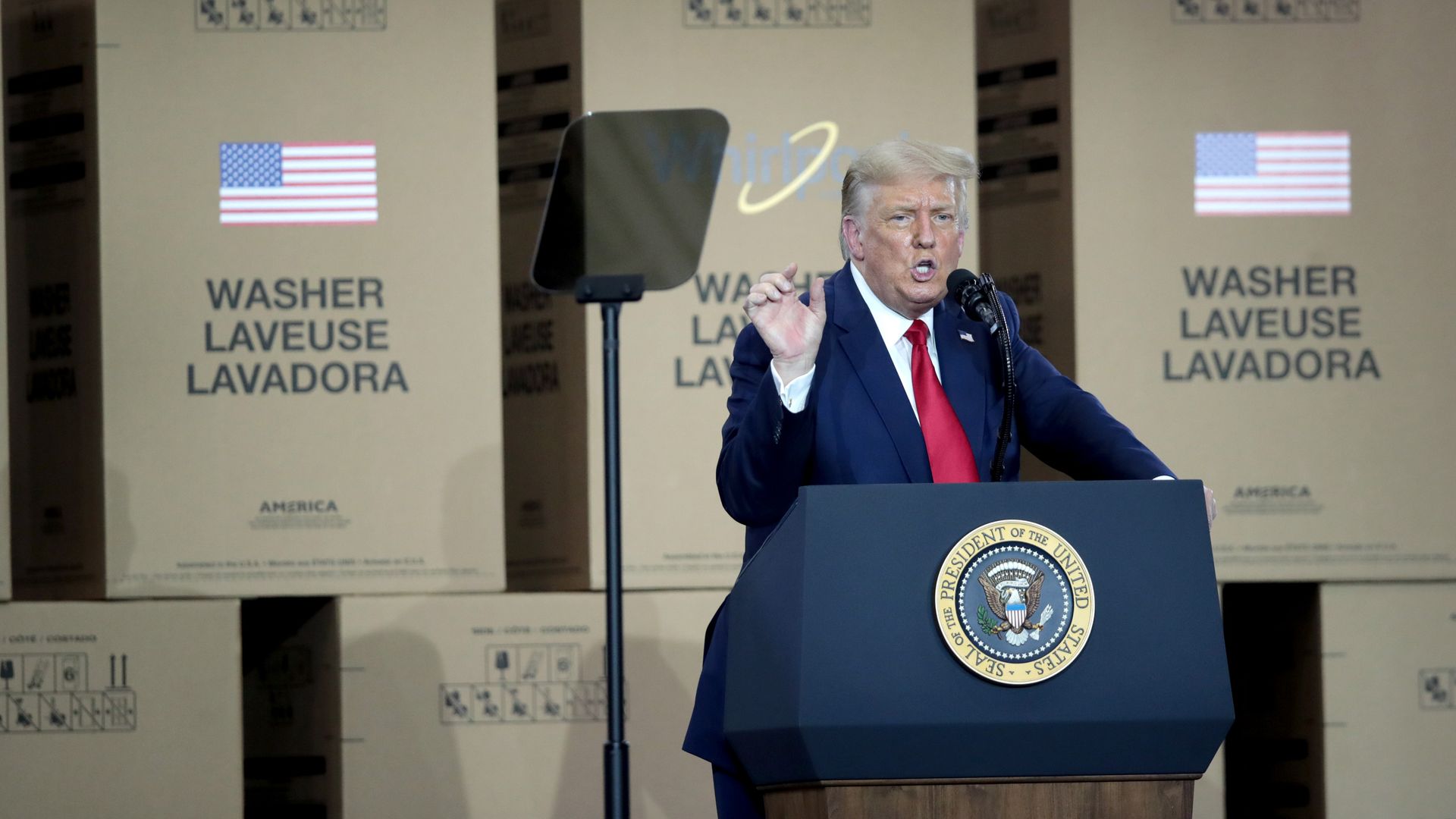
President Trump signed an executive order Thursday that would require the federal government to buy "essential medicines" and certain medical supplies from American manufacturing plants.
The big picture: Similar to Trump's recent executive orders that target drug prices, it's unclear how much this policy would change the drug and device supply chain, and there are several loopholes.